




Explore More Possibilities for Your Business
Full-cycle scenario construction to meet your needs from App research, development, and release to operation.
Ready for your soaring growth

You've spent weeks fine-tuning your rewarded ad placement. You've run A/B tests on your onboarding flow. You've rebuilt your LiveOps calendar from scratch. And then a competitor that launched three months ago quietly climbs past you in the charts.
What do they know that you don't?
For most mobile game teams, competitor research falls into one of two traps: it's either surface-level ("they have more downloads") or completely anecdotal ("someone on our team played it once"). Neither gives you the structured intelligence to actually respond, adapt, or get ahead.
The difference between teams that grow consistently and teams that chase their tails usually comes down to one thing: treating competitor mobile game analysis as an ongoing discipline, not a quarterly project.
Here's the uncomfortable truth: your competitors aren't going to hand you their roadmap. They won't explain why they added a Battle Pass in update 2.4, or why they quietly swapped energy mechanics for a lives system six weeks later. You have to read between the lines.
But that reading only means something when it's grounded in data.
App store rankings, review sentiment, update cadence, monetization structure, paid ad creative trends: all of it is observable, trackable, and with the right mobile game analytics platform, genuinely actionable.
Without that data layer, you're making expensive guesses.
You end up shipping features that miss the market by months, or running UA campaigns built around the wrong player motivations. Teams that treat competitive intelligence as a real input make faster, more confident calls on everything from feature prioritization to pricing to creative direction.
Think of the core loop as the heartbeat of a mobile game: the short, repeating cycle of actions a player completes every session.
Play > Earn > Spend > Play. Or Collect > Upgrade > Challenge > Collect.
When you analyze a competitor's core loop, you're really asking two questions: What behavior are they training in the player? And how fast does that loop resolve?
A tight loop under 3 minutes signals casual or hyper-casual design, optimized for frequency and micro-sessions. A loop running 15 to 30 minutes points to mid-core mechanics built for depth and longer engagement windows.
How to reverse-engineer it:
Play the game yourself at three key moments: first session, Day 3, and Day 7. At each point, document what the game rewards, where friction shows up, and what the natural stopping points feel like. Then map that against your own game's structure. Where do your engagement drop-offs mirror theirs? Where do you have a structural edge?
Core loop gets players in the door. Meta-features keep them coming back. Meta-features are everything built on top of core gameplay to extend session length, increase return frequency, and create social hooks:

 Example of PVP Arena

The meta-layer a competitor adds, and when they add it, is deeply revealing. A game introducing guild mechanics six months post-launch is reacting to churn. A game shipping a collection album at launch is betting hard on Day 30+ retention from day one.
What to watch:
Track your competitors' update logs over time. Treat every update as a signal, not just a changelog. Heavy meta-feature updates usually mean the core loop is struggling to hold players on its own. The frequency of those updates also tells you something about team size and how much runway they're working with.
How a game makes money reflects exactly how much it trusts its own players to stick around. Most mobile monetization falls into recognizable patterns
Early-friction monetization (paying to reduce wait times in session one) signals a game targeting short LTV. They're optimizing for conversion fast because they don't expect the player to stay long.
Late-stage prestige monetization (cosmetics and competitive edge available only in end-game) signals genuine confidence in Day 30+ retention.
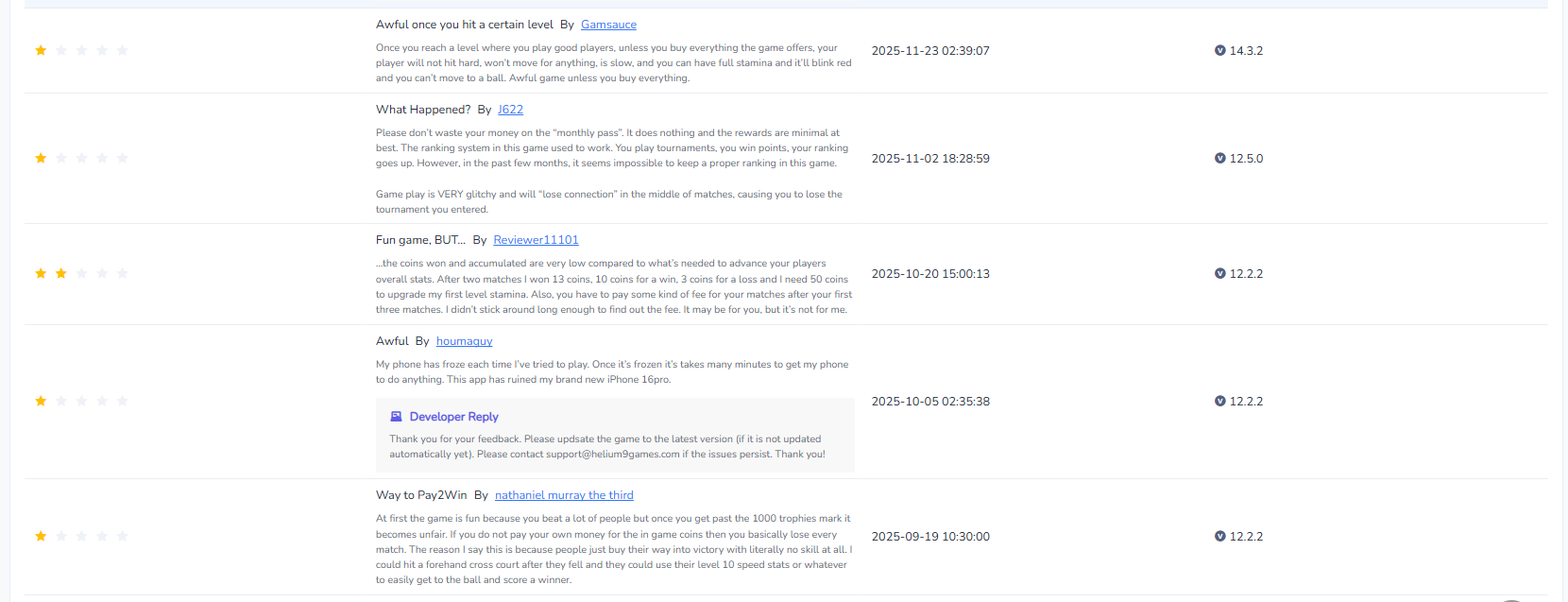
Pro tips: Pull up App Store and Google Play reviews filtered to one and two stars. Players will tell you, in clear and often frustrated language, exactly which monetization mechanics feel predatory or broken. That's free UX research and a precise indicator of where competitor monetization is overreaching.
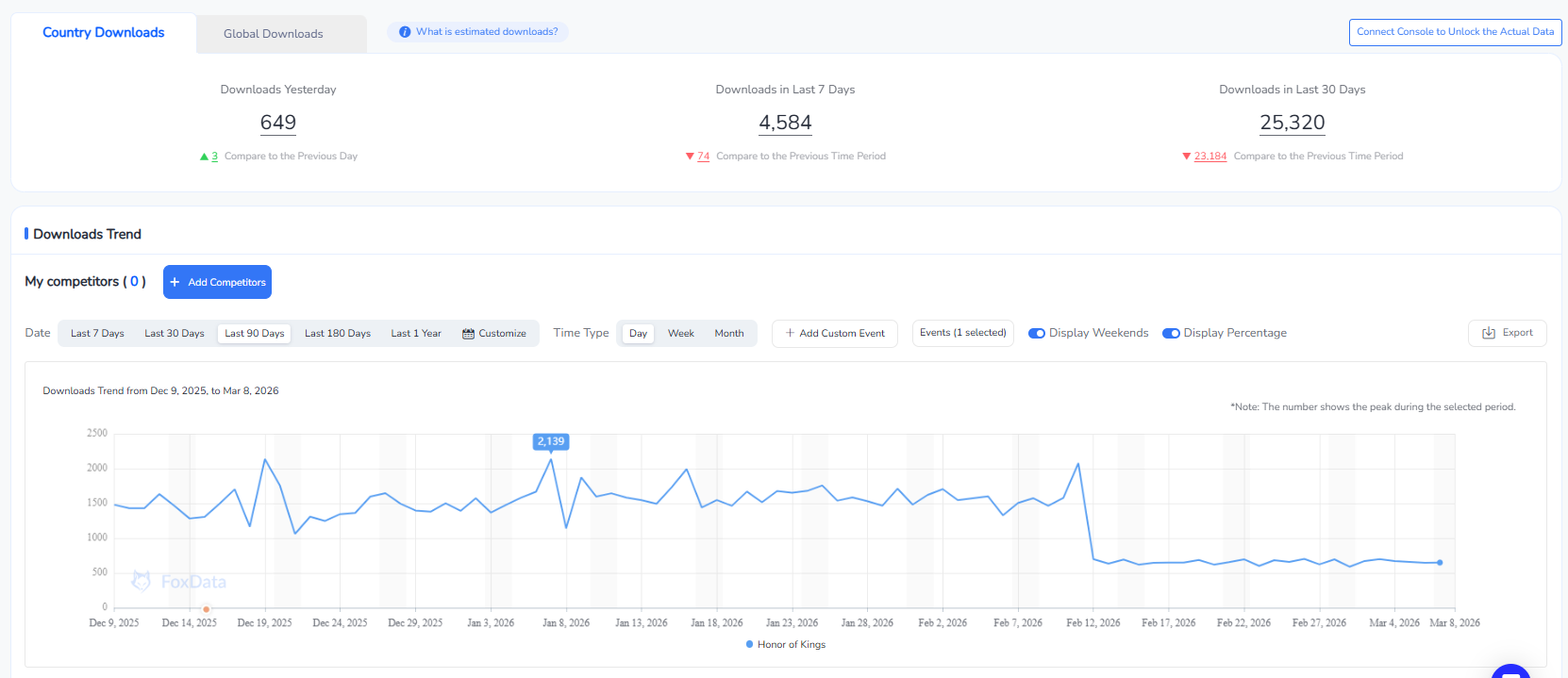
Raw download numbers are almost meaningless without context.
A game spiking downloads while revenue stays flat is acquiring users who don't convert. A game with modest downloads but climbing revenue estimates is finding its audience and monetizing well. A game cutting paid UA spend while holding chart position is either confident in organic performance or quietly running out of budget.
Understanding whether a competitor is in growth mode, plateau mode, or managed decline changes how you interpret everything else about their strategy.
Download velocity, revenue estimates, and category ranking history are all trackable through a purpose-built mobile game competitive intelligence platform. That data is what separates reacting to what a competitor did last quarter from actually anticipating what they'll do next.
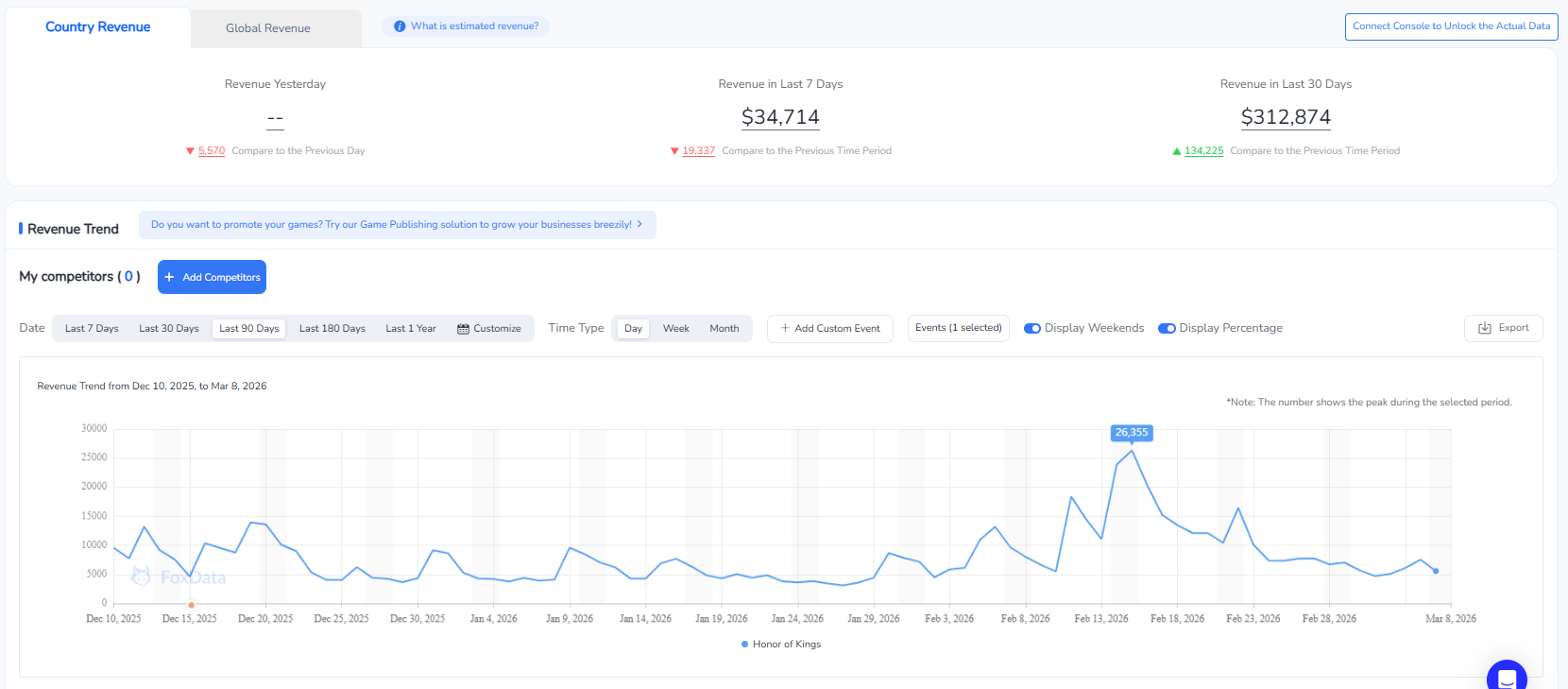
Your competitor's paid ad creatives are a live window into what's converting with your shared audience.
The hooks they use in video ads (stress mechanics, satisfying idle loops, narrative bait, social comparison, "fail" content) tell you which emotional triggers are landing in your target market right now. Creative strategy shifts are just as informative as the creatives themselves.
Are they suddenly testing character-driven narrative after six months of gameplay footage? That usually means raw gameplay hooks are fatiguing. Are they leaning into social comparison angles for the first time? They may be chasing a different audience segment.
What to look for:
Track their ad library over time, not just their latest creative. Volume changes, format shifts, and concept pivots all signal something: creative burnout, audience saturation, or a strategic repositioning you should know about before it affects your own acquisition landscape.
App Store Optimization isn't just about your own rankings. It's a real-time signal about what competitors are prioritizing.
Monitoring which keywords a competitor ranks for, especially ones that are underserved in your niche, is one of the highest-leverage inputs in any mobile game growth strategy. It tells you both where they're heading and where the gaps are that you can move into first.

Discover how FoxData enhances data protection and security standards to keep your analytics safe and reliable.
Frameworks only matter if you can actually run them without burning out your team.
Manually tracking updates, creatives, ASO shifts, and revenue trends across five to ten competitors is a serious time commitment. Without the right tooling, it becomes the kind of work that gets deprioritized whenever something urgent comes up, which means it never actually gets done.
This is where purpose-built tooling changes the equation. FoxData's game analytics and ASO competitive research suite consolidates download estimates, revenue trends, keyword tracking, creative intelligence, and store listing analysis in a single dashboard. No more stitching data from five different sources and trying to make sense of it manually.
1. Copying features instead of understanding strategy.
Your competitor added a Battle Pass. Should you? Maybe, but not because they did. Copying a feature without understanding why it worked for their audience, and whether your player base has the same behavioral profile, is how you end up shipping updates that go nowhere.
2. Treating download volume as the whole story.
High downloads with declining revenue is a very different signal than modest downloads with strong Day 30 retention. Always pair volume metrics with engagement and monetization data before drawing conclusions. Numbers without context lead to bad calls.
3. Running analysis once, then filing it away.
Competitive intelligence has a shelf life. A competitor's strategy from six months ago may already be in the process of being reversed. This is a recurring workflow, not a project with a deliverable. Build it into your team's weekly rhythm or it won't happen.
4. Only watching the obvious competitors.
The number-one game in your genre isn't always your most useful reference point. A mid-tier title quietly growing 15% month-over-month may have cracked a mechanic or positioning angle that the category leaders haven't caught up with yet. Cast your competitive net wider than the obvious names.
Every feature your competitors ship, every creative test they run, every monetization update they push: all of it is a signal.
The teams that build real processes for reading those signals, connecting the dots, and translating them into product and growth decisions compound their advantages in ways that are very hard to reverse-engineer from the outside.
Competitor mobile game analysis isn't a research exercise for slow weeks. It's a core operating practice for any team serious about growth in a market that moves fast and has very little patience for blind spots.
The intelligence is there. The question is whether you have the infrastructure to capture it.
Stop reacting and start anticipating. FoxData's mobile game analytics and competitive intelligence platform gives mobile game teams the visibility to track competitors, surface growth opportunities, and make smarter decisions, week after week, not just once a quarter.
Q: What is competitor mobile game analysis and why does it matter?
Competitor mobile game analysis is the practice of systematically studying rival games to understand their design decisions, monetization approaches, UA tactics, and market positioning. In a market where thousands of new titles launch every month, knowing what's working for others helps you make faster, better-informed decisions for your own game, without having to learn every lesson the expensive way.
Q: How do I identify the core loop of a competitor's mobile game?
The most reliable method is direct observation at key retention milestones. Download the game and play it at first session, Day 3, and Day 7. Track the sequence of actions the game rewards, note where friction or monetization prompts appear, and map the overall loop length. Pair that with App Store reviews to hear how players describe the experience themselves. If a competitor is making frequent updates to core systems, that's often a signal their loop isn't retaining well, which is a useful data point on its own.
Q: What metrics should I track for competitor mobile game revenue analysis?
Start with estimated download volume, category ranking history, revenue trend estimates, and IAP pricing structure. Then layer in qualitative signals: low-star review sentiment (especially comments about monetization), update frequency, and ad creative volume and variety.
A dedicated mobile game analytics platform can pull most of these signals into a unified view, making it much faster to spot trends and draw meaningful comparisons across multiple competitors at once.
Q: How often should I run competitor analysis for mobile games?
For fast-moving genres like hyper-casual and puzzle, a weekly ranking review combined with a monthly creative and ASO audit is a solid baseline. For mid-core and RPG titles with slower update cycles, bi-weekly check-ins plus a deeper quarterly analysis tends to cover the ground well.
The non-negotiable is consistency: building competitor analysis into a regular workflow, rather than treating it as an ad-hoc task, is what allows you to catch strategic shifts early instead of responding to them late.
Ready to make your app shine? Optimize your app's visibility with FoxData! Maximize downloads and rankings by leveraging our powerful insights today.
App Growth & ASO Tools by FoxData
FoxData supports every stage of app growth with specialized ASO and app analytics tools, helping teams improve keyword visibility, user acquisition, and retention through reliable data.
🔍 Store Keyword Research Tools
Research high-intent keywords, search volume, and competition to strengthen your app store optimization strategy.
📈 App Store Keyword Tools
Analyze keyword rankings and performance across the Apple App Store and Google Play to refine ASO execution.
📊 ASO Monitoring Tools
Monitor keyword ranking changes, visibility trends, and ASO impact over time with continuous performance tracking.
👥 User Activity Monitoring Tools
Understand in-app user behavior, engagement, and retention with real-time user activity analytics.
Together, these tools form FoxData’s ASO analytics and app intelligence ecosystem, designed to help developers, marketers, and growth teams make data-driven decisions and scale sustainably.
Explore it today!
👉 Learn more about FoxData here | 👉 Book a demo with FoxData team today!
© 2020-2026 FoxData. All Rights Reserved.