


Explore More Possibilities for Your Business
Full-cycle scenario construction to meet your needs from App research, development, and release to operation.
Ready for your soaring growth
Data Period: April 1–30, 2026
Data Source: FoxData Download & Revenue Rankings
Platforms Covered: Apple App Store & Google Play Store
Geographic Scope: Global
April 2026 delivered a market that was, depending on which platform and which metric you looked at, either quietly declining or sharply moving. Here is what the data actually says:
💡 Track which games are rising before the market catches on.
Explore live mobile game rankings on FoxData Top Charts →
April 2026 painted two very different pictures depending on which platform you examined. On iOS, the chart was stable at the top — with one title shattering that stability entirely.
Most games that gained ground moved only 1–2 spots, a reflection of how saturated the upper chart has become. Brand loyalty and sustained UA investment keep established titles anchored. Declines were equally modest — typically 1–3 positions, with no cliff-edge collapses anywhere in the Top 15. Then Jewel Coloring happened.
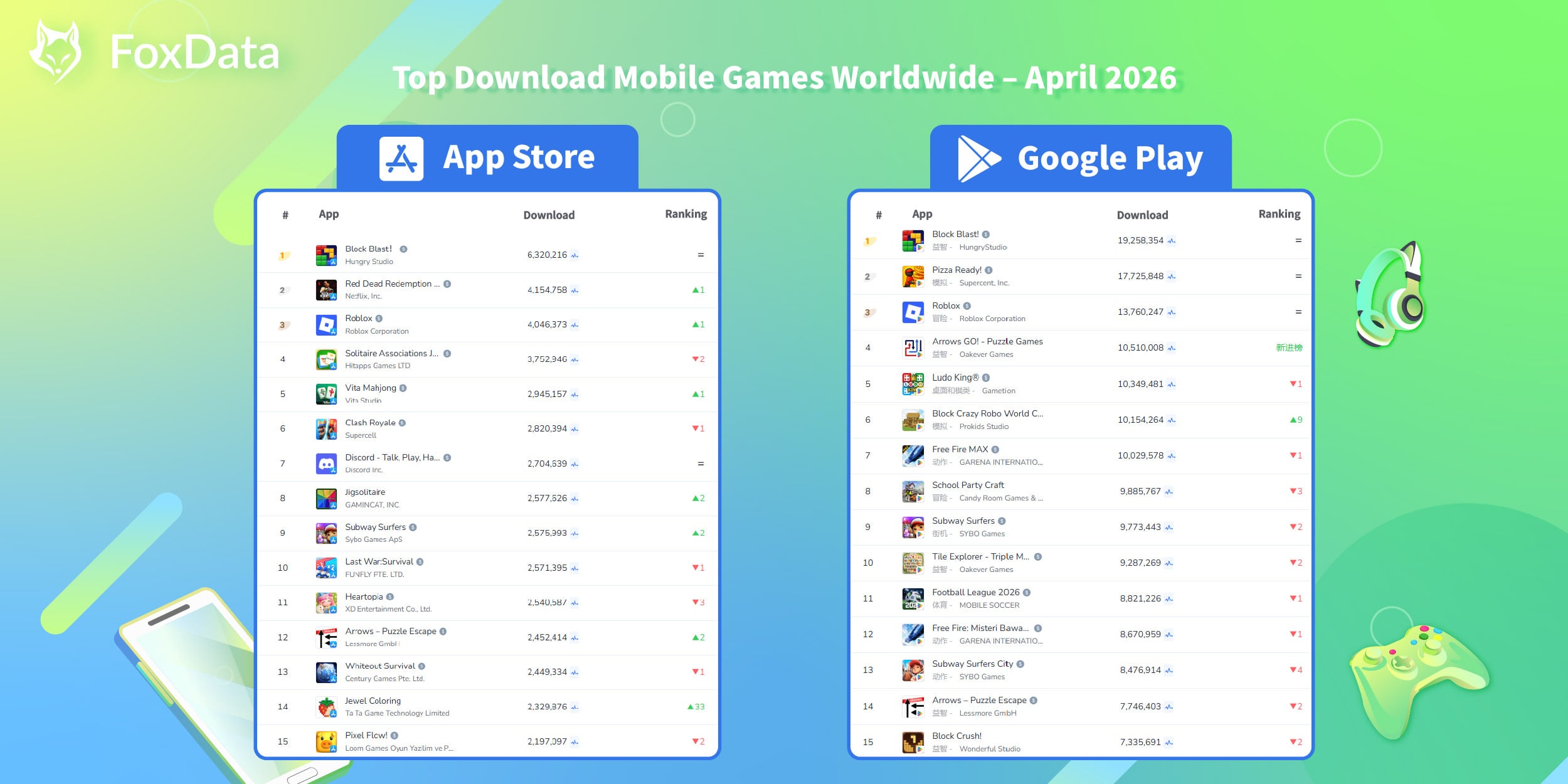
Data source: FoxData Download Charts
Published by Ta Ta Game Technology Limited (Hong Kong), Jewel Coloring launched on February 18, 2026. For its first month, it barely registered on any ranking. Then, starting mid-March, something shifted — and by April it erupted.
According to FoxData—Category Ranking, in just the first week of April, Jewel Coloring reached #1 on the iOS Free Games chart in 14 countries — including the US, Japan, and Australia — and entered the Top 10 in 64 countries and regions. On April 5–6, it briefly topped the overall US iOS game download chart. March monthly downloads exceeded 4.5 million; April set a new record.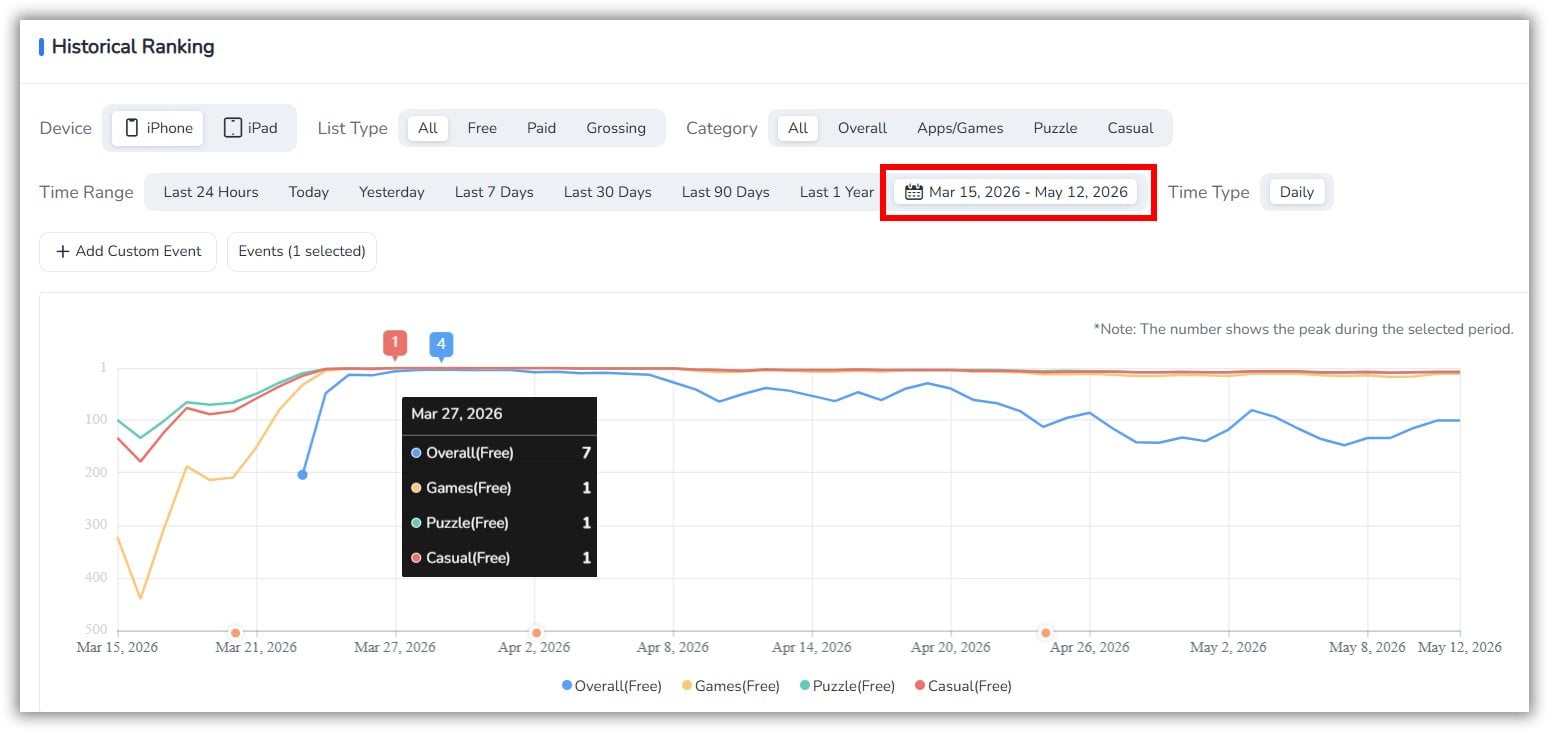
Source: FoxData's Historial Ranking
👉 How to Drive Your App Marketing Efficiency with FoxData "Category Ranking"
What drove this breakout?
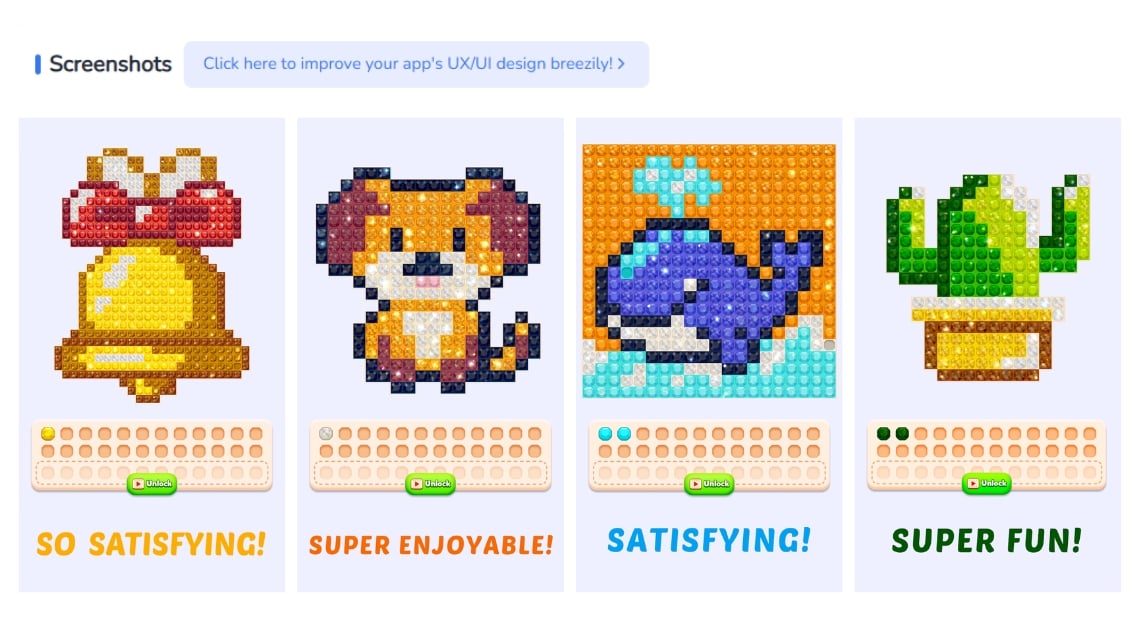
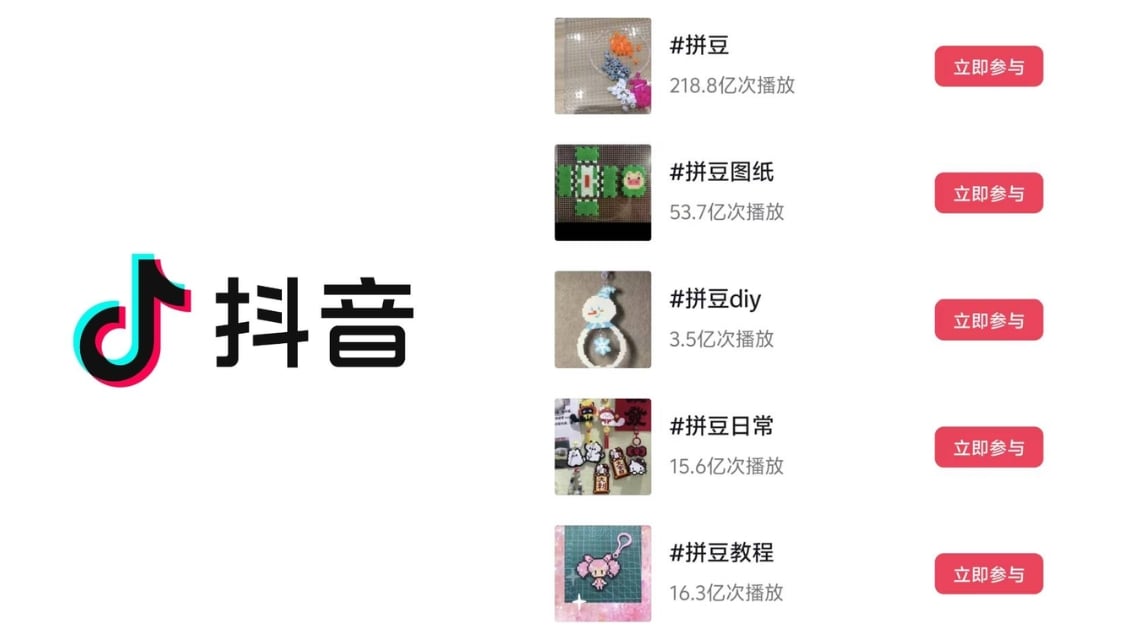
Casual puzzle is broadly perceived as oversaturated. But Jewel Coloring's breakout delivers a sharp market correction to that assumption: a crowded category does not equal saturated user demand, and mechanical similarity does not equal emotional sameness.
Its competitive edge isn't a new mechanic. It's the right emotional packaging, delivered to an underserved audience, at exactly the right cultural moment. The pixel art layer transforms color sorting into something that feels like a creative act — and the psychology of creativity generates a stronger self-efficacy feedback loop than pure entertainment, giving the game a natural retention advantage.
The timing is equally instructive: two months from launch to top of chart. In 2026, with AI-assisted development tools dramatically compressing indie production cycles, speed is a genuine competitive moat. For mid-size studios still polishing larger productions, the more urgent question is not "is our game good enough?" — it's "how fast can we respond when a two-month-old lightweight title starts eating our download share?"
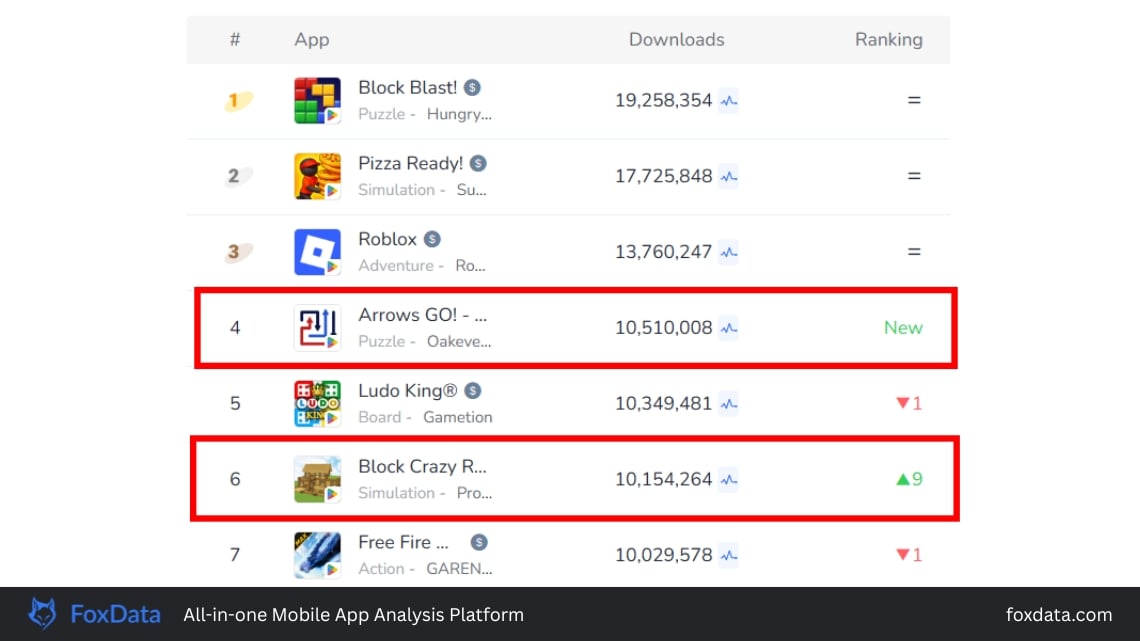
If the App Store had at least one standout, Google Play's April download chart told a more uniform story: a broad, orderly retreat.
Most titles dropped 1–4 positions across the board — no single category or product collapsed in isolation. This was systemic pressure. The spring holiday student user spike from March dissipated in April, and the retention quality of those acquired users (D2 retention, session depth, payment conversion) did not hold, prompting publishers to pull back UA budgets.
Android user acquisition competition in emerging markets — SEA, South Asia, LATAM — continues to intensify, raising paid UA costs and suppressing organic ranking momentum. April also lacks the strong holiday traffic accelerants (Spring Festival, summer break) that drive burst volume, consistent with the global Q1 2026 download decline of approximately 12% YoY.
Two outliers in a declining chart:
🎮 Want to track which games are rising before the broader market notices?
Start monitoring real-time game rankings on FoxData — free →
Emerging markets (SEA, LATAM) remain important Android growth engines — but their contribution to download volume far outpaces their contribution to revenue, creating a "strong numbers, weak conversion" dynamic that will increasingly pressure publishers through Q2 2026. If effective ARPU improvement strategies for these markets aren't deployed by May, the gradual decline in organic ranking performance is likely to continue.
The most defensible Android breakout strategy in this environment: lower device barriers + embed viral sharing mechanics + keep UA spend lean. Block Crazy Robo World Craft is a working example.
Revenue rankings in April 2026 diverge sharply from download rankings — reinforcing a pattern that has strengthened throughout Q1 2026: volume and monetization are increasingly decoupled. The games people install most are not the games generating the most money. Understanding why is where the real strategic intelligence lives.
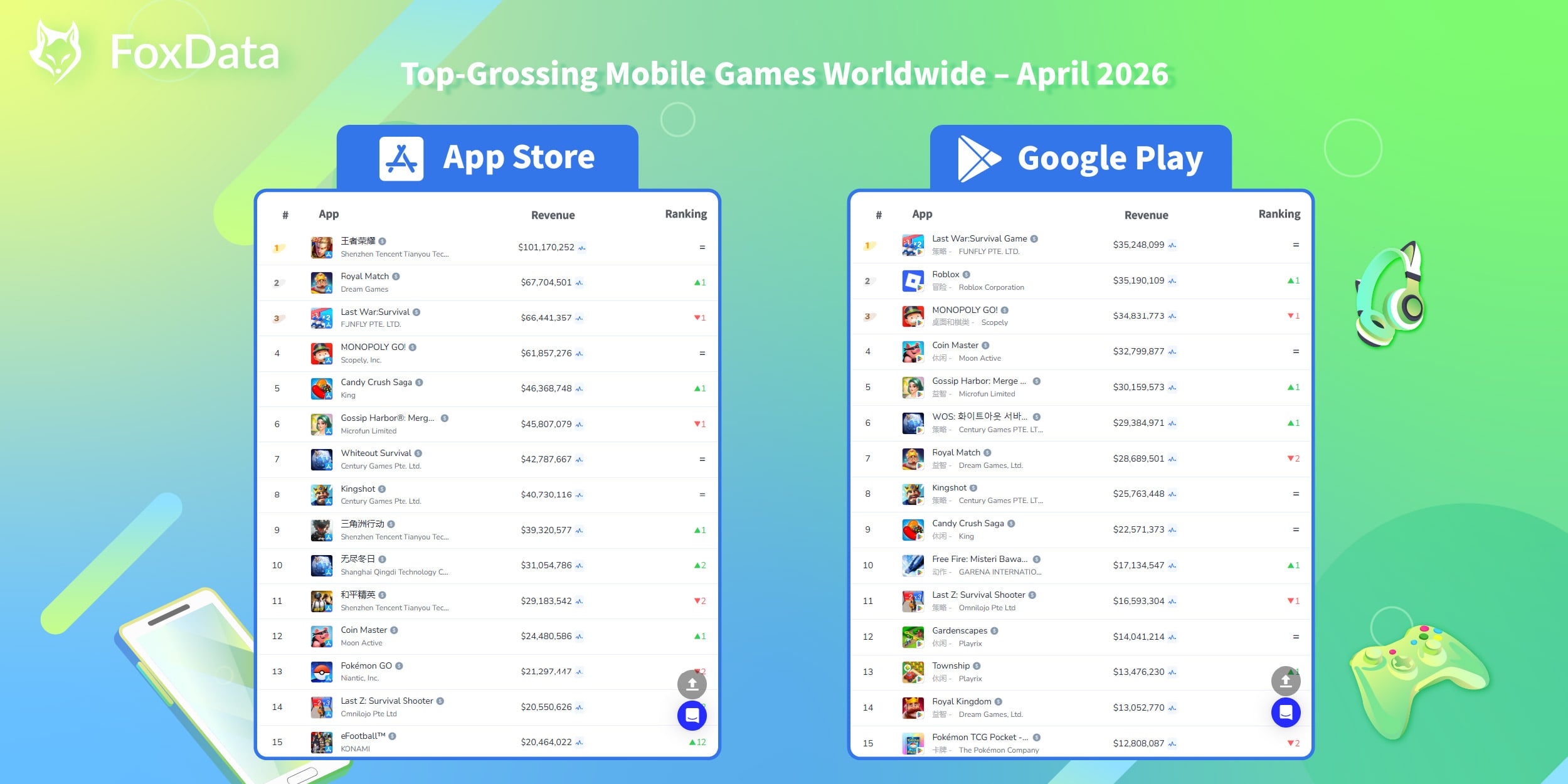
Data source: FoxData Revenue Charts
By the standards of the download chart, the App Store revenue rankings in April were almost unnervingly calm. Most titles moved only 1–2 positions — a textbook "long-tail harvesting" phase following successful Q1 seasonal update cycles. One title broke that pattern entirely.
According to FoxData, KONAMI's eFootball series surpassed 1 billion global downloads — and immediately activated a large-scale milestone celebration: the "1 Billion Downloads Campaign".
The campaign offered limited-time content with genuine scarcity mechanics: legendary player cards including Ronaldinho Gaúcho available for a limited signing window. This was not a standard discount promotion. It was architected as a "witness history together" moment for the global player community.
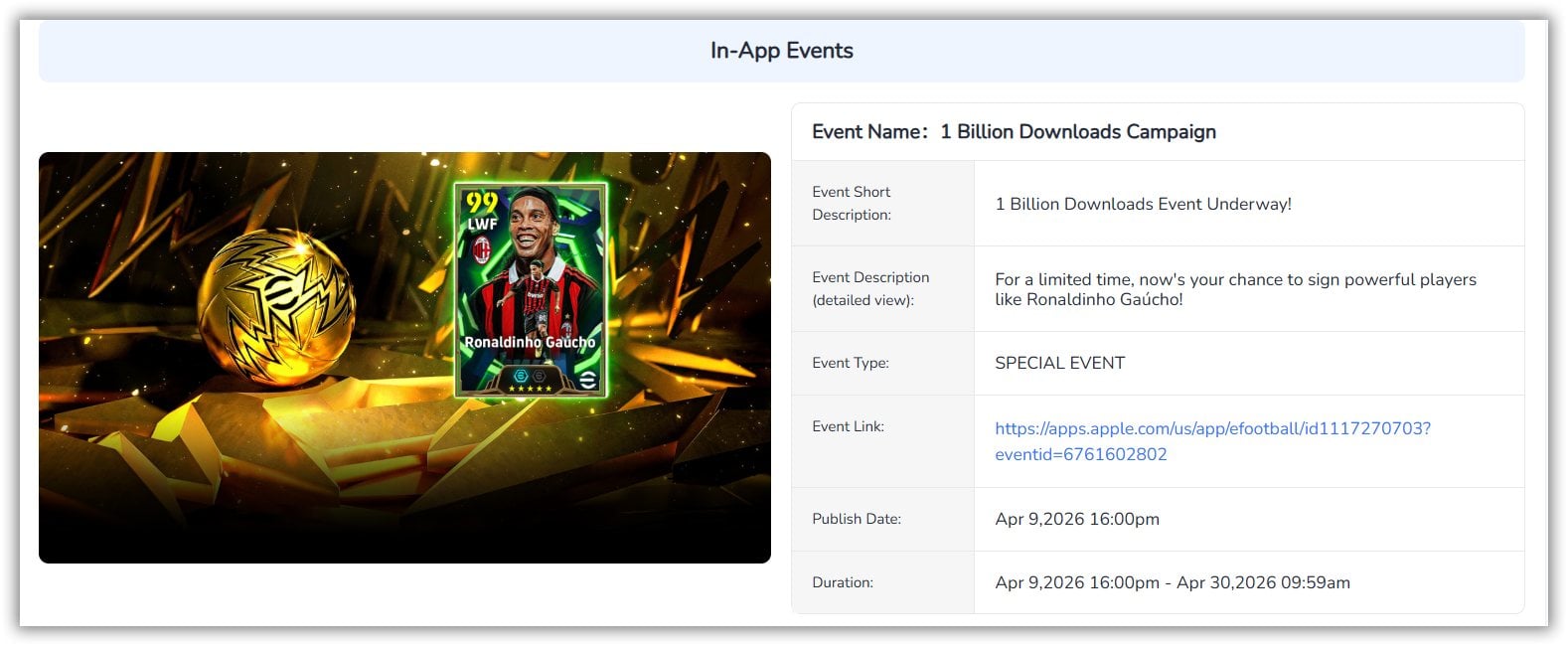
Source: FoxData's In-App Event
The three mechanics behind the 12-position climb:
This campaign was a deliberate evolution of KONAMI's earlier "900 Million Downloads Campaign" framework — which had already validated the milestone funnel model using daily login rewards, tournament score rewards, limited skill packs, and legend bundles. The 1B version escalated both the narrative stakes and the reward tier architecture.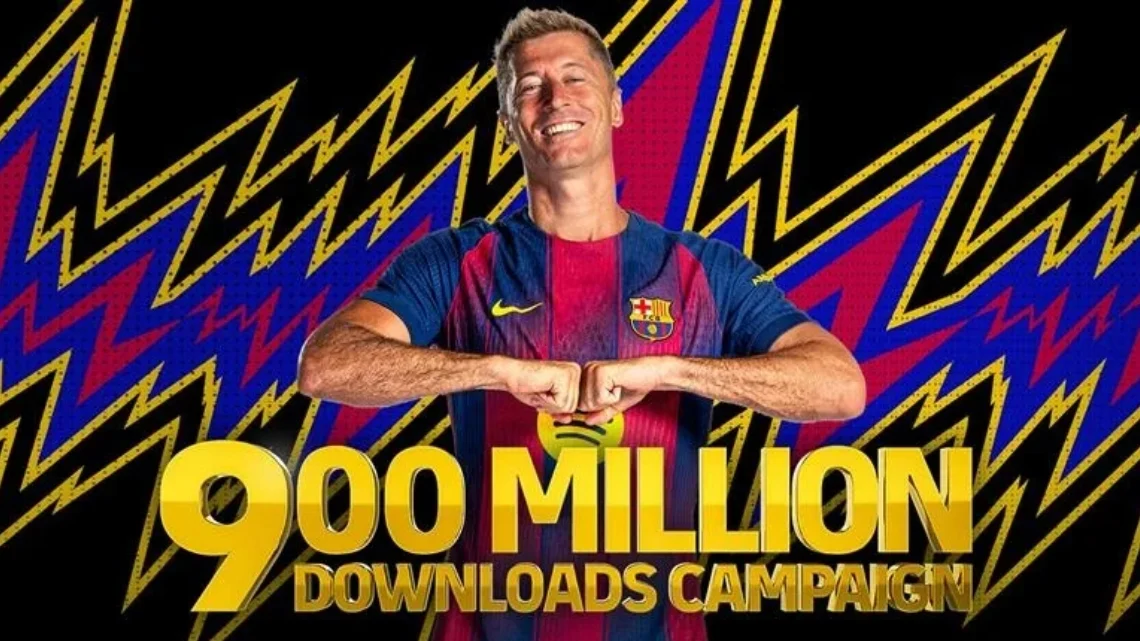
Beyond eFootball, the App Store revenue chart largely reflected a mature market holding steady. Most games moved only 1–2 positions, reinforcing a broader Q1 trend: top-grossing titles have entered a long-tail monetization phase, sustained by predictable seasonal updates, established spending habits, and stable live-service ecosystems.
When a game surpasses 1 billion downloads, it becomes more than a KPI — it becomes a long-term brand asset that can be continuously amplified and monetized. Instead of treating it as a standard promotion, KONAMI positioned eFootball™ as a shared global event, framing it as players “witnessing history together.” This works because ritual and collective moments strongly influence spending behavior in mobile games. Revenue growth often comes less from acquiring new users, and more from creating emotional peak moments that encourage existing players to spend beyond their usual habits.
Ronaldinho’s value in eFootball™ also goes beyond gameplay — for many football fans, he represents nostalgia, joy, and iconic memories, and this emotional connection drives stronger purchase motivation than functional value alone.
The bigger lesson for IP-driven mobile games is clear: successful monetization depends on identifying emotional trigger points that create genuine fear of missing out — and activating them at exactly the right live-ops moment.
In sharp contrast to the download chart's broad decline, Google Play's April revenue rankings painted a much cleaner picture — mostly +1 position gains, with declines concentrated in the 1–2 position range. A quiet but structurally meaningful signal.
On the surface, everyone gained or lost just one position — seemingly undifferentiated. But in the context of declining downloads, this revenue resilience reflects something structurally significant: the result of top publishers having built paying user moats over long periods.
A large base of low-intent casual users contributes download volume. A small core of high-value payers contributes the overwhelming majority of revenue. These are different populations, and the best publishers treat them differently.
The rational publisher strategy in this environment: protect revenue, not downloads. Rather than allocating UA budget to sift payers from a broad casual funnel, the more efficient play is deepening payment behavior from existing core users through limited-time events, battle pass structures, and social incentive loops.
The risk is real and growing: purely IAA (in-app advertising) casual titles on Android — built on cheap UA and ad monetization — will face increasingly compressed operating space if this structural trend continues through Q2 2026.
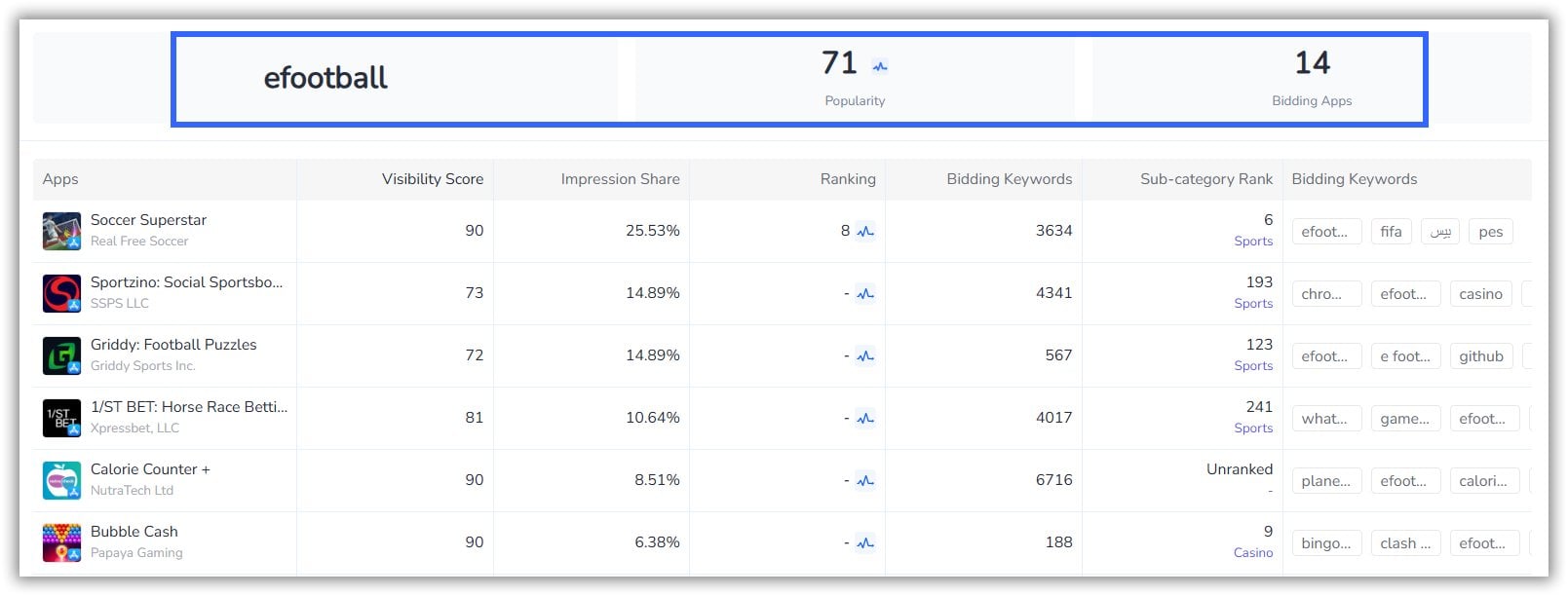
Ready to track what's actually driving revenue for the top 15 global mobile games right now?

Strategy titles account for a small share of global downloads but consistently capture a disproportionate share of mobile game revenue. April 2026 continues this pattern, with Last War: Survival, Clash of Clans, and Honor of Kings holding three of the top seven revenue positions across platforms.
Why it happens: Strategy players invest heavily in in-game progression — bases, armies, alliances, and long-term upgrades. This time investment creates psychological commitment, making spending feel like a rational extension of effort rather than impulse behavior. As a result, high-ARPU “whale” users are heavily concentrated in this genre, with stable spending patterns across seasons.
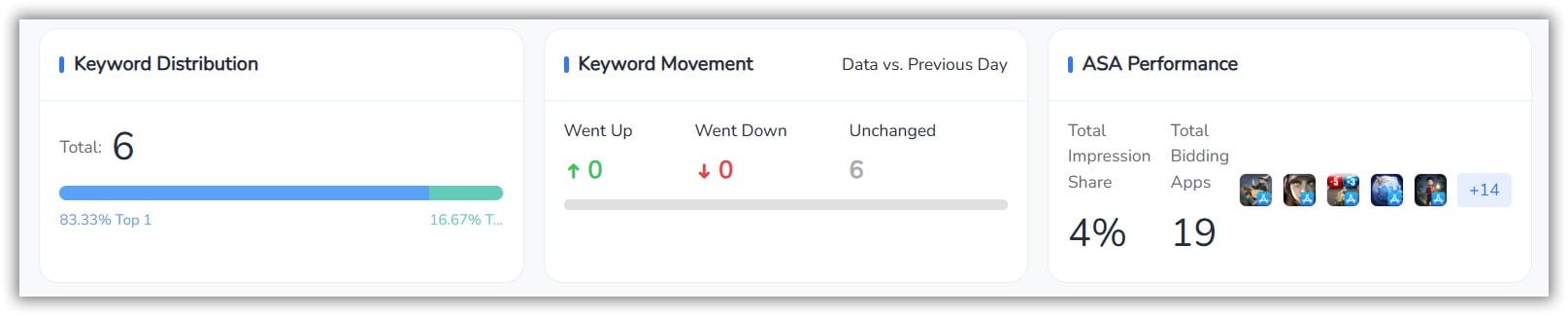
How to act on it: For strategy games, ASO and ASA targeting must clearly signal mid-core depth. Generic keywords like “strategy game” are too broad and underperform. High-intent terms such as “4X kingdom builder,” “real-time war strategy online,” and “alliance battle game” attract users with stronger purchase intent and significantly higher conversion potential. FoxData Keyword Intelligence helps identify which high-intent keywords top competitors rank for organically and bid on in ASA, revealing the most actionable keyword gaps.
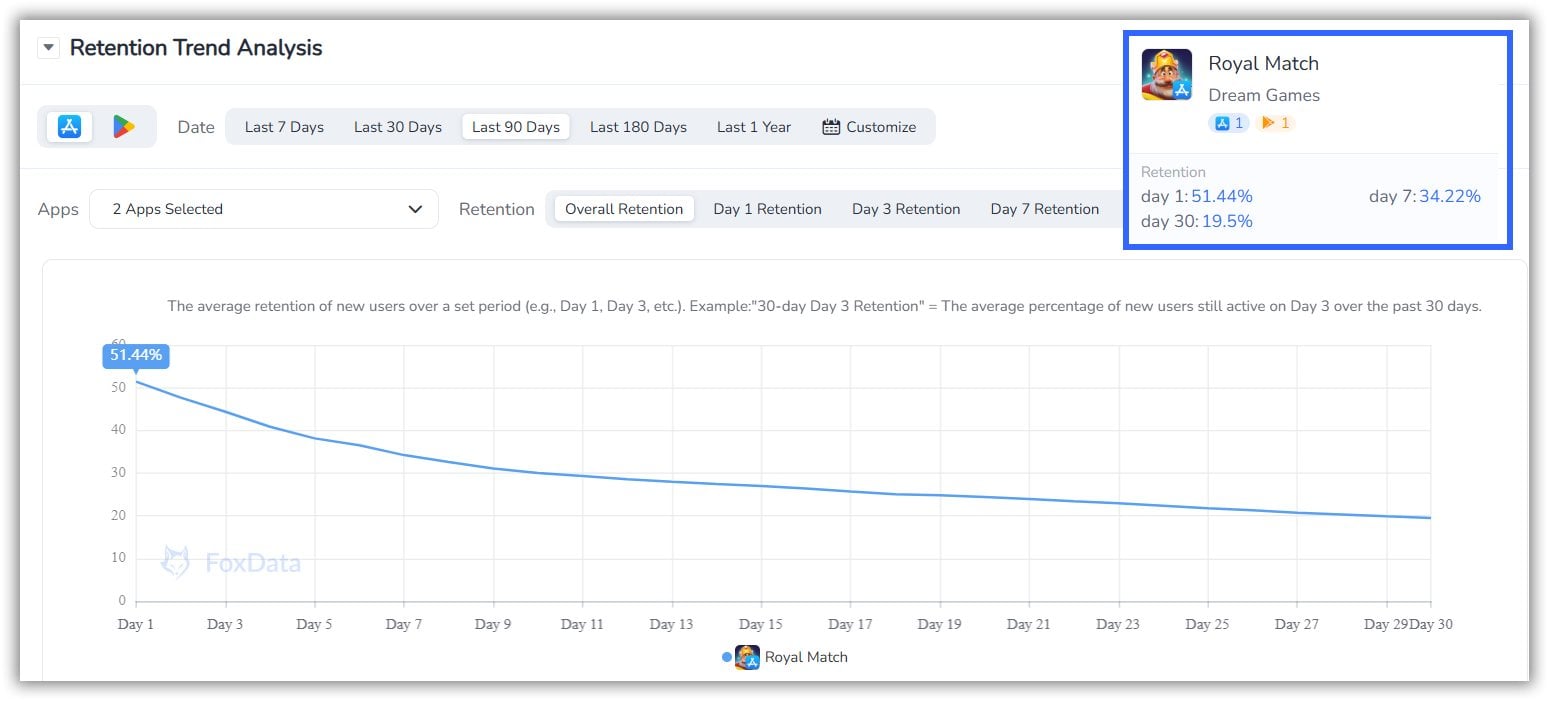
Titles like Royal Match and Candy Crush Saga are not top by ARPU, but they consistently rank high in total revenue due to massive retained user bases and long-term monetization.
Why it happens: Puzzle games rely on soft-currency IAP loops, where small, frequent purchases accumulate over time. The key driver is long-term retention (D30+) — once users stay past 30 days, their likelihood to monetize increases significantly. Low entry barriers create large user funnels, while progression systems sustain long-term engagement.
How to act on it: Focus on cohort retention, not just installs. Comparing D7, D14, and D30 retention against category leaders reveals where performance gaps exist. FoxData's User Retention Analysis Tool highlights how updates, events, and content changes impact retention curves, helping identify what drives sustained engagement.
The 12-position climb of eFootball™ highlights a key 2026 trend: live ops events with emotional framing are now the primary driver of revenue spikes, rather than pure UA growth.
Why it happens: Limited-time events tied to strong IP and milestone narratives trigger FOMO-driven spending behavior. When framed as shared experiences or cultural moments, these events significantly increase conversion intensity. KONAMI’s repeated success shows that refined, milestone-based live ops cycles can consistently amplify monetization.
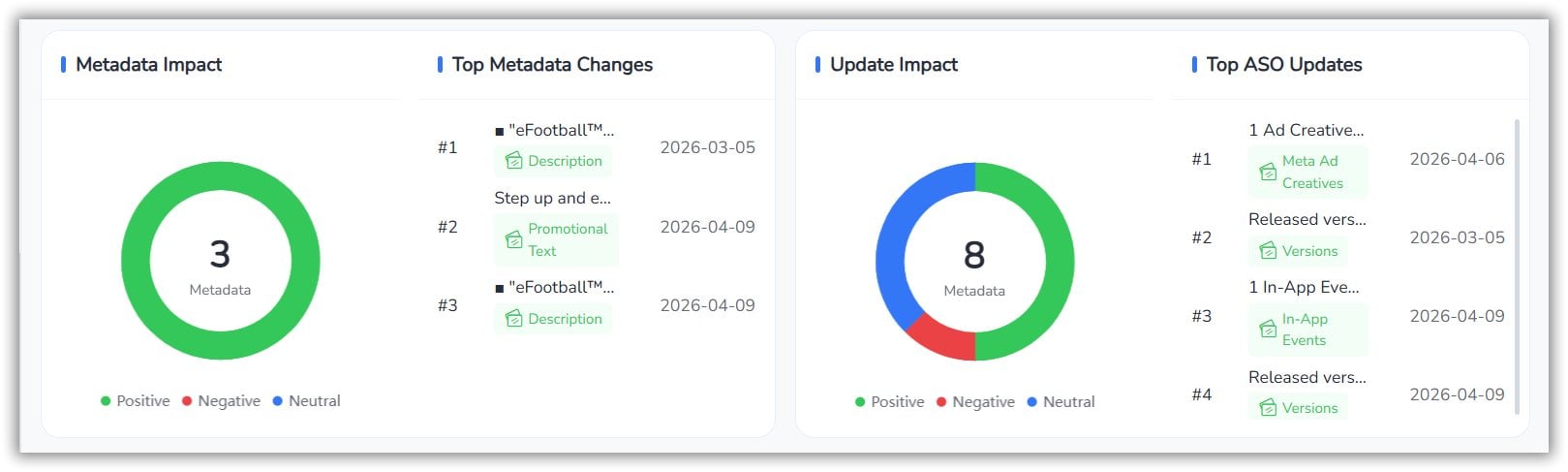
How to act on it: Track competitor update cycles and live ops schedules using ASO history and impact analysis. FoxData ASO Impact Analysis Tools help identify when competitors launch events and how those events affect ranking and revenue movement. The goal is to replicate timing logic, not just event design.
Across the mid-tier of April 2026's charts, the clearest structural growth signal is the continued expansion of hybrid monetization — combining IAP with rewarded video ads. This model is increasingly non-negotiable for titles that cannot compete at the ARPU levels of top strategy or MOBA games.
Why it happens: Pure IAP models leave monetization value on the table from the 95%+ of players who never make a purchase. Rewarded ad formats convert passive session time into CPM revenue without disrupting the IAP experience for active spenders. The net effect is typically a 15–25% gross revenue uplift for titles that implement the hybrid model effectively.
How to act on it: Benchmark your game against hybrid-monetized competitors using revenue comparison tools. The gap between IAP-only and hybrid models often reveals immediate monetization upside, along with industry-standard ad-to-IAP ratios already being used by top performers.
April 2026 confirms a major shift in the mobile game industry: the mobile game market is no longer dominated by the best-made games — it is dominated by the best-operated ones.
Jewel Coloring did not break out because of a new mechanic. It succeeded because it moved quickly, captured the right cultural trend, and positioned familiar gameplay in a more emotionally engaging way. eFootball™ also showed that strong live ops can drive major revenue growth. Instead of relying only on user acquisition, KONAMI turned a download milestone into an emotional global event that increased player spending through nostalgia and FOMO-driven engagement.
Both outcomes required the same underlying capability: real-time market intelligence. Knowing what competitors are doing before the broader market notices. Knowing which keywords attract payers rather than browsers. Knowing when to move and when to hold.
That capability is not a luxury reserved for the largest publishers. In April 2026's mobile game market, it is the minimum infrastructure requirement for competing at the top of any chart.
The biggest takeaway from April is straightforward: in 2026, speed, live ops execution, and real-time market intelligence are more important than production scale alone.
FoxData gives mobile game publishers the exact intelligence layer that April 2026's top-performing titles operate with:
✅ ISO 27001 Certified for enterprise-grade data security
🔍 90M+ keyword tracking across App Store and Google Play
📊 Minute-level ranking data across 13M+ apps globally
🌍 Market Segmentation tools to identify high-growth platforms, regions, and categories
🤖 AI-powered keyword insights, review summaries, and ranking alerts
🔗 Direct integration with App Store Connect and Google Play Console
See how leading mobile game publishers use FoxData to grow faster, optimize ASO, and make smarter live-ops decisions:
→ Explore FoxData Mobile Game Analytics Solutions
© 2020-2026 FoxData. All Rights Reserved.