





Explore More Possibilities for Your Business
Full-cycle scenario construction to meet your needs from App research, development, and release to operation.
Ready for your soaring growth
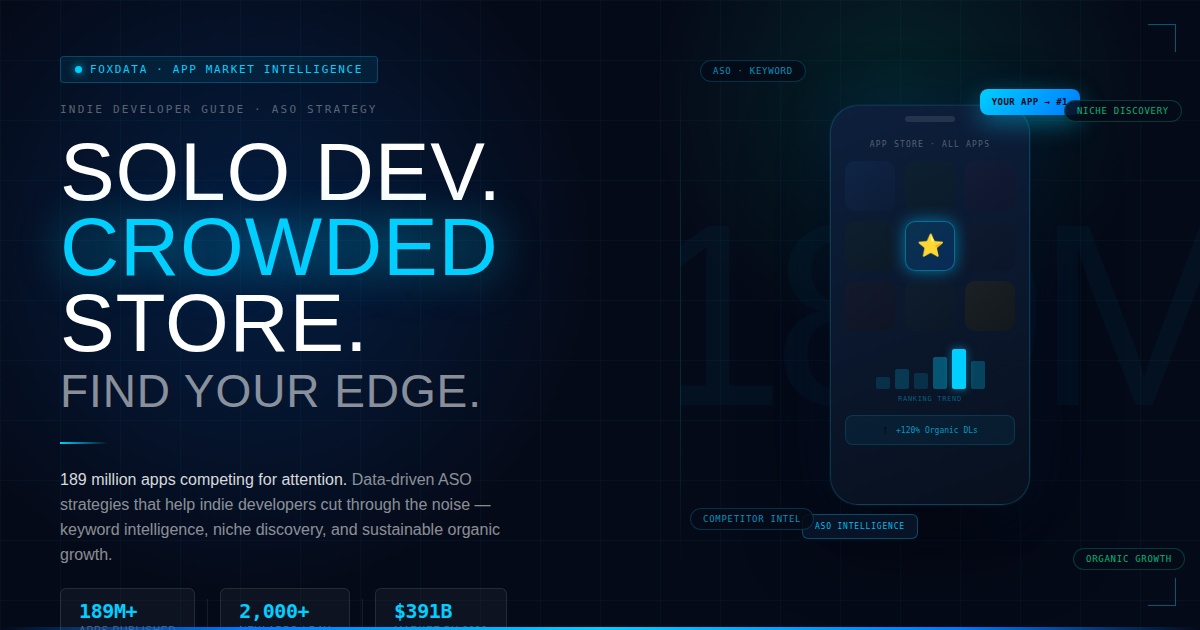
There are 1,889,069 apps on the U.S. App Store today. You're one person - or maybe a small team of two or three - trying to build something that gets noticed among nearly two million alternatives.
But here's what the data actually shows: the game isn't as impossible as that number suggests. Because the App Store isn't static. It's churning. Every single day, apps are being released, removed, dropping off charts, losing keyword rankings. The landscape reshapes itself constantly - and that churn creates openings for developers who know where to look.
Let's look at what FoxData's data revealed for a single 30-day period (April 19 – May 18, 2026):
Apps removed from the store: averaging 1,200–1,500 daily (with a spike to 6,467 on April 29)
New releases: averaging 800–1,500 daily, trending downward
Net effect: the store is actively clearing space
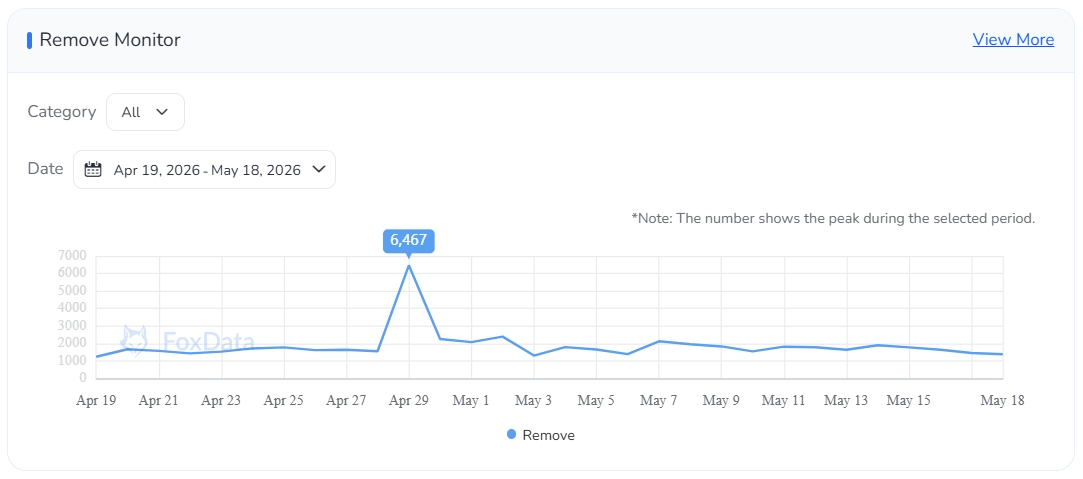
Daily app removals in the U.S. App Store. The April 29 spike of 6,467 removals shows Apple periodically clears large batches of non-compliant or abandoned apps.
Every removed app leaves behind:
Orphaned keyword positions that re-enter the competitive pool
Users who lose access to a tool they relied on and immediately search for alternatives
Category chart positions that shift upward for remaining apps
As an indie developer, you don't need to beat all 1.89 million apps. You need to beat the 50–200 apps in your specific keyword niche. And when some of those disappear, your job gets measurably easier.
FoxData's category statistics reveal which verticals are experiencing the most turnover - and therefore the most opportunity for newcomers.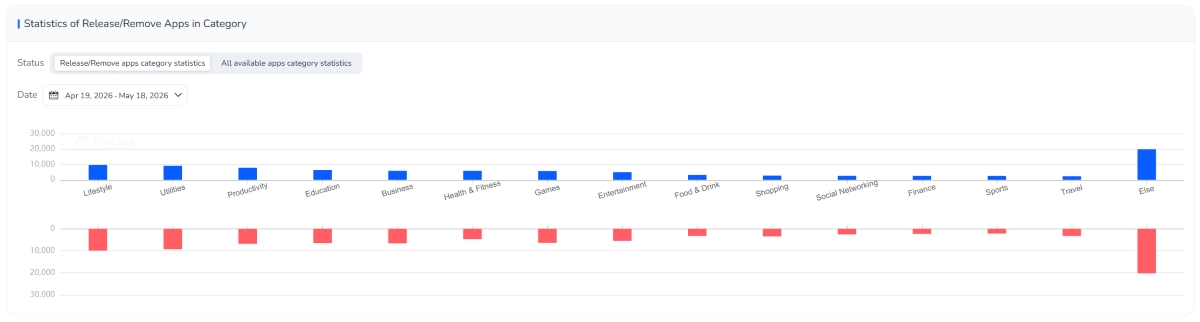
Release (blue, above) vs. Removal (red, below) by category. Categories where removals significantly exceed releases represent potential opportunity zones.
What to look for:
Categories where removal bars are longer than release bars = net space opening up
Categories with moderate release activity = validated demand without extreme competition
The "Else" category shows massive removals - niche sub-categories within it may be significantly underserved
For indie developers specifically, Productivity stands out: it shows healthy release activity (indicating market demand) combined with substantial removals (indicating that existing solutions are failing to meet Apple's standards or user expectations). If you're building a productivity tool, the market is actively making room for better alternatives.
Explore FoxData's productivity app analytics to identify specific gaps within this category.
One pattern that indie developers often miss: release timing is not uniform. FoxData's Release Monitor shows clear cyclical patterns in daily release volumes.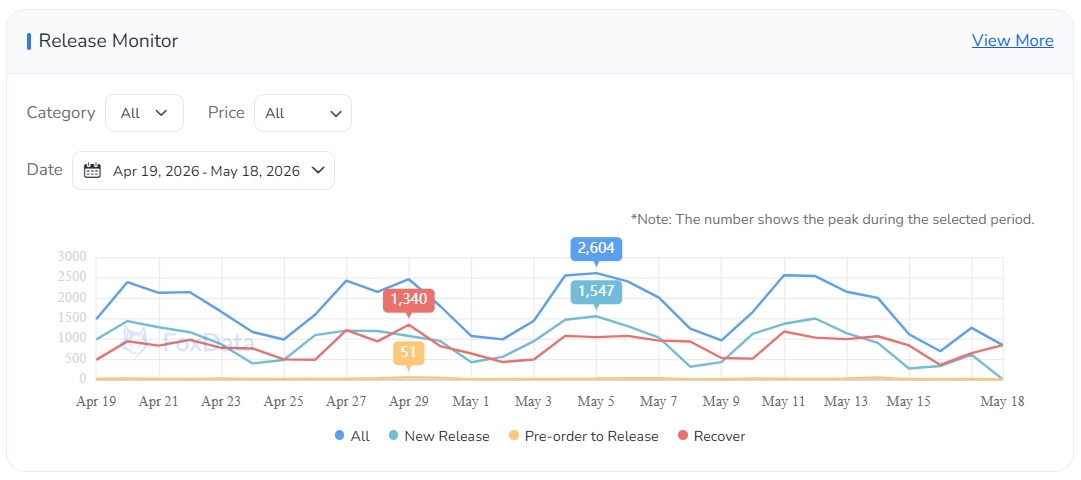
Daily release volumes fluctuate between ~800 and ~2,600. Launching during a low-volume day means less competition for App Store editorial attention and "New Apps We Love" consideration.
Practical implications:
Don't launch on high-volume days. If 2,600 apps release the same day you do, your chances of editorial notice are half what they'd be on an 800-release day.
Watch for post-spike dips. After a high-release period, there's often a 2–3 day valley. That's your window.
Weekends and holidays show lower release volumes - counter-intuitive timing can work in your favor.
You've launched. You've gained some keyword positions. Now what?
The biggest risk for indie apps isn't a massive competitor copying your product - it's silent ranking erosion that you don't notice until downloads have already fallen off a cliff.
FoxData's data shows that keyword ranking disruptions can be sudden and massive - 66,083 apps lost keyword positions on May 9 alone. If you're not monitoring daily, you won't know whether a download dip is:
A market-wide event (wait it out)
A competitor's ASO improvement (respond strategically)
A problem with your own metadata (fix immediately)
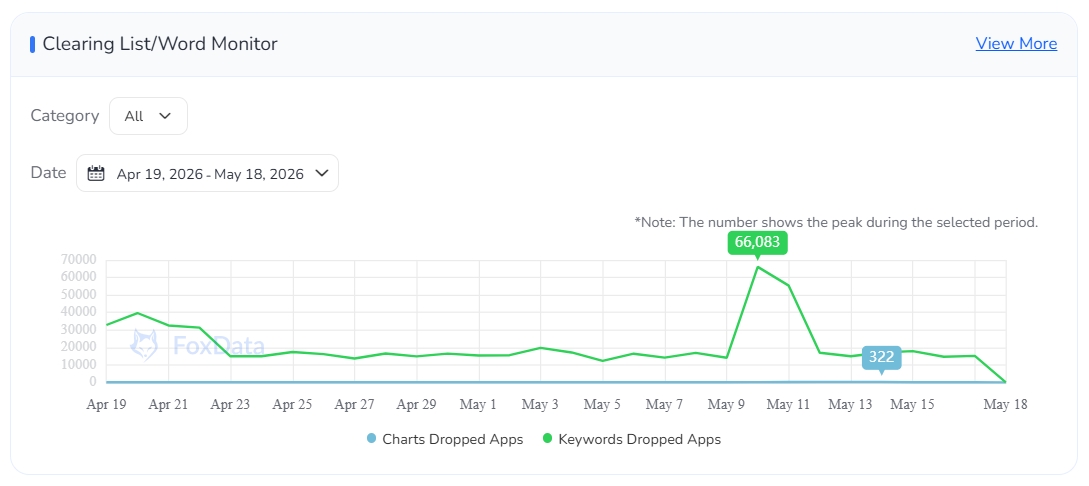
The May 9 spike of 66,083 apps losing keyword rankings was a market-wide event - not caused by individual app issues. Developers without monitoring tools may have made unnecessary (and harmful) reactive changes.
For indie developers operating without a dedicated ASO team, FoxData's free ASO tools provide the baseline monitoring needed to distinguish between "the market moved" and "I have a problem."
Based on the current market data, here's a framework that doesn't require a marketing budget:
Use FoxData's category statistics to find verticals where removal rates create natural openings. Passion matters for motivation - but data should guide where you point that motivation.
Monitor Release Monitor for 2–3 weeks before your target launch date. Identify the cyclical low points. Aim for those.
Establish your target keyword rankings the week your app goes live. Use FoxData's ASO tools for indie developers to track positions without manual daily checks.
When you see your rankings drop, check FoxData's Clearing List first. If thousands of apps lost rankings simultaneously, it's not about you. Wait 48–72 hours before making changes.
Upcoming competitors in your niche are publicly visible in pre-order. Check weekly. If a well-funded competitor lists a pre-order in your exact niche, you have 2–8 weeks to strengthen your position before they arrive.
The advantage large studios have over indie developers isn't just budget - it's information asymmetry. They have analytics teams monitoring market data full-time. They see the patterns. They time their moves.
FoxData levels that playing field. The same Store Monitor data that enterprise teams rely on is accessible to a solo developer checking dashboards over morning coffee. The same release patterns, removal spikes, keyword disruptions, and category dynamics.
1.89 million apps sounds overwhelming. But the actual competition for your specific niche, in your specific category, for your specific keywords? That's a manageable number. And it's getting smaller every day that Apple removes non-compliant apps.
The data is there. The openings are real. Start with FoxData's free tools and build your strategy on evidence, not guesswork.
© 2020-2026 FoxData. All Rights Reserved.