

Explore More Possibilities for Your Business
Full-cycle scenario construction to meet your needs from App research, development, and release to operation.
Ready for your soaring growth
This is a U.S.-based startup team specializing in a smart task and focus management app designed to help users build better time and attention habits through AI.
At launch, the app gained some organic traction through social media word-of-mouth. However, the team soon realized that once organic traffic plateaued, App Store downloads stagnated.
The challenge was clear: how could they break through the organic traffic ceiling and regain momentum for sustained growth and user engagement?
Teams familiar with app growth would immediately think of ASO (App Store Optimization).
But the problem was—they had no idea where to begin. The data seemed random, and progress was largely based on luck.
They asked themselves:
The team was passionate and creative, but lacked direction and the right tools.
Then, during a startup community sharing session, they first heard about FoxData.
What attracted them wasn’t just “catching up with competitors,” but finally finding a clear, learnable, and affordable method.
FoxData provided exactly that—an approachable, actionable entry path into ASO.
For this team, the decision to work with FoxData was simple:
They wanted to replace guesswork with data, and intuition with structured experimentation.
FoxData wasn’t a magic cure—it marked the start of their first logical, data-driven growth experiment—a learning system that helps ASO beginners understand patterns and accumulate experience.
Before FoxData, the team experimented with multiple approaches:
They were “busy,” yet couldn’t tell which metrics truly represented real growth—stuck in a loop of reaction without insight.
This is a common pain point for small teams: they collect data but lack a framework for analysis.
FoxData’s first step was to initiate an App Health Check (Growth Diagnosis) to build a holistic performance overview from core metrics.
The diagnosis identified several key areas for improvement:
Mavis (Product Manager) reflected:
“The report was like a mirror—it showed us that most of our efforts were only on the surface.”
FoxData consultants then proposed a four-step closed-loop strategy: Insight → Action → Feedback → Localization, rebuilding the app’s growth system.
Using FoxData’s Keyword Diagnosis Panel, the team dissected their search performance and uncovered structural issues:
From this, the team built a three-tier keyword framework:
The biggest gain at this stage wasn’t immediate ranking growth—but clarity: what to do, when, and in what order.
With FoxData’s guidance, the team transitioned from ad-hoc adjustments to a consistent operational rhythm:
FoxData’s Keyword Explore module identified high-intent, high-CTR terms and added them to the tracking pool.
For example, the keyword “focus timer” exhibited an exceptionally high click-through rate—becoming a top priority target.
Within three weeks, its ranking jumped from No. 19 to No. 5 through focused optimization.
Using Metadata Simulator, the team tested two title versions:
After 14 days, Version B showed a 22% higher CTR and a 15% increase in conversion rate.
From this, the team adopted a more compelling positioning strategy—“Functionality + AI assistance.”
Leveraging ASA Keyword data, the team connected their Apple Search Ads performance with organic search trends, selecting ten rising keywords for sustained bidding while pausing underperforming ones.
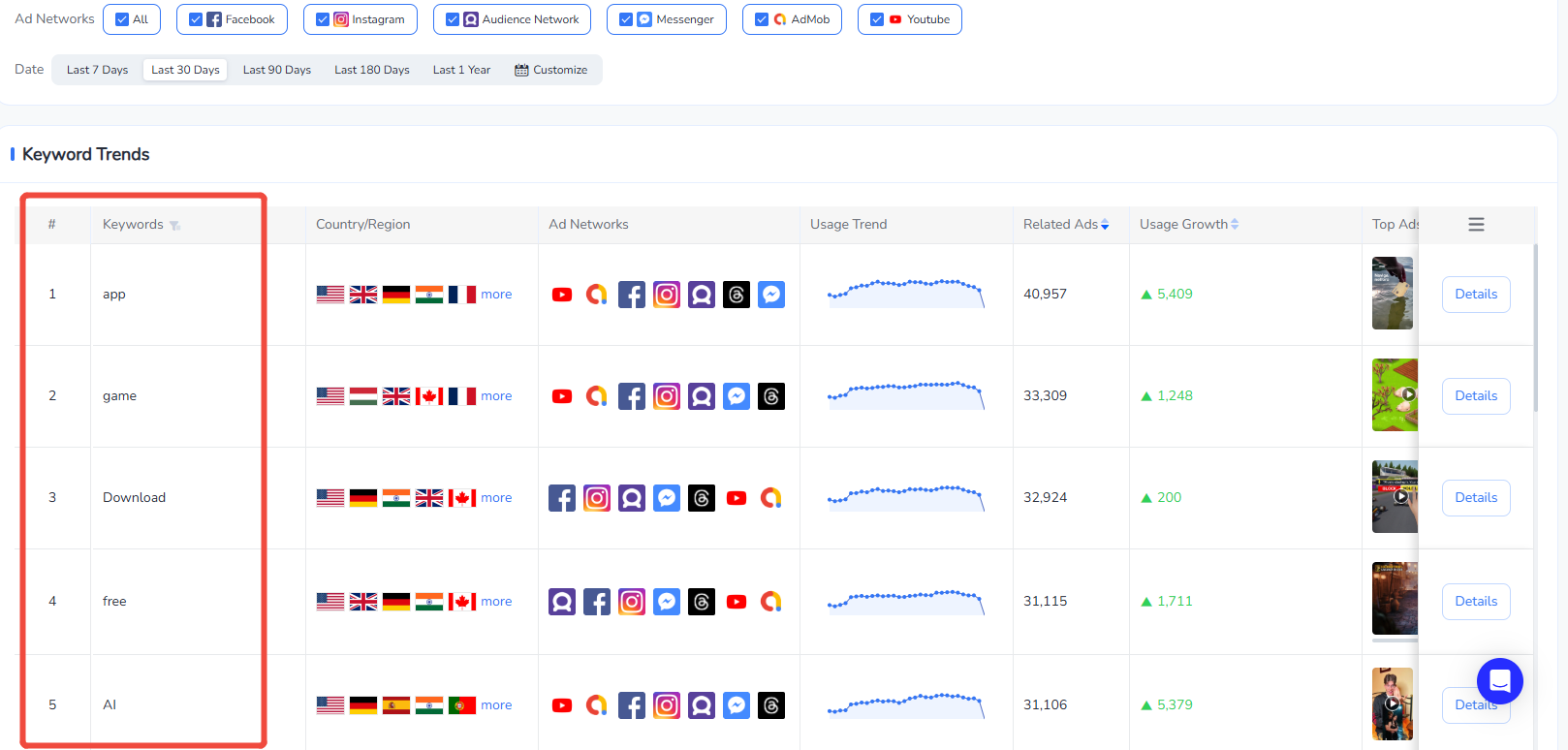
In just three weeks, ad ROI improved by 32%.
Previously, the team only tracked ratings to gauge user sentiment.
FoxData’s AI Review Summary transformed reviews into structured emotion and theme data, producing measurable insights:
As a result, the team prioritized “auto-sync” and “collaboration sharing” in both upcoming ASO copy and product roadmap decisions.
This not only strengthened their ASO messaging but also informed the next iteration of product development.
When expanding globally, the team discovered that search patterns varied significantly across markets.
Using FoxData’s new Global Overview tool, they found:
FoxData's Global Overview ASO Keywords feature page
Based on these insights, they implemented localized strategies:
Results:
The transformation marked a shift from data tracking to data-driven decision-making.
This collaboration delivered three key mindset upgrades:
In a fiercely competitive productivity app market, the team no longer relied on fleeting trends—they grew through structured, data-based iteration.
This productivity app rewrote its trajectory with a single “data health check”—
Transforming guesswork in metadata into insights about what users truly value;
Turning blind ad spending into a unified ASO + ad synergy;
Their breakthrough began with a FoxData ASO Diagnosis.
If your app is facing “stagnant downloads, unclear ad results, or poor ranking progress,”
start where they did—with a systematic growth diagnosis.
Let FoxData show you, through real data, what to do next.
👉 Start your free FoxData trial today and make every growth decision verifiable.
FoxData — Turning Data into Predictable Growth.
© 2020-2026 FoxData. All Rights Reserved.