





Explore More Possibilities for Your Business
Full-cycle scenario construction to meet your needs from App research, development, and release to operation.
Ready for your soaring growth
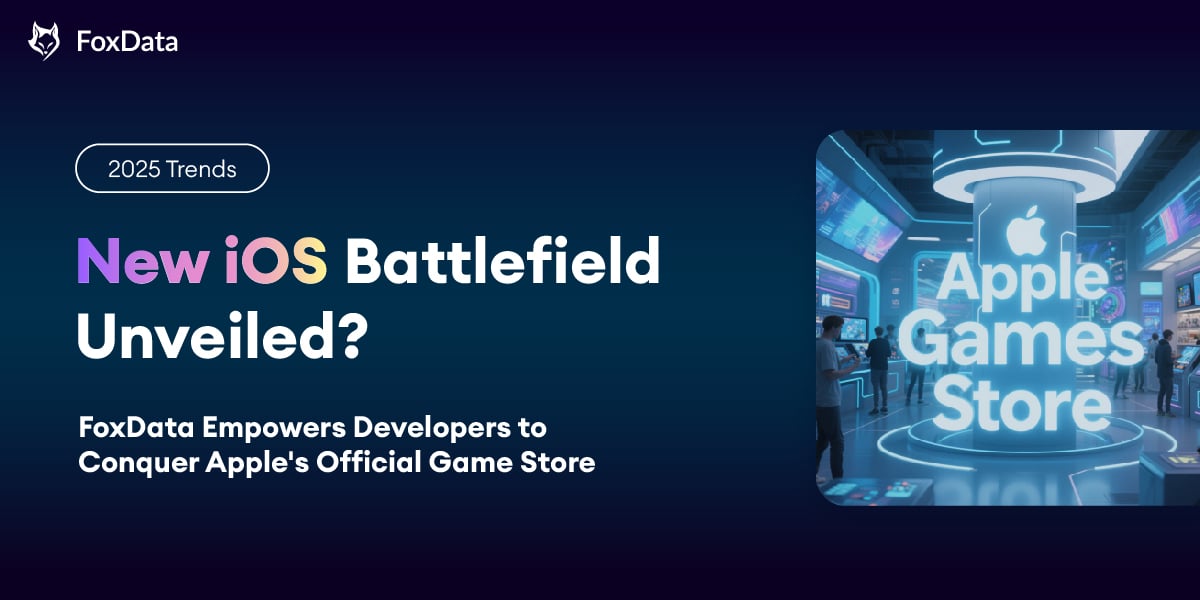
Apple is reportedly set to launch a pre-installed "Games App" at the upcoming WWDC (2025), according to Bloomberg. This app will integrate leaderboards, achievements, social features, and game recommendations, and is being called an "Apple-branded game store." This launch is a key strategic move for Apple amidst pressure from the EU regarding third-party app stores.
In a context of tightening global regulations and platform rule changes, this new "official game channel" could shift player attention, alter content recommendation algorithms, and rewrite game exposure methods. For game developers and those expanding globally, a race to adapt to these new channels and reallocate traffic is quietly beginning.
How should developers prepare for this systemic shift? FoxData offers a comprehensive, data-driven approach, from trend analysis and asset adaptation to channel deployment and user management, helping companies gain an early advantage in this new ecosystem.
Based on current information, this "Games App" is essentially a lightweight "iOS game platform entry point + advertising platform," even though it's presented as an achievement center and editorial recommendation aggregator. This approach is similar to the "game centers" long operated by Android manufacturers in China, which integrate game downloads, rankings, content distribution, and social interaction into a system-level app.
Its core value lies in three areas:
For game companies, this could become another "arena."
New platform = New traffic logic + New deployment strategies + New asset presentation + New user behavior patterns. FoxData will be a crucial tool for game companies to clarify these strategies.
Apple's move to create a new game store suggests a fundamental shift away from the existing traffic mechanisms primarily driven by App Store search rankings and editorial recommendations.
Especially with the platform actively integrating specific content entry points like "leaderboards," "achievements systems," and "subscription recommendations," developers must begin to monitor how these trend changes impact player decision-making paths.
In this context, manufacturers need to establish a "real-time data sensitivity mechanism," focusing on the following three key signals of change:
New game entry points may disrupt the traditional user behavior path of "App Store keyword search — view rankings — enter detail page." It's more like a "theme-based content aggregation platform" where users can browse through tags, recommendations, topics, or event formats.
Therefore, developers can focus on tracking the following indicators:
If Apple designs an independent ranking system for the new platform and introduces mechanisms like "editorial recommendations," "special zone rankings," and "friends' most played," this will give rise to new exposure and distribution logic, not limited to traditional top-grossing/free charts.
Development teams need to monitor "ranking methods," "ranking update frequency," and "correlation between ranking and conversion." For example:
Apple has been strengthening its localization operations, and this "game app" is also likely to reflect strong regional distribution differences in the future. From a multi-regional perspective, there are also significant differences in the acceptance of this "guided discovery content" in different countries.
Manufacturers can focus on analyzing:
At these inflection points, established data platforms like FoxData offer features such as market heat tracking, keyword trend analysis, ranking tracking, and user sentiment analysis. These tools provide "early warning signals" and "simulated analysis" before a product launch, enabling strategic preparation.
However, the crucial factor is whether companies establish a "data perception system based on real market feedback" from this point forward. This will be key to successfully navigating the iOS ecosystem's transformation.
We are in an era where decisions cannot solely rely on experience.
Once the new platform's traffic distribution mechanism is established, it will inevitably lead to the failure of old placement algorithms and a decline in creative CTR. Therefore, early adaptation is crucial for companies to "reduce costs and increase efficiency" during the chaotic period.
FoxData's Meta Ad Creatives can leverage ranking data and click feedback to identify image elements that align with "Apple's official preferences."
Our analysis suggests:
The FoxData Competitor module closely monitors the latest advertising strategies of top-tier developers. When they first enter a new game store and adjust their strategies, such as launching limited-time events to distribute rewards, FoxData's Timeline feature will update these actions in real-time and assist in analyzing their ROI impact.
Leveraging FoxData's user review and rating analysis capabilities, developers can continuously refine game content packaging:
FoxData's Comparison by Country/Region model enables strategic planning for initial "test market" ad placement regions.
As Apple Arcade becomes a key promotional product (integrated with Game Hub), the subscription model will impact the user LTV model. If users transition from one-time payments to monthly subscriptions:
FoxData can delineate different subscriber profiles based on retention, payment pathways, and interaction behaviors.
Focus on "renewal alerts" or "key churn points" (e.g., Day 14 active breakpoint)
The emergence of Apple's "Game Store" is undoubtedly the first "deployment" under the platform's ecological restructuring. Top-tier manufacturers will quickly adapt and seize traffic valleys; ordinary manufacturers who fail to respond in time will fall into the predicament of declining conversion efficiency, failing material performance, and rising user acquisition costs.
However, in this new game, developers with a data hub like FoxData can sense the wind direction, segment users, and adapt materials the fastest. They can also complete strategy previews and channel planning before the new traffic mechanism is established.
Ultimately, faster than change is the perception of trends. Deeper than adjustment is the understanding of data. FoxData is your radar and engine to the new ecosystem.
📚 Recommended reading:
© 2020-2026 FoxData. All Rights Reserved.