



Explore More Possibilities for Your Business
Full-cycle scenario construction to meet your needs from App research, development, and release to operation.
Ready for your soaring growth
The mobile app market is bigger and more competitive than ever. It is indicated that 149 billion apps and games were downloaded globally in 2025. At the same time, TechCrunch reports that consumer spending on mobile apps climbed 21.6% in 2025, reaching an estimated $155.8 billion. With millions of apps competing for limited user attention, the teams that win are the ones that act on the right data, fast.
That is exactly where app store data APIs come in.
An app store data API gives your team programmatic access to real-time intelligence. Think keyword rankings, category charts, ratings, reviews, competitor metadata, and download estimates, all available without manual scraping or guesswork. For product managers, marketers, UA managers, and research analysts, this kind of structured data access changes how decisions get made.
This article breaks down the most valuable, actionable use cases for app store data APIs. Whether you are building internal dashboards, running competitor analysis, or powering your ASO workflow, there is a strong use case here for your team.
Most teams still rely on fragmented data. A marketer exports a CSV from one tool. A product manager screenshots a competitor's ranking. A researcher manually checks store listings across regions.
This approach is slow, inconsistent, and hard to scale.
App store data APIs solve this at the root. They allow teams to pull structured, normalized data directly into their workflows, at scale.
According to Apple's developer documentation, the App Store Connect API now provides access to over 50 analytics report types, covering everything from engagement metrics to in-app purchase performance. That is a significant expansion of what teams can work with, programmatically.
The question is no longer whether you need this data. The question is how you put it to work.
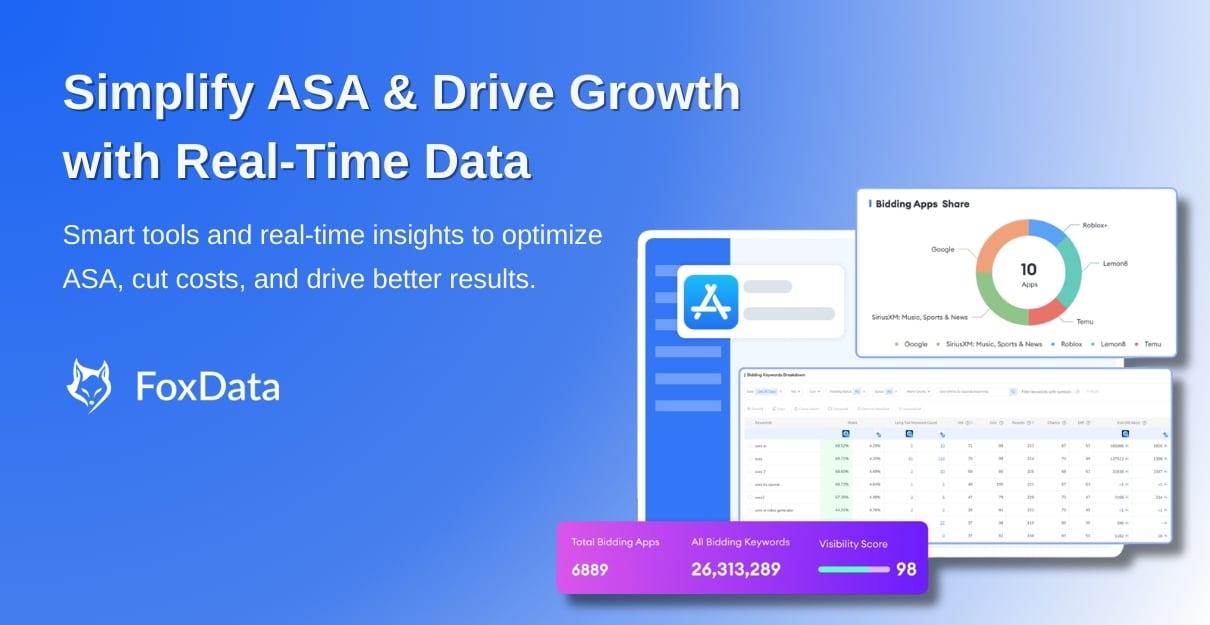
Discover keyword opportunities, monitor competitors, and improve campaign performance using FoxData’s ASA analytics tools.
Product managers need to understand how their app stacks up against alternatives. Not just in terms of features, but in terms of store presence, user sentiment, and discoverability.
With a mobile app analytics API, your product team can:
Track competitor app metadata in real time.
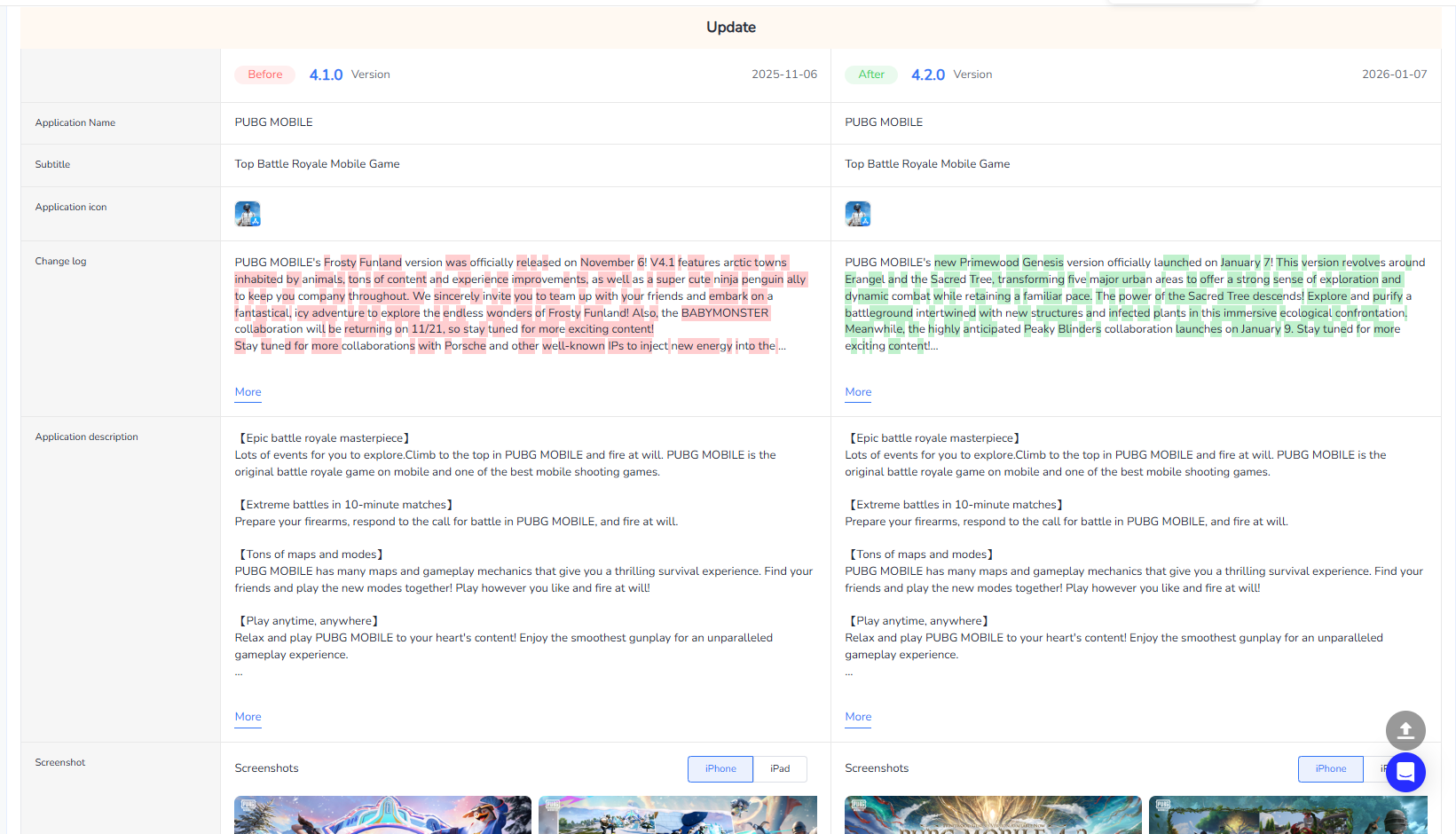
Monitor changes to competitor titles, descriptions, screenshots, and categories across regions. When a competitor updates their store listing, it is often a signal they are testing new messaging or targeting a new audience. Catching this early gives your team a head start.
Benchmark ratings and reviews at scale.
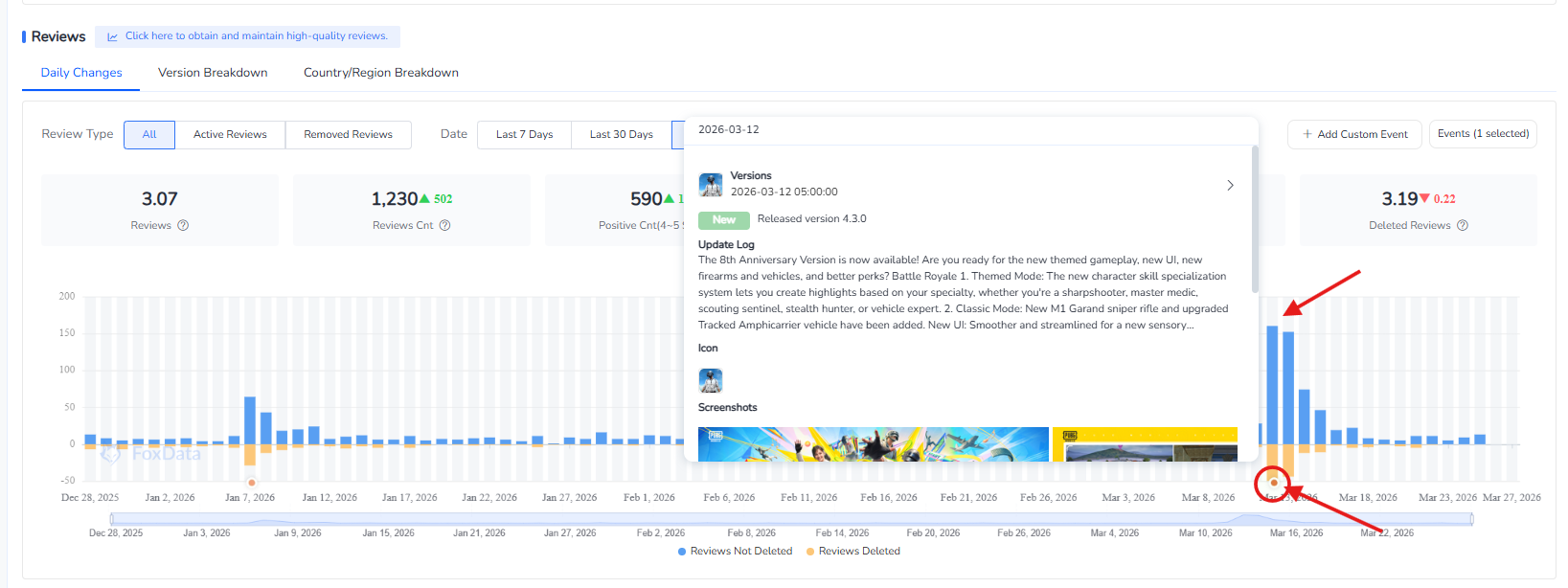
Manually reading reviews takes hours. An app market intelligence API can surface rating trends, keyword themes in negative reviews, and sentiment shifts across app versions, automatically. Product managers can connect review data directly to version releases. Example of how review ratings increase after a version update.
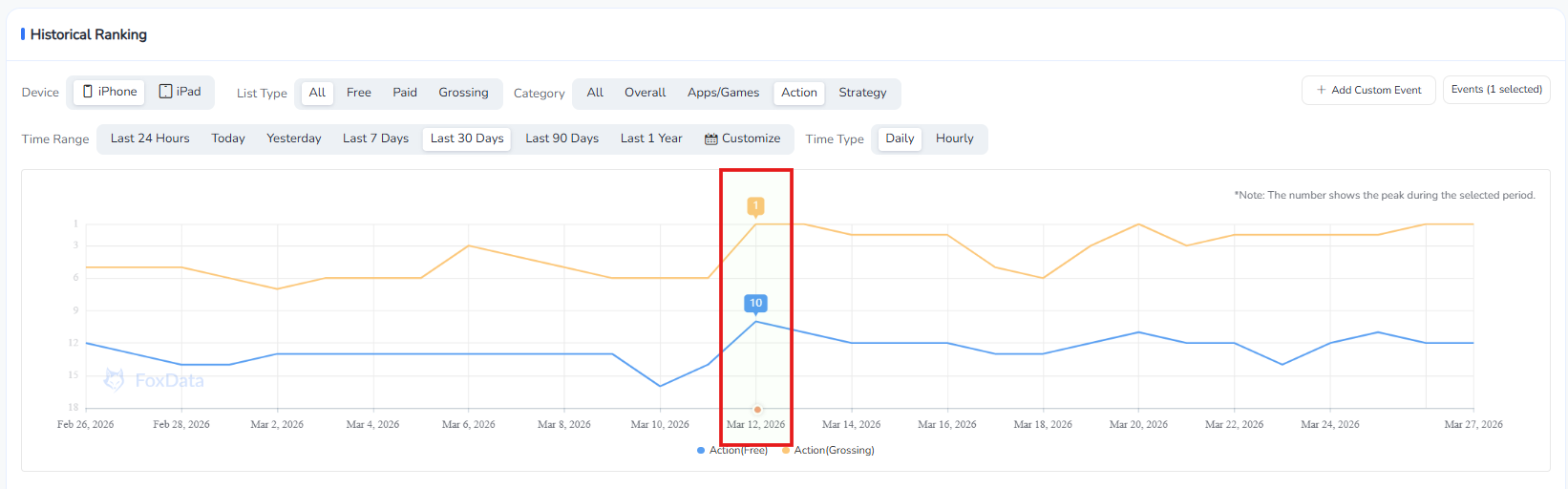
Monitor category rankings to measure feature impact. When you ship a major update, does your ranking improve? By pulling category chart data through an API, product teams can correlate product decisions with actual store performance, not just in-app analytics. Example of how a mobile app peaked in ranking after an update.
TechCrunch reports that while download volumes have declined for five consecutive years, consumer spending on non-game apps surged 33.9% year-over-year in 2025.
That tells you one thing clearly: the apps that are winning are not winning on volume alone. They are winning on insight, targeting, and store execution. Teams without structured data pipelines are already falling behind.
For marketers, app store data APIs are the engine behind scalable ASO and competitive advertising intelligence.
Keyword tracking across multiple markets. ASO is not a one-time task. Rankings shift daily. A mobile game analytics API or general app analytics API allows marketing teams to track keyword positions across countries and storefronts continuously. You can set up automated reports that flag drops before they affect installs.
Competitive keyword gap analysis. By pulling keyword data for competing apps, your marketing team can identify terms where competitors rank but you do not. This creates a clear, prioritized list of ASO opportunities.
Creative and metadata A/B test monitoring. When you run a Custom Product Page test or update your icon, you need data to evaluate results. By integrating app store data through an API, marketing teams can pull impression, tap-through, and conversion data into their own reporting systems, alongside spend data from UA campaigns.
UA campaign targeting refinement. User acquisition managers can use category and keyword performance data to refine audience segments. If a keyword is surging in search volume in a particular market, that is a signal to increase ad spend or localize your creative for that region.
For FoxData users, the app store data API provides normalized, market-ready data for all of these workflows, without the need to build and maintain custom scrapers.
Whether you are a game publisher, a VC analyst, or an internal strategy team, app store data APIs unlock structured market research at a scale that was previously only possible for large enterprises.
Market entry research. Before entering a new category or geography, research teams can pull category chart data, top app rankings, download estimates, and rating distributions to assess the competitive landscape objectively.
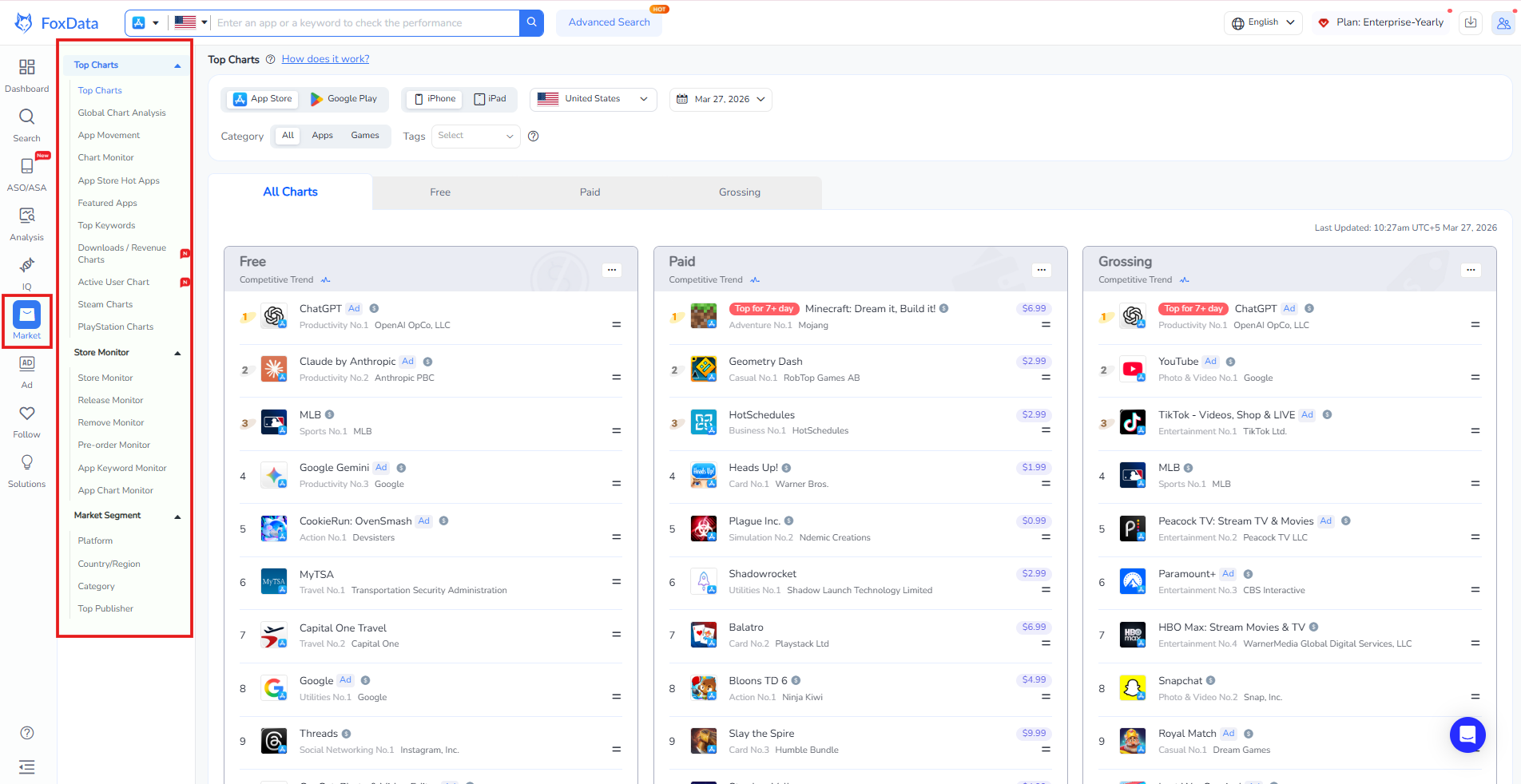
Trend detection. By monitoring keyword search volume trends and ranking movements across thousands of apps simultaneously, research teams can identify emerging categories, rising competitors, and market saturation signals early.
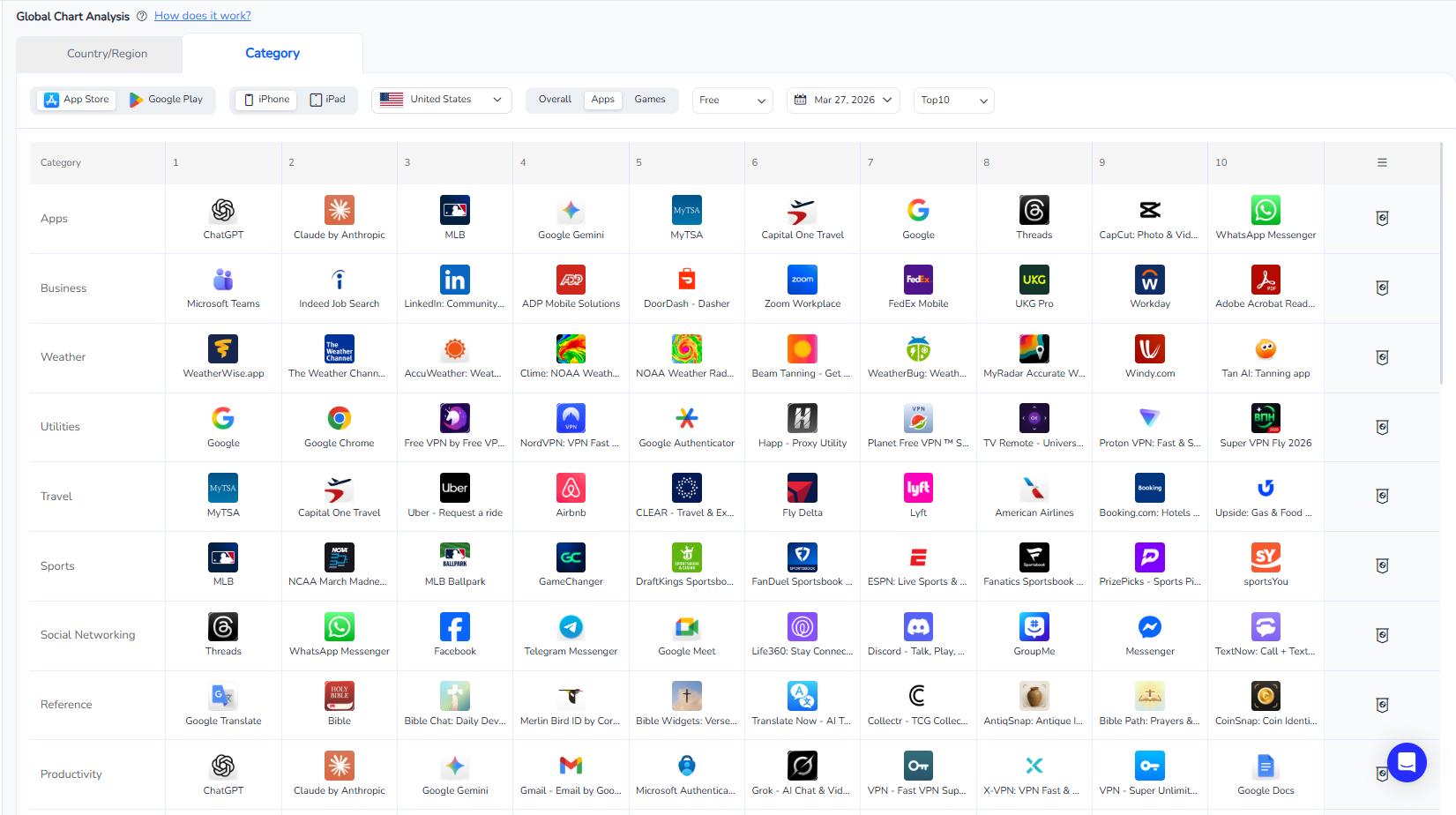
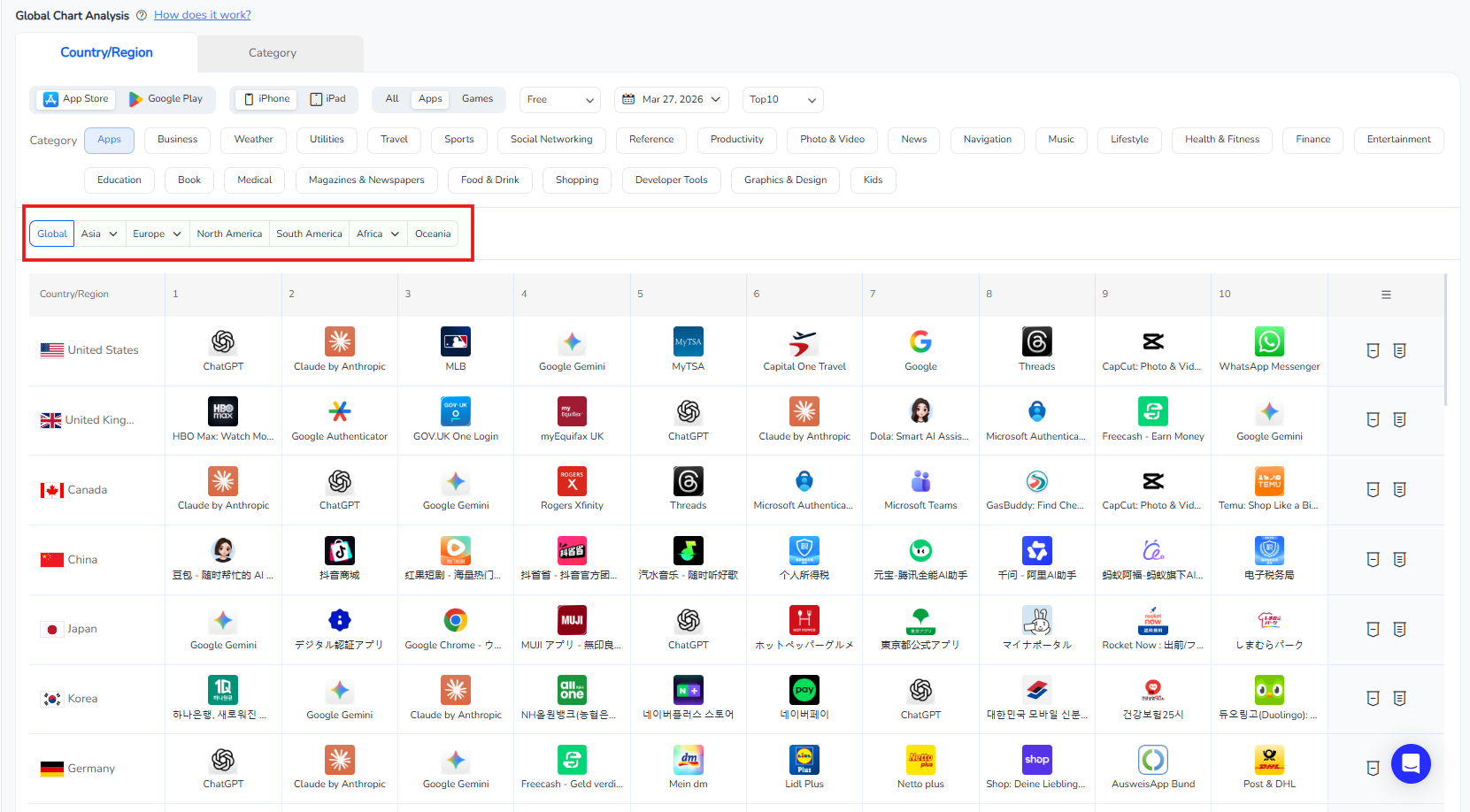
Longitudinal benchmarking. Historical data from an ASO data API allows teams to track how an app or category has evolved over time. This is invaluable for strategic planning, investor reporting, and post-launch performance analysis.
Competitive landscape reports. Research teams can build automated weekly or monthly reports that pull the latest data across a defined competitor set, covering ratings, version updates, keyword coverage, and estimated download trends.
FoxData's mobile app analytics API is built specifically for product, marketing, and research teams that need reliable, structured app store intelligence at scale.
Here is how to get started in a practical way:
Step 1: Define your data needs by team. Before calling any endpoint, list the specific questions each team needs to answer. Product teams may need competitor metadata. Marketing teams may need keyword rankings. Research teams may need category chart data.
Step 2: Map those needs to available endpoints. FoxData's API covers keyword rankings, app metadata, ratings and reviews, category rankings, and download estimates across both the Apple App Store and Google Play.
Step 3: Build your data pipeline. Pull data into your internal database or data warehouse on a scheduled basis. Normalize it alongside your first-party analytics data for a complete view.
Step 4: Create automated reporting layers. Use your favorite BI tool (Looker, Tableau, Power BI, etc.) to build dashboards on top of this data. Set alerts for ranking drops, rating changes, or competitor metadata updates.
Step 5: Iterate based on what you find. Data is only valuable if it drives action. Establish a regular review cadence where teams present API-driven insights and connect them to upcoming decisions.
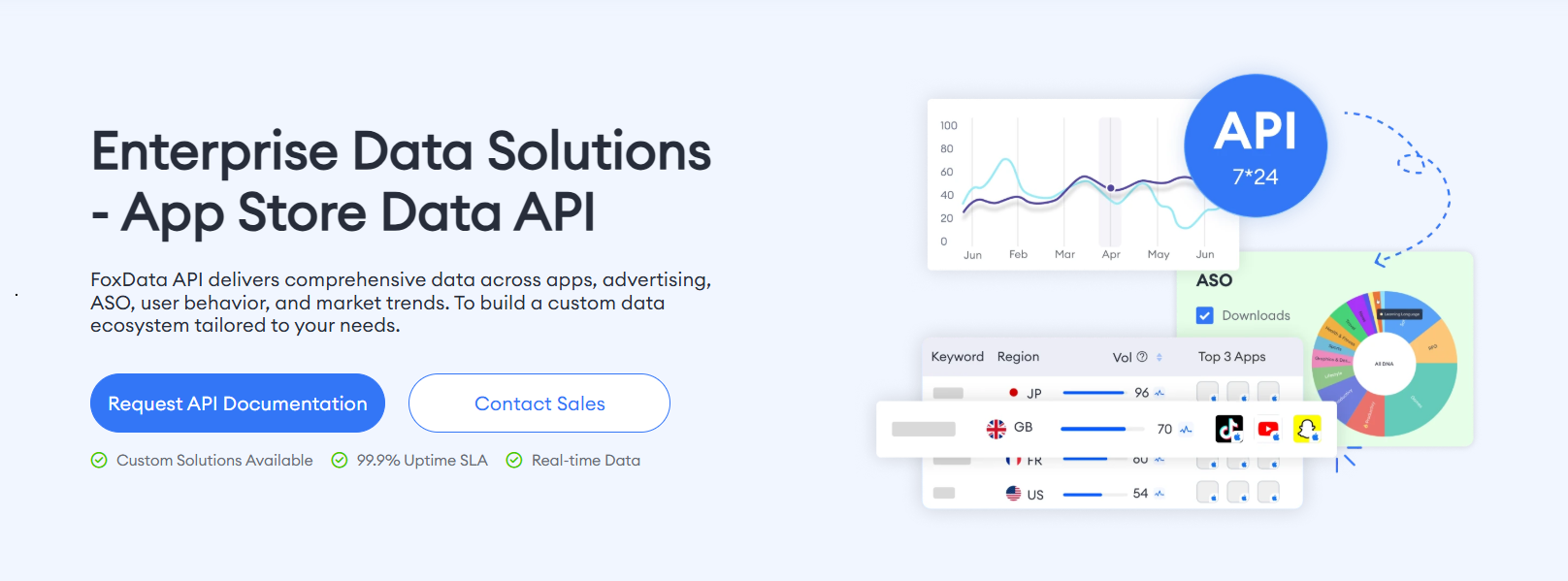
Teams that want a more integrated starting point can explore FoxData's App Data API directly, which is designed to support both developers and non-technical marketers.
Pulling too much data without a clear question. API access gives you access to enormous volumes of data. Pulling everything without a clear use case leads to analysis paralysis. Start with one specific question per team.
Ignoring regional differences. App store performance varies significantly by country. A keyword that ranks well in the US may not be relevant in Japan or Brazil. Always segment your data by market before drawing conclusions.
Treating API data as a replacement for user research. App store data tells you what is happening. It does not always tell you why. Combine API data with user interviews, session recordings, and in-app analytics for a complete picture.
Failing to track data over time. A single snapshot of rankings or ratings has limited value. The power of an app market intelligence API comes from tracking trends over weeks and months. Build time-series storage from day one.
Not cleaning or normalizing data before analysis. Raw API responses can include duplicates, null values, or inconsistent formats across markets. Invest in a lightweight data transformation layer before pushing data to your dashboards.
The teams winning in mobile today are not necessarily the ones with the biggest budgets. They are the ones making faster, smarter decisions, fueled by structured data.
An app store data API is the infrastructure that makes that possible. It removes the bottleneck of manual research, enables cross-team alignment around a single source of truth, and creates the foundation for scalable growth.
Whether your team is optimizing keywords, benchmarking competitors, planning a market entry, or evaluating a product roadmap, the use cases are clear, and the value is measurable.
Ready to put app store intelligence to work for your team? Explore FoxData's App Data API and see how leading mobile teams are turning real-time store data into a repeatable growth advantage.
What is an app store data API?
An app store data API is a programmatic interface that gives your team access to structured data from the Apple App Store and Google Play. This includes keyword rankings, app metadata, ratings, reviews, category charts, and download estimates. Teams use this data to power ASO workflows, competitor analysis, and market research.
Which teams benefit most from an app store data API?
Product managers, ASO specialists, user acquisition managers, and market research analysts all benefit directly. The API removes manual data collection and enables each team to build automated, scalable reporting on top of real-time app store intelligence.
How is an app store data API different from regular ASO tools?
Standard ASO tools provide data through a dashboard interface. An API gives you direct, programmatic access to that same data, so you can integrate it into your own systems, build custom dashboards, and combine it with first-party data. It is a better fit for teams that need flexibility and scale.
Can small teams or indie developers use an app store data API?
Yes. While larger publishers often use APIs to power enterprise-grade intelligence pipelines, smaller teams can start with targeted, focused API calls. Even a simple weekly keyword ranking report built on API data gives a competitive edge over teams that rely on manual checks.
Ready to make your app shine? Optimize your app's visibility with FoxData, the ultimate mobile app analytics and ASO tool! Maximize downloads and rankings by leveraging our powerful insights today.
App Growth & ASO Tools by FoxData
FoxData supports every stage of app growth with specialized ASO and app analytics tools, helping teams improve keyword visibility, user acquisition, and retention through reliable data.
🔍 Store Keyword Research Tools
Research high-intent keywords, search volume, and competition to strengthen your app store optimization strategy.
📈 App Store Keyword Tools
Analyze keyword rankings and performance across the Apple App Store and Google Play to refine ASO execution.
📊 ASO Monitoring Tools
Monitor keyword ranking changes, visibility trends, and ASO impact over time with continuous performance tracking.
👥 User Activity Monitoring Tools
Understand in-app user behavior, engagement, and retention with real-time user activity analytics.
Together, these tools form FoxData’s ASO analytics and app intelligence ecosystem, designed to help developers, marketers, and growth teams make data-driven decisions and scale sustainably.
Explore it today!
👉 Learn more about FoxData here | 👉 Book a demo with FoxData team today!
© 2020-2026 FoxData. All Rights Reserved.