



Explore More Possibilities for Your Business
Full-cycle scenario construction to meet your needs from App research, development, and release to operation.
Ready for your soaring growth
The mobile productivity space is one of the fastest-growing app categories on the market. According to Business of Apps, productivity apps generated over $32.5 billion in revenue in 2024, a 17.3% increase from the previous year. Then 2025 hit a new milestone entirely. For the first time globally, consumers spent more on non-gaming apps than on games.
According to TechCrunch, worldwide consumer app spending reached approximately $85 billion in 2025, a 21% year-over-year increase. Productivity was a key driver of that shift.
Yet despite this massive opportunity, many developers still enter the market without a clear category strategy. They build a solid app but pick the wrong niche. They launch with great features but poor visibility. They grow slowly and burn through their user acquisition budget.
Understanding the different productivity app categories is the first step toward avoiding those pitfalls. When you know where the demand is, you can build smarter. You can also position your app with precision and drive sustainable organic growth.
This guide breaks down the major productivity app categories. It also shows you how to use data and ASO tools to compete effectively in 2025.
Before diving into categories, let us talk about why category selection is a strategic decision, not just a classification choice.
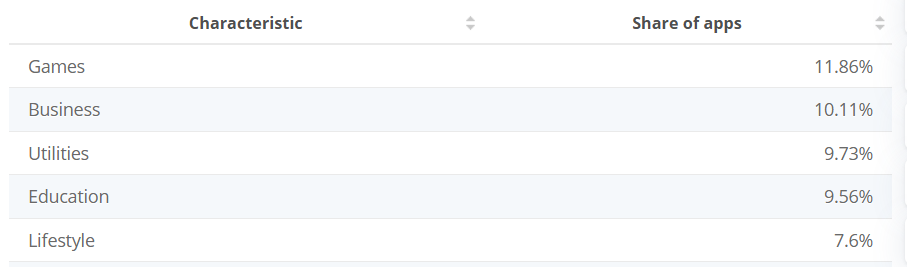
According to Statista, gaming apps hold the largest share of the Apple App Store, at roughly 12% of all available apps. Business apps rank second at around 10%. Utilities apps sit third at nearly 9.73%. Productivity apps are embedded across all three of these areas, making them especially competitive.
The challenge is visibility. Research shows that search optimization drives between 65% and 70% of all App Store downloads. That means your metadata, keyword strategy, and creative assets must be aligned to your chosen category from day one.
Category selection also affects how the algorithm surfaces your app to users. Apple and Google both use category signals to match apps to user queries. Choosing the wrong category even for a strong app will suppress your organic reach.
This is why category intelligence is foundational to any strong productivity app ASO strategy. Getting it right before you launch saves time, money, and wasted installs.
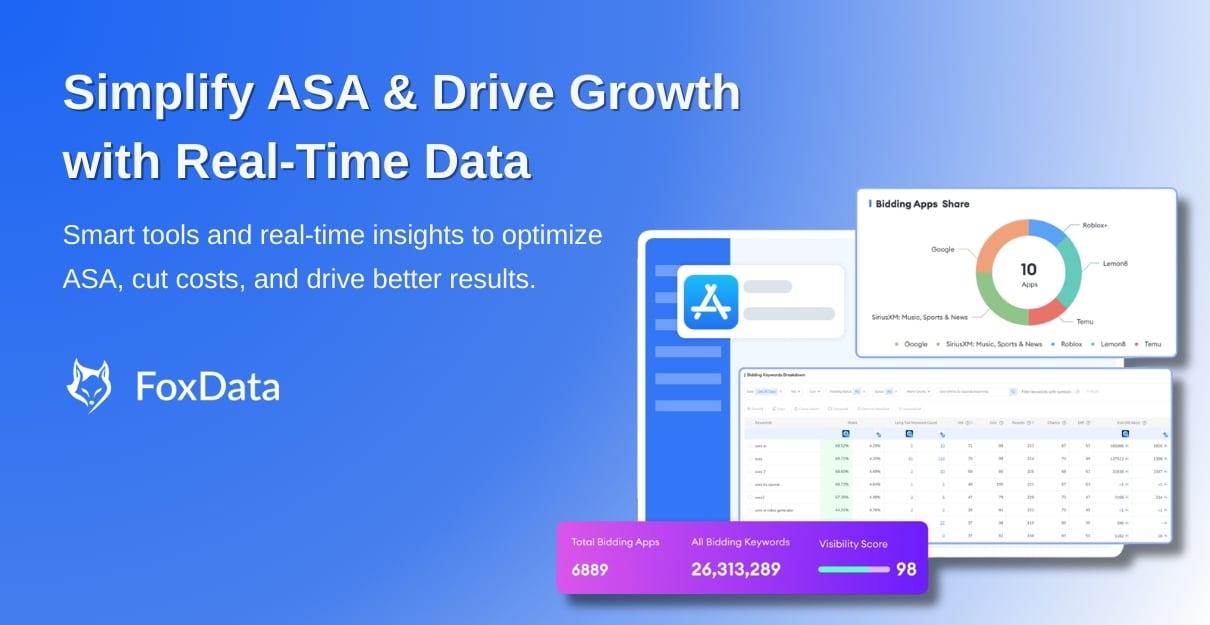
Discover keyword opportunities, monitor competitors, and improve campaign performance using FoxData’s ASA analytics tools.
Task management apps are the backbone of the productivity category. They help users create to-do lists, set deadlines, assign tasks, and track progress. Apps like Todoist, TickTick, and Microsoft To Do dominate this subcategory.

For developers and publishers, this is a highly competitive but high-value niche. Users in this segment are often professional, subscription-ready, and highly engaged. The challenge is differentiation. You need a specific angle. Think focus on a vertical like construction management, freelancer billing, or academic project tracking.
Keyword strategy here should target intent-based terms. Phrases like "team task tracker," "project deadline app," and "work organizer for teams" tend to perform well because they match what users are actually searching for.
Note-taking apps have evolved significantly. Apps like Notion, Obsidian, and GoodNotes now serve as full knowledge management systems. They attract power users who want to build personal wikis, organize research, and structure long-form content.
This category rewards strong visual ASO. Screenshots that demonstrate templates, linking capabilities, and multi-device sync tend to convert better. Your app icon should feel clean, modern, and minimal. This subcategory is increasingly popular with students, researchers, and content creators.
One trend worth noting: AI-driven note-taking and summarization is growing fast. According to TechCrunch, in-app purchase revenue for generative AI apps more than tripled to top $5 billion in 2025. Downloads of AI apps doubled year-over-year to reach 3.8 billion. Integrating AI features into note-taking apps is becoming table stakes.
Scheduling apps are among the most searched categories in the productivity space. Based on Fortune Business Insights data, the scheduling app market is growing at a CAGR of 16.1% from 2024 to 2032. That is one of the fastest growth rates in the entire productivity category. Meanwhile, the broader productivity apps market is valued at $14.46 billion in 2026, and is projected to reach $30.85 billion by 2034, underscoring just how much room this space has left to grow.
Apps like Calendly, Reclaim.ai, and Motion have carved out strong positions here. The user intent is very specific. People searching for scheduling apps know exactly what they need. This makes keyword targeting relatively straightforward.
This category bridges productivity and wellbeing. Apps like Forest, Habitica, and Streaks fall into this space. They help users build habits, stay focused, and reduce distraction.
This niche performs well with younger demographics. It also benefits from strong gamification elements, which can boost retention and session frequency. If you are a game developer looking to expand into productivity, this is a natural bridge category.
The ASO opportunity here is strong. Search terms like "focus timer," "habit tracker app," and "Pomodoro app" have consistent search volume with relatively moderate competition.
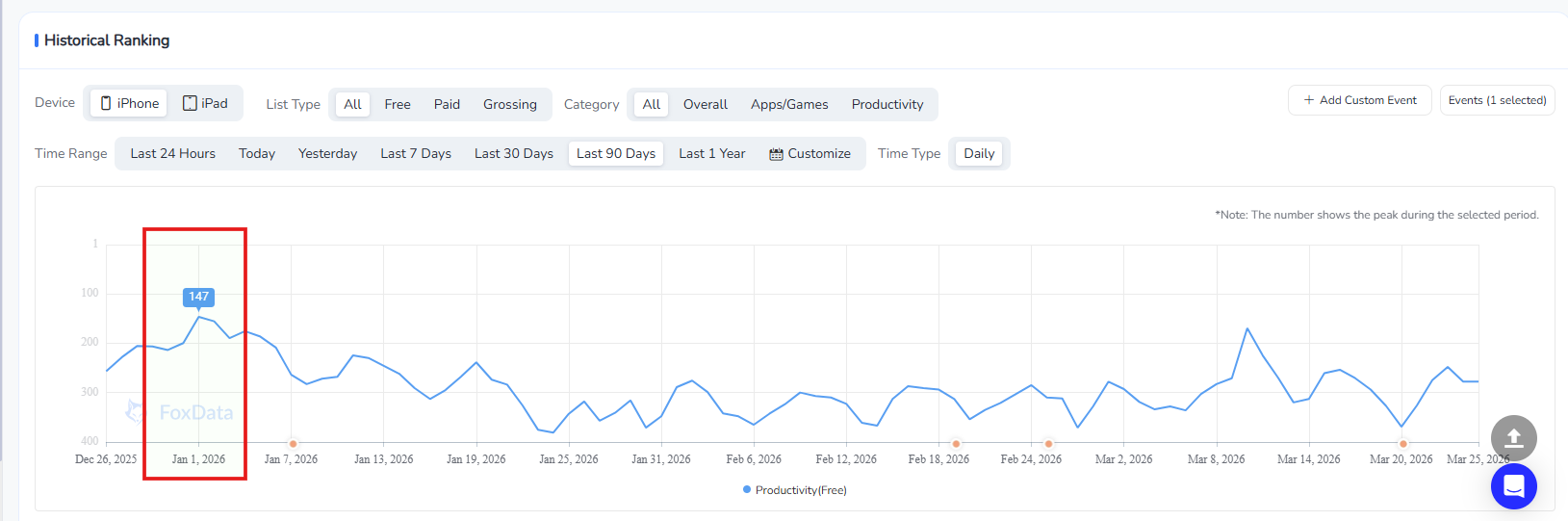
Seasonal trends around New Year's resolutions, exam seasons, and back-to-school periods can drive significant install spikes.
File management apps occupy a critical but often overlooked niche. Users need tools to organize, share, and retrieve documents across devices. Google Drive, Dropbox, and Microsoft OneDrive dominate at the top, but there is still room for vertical-specific or privacy-focused alternatives.
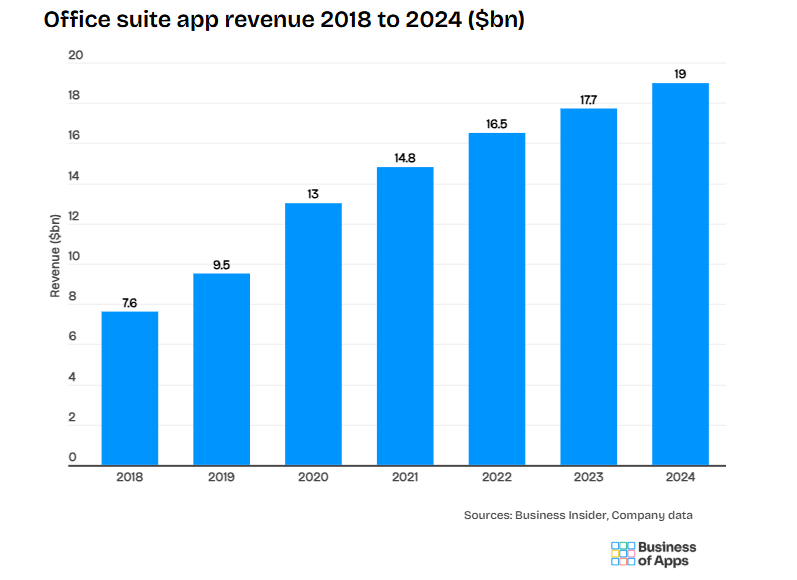
According to Business of Apps, office suite apps generated $19 billion in revenue in 2024, primarily from cloud storage solutions. The monetization model is clear and proven. Subscription revenue is predictable and retention tends to be high because switching costs are real.
New entrants should focus on underserved segments. Secure document storage for legal professionals, project file management for creative agencies, or encrypted file sharing for healthcare teams are all viable white spaces.
Communication apps are productivity apps too. Microsoft Teams, Slack, and Google Meet have each grown massively in the remote-work era. Microsoft Teams alone has over 300 million active users according to Business of Apps.
For independent developers, building a standalone competitor to these giants is not realistic. However, there are strong opportunities in building lightweight alternatives for specific industries. A communication app tailored to restaurant teams, construction sites, or remote educators can gain real traction with the right positioning.
ASO for this subcategory relies heavily on branded keyword defense and strong ratings. Communication apps with ratings below 4.2 stars lose ground quickly in search rankings.
Personal finance apps sit at the intersection of productivity and fintech. Apps like YNAB, Copilot, and Money Manager help users track spending, set budgets, and plan savings. This category has strong subscription economics and extremely loyal users.
Keyword research for finance productivity apps should prioritize high-intent search terms. Terms like "budget planner," "expense tracker," and "personal finance app" see consistent monthly searches.
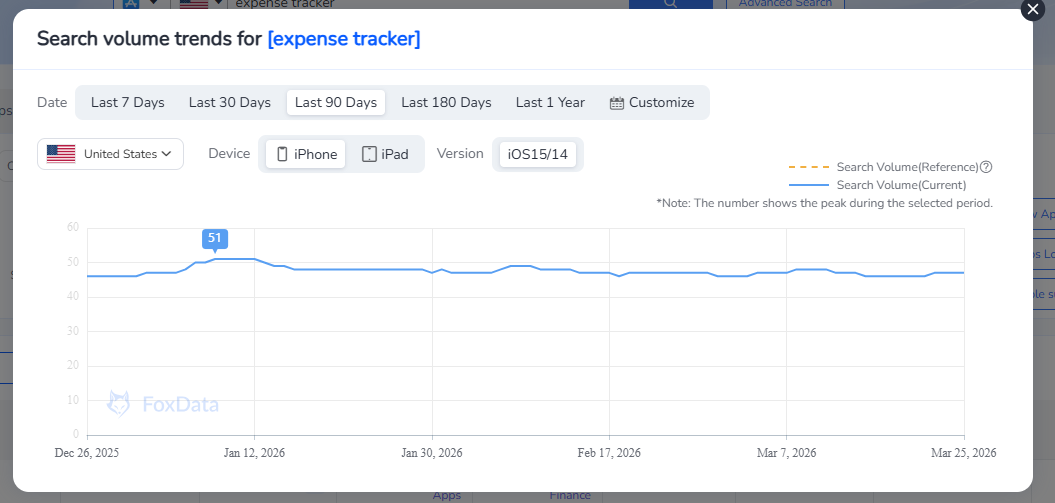
You can refine these by adding platform or demographic qualifiers to find lower-competition opportunities.
Knowing the categories is step one. Validating your chosen niche with real data is step two. Here is a tactical workflow that experienced ASO practitioners use before launching a productivity app.
Step 1: Analyze keyword demand in your target category. Look at monthly search volume for core terms in your niche. Identify which keywords have high search frequency but moderate competition. These are your priority targets.
Step 2: Audit the top competitors in that subcategory. Review their ratings, download estimates, review velocity, and keyword coverage. Identify gaps in their positioning. Where are users leaving negative reviews? What features do users consistently request?
Use FoxData's AI Review Summary for easy summarizations:
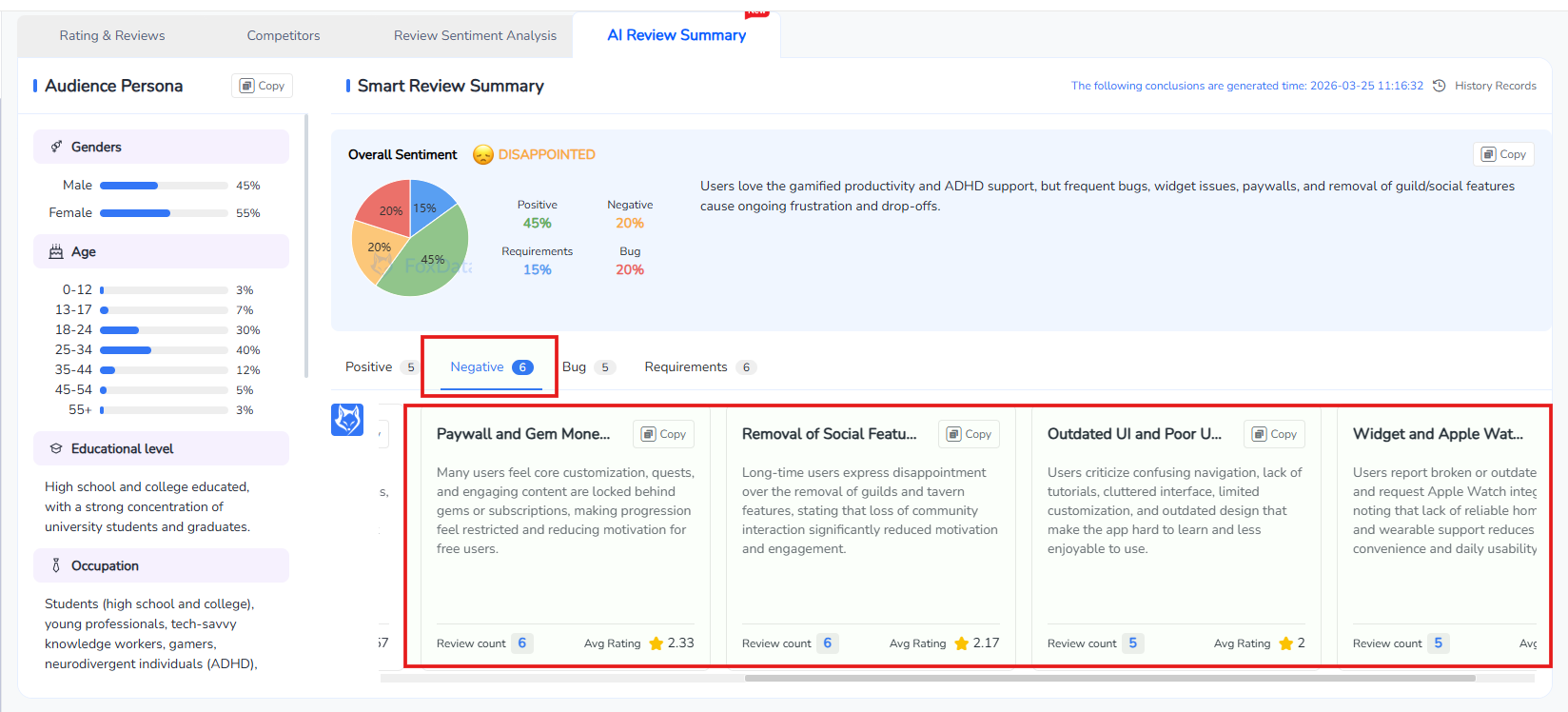
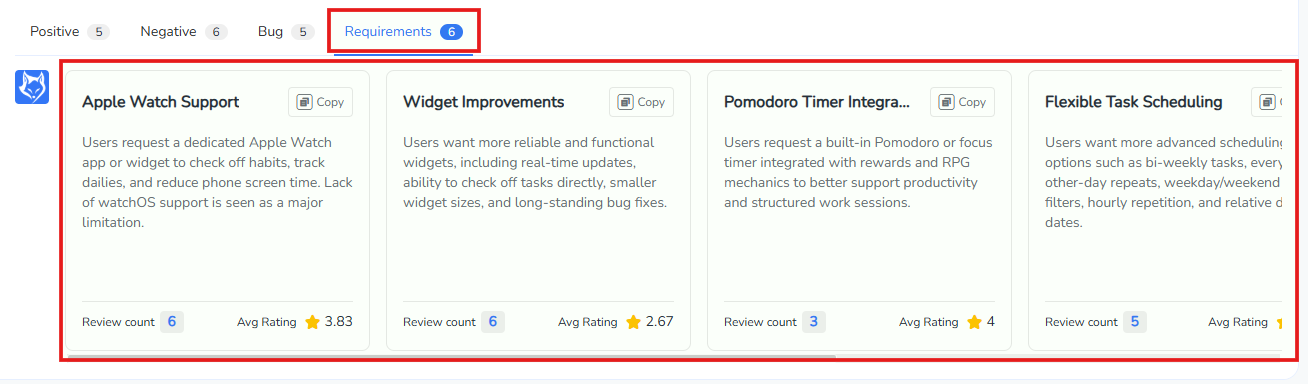
Step 3: Study app store creative trends. Look at what icons, screenshots, and preview videos the top-ranked apps use. Identify patterns and test your own creative against benchmarks.
Step 4: Monitor keyword rankings weekly. Your ranking for core search terms directly affects your organic download volume. Track movement consistently and respond to drops quickly.
Using a dedicated mobile productivity app analytics platform to do this research will save you hours compared to manual tracking. You want a single dashboard where you can see keyword rankings, competitor downloads, category performance, and creative benchmarks together.
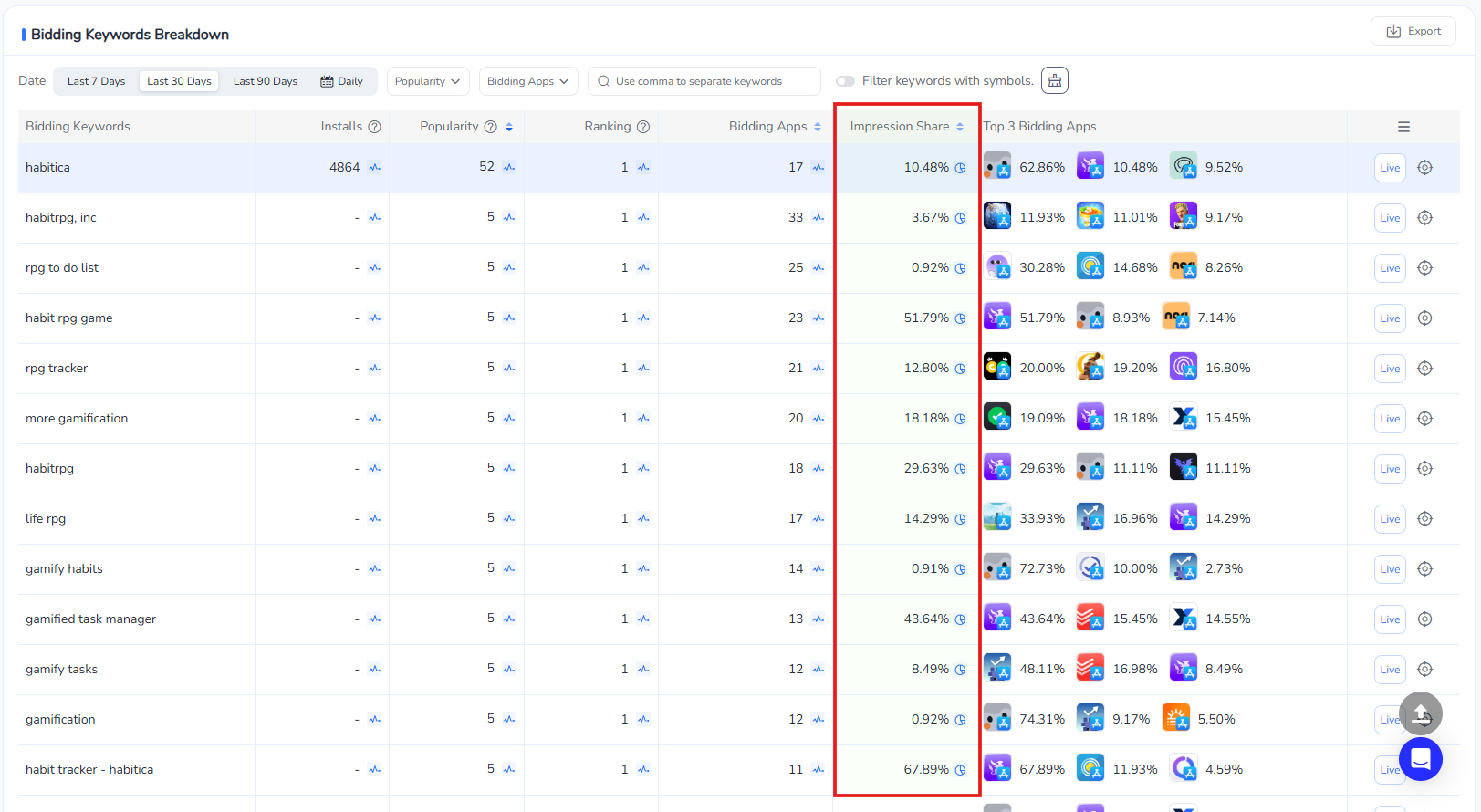
Apple Search Ads (ASA) data is also valuable here. Search Ads impression share for target keywords tells you how competitive a term is before you invest in paid traffic. Use that data to inform both your organic ASO and your paid UA strategy.
Even well-built productivity apps fail to grow when these mistakes are present.
1. Choosing a category that is too broad.
Publishing a generic "productivity" app without a clear niche makes it nearly impossible to rank. The algorithm and the user cannot identify what problem you solve. Pick one category, one user type, and one core job to be done.
2. Ignoring localization entirely.
The productivity app market is global. Apps with localized metadata consistently outperform English-only apps in non-English markets. Even basic keyword localization for Spanish, Japanese, German, or Portuguese can significantly expand your download volume.
3. Neglecting app ratings and reviews.
Research shows that apps with lower ratings see a direct drop in conversion rates from their store listings. A one-star drop can reduce conversion by as much as 30%. Prioritize in-app review prompts and respond to every negative review publicly.
4. Not updating metadata after launch.
ASO is not a one-time activity. Category trends shift. New competitors enter. Search behavior changes with seasons and global events. Review your keyword strategy every 30 to 60 days. Update your screenshots when competitors raise the bar.
5. Separating ASO from paid UA strategy.
Your Apple Search Ads data should inform your organic keyword list. Your top organic keywords should guide your paid bidding strategy. When these two channels are disconnected, you waste budget and miss high-intent traffic. A strong app store optimization solution for productivity apps bridges this gap effectively.
The productivity app market is large, fast-growing, and full of real opportunity. But opportunity is only as valuable as your ability to act on it with precision.
Knowing the right category is not enough on its own. You need to validate your niche with data, optimize your store listing for search intent, monitor competitor moves consistently, and align your paid and organic strategies.
Every decision you make about category, keywords, creatives, and monetization should come from actual market data, not guesswork.
Ready to build your next productivity app on a solid data foundation? Explore FoxData's productivity app analytics and ASO solutions to find the right niche, track your rankings, and grow with confidence.
Q1: Which productivity app category has the least competition for new developers?
Niche scheduling, focus and habit tracking, and vertical-specific file management apps tend to have lower top-chart competition compared to broad task managers or general office suites.
The key is pairing a focused subcategory with a specific user persona. Niche targeting allows you to rank for specific search terms more quickly and build a loyal base before expanding.
Q2: How does App Store category selection affect ASO rankings for productivity apps?
Category placement affects which charts your app can appear in and which browse sections it gets featured in. Choosing the correct primary and secondary categories ensures the algorithm surfaces your app to the right users. Misclassification reduces browse-driven traffic significantly, which accounts for 15% to 20% of total App Store downloads.
Q3: Should productivity apps invest more in ASO or Apple Search Ads?
Both channels work best when they are aligned. Organic ASO builds long-term visibility at zero marginal cost per install. Apple Search Ads captures high-intent users who are actively searching for a solution. For new apps with no ranking history, a combined approach accelerates visibility.
As organic rankings improve, UA spend can be optimized toward higher-value acquisition terms.
Q4: What data should I track to measure productivity app ASO performance?
Key metrics to monitor include keyword ranking position for core and long-tail terms, conversion rate on your store listing page, download velocity, rating velocity (review frequency over time), and competitor ranking movements. Tracking these together gives you a full picture of where to prioritize optimization efforts.
Ready to make your app shine? Optimize your app's visibility with FoxData, the ultimate ASO tool! Maximize downloads and rankings by leveraging our powerful insights today.
App Growth & ASO Tools by FoxData
FoxData supports every stage of app growth with specialized ASO and app analytics tools, helping teams improve keyword visibility, user acquisition, and retention through reliable data.
🔍 Store Keyword Research Tools
Research high-intent keywords, search volume, and competition to strengthen your app store optimization strategy.
📈 App Store Keyword Tools
Analyze keyword rankings and performance across the Apple App Store and Google Play to refine ASO execution.
📊 ASO Monitoring Tools
Monitor keyword ranking changes, visibility trends, and ASO impact over time with continuous performance tracking.
👥 User Activity Monitoring Tools
Understand in-app user behavior, engagement, and retention with real-time user activity analytics.
Together, these tools form FoxData’s ASO analytics and app intelligence ecosystem, designed to help developers, marketers, and growth teams make data-driven decisions and scale sustainably.
Explore it today!
👉 Learn more about FoxData here | 👉 Book a demo with FoxData team today!
© 2020-2026 FoxData. All Rights Reserved.