


Explore More Possibilities for Your Business
Full-cycle scenario construction to meet your needs from App research, development, and release to operation.
Ready for your soaring growth
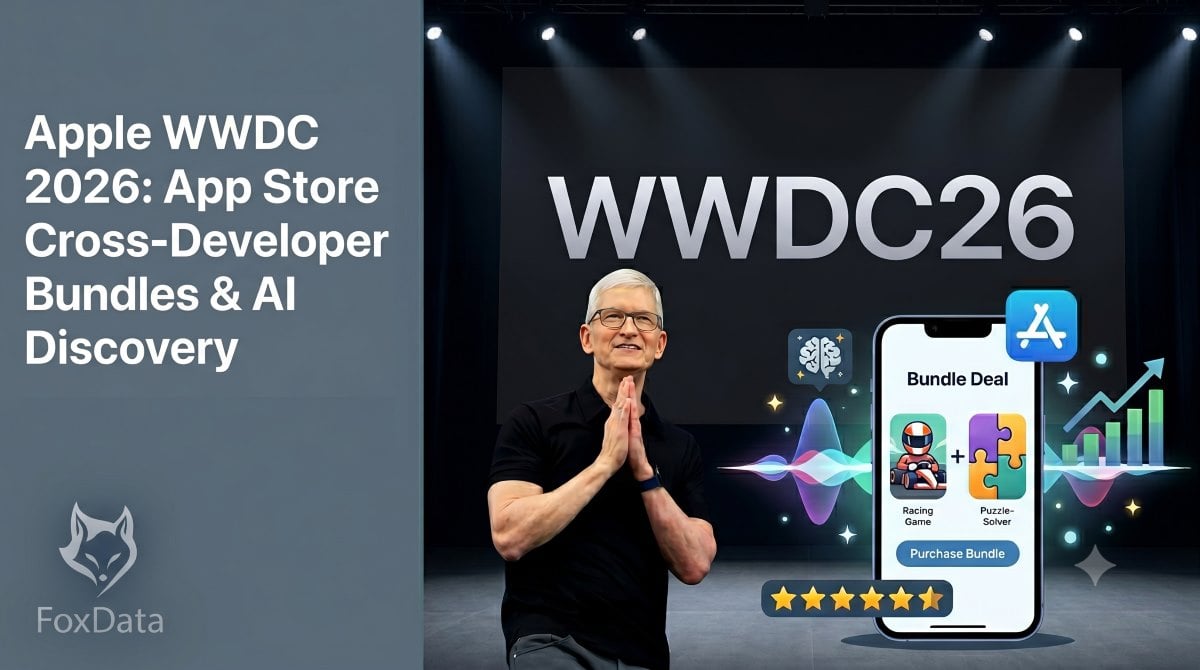
Apple just dropped the most consequential App Store business model update in a decade. At WWDC 2026 on June 8, the company unveiled cross-developer subscription bundles, group purchasing, enterprise volume licensing, and an on-device AI recommendation engine — a five-pillar overhaul that fundamentally rewrites how apps are sold, discovered, and retained on the world's most lucrative software marketplace.
For the 30 million registered iOS developers who generated $1.4 trillion in billings and sales through the App Store ecosystem in 2025, these changes aren't incremental — they're structural. Whether you run a two-person indie studio or manage a portfolio of 50+ apps, every dimension of your App Store strategy now needs revisiting. This article breaks down all six changes, maps them to actionable developer and ASO playbooks, and identifies the winners and losers of Apple's new commercial architecture.
Apple's WWDC 2026 App Store announcement Apple Newsroom is not a single feature drop — it's a coordinated release across six interdependent pillars. Together, they reshape the three core functions of the App Store: discovery, monetization, and retention. The last time Apple made a change of this magnitude was June 2016, when it introduced subscription pricing and revised its revenue share to 85/15 after the first year — a move that created the modern app economy. This WWDC 2026 update is arguably more ambitious, because it doesn't just tweak the existing model — it adds entirely new commercial formats that never existed on the platform The Next Web.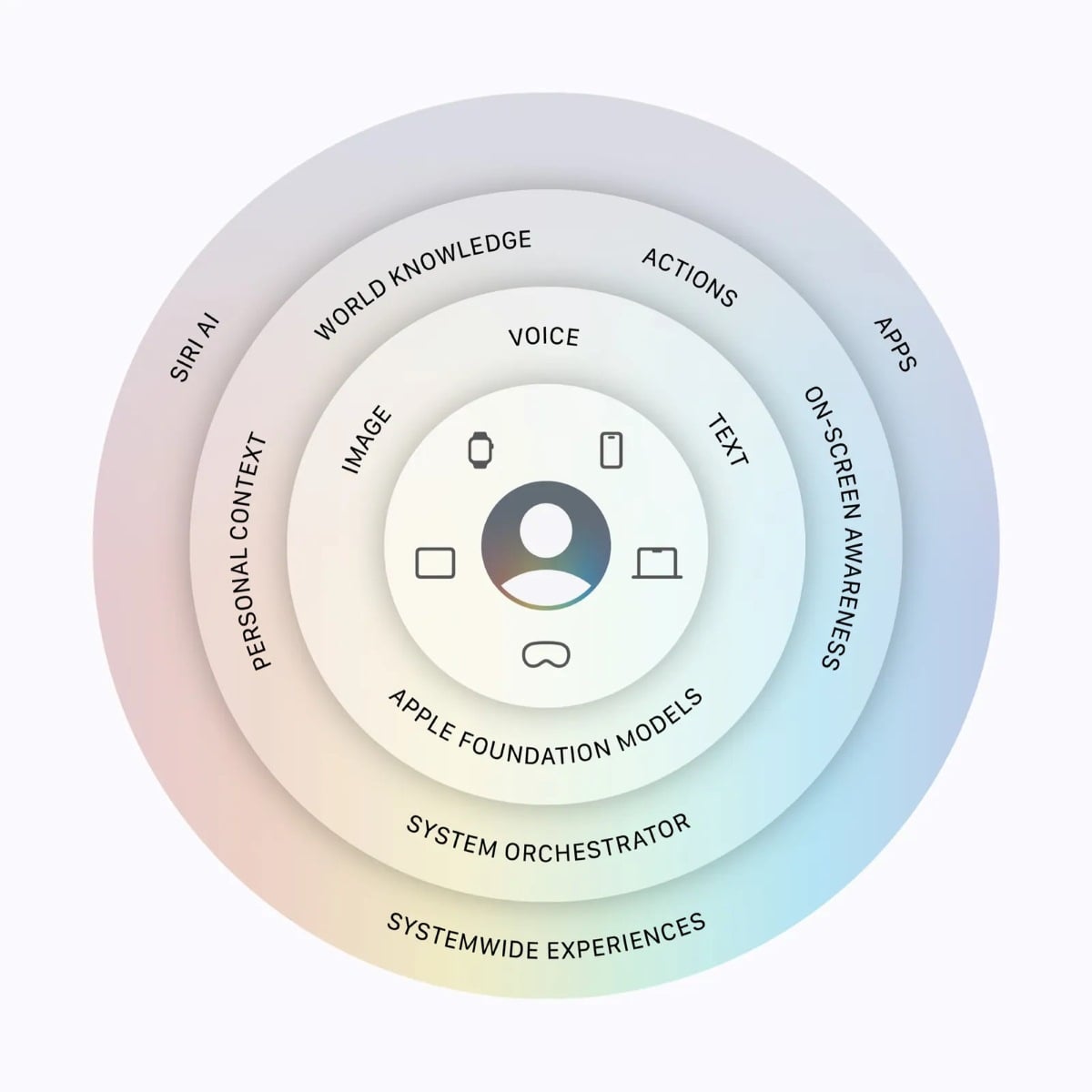
The six pillars are:
(1) Cross-Developer App Store Bundles and Suites, which allow independent developers to package subscriptions together at a discount;
(2) Group Subscriptions and Volume Purchasing through StoreKit 2, enabling multi-seat licensing for teams and enterprises;
(3) Personalized Collections and App Notes, an on-device AI recommendation system;
(4) Creative Assets and the Asset Library, which brings rich media to product pages and search results;
(5) Retention Messaging, giving developers tools to intervene during cancellation flows; and
(6) Streamlined App Review, including grouped IAP submissions and Apple Silicon-only Mac binaries.
Each pillar on its own would be a notable update. Together, they represent the most significant re-architecture of App Store commerce since the platform launched in 2008.
The headline feature for developers is cross-developer App Store Bundles — the ability for two or more independent developers to package their subscription apps together and sell them at a combined discount price. Previously, bundles were restricted to apps owned by a single developer account, which meant only large publishers with multi-app portfolios could offer bundled pricing. Under the new system, a fitness tracking app, a meditation app, and a meal-planning app — each from different developers — can form a single discounted subscription package. Apple handles the revenue distribution between participating developers, though the exact split mechanics have not yet been detailed Apple Newsroom.
Alongside Bundles, Apple introduced Suites — a related format where a developer (or group of developers) can create a subscription package containing apps that are not available as standalone purchases within the Suite. This is a fundamentally new pricing model for the App Store. Think of it as the digital equivalent of a cable TV package: you subscribe to the Suite and get access to everything inside, but you cannot pick and choose individual components à la carte. For indie developers, this opens an intriguing growth strategy — partnering with complementary apps to create exclusive value packages that cannot be replicated by individual purchases. For users, it means access to app collections at a lower total cost than subscribing to each app separately The Next Web.
The strategic significance of cross-developer bundles cannot be overstated. For the first time, small and mid-sized developers can compete with large publishers on pricing and bundling. A well-executed bundle partnership can function as a user-acquisition engine: each developer in the bundle exposes their subscriber base to the others, creating a network effect that drives down blended customer acquisition costs. For ASO teams running app analytics for indie developers, bundles will require new keyword strategies — optimizing for bundle-specific search terms and monitoring cross-developer conversion funnels.
Starting this week in US English, the App Store will introduce Personalized Collections — AI-generated recommendation groups that appear on the Apps, Games, and Search tabs, tailored to each user based on their installed apps and usage patterns. Examples Apple provided include collections like "Apps that pair well with your photography workflow" or "Games similar to what you've been playing." The recommendations are generated entirely on-device using local intelligence — no app usage data is sent to Apple's servers Apple Newsroom.
Alongside Collections, Apple is introducing App Notes — short editorial explanations attached to individual recommendations that tell users why a specific app was suggested. For example, a Note might read: "Recommended because you use three photo-editing apps and this one supports RAW format." This is a significant departure from the traditional App Store discovery model, which relied primarily on keyword search rankings, category browsing, and editorial curation. App Notes inject a layer of transparency into algorithmic recommendations that has historically been absent from both the App Store and Google Play.
For ASO practitioners, the implications are profound. The App Store's discovery mechanism is shifting from pure keyword-to-keyword matching toward behavioral-intelligence-driven recommendations. This means traditional app keyword analytics strategies need to expand to include semantic relevance and cross-app usage pattern analysis. Apps that appear in "also used by" clusters will benefit disproportionately from Personalized Collections, making competitor adjacency mapping a new ASO discipline.
Rich Media Everywhere: Product page headers and search results can now display video previews, animated content, and high-resolution imagery — a significant upgrade from static screenshots. These Creative Assets work with custom product pages and product page optimization (PPO), so developers can A/B test which visuals drive the highest conversion.
Centralized Asset Library: A single management hub in App Store Connect for all Creative Assets, app preview videos, and screenshots. Assets can be reused across custom product pages and In-App Events, eliminating redundant uploads. For teams managing multi-language marketing across dozens of locales, this is a workflow game-changer.
Independent Review for Assets: Creative Assets can be submitted for App Review independently of an app update — meaning marketing teams can refresh seasonal imagery, coordinate with Apple Ads campaigns, or launch promotional pushes without waiting for engineering to ship a new build. This decouples marketing velocity from development cycles.
Product Page Preview: App Store Connect now supports a preview mode showing how Creative Assets, descriptions, and screenshots render on iPhone and iPad across languages, in Dark Mode, and in both portrait and landscape orientations.
Featuring Nominations for Games: Game developers can now pitch their titles directly to the App Store editorial team for featuring in the Apple Games app, including plans for limited-time in-game offers or discounts. This creates a dedicated curation pipeline for games separate from the main App Store.
These Creative Assets capabilities fundamentally change how ASO impact analysis should be conducted. Conversion rate optimization now extends beyond screenshots and preview videos to include animation and video in search results — a completely new creative dimension with no historical benchmark data.
| Feature | Previous State | New Capability | Strategic Impact |
|---|---|---|---|
| Group Subscriptions | Single-user subscriptions only; no native multi-seat support | StoreKit 2-powered group purchases: one buyer purchases multiple seats, invites others via Apple-provided invite flow | Opens B2B, team, and family plan markets; each member uses their own Apple ID for personalization |
| Volume Purchasing | Limited to free apps and one-time paid apps via Apple Business/School Manager | Subscription volume purchasing through Apple Business Manager and Apple School Manager with MDM-integrated seat management | Positions App Store against Google Workspace and Microsoft 365 enterprise distribution |
| Retention Messaging | Developers had no in-flow tools during cancellation — users saw only Apple's standard cancellation confirmation | Developers can present targeted offers, feature highlights, or untried capabilities when users initiate cancellation | Direct churn-reduction lever; follows existing App Store commission structure |
| IAP Submission Bundling | Each In-App Purchase required a separate App Review submission | Multiple IAPs and related items can be grouped into a single unified submission | Reduces review friction for apps with complex monetization (games, SaaS) |
| Mac App Store Binaries | Required Intel + Apple Silicon universal binaries | Apple Silicon-only binaries now accepted; Intel support no longer mandatory | Reduces build complexity and binary size; reflects completed Apple Silicon transition |
Volume purchasing arrives this fall, with group purchases following in winter 2026. Retention Messaging is rolling out now to all developers in App Store Connect. Together, these features push the App Store into enterprise and team markets that Google and Microsoft have dominated for years — while simultaneously giving every developer a built-in churn-reduction toolkit tbreak.
For game developers and subscription-heavy apps, Retention Messaging is particularly significant. Apple has historically been cautious about allowing developers to communicate during the cancellation flow, concerned about user experience. This feature signals that Apple now views developer-led retention as aligned with platform interests — retained subscriptions benefit everyone in the ecosystem. Developers running mobile game analytics solutions should immediately begin designing cancellation-flow offers and messaging variants to test when the feature goes live.
Apple is rolling out these changes on a staggered schedule rather than as a single release:
Apple has not announced any changes to its commission structure in connection with these features. The existing 30%/15% (Small Business Program) rate applies to all new subscription formats, including cross-developer bundles and group purchases. Revenue distribution mechanics for cross-developer bundles — specifically how Apple's commission interacts with inter-developer revenue splits — have not yet been detailed Apple Newsroom.
Re-evaluate your subscription packaging immediately. Cross-developer bundles change the competitive landscape. If you're a single-app developer, start identifying complementary apps for potential bundle partnerships. The first movers in each app category will capture disproportionate bundle traffic, because Apple's editorial team will likely feature early cross-developer bundles prominently — the same pattern observed when Apple launched subscription pricing in 2016 and in-app events in 2021.
Build your Retention Messaging strategy now. The cancellation flow is the highest-leverage moment in the subscriber lifecycle. Design 2–3 message variants (discount offer, feature highlight, "you haven't tried X yet") and have them ready to deploy. The developers who test and optimize Retention Messaging in its first 90 days will build a structural retention advantage.
Audit your app's category classification. Apple's updated age rating questionnaire goes live in July, and apps with social-media-like features (user-generated content, social feeds) will be automatically sorted into the Social Media Time Allowance category. If your app gets miscategorized, parents using Screen Time will have a harder time allowing access — directly impacting your addressable audience.
Prepare Creative Assets for the iOS 27 launch window. The developers who have rich video, animation, and high-resolution assets live when Creative Assets surfaces go broad will capture early-adopter conversion gains. Remember: assets can now be submitted independently from app updates, so marketing teams can move without engineering dependencies.
Reconsider your Mac strategy. Apple Silicon-only binaries reduce build complexity. If you've been maintaining Intel support solely for Mac App Store compliance, you can now drop it — reducing CI costs and binary size without losing distribution.
Keyword strategy must evolve to include behavioral adjacency. Personalized Collections recommend apps based on usage patterns, not keyword matches. ASO teams should map their app's "co-usage graph" — which other apps do your users also have installed? — and optimize metadata to strengthen those semantic associations. Traditional keyword ranking remains important, but it is no longer the sole discovery vector.
Creative testing expands to a new dimension. Creative Assets introduce video and animation to search results and product page headers. This means conversion rate optimization (CRO) now has an entirely new variable class with no industry benchmarks. Run A/B tests comparing static screenshots vs. animated headers vs. video previews before your competitors do.
Bundle partnerships are an ASO opportunity. When your app joins a cross-developer bundle, your product page will receive traffic from bundle discovery surfaces and partner app cross-promotion. Optimize your product page to convert bundle-referred visitors — these users arrive with different intent than organic search visitors and may need different messaging.
Monitor the Personalized Collections rollout obsessively. The first apps to appear in high-traffic Collections will see a step-change in organic discovery. Track which of your competitors appear in which Collections, reverse-engineer the usage patterns that triggered those placements, and adjust your positioning accordingly.
Localization timelines just got tighter. Personalized Collections roll out in US English first, but additional languages are "coming soon." When Collections expand to new locales, the apps with fully localized metadata and Creative Assets in those languages will be best positioned to appear in region-specific recommendations.
For end users, the most visible changes will be Personalized Collections and cross-developer bundles. The Collections appearing on your Apps and Games tabs will evolve based on what you download and use — not based on what Apple wants to promote. Because the intelligence runs on-device, your app usage data never leaves your iPhone, addressing a privacy concern that has historically limited App Store personalization efforts.
Cross-developer bundles should translate to lower effective subscription costs. If you currently subscribe to a fitness app (9.99/ month), ameditationapp (7.99/month), and a recipe app (4.99/month), abundle that packages all three for 14.99/month delivers immediate savings. The trade-off is that bundles may create stickier subscription relationships — canceling one app means potentially losing access to the entire bundle, which raises the switching cost. This is by design: Apple and developers both benefit from higher retention, and the value proposition to consumers is lower per-app pricing.
For parents, the new Screen Time category-level controls — Social Media, Entertainment, Games, or Other — replace the impractical model of managing individual app restrictions. Starting in July, parents can set daily time allowances per category, and apps will be automatically classified based on developer-provided age rating information. This is a materially better parental control system than what existed before, though its effectiveness depends on accurate developer self-classification.
Personalized Collections and App Notes begin rolling out this week (June 8, 2026) in US English. Volume purchasing arrives in fall 2026, group purchases in winter 2026. Cross-developer bundles and suites are expected alongside the iOS 27 public release in September 2026. Retention Messaging and App Review changes are available now.
Apple has not yet published the detailed revenue distribution mechanics for cross-developer bundles. The existing App Store commission structure (30% standard / 15% Small Business Program) applies. How revenue is split between participating developers — and whether Apple takes its commission before or after the inter-developer split — remains to be clarified in updated App Store Connect documentation.
Personalized Collections works on any device running iOS 27, iPadOS 27, or macOS 27. The feature uses on-device intelligence and does not require an internet connection for recommendation generation, though downloading recommended apps obviously requires connectivity. Apple has confirmed the feature does not upload app usage data to its servers.
Google Play has offered multi-app subscriptions and some bundling capabilities, but cross-developer bundles are new to both platforms. Google Play's discovery system already incorporates behavioral signals more heavily than the traditional App Store, so Personalized Collections represents Apple catching up — and potentially surpassing — Google's recommendation quality through on-device processing. Volume purchasing through managed enterprise accounts has existed on Google Play for years; Apple's entry via Apple Business Manager closes that gap.
Prioritize three actions: (1) identify potential bundle partners in your app category and initiate conversations now — the first bundles will receive editorial featuring; (2) prepare 2–3 Retention Messaging variants before the feature goes live so you can test immediately; and (3) create Creative Assets (video, animation, high-res imagery) now so you're visible when those surfaces launch. Developers who act in June-July 2026 will capture early-adopter advantages that late movers cannot easily replicate.
Apple's WWDC 2026 App Store announcement is not a feature update — it's a platform re-architecture. Cross-developer bundles end the single-developer economic model that has defined the App Store since 2008. Personalized Collections shift discovery from keyword matching to behavioral intelligence. Creative Assets decouple marketing velocity from engineering release cycles. And group subscriptions plus volume purchasing push the App Store into enterprise territory it has never seriously contested. For the $1.4 trillion App Store developer ecosystem, these changes create new winners and new losers. The developers who adapt their pricing, bundling, ASO, and retention strategies in the next 90 days will be the winners. ASOWorld will publish a same-day breakdown when each feature goes live — bookmark this page for updates.
© 2020-2026 FoxData. All Rights Reserved.