



Explore More Possibilities for Your Business
Full-cycle scenario construction to meet your needs from App research, development, and release to operation.
Ready for your soaring growth
Earlier this year, FoxData reached an important milestone by achieving ISO 27001 certification—reinforcing our long-term commitment to information security, data protection, and enterprise-grade compliance. The timing is not incidental.
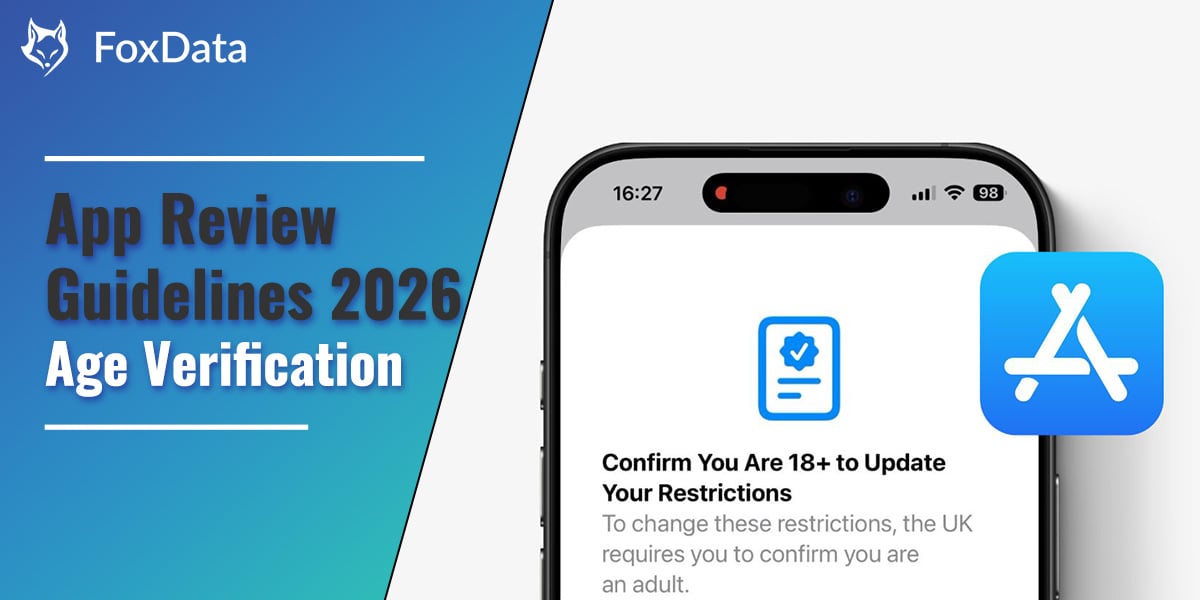
Across the global app ecosystem, compliance is no longer a background requirement. It is becoming a structural constraint on growth. Apple’s latest expansion of age verification and 18+ app restrictions makes that shift unmistakably clear.
In 2026, Apple is rolling out stricter age assurance mechanisms across multiple regions, fundamentally reshaping how apps are distributed, discovered, and monetized. For developers operating at scale, this is not just a regulatory update—it directly affects App Store visibility, conversion funnels, UA efficiency, and long-term ASO performance.
Apple’s updates are a response to a global wave of age-verification and child-protection legislation. Regulators are no longer satisfied with platform-level promises; they are demanding enforceable, technical controls.
Users are now blocked from downloading 18+ rated apps unless adulthood is verified at the system level.
New Apple accounts will soon share age category signals with apps, enabling stricter and more explicit compliance workflows.
The broader pattern is clear: regulation is becoming localized, enforceable and technical. Apple’s answer is to centralize age assurance within iOS itself—reducing privacy risk while tightening distribution control across the App Store.
At the core of Apple’s update is the Declared Age Range API, now in beta with expanded capabilities.
Rather than sharing sensitive personal data such as birthdates, Apple allows developers—subject to user or guardian consent—to access an age-category signal. This preserves Apple’s privacy-first stance while still giving developers the minimum information required to meet legal obligations.
The updated API now indicates:
For developers, this delivers clearer compliance signals—but also removes ambiguity. Gray areas that once allowed flexible interpretation are rapidly disappearing.

Discover how FoxData enhances data protection and security standards to keep your analytics safe and reliable.
Policy announcements only tell part of the story. The real impact becomes visible when you examine what is already happening across major App Store markets.
The U.S. remains the most critical market for global app growth. On the surface, recent removals appear scattered—affecting AI music tools, workplace networking apps, travel platforms, and even parenting utilities.
But a closer look reveals a consistent pattern. Apps featuring keywords such as “Live Chat,” “Video Chat,” and “Meet New Friends” are disproportionately affected. Any product enabling real-time interaction with strangers is now under heightened scrutiny.
📌 Key insight: Apple and regulators are no longer judging apps by category alone. Enforcement is increasingly driven by user behavior and risk exposure, especially where minors may be involved.
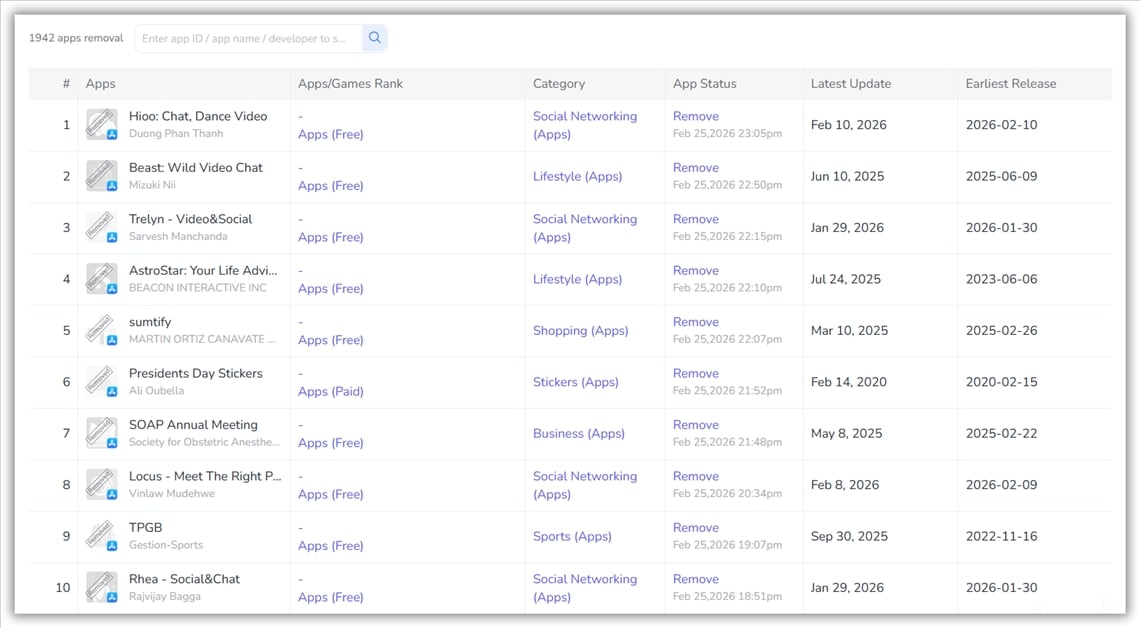
➡️ See the full list of U.S. apps recently removed
These markets reflect U.S. trends, but with an even stricter stance on anonymity. Apps built around anonymous chat or video interaction—such as “Aloha Live – Anonymous Chat” and “Xonder: Anonymous Chat & Vent”—are consistently flagged.
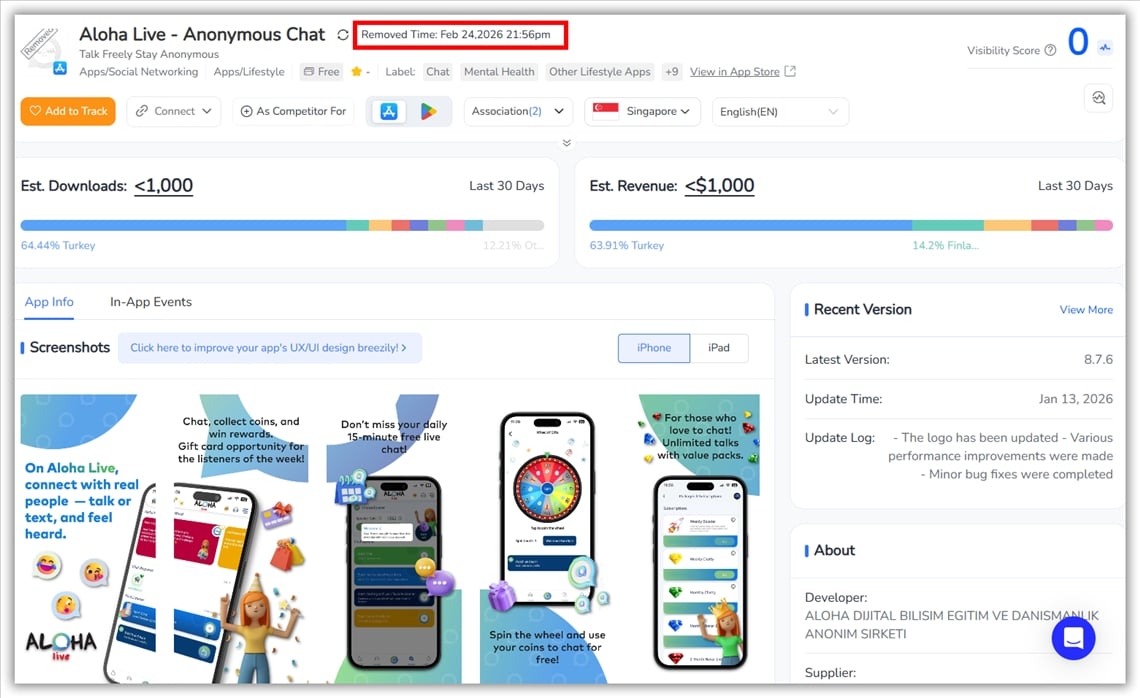
Source: FoxData App Profile
📌 Key insight: In highly regulated regions, anonymous real-time interaction has become a structural liability—regardless of moderation policies or stated intent.
Brazil’s enforcement initially targets social apps, but the scope is broader. Products with travel, activity-sharing, or light social features are also affected when safety mechanisms or data protections are deemed insufficient.
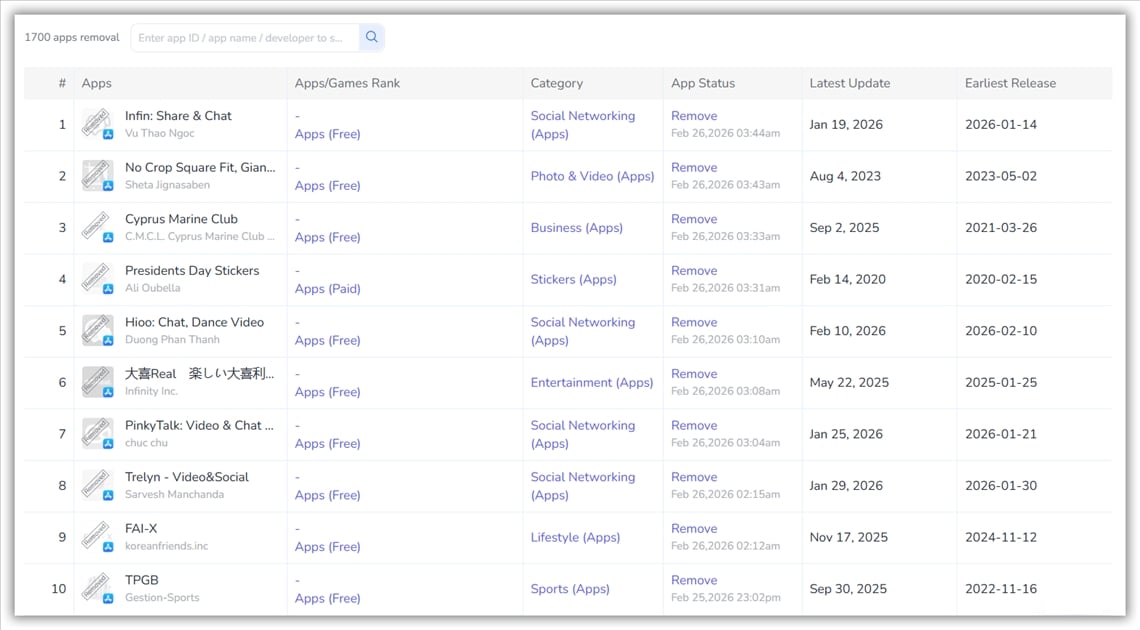
➡️ See the full list of Brazil apps recently removed
⚠️ Critical note for developers: Loot boxes and in-app monetization mechanics now directly affect App Store visibility. Any game declaring loot boxes is automatically rated 18+, restricting reach, weakening organic growth, and reducing UA efficiency.
Across the U.S., Singapore, Australia and Brazil, enforcement patterns are remarkably consistent:
Developers relying on one-off compliance checks risk post-launch surprises—sudden removals, forced rating escalations, or silent download blocks. Platforms like FoxData help teams translate regulatory signals into actionable ASO and visibility insights, allowing risks to be identified before enforcement occurs.
In Australia, Brazil, and Singapore, users cannot download 18+ apps without verified age confirmation. While Apple manages system-level verification, developers still face dual responsibilities:
1. Platform-level enforcement (App Store download gating)Monetization decisions now intersect directly with compliance. Growth strategies that ignore this link are increasingly fragile.
Apple’s expanded age verification and 18+ restrictions make one thing unmistakable: compliance now shapes visibility, downloads and revenue.
In 2026, age ratings, keyword strategy, and interaction design can determine whether an app scales—or stalls.
Developers who wait to react after enforcement face sudden removals and long-term growth ceilings. Teams that prepare early gain a measurable competitive advantage.
👉 If you’re planning global growth under tightening age restrictions, FoxData’s analytics and ASO solutions help you assess risk, optimize metadata, and protect visibility—before growth is disrupted.
📣 Don't miss these:
© 2020-2026 FoxData. All Rights Reserved.