




Explore More Possibilities for Your Business
Full-cycle scenario construction to meet your needs from App research, development, and release to operation.
Ready for your soaring growth
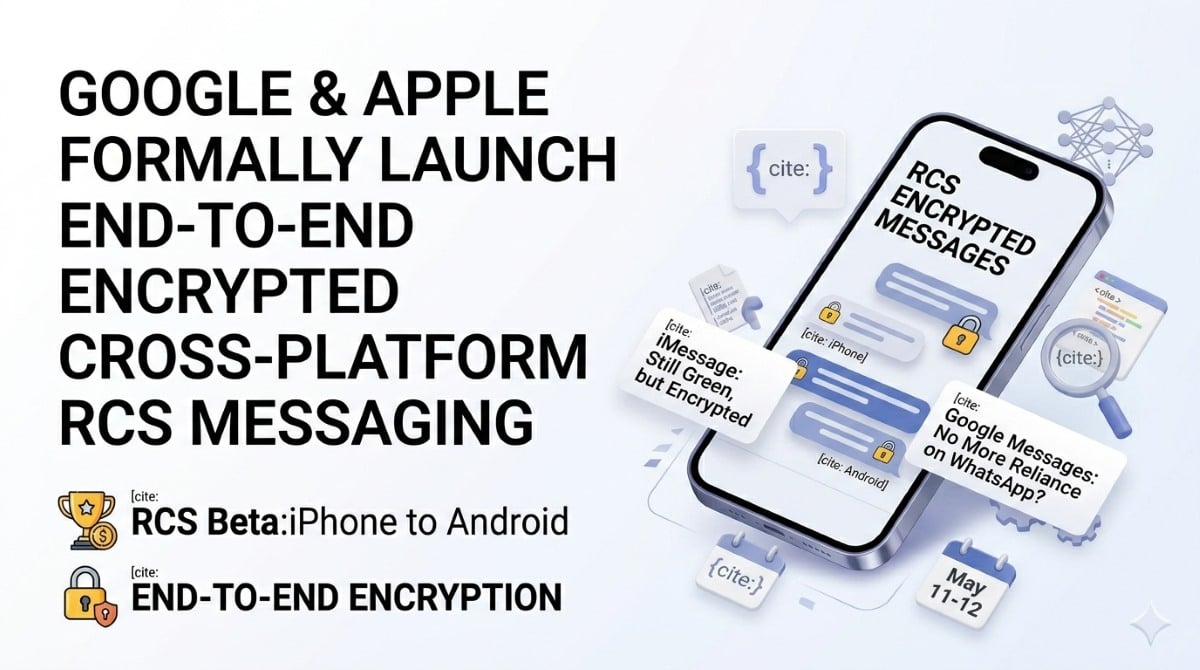
In a historic move that dramatically reshapes the global communication landscape, Apple and Google, in collaboration with the GSMA, officially launched end-to-end encrypted (E2E) RCS messaging (Beta) on May 11, 2026. Dominating headlines over the past six hours across Forbes, The Hacker News, and Apple Newsroom, this development is being celebrated as the most monumental shift in mobile communication since Google Messages debuted 12 years ago.
Google's Android ecosystem leader, Sameer Samat, referred to this rollout as an "amazing milestone," effectively closing the long-standing security gap between iOS and Android users. For App Store developers and iOS app marketing professionals, this OS-level unification is much more than a technical upgrade—it represents a massive shift in user behavior that will directly impact the growth strategies of third-party messaging apps globally.
The writing has been on the wall for several months. Tracking back to the groundwork laid out in iOS 26.5 Beta 3 in April 2026, Apple steadily fine-tuned its RCS Universal Profile integration. Previously, texts exchanged between iPhones and Androids reverted to the archaic, unencrypted SMS/MMS protocols. Media files were severely compressed, typing indicators were non-existent, and most importantly, privacy was compromised.
With this May 2026 release, those barriers are shattered. While Apple has opted to retain the visually distinct "green bubble" for Android contacts, the data transmission layer has been completely overhauled. Now, iPhone to Android texts benefit from robust E2E encryption, meaning not even Apple, Google, or mobile carriers can read the contents of the messages.
When native OS capabilities experience a major upgrade, user search behaviors in the App Store shift almost instantly. Following this RCS rollout, expect a spike in queries like "secure messaging," "encrypted chat," and "cross-platform privacy." Independent developers must pivot their keyword strategies quickly. By utilizing comprehensive App Analytics for Indie Developers and leveraging robust Free ASO Tools, marketers can identify and bid on high-converting, long-tail search terms before competitors even notice the trend.
For years, Meta's WhatsApp has dominated the international messaging market precisely because it solved the cross-platform friction that Apple and Google refused to address. WhatsApp provided reliable, encrypted communication regardless of the user's operating system.
With Google Messages and Apple's native Messages app now offering seamless, secure interoperability, the necessity for a third-party application to bridge the gap diminishes significantly. This upgrade grants Google Messages the capability to compete head-to-head with WhatsApp, fundamentally altering the competitive dynamics within both the App Store and Google Play.
For app marketers managing third-party communication tools—be it Telegram, Signal, or localized solutions—the pressure is on. You must clearly articulate your app's unique value proposition beyond just "encrypted chatting." Understanding how your competitors are pivoting their monetization and user acquisition is critical. Growth operators are strongly advised to consult a complete guide to analyzing competitor app revenue to monitor WhatsApp and Telegram's financial performance shifts in real-time.
As native messaging becomes inherently more powerful, third-party apps will experience increased friction at the top of the funnel. If the default phone messaging app handles high-res video sharing and E2E encryption flawlessly, why would a user download another app? This is the exact dilemma your ASO strategy needs to solve.
To survive, messaging app developers must rely on data, not guesswork. Optimizing Custom Product Pages (CPPs) to highlight hyper-specific features—such as massive group chats, decentralized architecture, or specialized gaming communities—will be vital. Ensure you are equipping your team with the ASO tool that actually drives installs, allowing you to systematically A/B test your creative assets against the shifting market narrative.
The timing of this rollout is far from coincidental. With WWDC 2026 scheduled for June 8-12, Apple is clearing the deck of legacy communication protocols to pave the way for iOS 27's highly anticipated AI features. Industry insiders speculate that the incoming Siri overhaul—rumored to support on-device integration with Gemini, Claude, and ChatGPT—will be capable of intelligently summarizing these encrypted RCS threads natively.
For the App Store ecosystem, this signifies a deeper integration between native communication and AI. App developers must anticipate an environment where users spend more time in their native messaging apps, forcing third-party developers to find innovative ways to drive re-engagement.
The historic collaboration between Apple and Google marks the end of an era for fragmented, unsecured texts. As the mobile ecosystem adapts to this new baseline of privacy and interoperability, agility in marketing and product positioning will be the defining factor for app success in Q3 2026 and beyond.
As of May 11, 2026, messages sent between iPhones and Android devices using RCS (Beta) are fully end-to-end encrypted. This ensures that media and texts are secure in transit, offering a unified privacy standard that previously only existed within siloed ecosystems like iMessage.
Yes. While the underlying technology has been upgraded to support E2E encryption and high-quality media sharing (features tested heavily since iOS 26.5 Beta 3), Apple has chosen to maintain the distinct green bubble aesthetic for cross-platform conversations.
Native OS apps now offer the primary benefit—seamless, encrypted cross-platform communication—that historically drove users to download WhatsApp or Telegram. Third-party apps may experience increased user acquisition costs and will need to market niche features to maintain their App Store rankings.
Marketers should anticipate shifts in keyword search volume related to "privacy," "encryption," and "messaging." Updating your metadata and leveraging App Analytics will be essential to discover new long-tail keywords and maintain search visibility against strengthened native apps.
To accurately measure the fallout of major tech news on your user acquisition, it's highly recommended to use dedicated ASO Impact Analysis Tools. These platforms allow developers to correlate macro OS changes with micro fluctuations in daily install velocity and revenue.
© 2020-2026 FoxData. All Rights Reserved.