

Explore More Possibilities for Your Business
Full-cycle scenario construction to meet your needs from App research, development, and release to operation.
Ready for your soaring growth
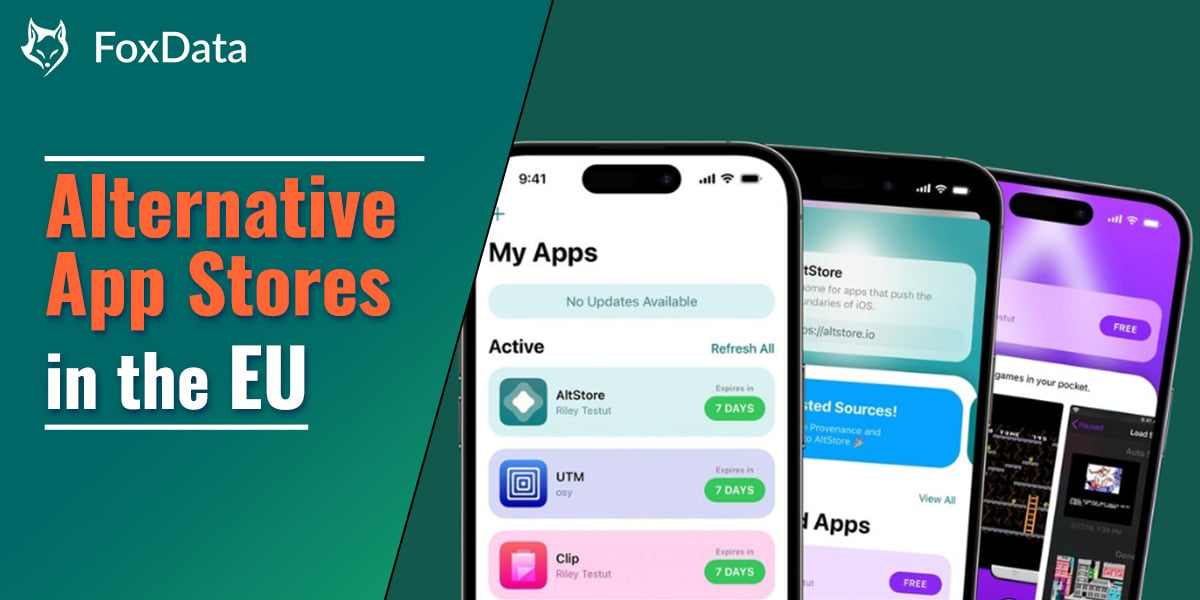
Alternative app stores in the EU are no longer a theoretical discussion. With the Digital Markets Act now enforced, Apple has opened iOS to alternative distribution channels, while Google faces increasing pressure over default placement and distribution practices.
For developers scaling in Europe, this shift introduces both new risk vectors and a short-lived early advantage window.
The core question is no longer whether alternative stores exist, but where they create tangible value. In saturated App Store and Google Play markets, these platforms can offer cleaner visibility, lower competitive density, and more flexible commission structures — especially relevant for apps with tight LTV margins, policy-sensitive content or niche audiences.
If your app generates installs or revenue from Europe, alternative app stores are already part of your competitive landscape — whether you actively use them or not.
This matters most for teams:
It is less relevant for teams operating exclusively outside Europe or products without a 12-month international roadmap.
Timing is critical. We are still in an early advantage phase: competition is limited, ranking systems are immature, and visibility is uneven. Historically, these conditions compress quickly once adoption accelerates.
Platform dependency is no longer theoretical. Developers are already feeling its impact through policy enforcement, ranking volatility and rising acquisition costs.
Key implications include:
Used correctly, alternative stores allow teams to optimize visibility, revenue and risk exposure simultaneously.
Developers are already using alternative app stores to reach new audiences and reduce dependency on Apple and Google. Leading examples include:
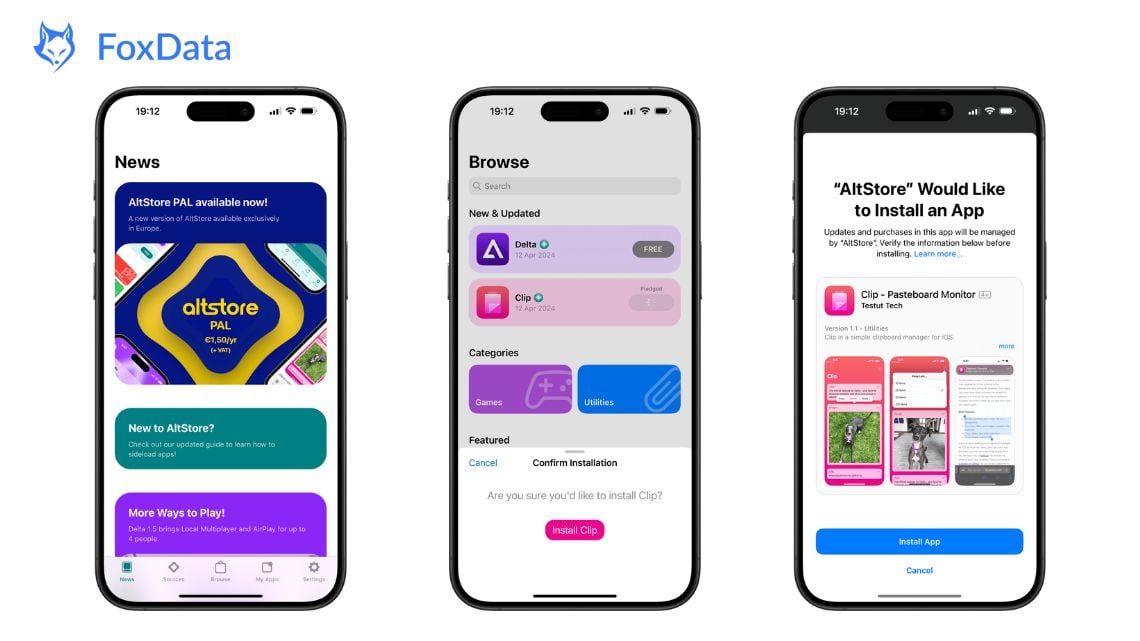
A self-hosted distribution model where developers upload apps like UTM, OldOS, and PeopleDrop. This setup offers full distribution control and significantly less competition — ideal for niche or experimental products.
Distributes Fortnite, Rocket League Sideswipe, and Fall Guys, demonstrating how a multi-channel strategy can bypass App Store restrictions while expanding reach.
Content will be displayed after page load
🎬
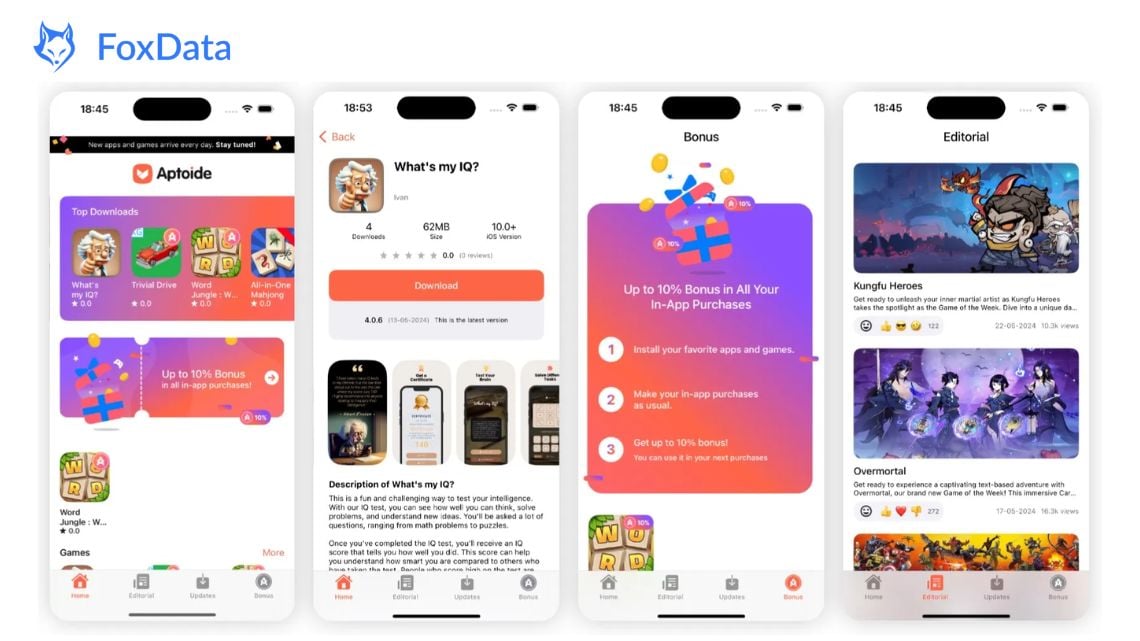
Supports iOS distribution with flexible commissions. With over 430 million users across platforms, Aptoide provides both scale and infrastructure for broader exposure.
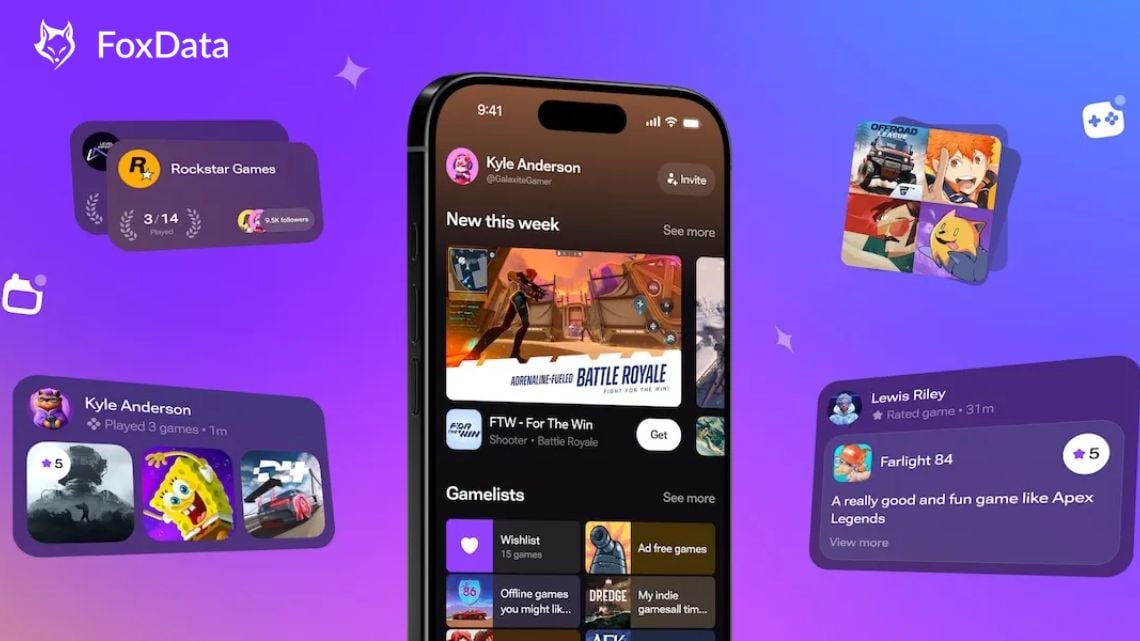
Swipe-based app discovery platform. Users explore apps via playlists and social connections, giving smaller apps better visibility and engagement.
💡 Takeaway: Alternative stores are not replacements — they are strategic extensions that diversify risk and unlock incremental growth.
Discover how FoxData enhances data protection and security standards to keep your analytics safe and reliable.
 Your Data, Secured: FoxData Achieves ISO 27001
See How
Your Data, Secured: FoxData Achieves ISO 27001
See How
Top-performing teams approach alternative stores deliberately, not reactively:
1. Isolate EU Performance: Analyze country-level installs, keyword rankings, and revenue to detect saturation in default stores.Alternative app stores expand distribution — but they do not replace App Store and Google Play as the primary discovery engines. For most teams, growth decisions still begin with understanding performance, saturation, and risk within Apple and Google’s ecosystems.
FoxData helps teams make those decisions with clarity:
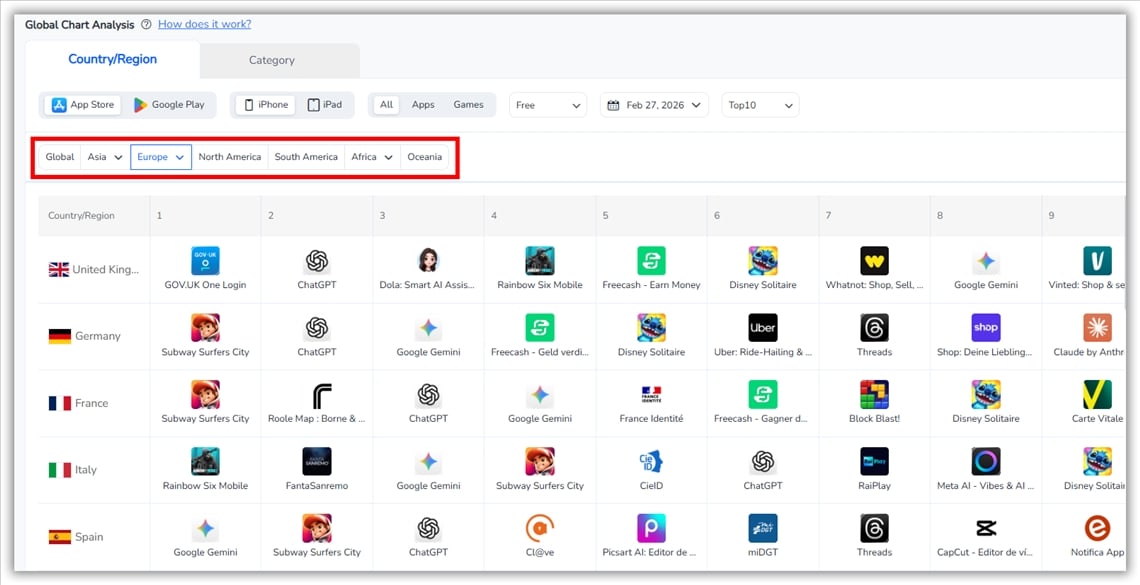
Identify EU and global markets where App Store or Google Play growth is becoming constrained, so you can assess when alternative distribution might be worth testing — and where it’s unlikely to move the needle.
Safely test and simulate metadata changes on App Store and Google Play before publishing, reducing ranking risk while you stabilize core growth channels and experiment elsewhere.
➡️ How to Turn Metadata into a Predictable Growth Engine with FoxData's Keyword Optimization
|
Dimension |
App Store / Google Play |
Alternative App Stores |
|
Distribution Control |
Centralized |
Flexible, self-hosted or curated |
|
Fees |
Fixed & standardized |
Negotiable / lower |
|
Ranking Competition |
Extremely high |
Significantly lower |
|
Policy Risk |
Single point of failure |
Distributed |
|
ASO Strategy |
Keyword-heavy |
Positioning-driven |
This isn’t about replacement—it’s about portfolio distribution.
Alternative app stores won’t replace the App Store or Google Play, but they shift how growth risk and opportunities unfold in the EU. Teams that move early gain insights on visibility, fees, and compliance, while those who wait face a crowded, competitive market.
For most developers, the smartest approach is to use App Store and Google Play data as a baseline to guide diversification decisions. FoxData supports that decision-making layer— helping teams measure saturation, simulate ASO impact and stabilize core growth channels before testing alternative distribution paths.
👉 Start with a free FoxData trial.
📚 Recommended Reading:
© 2020-2026 FoxData. All Rights Reserved.