

Explore More Possibilities for Your Business
Full-cycle scenario construction to meet your needs from App research, development, and release to operation.
Ready for your soaring growth
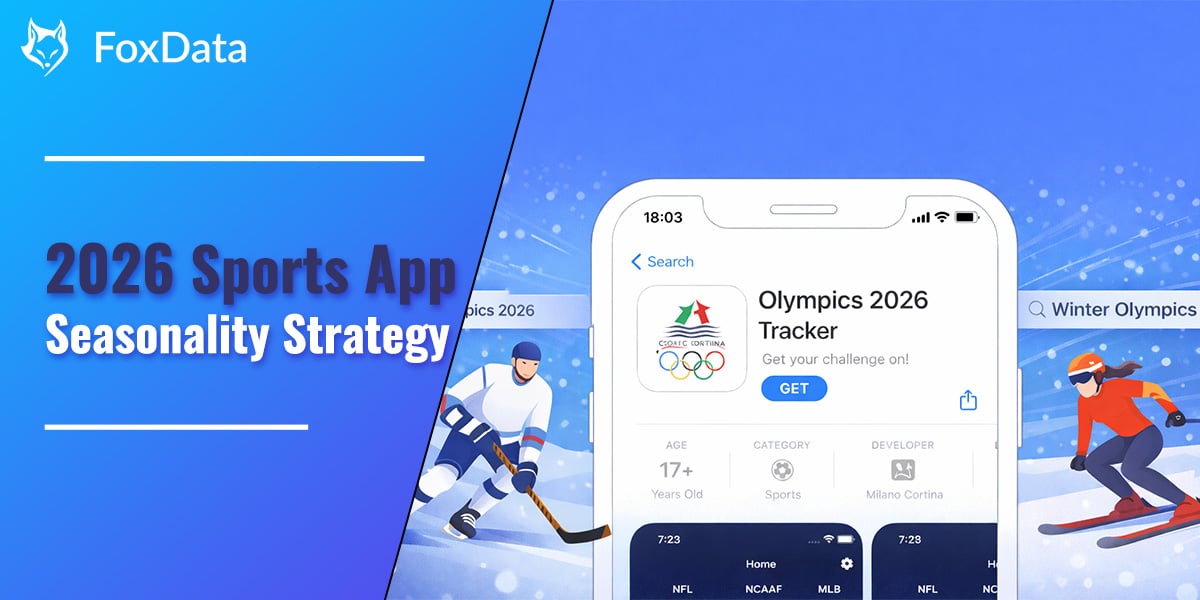
In 2026, sports seasonality in the App Store is no longer about reacting to hype.
By the time keywords like “World Cup schedule” or “Olympics live stream” spike, the winners have already secured their advantage.
With the FIFA World Cup hosted across North America and the Winter Olympics in Milan-Cortina, visibility is often decided weeks—or even months—before peak search demand.
This isn’t because teams are faster during the event. It’s because Apple’s algorithm has already learned which apps genuinely belong to sports-related intent—and which are just chasing it.
This guide breaks down the exact strategy to build Pre-season Keyword Authority and show how it can lower your CPA (Cost Per Acquisition) while competitors overpay during peak season.
Every year, developers repeat the same mistakes:
The problem isn’t lack of effort. The problem is timing—by the time teams act, the algorithm has already learned which apps are relevant.
In 2026, App Store search increasingly rewards historical relevance signals, not just short-term keyword insertion. When demand surges, Apple already knows which apps are “about” a topic—and which are just riding the wave.
The 2026 Reality: Sports seasonality is no longer about capturing demand. It’s about being recognized as relevant before demand becomes competitive.
👉 How to Promote Sports Betting App Effectively?
Most apps don’t lose the sports season because their product is weak. They lose because Apple has already determined who deserves traffic—before users even type a keyword.
By the time “World Cup schedule” spikes, the algorithm has already separated early authorities from late entrants.
Your job in 2026 is not chasing traffic. It’s shaping how the App Store understands your app—before it needs to decide. This is where seasonality shifts from a campaign mindset to a long-term strategy.
Instead of asking “Which sports keywords should I target?”, the better question in 2026 is: “Which sports-related micro-intents can I own early—before competitors notice them?”
These are not headline keywords like “World Cup” or “Olympics”. They are supporting intent clusters that quietly establish relevance.
Examples across app categories:
Individually, these keywords don’t look explosive. Collectively, they define what your app represents in Apple’s search ecosystem.
💡 Tip: Use FoxData’s Keyword Analytics to filter for "Ranking Trend" keywords with low difficulty. The goal is not short-term traffic—it’s semantic positioning before peak competition begins.
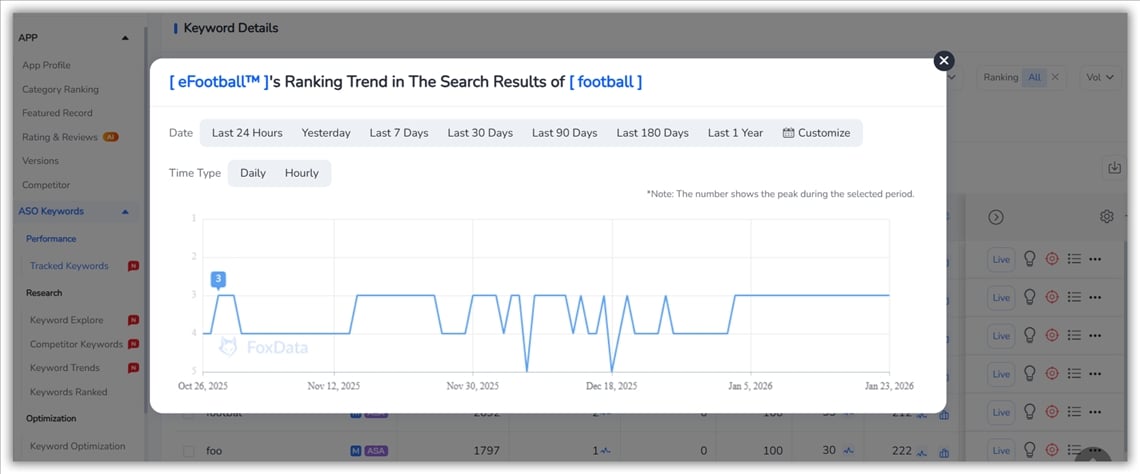
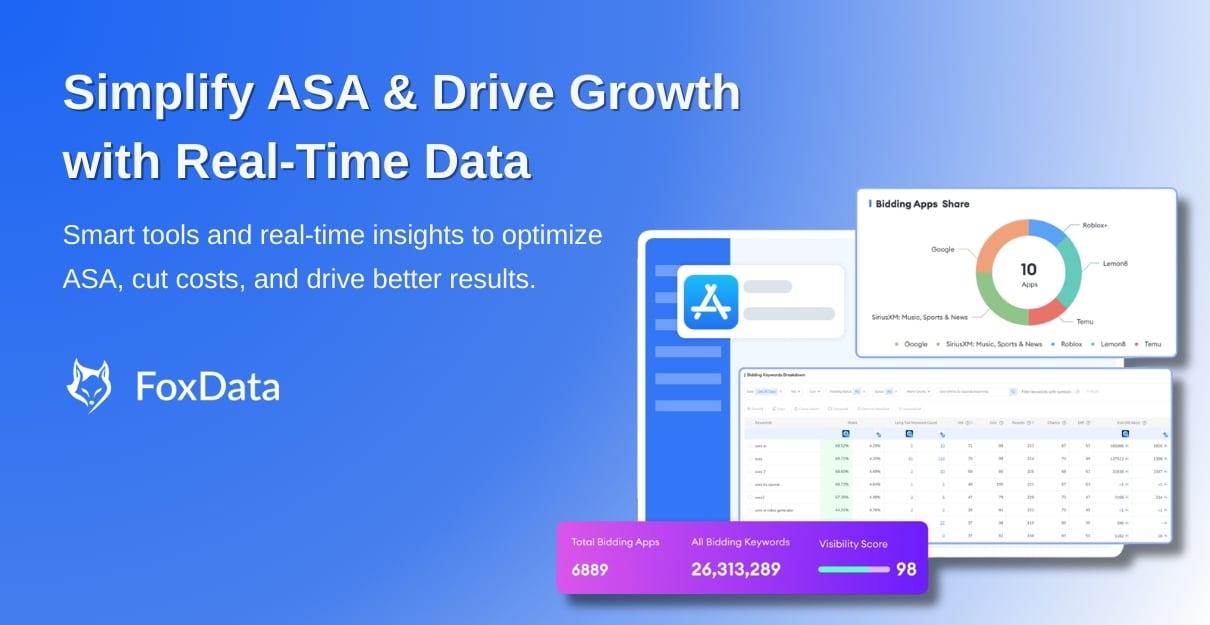
Discover keyword opportunities, monitor competitors, and improve campaign performance using FoxData’s ASA analytics tools.
Most teams make the mistake of chasing vanity keywords like “World Cup.” These are high-volume but highly competitive—expensive and hard to rank for.
Winning teams focus on Micro-Intent Clusters that signal relevance to the App Store early, giving you a head start.
When your app consistently ranks for related micro-intents, Apple treats it as structurally relevant, lowering ASA auction pressure and improving organic stability.
This is also where FoxData’s ASO Keyword becomes critical: you can see which terms are accelerating, not just which are popular.
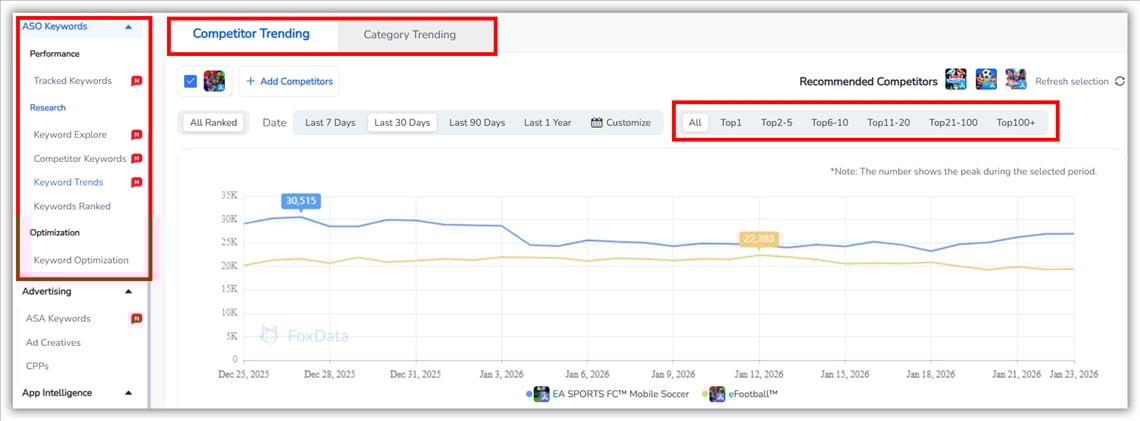
👉 Explore the All-New FoxData ASO/ ASA Module — Smarter ASO, Smoother Workflow
Key Insight: The earlier you rank for supporting keywords, the easier it is to rank for event-level keywords later—often without aggressive bidding.
Ranking doesn’t happen because you added a keyword—it happens when user behavior repeatedly confirms relevance.
Apple now looks for three layers of consistent signals:
A common mistake is trying to describe everything at once:
Scores · Live · Highlights · News · Stats · World Cup · Olympics
This dilutes algorithm confidence.
Correct approach: Each phase of the season should establish one or two clear identities.
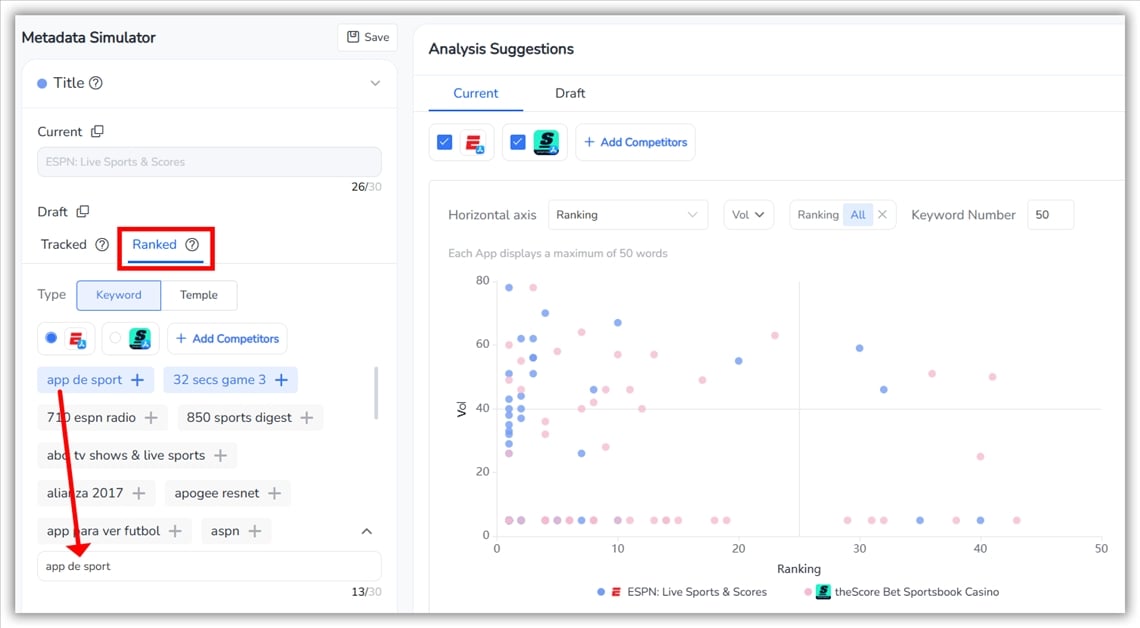
Using FoxData ASO Keyword Mapping to perform full Keyword Optimization —test, validate, and refine metadata. This makes it more likely your app ranks higher or ranks at all.
In 2026, In-App Events are not just exposure tools—they are relevance multipliers.
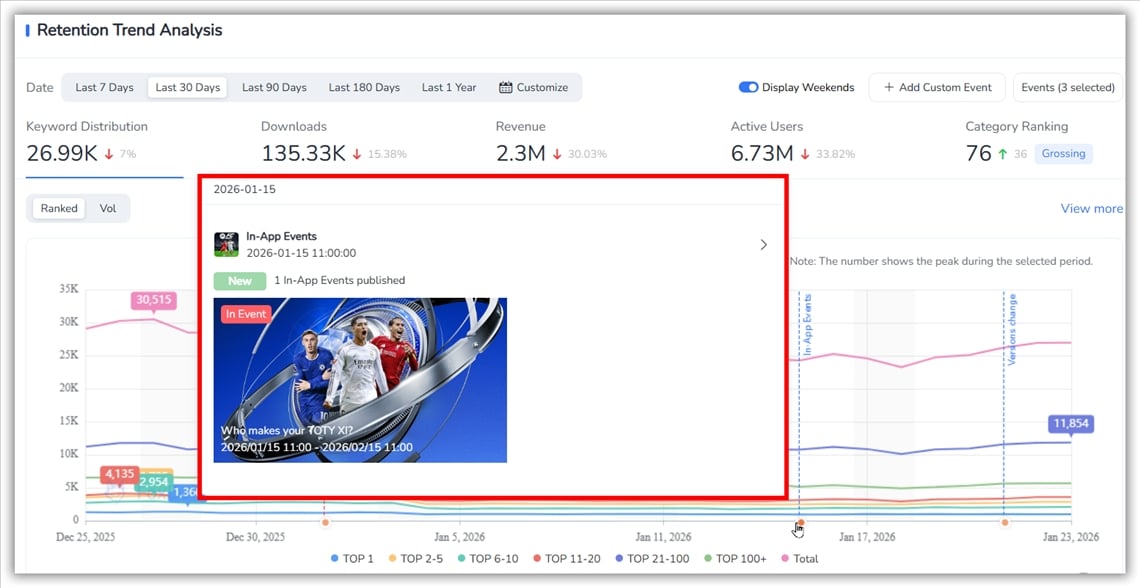
Pre-season events such as World Cup Lineup Predictions or Olympics Daily Medal Tracker allow Apple to test user engagement and reinforce relevance.
With FoxData ASO Impact Analysis, use the Event Node (orange dot) on your performance charts to see which event caused a download surge—and replicate it next time.
Many teams create CPPs only after ASA costs spike—by then, ranking momentum is fragile.
Correct order:
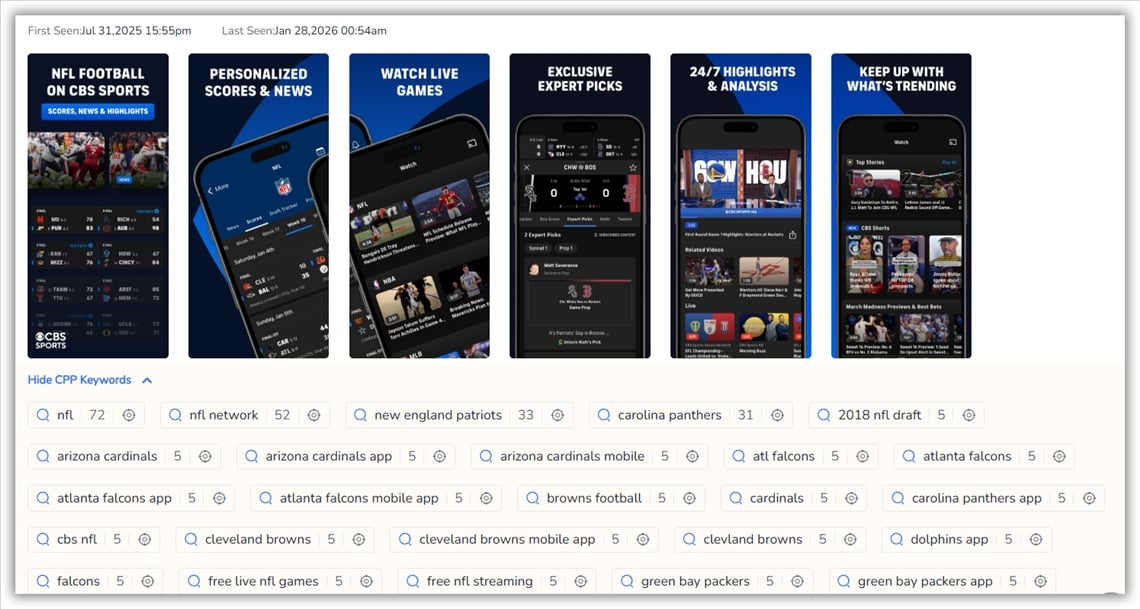
💡 Tip: Use this data to identify high-performing CPP keywords, benchmark competitors, and refine your own CPP strategy for maximum organic traffic and ASA efficiency.
At peak sports season, ASA competition is brutal. Launching it alone is inefficient and costly.
Instead, ASA should reinforce keywords you already rank for:
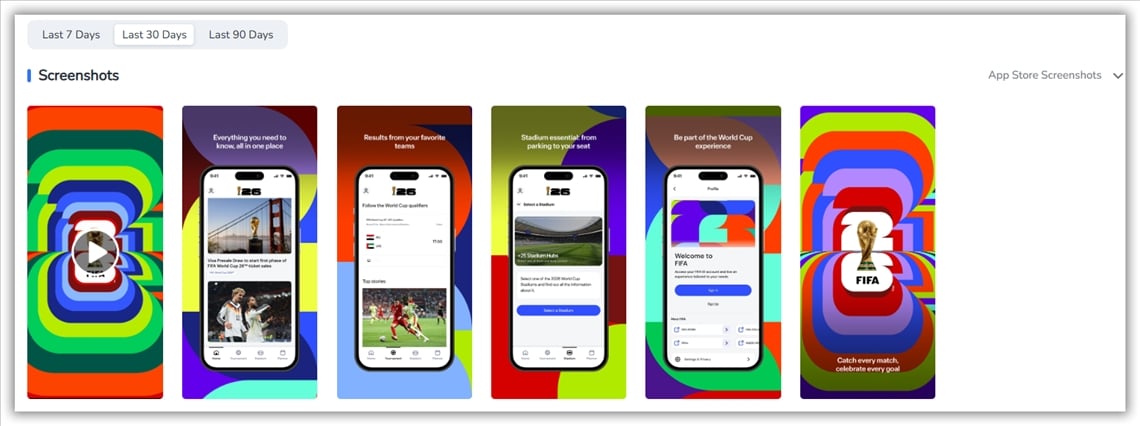
CPPs become conversion weapons, not just creatives. Tailor each CPP to the exact micro-intent (e.g., “FIFA World Cup” → show live news feed, not the home screen).
👉 A Step-by-Step Guide to Custom Product Pages (CPPs) for Apple Ads
During a sports peak, rankings change rapidly—and conversion behavior now influences visibility more than ever. If users find your app via a specific keyword but don’t install it, Apple’s algorithm may interpret it as a poorer match for that intent.
📌 Action: Use FoxData’s Keyword Analytics and Tracked Keywords to track ranking and conversion trends together. If a high-intent keyword ranks well but installs or conversion drop, it’s a signal to adjust CPP visuals or update metadata. This data-driven loop helps maintain organic authority and performance during peak demand.
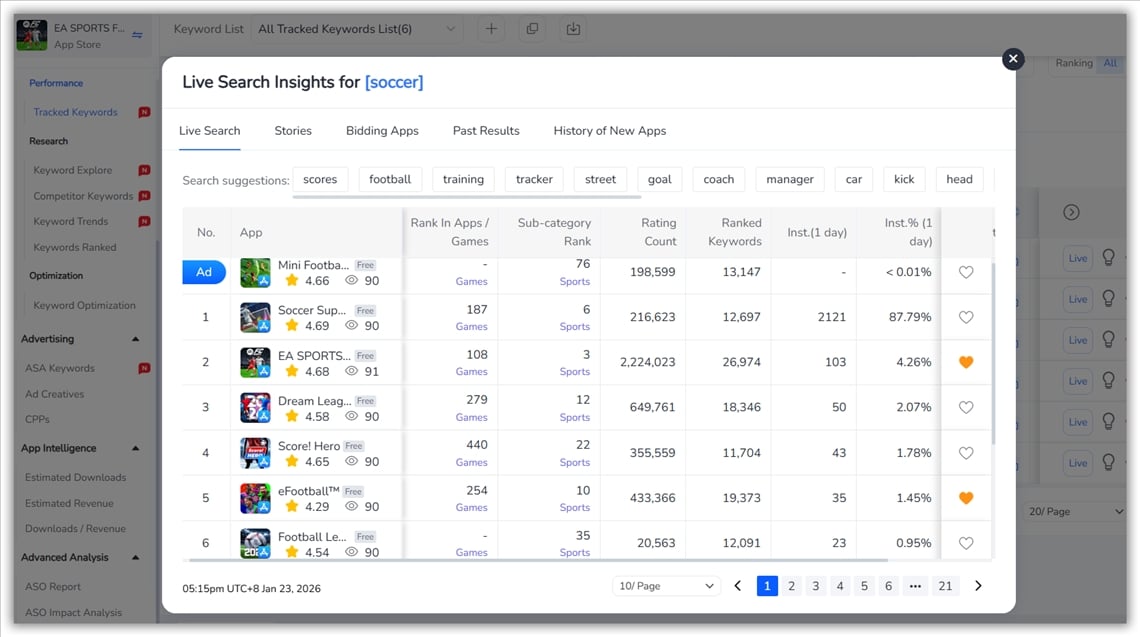
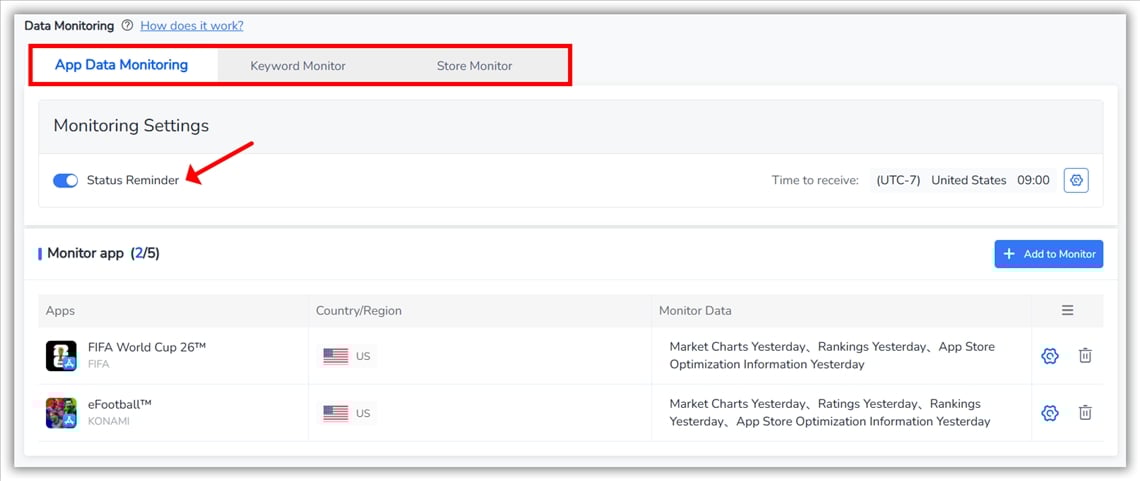
Execution speed matters. FoxData helps you dominate micro-moments:
|
Timeline |
Action Item |
FoxData Tool |
|
90 Days Out |
Identify rising "Micro-Intent" clusters and update metadata |
Keyword Research |
|
60 Days Out |
Competitive Analysis: Find competitor keyword gaps |
Competitor Keyword Analysis |
|
30 Days Out |
Test CPPs and discovery ASA campaigns |
ASA Intelligence |
|
During Event |
Monitor real-time ranking shifts |
Live Search & Alerts |
In 2026, sports seasonality is won before the event starts.
Apps that treat seasonality as a long-term strategy—not a one-off campaign—capture sustainable growth instead of short-lived spikes.
Sports seasonality isn’t a campaign you launch—it’s a growth engine you build deliberately, early, and strategically.
By establishing keyword authority ahead of demand, validating intent through conversion, and reinforcing momentum with smart ASA execution, you turn temporary sports events into durable growth.
Ready to uncover the keyword opportunities your competitors are missing?
👉 Start your FoxData free trial and see exactly where authority—and budget—is being wasted.
📣 Don't miss these:
© 2020-2026 FoxData. All Rights Reserved.