



Explore More Possibilities for Your Business
Full-cycle scenario construction to meet your needs from App research, development, and release to operation.
Ready for your soaring growth

If your cost per install has been creeping upward, you are not alone. The mobile gaming market is now generating roughly $92 billion in annual revenue. But acquiring new players is becoming harder and more expensive by the day.
Acquisition costs rose 12 percent year over year in 2025, while the user base grew just 2 percent. Marketers are watching their CPI climb while their budgets stay flat. Some are cutting campaigns. Others are doubling spend without improving results. Neither approach is working.
The real issue is not the market. It is a lack of precision. Teams are spending without knowing exactly why costs are rising or what levers to pull. That is where mobile game analytics becomes your most valuable weapon.
This article explains what is driving CPI increases, what the data actually tells you, and how to respond with targeted, evidence-based decisions.
Rising CPI is a signal. It tells you something is broken upstream. But without data, you cannot tell if the problem is your creative, your targeting, your store listing, or the competitive landscape around you.
Most teams make the mistake of treating CPI as the problem itself. They cut bids or pause campaigns. The installs drop, and nothing improves.
The smarter approach is to treat CPI as a diagnostic metric. When you layer it against keyword performance, conversion rates, creative click-through data, and competitor benchmarks, you start to see where the actual friction lives. That is what separates reactive spending from strategic user acquisition.
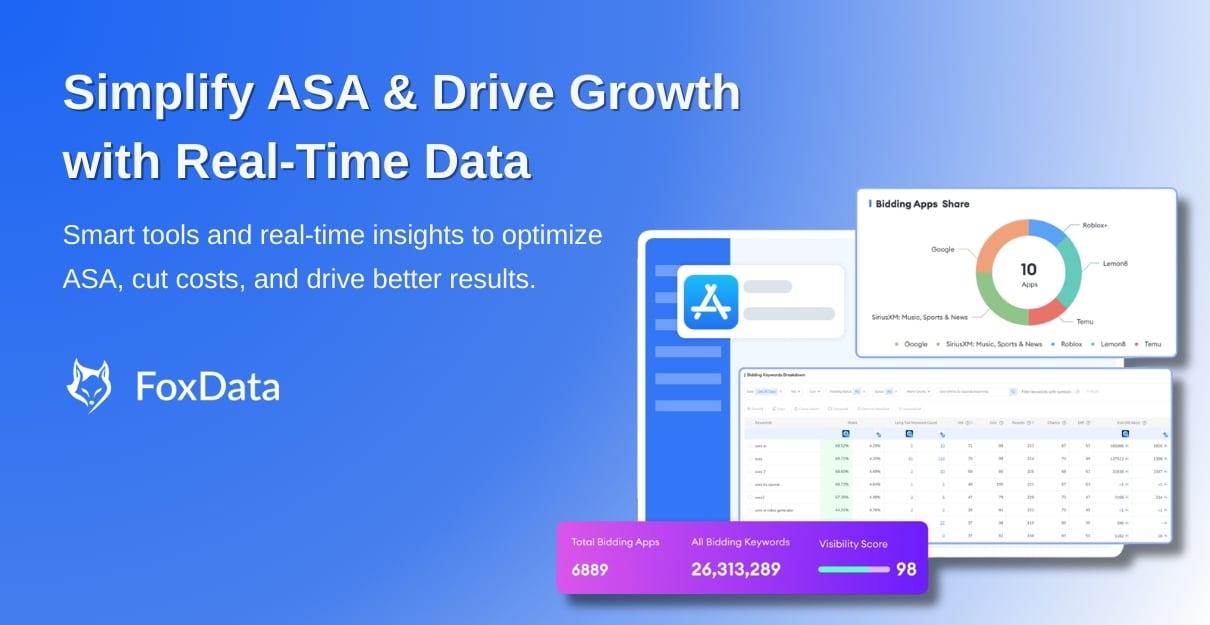
Discover keyword opportunities, monitor competitors, and improve campaign performance using FoxData’s ASA analytics tools.
Apple's App Tracking Transparency framework fundamentally changed how advertisers reach players on iOS. When targeting signals disappear, ad networks bid broadly. Broad bidding means wasted spend. Wasted spend means higher CPI.
iOS UA spend grew 6 percent year over year in 2025, reflecting renewed but cautious confidence post-ATT. However, teams that have not adapted their measurement approach to modeled conversions and multi-touch attribution are still flying blind. The same dynamic is expanding on Android as Google's Privacy Sandbox matures. Measurement maturity has become a true competitive advantage, not just a technical nicety.
In 2025, the average monthly number of mobile game advertisers exceeded 84,000, a 21.9 percent year-over-year increase, with a peak of more than 90,000 in June. More advertisers chasing the same inventory means higher auction prices and higher CPIs, especially in North America and Western Europe where competition is fiercest.
Meanwhile, user attention is finite. Top advertisers now test 2,400 to 2,600 creatives per quarter. Ad fatigue sets in faster when competitors flood the same inventory with high volumes of similar creative. Audiences stop responding. Click-through rates fall. And CPIs rise further.
Not all CPI increases are equal. According to Business of Apps, the average mobile game CPI on iOS stands at $4.22 in 2026, with Android averaging $2.97. Hardcore games push significantly higher, with shooter titles averaging $7.47 CPI while mid-core games on iOS run around $4.50.
Geography matters just as much. CPIs in North America reach $5.00 or higher per install, while Latin America offers installs as low as $0.27. Without benchmarking your CPI against genre and geography norms, you cannot tell if your performance is a real problem or simply expected for your category.
Even with perfect targeting, high CPI can result from a weak app store listing. If players click your ad but do not install after landing on your store page, you have paid for a click that produced nothing. Every unpaid visit that does not convert drives your blended CPI upward.
Global gaming user acquisition spend reached $25 billion in 2025, with nearly half concentrated in the US alone. At that level of investment, even a small improvement in store conversion rate represents enormous savings.
App store optimization for games is often treated as a one-time task. In practice, it is an ongoing discipline. Stale screenshots, unclear value propositions, or untested icons can quietly destroy conversion rates while your team focuses only on paid channels.
Reducing CPI sustainably requires action across three fronts simultaneously: your paid targeting, your organic discoverability, and your creative performance. Fixing only one while ignoring the others will deliver limited results.
Your paid and organic acquisition channels are not independent. Strong keyword rankings reduce your dependence on paid installs. They also improve your quality score signals, which affects what you pay in Apple Search Ads and Google UAC auctions.
Start with a keyword gap analysis. Identify which terms your competitors are ranking for that you are not. Prioritize keywords with high search volume and moderate competition in your specific genre. Then update your title, subtitle, and short description to reflect those terms naturally.
This is the foundation of ASO optimization for mobile games. And it directly lowers your effective CPI by generating installs you did not pay for.
Creative fatigue is one of the fastest ways CPI climbs. When audiences see the same ad repeatedly, engagement drops and costs rise. In 2025, creative iteration became the core battlefield for mobile game UA, with video ads accounting for 81 percent of all game creatives and top advertisers testing thousands of variants per quarter.
Run structured creative tests with a minimum of three to five variants per campaign. Test one variable at a time: hook style, opening frame, call-to-action wording, or visual format. Track which creative elements correlate with lower CPI and higher day-one retention, not just install volume.
Playable ads and short video clips continue to perform well in gaming. But the format alone is not enough. The creative must match user intent and the promise of your store listing. Mismatched messaging between an ad and a store page creates drop-off and inflates effective CPI.
Rather than applying a single bid strategy globally, segment your campaigns by region and align bids to the expected revenue potential of each market. Set bid caps based on lifetime value estimates per geography, not just on CPI targets in isolation.
Markets with lower CPIs but acceptable LTV, such as parts of Southeast Asia or Latin America, can offer significant scale at lower cost. Reinvesting savings from efficient geos into your premium markets helps balance overall portfolio CPI.
Retention is the silent driver of CPI efficiency. When players stay, their lifetime value improves. Better LTV justifies higher bids and allows you to compete more aggressively for high-quality users.
Industry data shows that more than 95 percent of mobile game users churn within 30 days. If your day-one retention is below 25 percent, paid acquisition will always feel expensive because your economics do not support it.
The average ARPU for US mobile gamers stands at approximately $60.58, which means the ceiling for CPI efficiency is directly tied to how long players stay engaged.Identify where players drop off in their first session. Address friction in onboarding, tutorial length, and early reward cadence before increasing spend.
The most common mistake in UA management is increasing budget without a clear diagnosis. Before adjusting any campaign, pull your CPI trend data by channel, creative, and geography over the past 60 to 90 days. Identify where the increase is concentrated.
Is CPI rising on iOS but stable on Android? That points to ATT-related signal loss. Is it rising only in one country? That suggests competitor pressure in that market. Is it rising across all channels simultaneously? That may indicate creative fatigue or a weakening store conversion rate.
FoxData's mobile game analytics solutions give you the visibility to answer these questions across organic and paid channels in one place, without manually stitching together data from multiple sources.
If a competitor improves their store listing or launches a major creative push, their visibility goes up and yours goes down relatively. This competitive shift is often invisible unless you are actively tracking it.
Monitor your top five to ten genre competitors weekly. Watch for changes in their keyword rankings, icon updates, screenshot refreshes, and review trends.
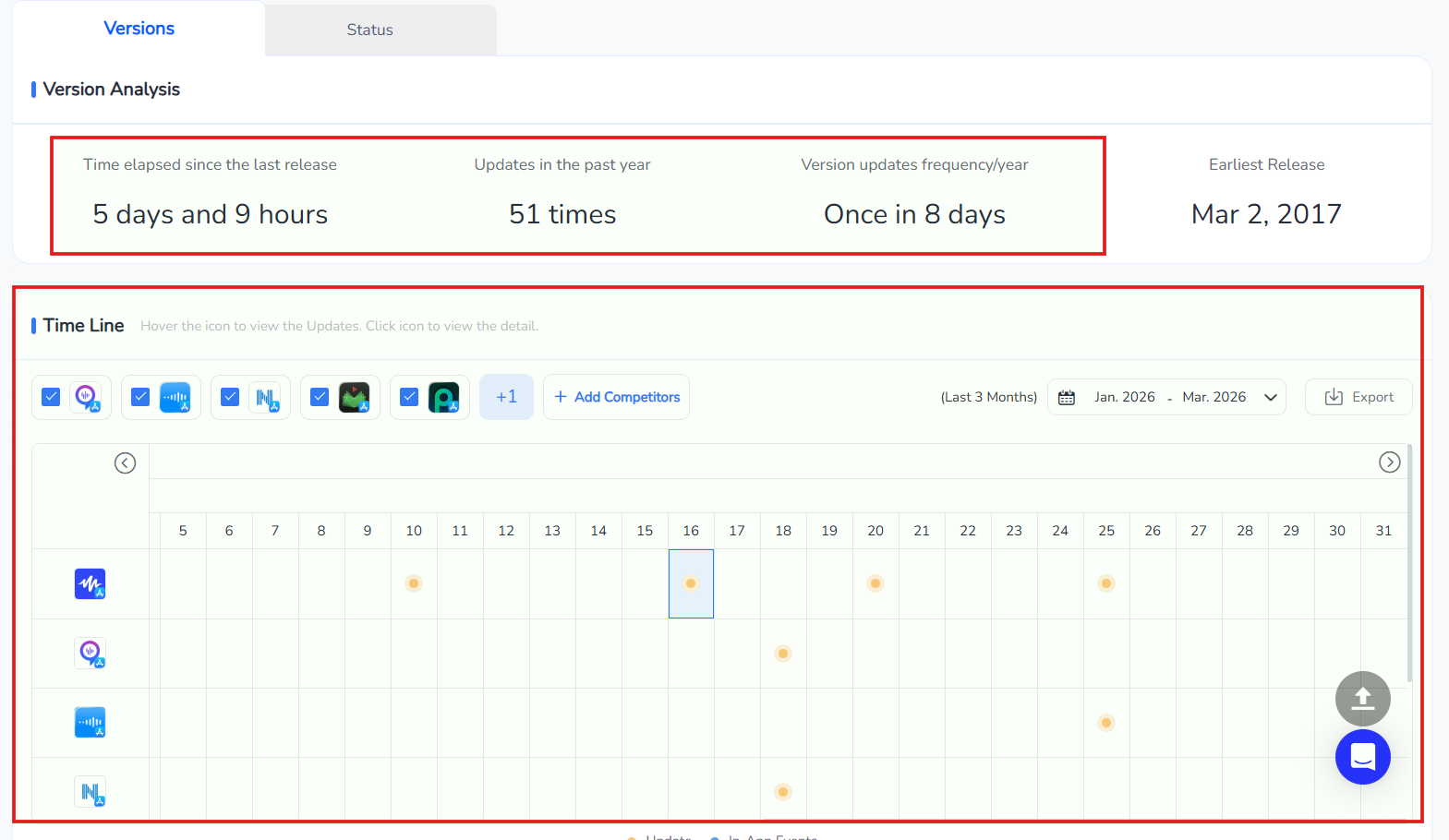
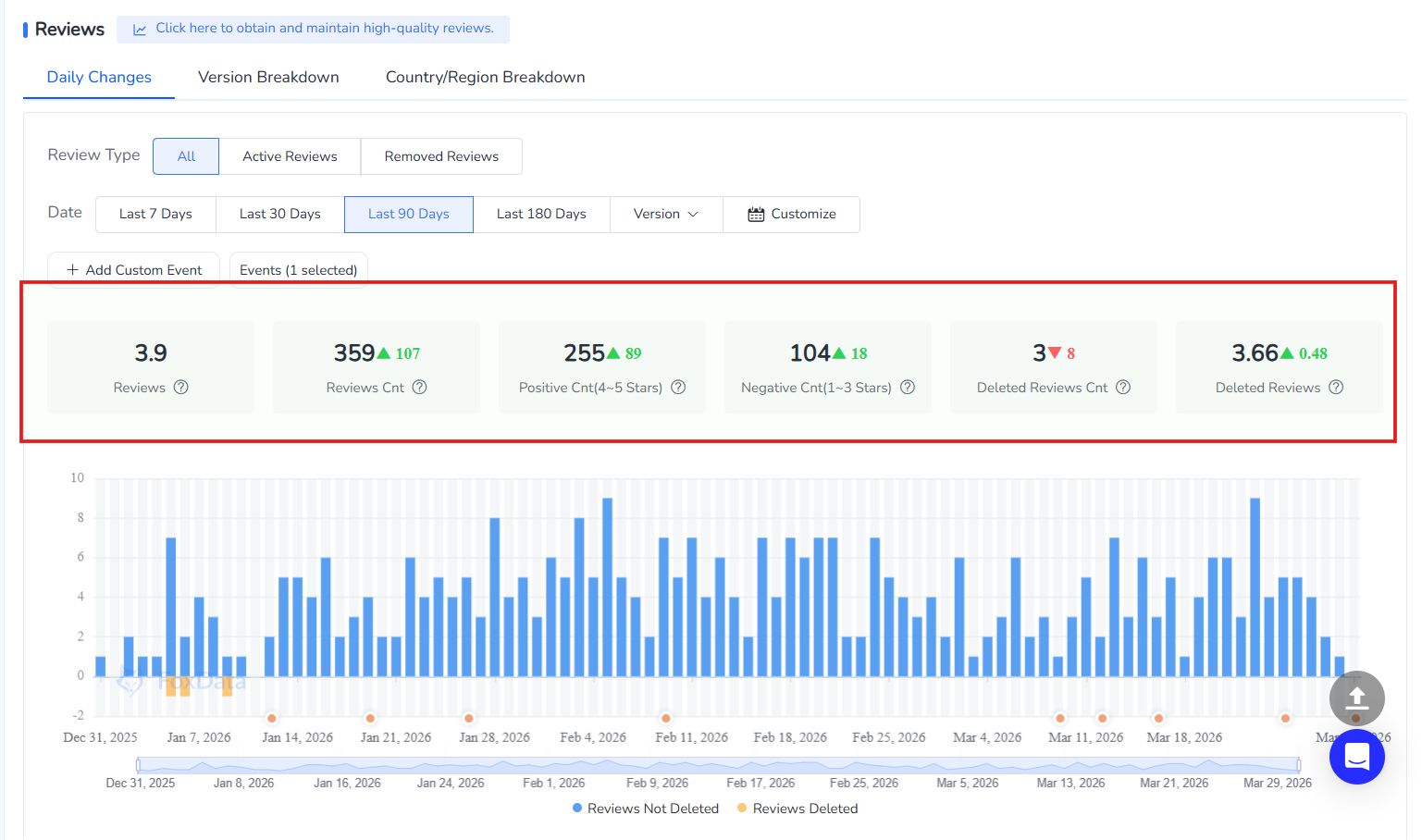
When a competitor improves their organic position, their paid efficiency also increases. You need to know when that happens.
Using FoxData's game analytics platform for competitive ASO monitoring lets you spot these shifts early and respond before they erode your position.
CPI becomes meaningful only in the context of the player's long-term value. A $5 CPI is excellent if the player generates $20 in revenue. It is catastrophic if they churn after one session.
Build cohort-level LTV models for each acquisition channel and creative type. Use these models to set CPI thresholds that reflect actual business economics. This protects you from the trap of chasing artificially low CPIs that bring in low-value users.
Chasing the lowest CPI at the expense of quality. Low CPI installs from low-quality sources produce poor retention and low LTV. Your blended economics get worse even when your CPI appears to improve.
Treating ASO and paid UA as separate workstreams. They are deeply connected. Weak organic conversion inflates paid CPI. Missed keywords limit your paid quality scores. Both teams need to be aligned on the same data.
Ignoring creative rotation schedules. Running the same set of ads for more than three to four weeks without refresh is a guaranteed path to rising CPI. Build a creative pipeline, not just a creative library.
Optimizing bids without understanding retention data. Bidding higher on channels that deliver low day-seven retention is a slow budget drain. Always tie bidding decisions to downstream behavior, not just top-of-funnel cost.
Reacting to CPI spikes without identifying root cause. Pausing campaigns or slashing bids during a CPI spike without diagnosing the cause often makes recovery harder. Use your analytics data first. Then act with intention.
Rising CPI is not inevitable. It is the result of misaligned targeting, weak store conversion, creative fatigue, or competitive pressure you have not yet responded to. Each of those problems has a data-driven solution.
The teams winning in mobile game user acquisition in 2025 are not necessarily spending more. They are spending smarter. They are tracking what their competitors do in the app stores. They are connecting paid campaign data to organic performance. They are using retention and LTV signals to guide bidding decisions.
That level of precision requires a platform built specifically for the mobile game market, not a generic analytics tool patched together from different sources.
Ready to take control of your user acquisition costs? Explore how FoxData's mobile game analytics and ASO platform helps game publishers and UA teams reduce CPI, improve store visibility, and grow with greater confidence.
What is a normal CPI for mobile games in 2026?
CPI benchmarks vary significantly by genre and platform. According to Business of Apps, the average mobile game CPI on iOS is $4.22, with Android averaging $2.97. Shooter and hardcore games push well above that, with shooter titles averaging $7.47 on iOS. Casual genres remain more affordable. Your genre and target geography will determine the right benchmark for your game.
How does Apple ATT affect mobile game CPI in 2026?
Apple's App Tracking Transparency framework limits user-level data available to advertisers on iOS. With fewer tracking signals, ad networks target less precisely. Less precise targeting means higher spend per install. Teams that have shifted to modeled conversions and multi-touch attribution are now recovering signal and regaining efficiency.
iOS UA spend grew 6 percent in 2025, reflecting cautious confidence returning to the platform as measurement practices improved.
Can ASO improvements actually reduce CPI?
Yes. Strong organic keyword rankings generate installs without paid spend, reducing your blended CPI. Improved store conversion rates mean that every paid click has a higher chance of resulting in an install, which directly reduces effective CPI. ASO and paid UA work together, not independently.
How often should I refresh my ad creatives to control CPI?
In 2026, creative iteration has become the core battlefield of mobile game UA. Top advertisers test 2,400 to 2,600 creatives per quarter. For most studios, reviewing creative performance weekly and rotating underperforming assets immediately is the minimum bar. Maintain a pipeline of at least three to five new concepts in active testing at all times.
Ready to make your app shine? Optimize your app's visibility with FoxData, the ultimate mobile app analytics and ASO tool! Maximize downloads and rankings by leveraging our powerful insights today.
App Growth & ASO Tools by FoxData
FoxData supports every stage of app growth with specialized ASO and app analytics tools, helping teams improve keyword visibility, user acquisition, and retention through reliable data.
🔍 Store Keyword Research Tools
Research high-intent keywords, search volume, and competition to strengthen your app store optimization strategy.
📈 App Store Keyword Tools
Analyze keyword rankings and performance across the Apple App Store and Google Play to refine ASO execution.
📊 ASO Monitoring Tools
Monitor keyword ranking changes, visibility trends, and ASO impact over time with continuous performance tracking.
👥 User Activity Monitoring Tools
Understand in-app user behavior, engagement, and retention with real-time user activity analytics.
Together, these tools form FoxData’s ASO analytics and app intelligence ecosystem, designed to help developers, marketers, and growth teams make data-driven decisions and scale sustainably.
Explore it today!
👉 Learn more about FoxData here | 👉 Book a demo with FoxData team today!
© 2020-2026 FoxData. All Rights Reserved.