


Explore More Possibilities for Your Business
Full-cycle scenario construction to meet your needs from App research, development, and release to operation.
Ready for your soaring growth
For years, “growth” in mobile has been synonymous with scale: bigger teams, more features, massive marketing budgets.
But across 2025 and early 2026, a different pattern became impossible to ignore.
A new generation of small, highly focused AI apps began outperforming much larger competitors—especially in revenue efficiency and install-to-pay conversion.
This shift isn’t a temporary curiosity.
It reflects a deeper structural change in user behavior:
Users don’t want more features. Users want more relevance.
After years of exposure to generative AI and automation, users no longer need education on “how AI works.” They care about whether an app solves their exact need, their identity, and their anxieties.
This is why more than 10,000 emerging teams and indie developers use tools like FoxData: to validate niche demand, monitor category shifts, uncover keyword intent, and scale revenue with clarity—not guesswork.
Large apps aren’t failing—they’re stabilizing.
But stabilization in today’s market means slow velocity, high CAC, and declining incremental growth.
Below are four structural forces behind the slowdown.
Most large apps have already captured their core audience. Growth today relies on re-engagement, incremental feature updates, and defensive marketing—often at a high cost.
FoxData’s App Intelligence trendlines show that even category leaders—TikTok, Instagram, major utility apps—are no longer accelerating. They remain dominant, but their velocity has declined.
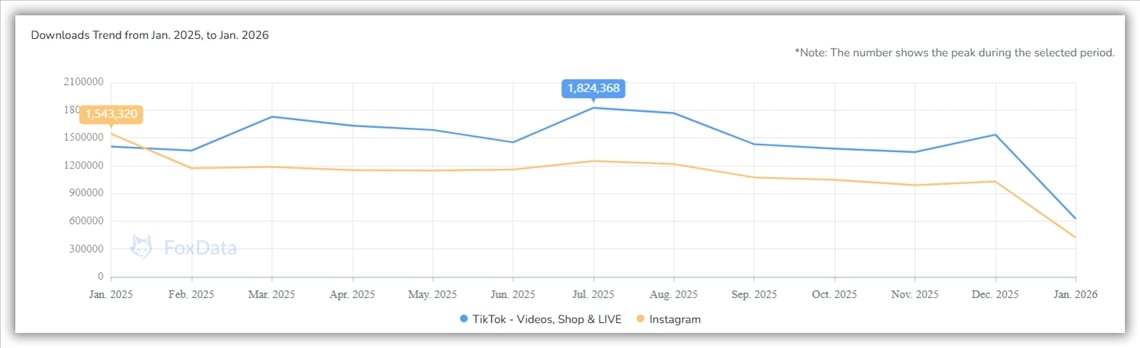
This slowdown opens gaps where niche-focused challengers can rise.
🔍 How to Optimize Your User Acquisition Strategy with "Estimated Downloads"
Both the App Store and Google Play increasingly reward apps that demonstrate sharp relevance early on. Apps with clear niche positioning, intent-aligned metadata, and strong initial conversion signals tend to surface faster.
Large apps struggle here. Their metadata changes slowly and cautiously. Niche apps, by contrast, can test and optimize weekly—adapting quickly to emerging search intent.
👉 ASO Tools in 2025: The Features You Think Matter vs. What Actually Drives App Growth
User acquisition costs have surged for broad, competitive keywords like “VPN,” “photo editor,” or “AI chatbot.” For large apps, scaling through paid channels has become increasingly inefficient.
Smaller, focused apps benefit from the opposite dynamic. Narrower keywords—such as “VPN for travelers,” “no watermark photo editor,” or “AI roleplay chat for couples”—deliver cheaper installs and higher install-to-pay conversion. Precision now outperforms volume.
Users increasingly choose apps that do one job exceptionally well.
A travel-focused VPN outperforms generic VPNs for travel-related queries.
A couples journaling app converts better than broad productivity tools.
An AI English tutor focused on conversation practice outperforms general learning platforms.
These micro-intents are where the next wave of app revenue is being created—often in markets big apps are too slow to address.
Below are five real-world apps that illustrate why niche specificity drives both growth and monetization in 2026.
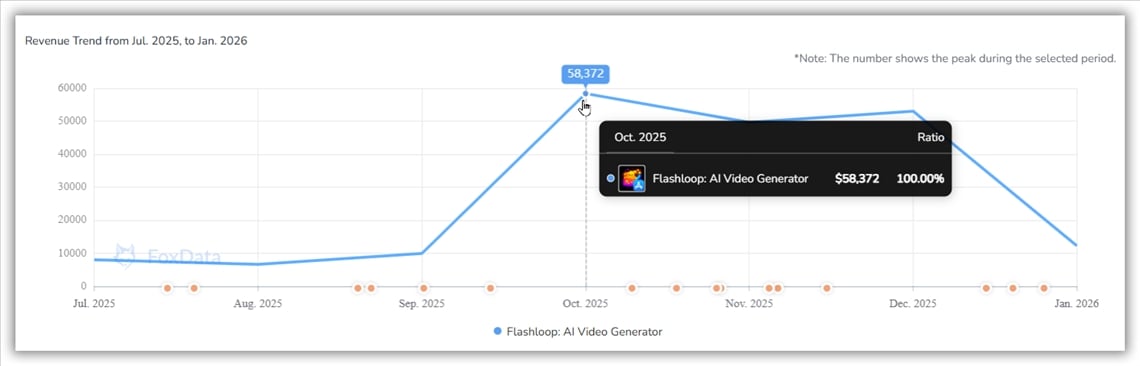
Launched in June 2025, Flashloop: AI Video Generator quickly reached 50K+ downloads and $58K in monthly revenue.
👉 How to Optimize Your Monetization Strategy with "Estimated Revenue"
Flashloop: AI Video Generator exploded by leaning into a cultural behavior that already exists: self-expression as entertainment currency. With Google Veo 3 and Sora-style motion modeling, users can create cinematic identity-driven videos from just text or photos.
Flashloop’s distribution engine wasn’t paid ads—it was TikTok and YouTube Shorts. People share AI transformations because it signals identity, creativity, humor, or aspiration.
Discover What Makes Flashloop: AI Video Generator a Viral Hit →
Why it works
💡 FoxData Insight:
Flashloop: AI Video Generator didn’t try to compete with CapCut or Adobe. It picked a single emotional use case—“Show who I can be”—and monetized it repeatedly.
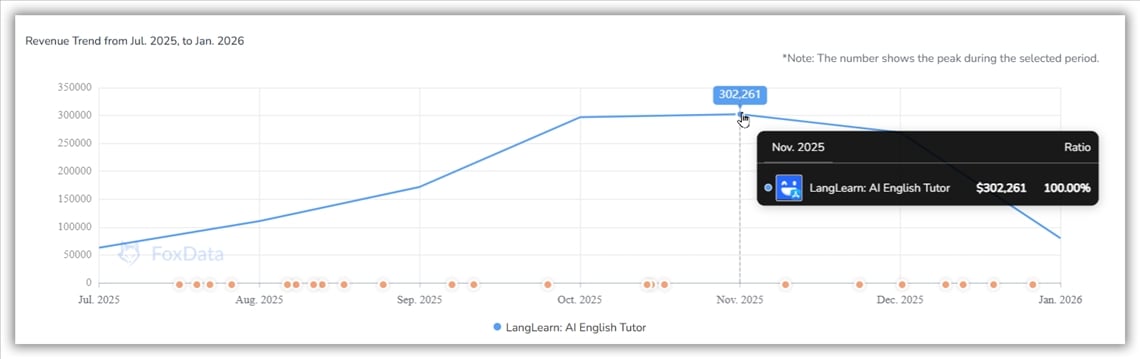
Launched in April 2025, it quickly achieved 180K+ downloads and $300K monthly revenue.
🔍 See How Top Apps Like LangLearn Grow
LangLearn: AI English Tutor solves a universal fear: the embarrassment of speaking English in front of others. Instead of grammar drills, it gives users a safe space to practice real conversations with a virtual human.
Its engagement loop is psychological:
Fear → attempt → correction → progress → confidence → retention
Why it works
💡 FoxData Insight:
Language-learning apps succeed when they reduce friction and amplify identity transformation, not curriculum volume.
Launched in April 2025, it quickly reached 40K downloads and $85K in monthly revenue.

A perfect example of niche identity + ritual use case.
Christians attend weekly services. Each service contains new content. Users want to remember, reflect, and share. This app automates the entire workflow:
Recurring behavior drives predictable subscription revenue.
💡 FoxData Insight:
Any behavior attached to ritual—religion, therapy, recovery programs, meditation—creates weekly or daily engagement without marketing.
👉 Identify your niche, validate demand and scale apps like Bible Note Taker. Try FoxData free today.
Launched in May 2025, it quickly reached $100K in monthly revenue, fueled by the constant demand from new businesses, side projects and product launches.
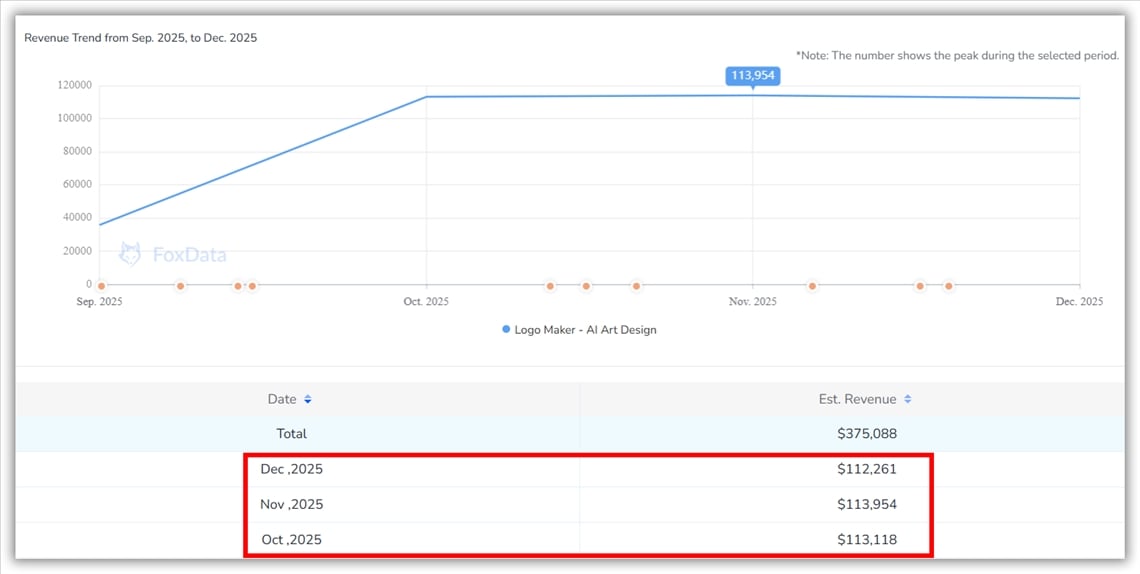
Logo Maker succeeds for a simple reason: its name matches user intent.
Search “logo maker,” “create logo,” or “AI logo generator,” and the app appears immediately. The ASO is not clever—it’s literal. And literal wins.
Why it works
💡 FoxData Insight:
The best ASO strategy in 2026 is not stuffing keywords—it’s naming the product exactly what the target audience searches for.
👉 Learn how FoxData helps small teams optimize ASO and grow apps like Logo Maker
Launched in August 2025, it quickly reached $110K in monthly revenue.
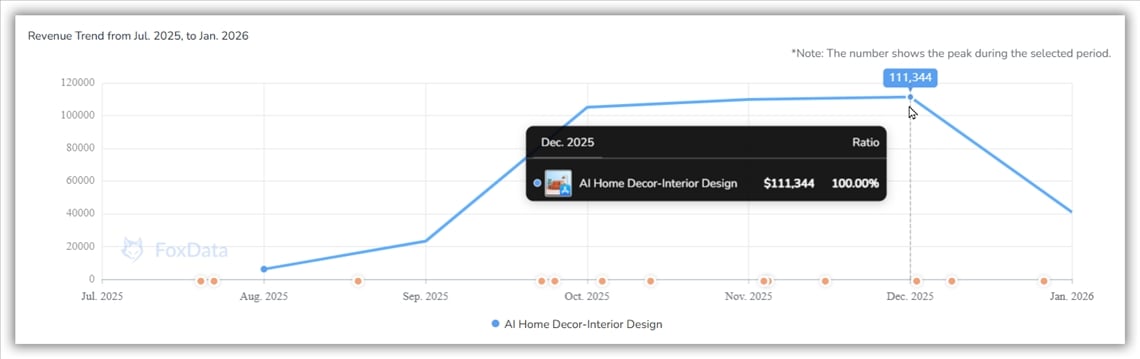
This app solves a painful and universal problem: “I don’t know what my room will look like after renovation.”
Its entire value delivery happens in one action:
Upload room → see transformation
Why it works
💡 FoxData Insight:
The AI interior market is not about aesthetics—it’s about reducing uncertainty and increasing confidence in decision-making. Discover how FoxData enhances data protection and security standards to keep your analytics safe and reliable.
 Your Data, Secured: FoxData Achieves ISO 27001
See How
Your Data, Secured: FoxData Achieves ISO 27001
See How
The biggest misconception is that niche apps grow because they “get lucky” or “go viral.”
False. They grow because their entire product ecosystem is aligned around one high-intent job.
Let’s break down the growth mechanics.
Each of these apps succeeds because users can immediately answer the question: “Why is this app for me?”
Identity-aligned niches—whether Christians, language learners, home renovators, content creators or small business owners—convert better and churn less. In these cases, the app isn’t just a tool; it’s part of the user’s lifestyle, habits, or personal identity.
This is why niche apps often outperform bigger, feature-packed alternatives: identity is stronger than features.
These examples demonstrate a clear principle: focus on a single high-intent niche with an emotional or identity-driven need, and users will not just adopt your app—they’ll pay for it repeatedly.
Apps that try to do everything often fail. The most successful apps obsess over solving a single problem extremely well.
By focusing on one high-value job, these apps deliver clarity, simplicity and tangible results. Users immediately understand the value, and conversion and retention increase. Success comes not from being feature-rich, but from being laser-focused on the one thing that matters most.
The most profitable apps reduce onboarding to one high-intent action, making it obvious what the user should do:
This single action serves as both the first meaningful experience and a signal of user intent. Users don’t need tutorials or guesswork—the value is immediate.
Lesson: Build around the single user action that matters most—everything else is secondary.
The most successful niche apps don’t overwhelm users. They reduce the experience to what truly matters:

This simplicity lowers friction, shortens time to value, and makes the product easy to return to. Over time, that ease turns into habit.
Successful niche apps tie subscriptions to recurring emotional behaviors. Their usage isn’t optional—it’s predictable, identity-driven and habit-forming.
|
App |
Recurring Trigger |
Why It Drives Subscriptions |
|
Flashfloop: AI Video Generator |
Social sharing |
Vanity and social reward drive repeat use |
|
LangLearn: AI English Tutor |
Daily practice |
Guilt + progress loop keeps users coming back |
|
Bible Note Taker & Recorder |
Weekly church attendance |
Ritual-based usage creates predictable engagement |
|
Logo Maker |
New projects launching |
Business creation cycles generate recurring demand |
|
AI Home Decor |
Renovation planning |
Continuous decision-making encourages return visits |
Niche apps outperform broad productivity tools because their usage cycles are anchored in identity and emotion, not optional convenience. When repeatable triggers exist, subscriptions naturally follow.
All of these niche apps share the same acquisition formula: clear, high-intent naming and positioning - AI English Tutor, Logo Maker, AI Home Decor.
When users can immediately guess what the app does from the title alone, your ASO customer acquisition cost drops dramatically.
FoxData’s Keyword Analysis shows why these apps rank and convert so well: they target keywords where intent equals conversion:
In contrast, broad keywords like “AI tools,” “video editor,” or “design app” attract irrelevant traffic and hurt conversion rates.
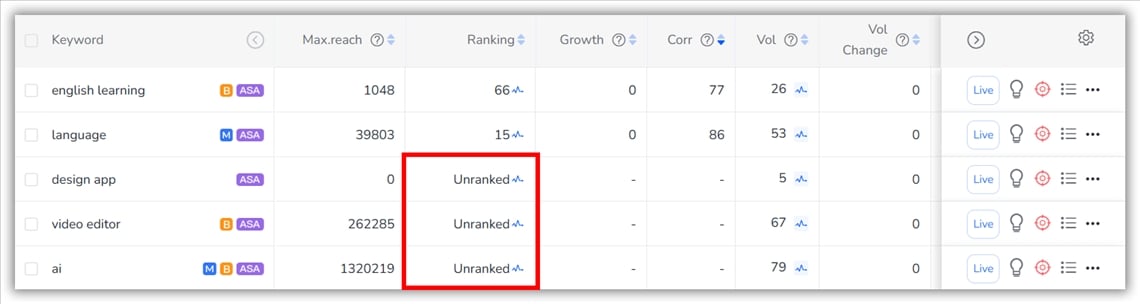
👉 Explore the All-New FoxData ASO/ ASA Module — Smarter ASO, Smoother Workflow
Precise, intent-driven ASO wins—users find your app naturally, and the ones who download are ready to pay.
One of the biggest challenges for product teams and publishers is simple: Which niche is worth entering—and will it grow?
FoxData solves this with early-signal detection, drawing on four key datasets:
1. Keyword Velocity Monitoring
FoxData tracks rising keywords before they reach mainstream visibility. Teams can spot early search volume spikes, observe competitor expansion, detect metadata changes from top-ranking apps, and identify gaps where no strong player exists. This insight lets teams enter niches before costs rise.
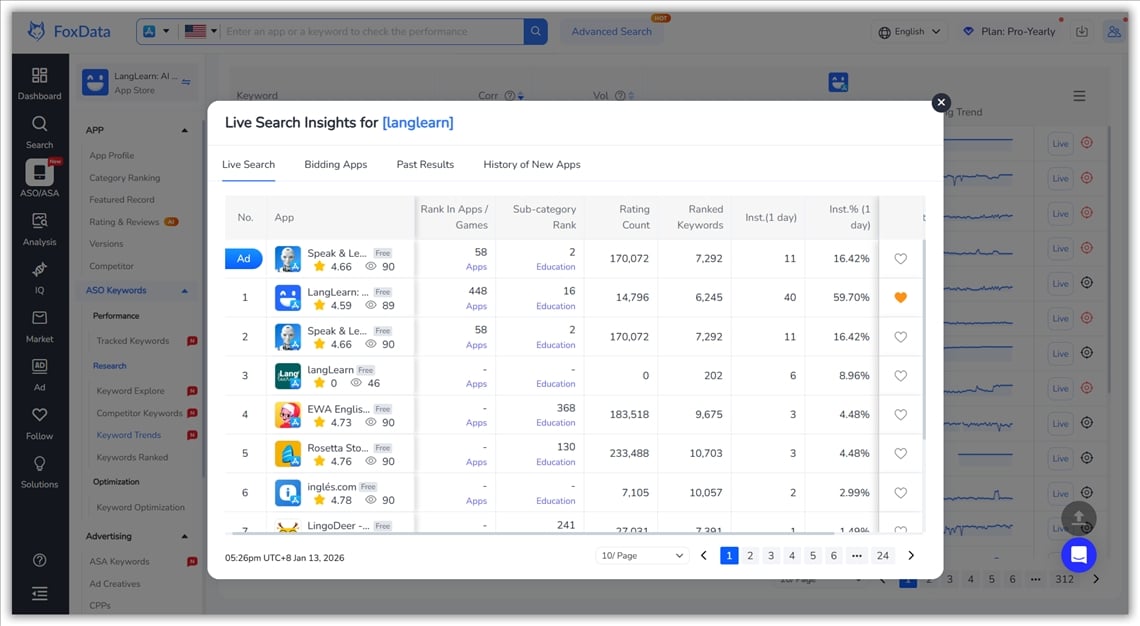
👉 A Comprehensive Guide to Niche Keywords Research With Free ASO Tool
Teams can monitor when competitors update titles, keywords, screenshots, pricing or expand into new markets. These moves often signal that a niche is heating up, providing actionable intel before it’s obvious in downloads or revenue.
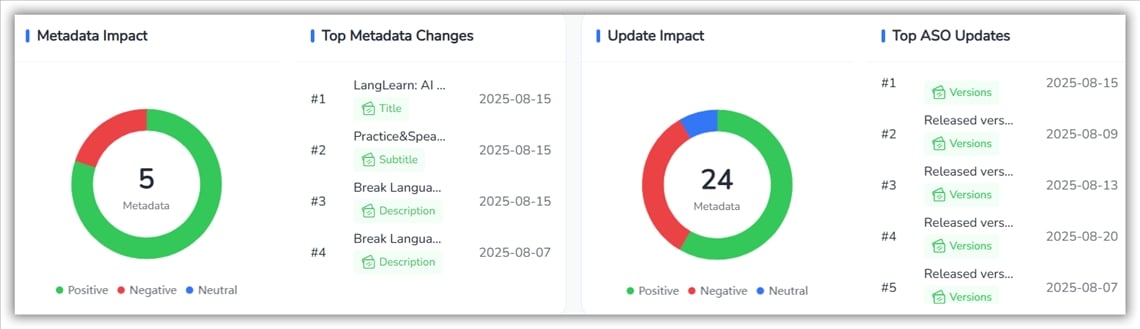
👉 ASO Impact Analysis: Turning App Store Events Into Measurable Growth Decisions
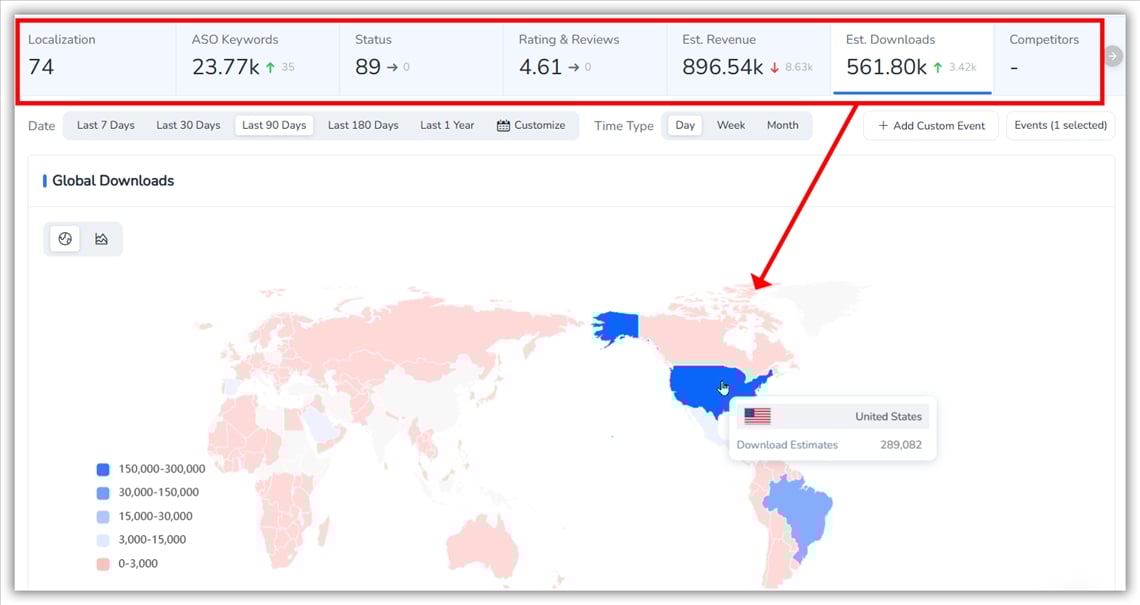
FoxData’s Global Overview allow developers to analyze keyword performance, download and revenue estimates, category rankings and regional variances across markets—revealing where niche demand is rising worldwide before competitors take notice.
In a noisy market, the true winners of 2026 aren’t those building the biggest apps—they’re the ones building the most intentional. Success comes from focusing on what truly matters: a clear niche identity, a single high-intent input, a monetizable habit, a simple and intuitive UX, precise ASO, and a sharp focus on solving the one job that users care about most.
For developers, marketers, founders, and indie creators, the question is no longer:
“How do I build a big app?”
Instead, it’s:
“Which small, high-intent niche will pay me every month for solving one recurring, painful problem?”
With FoxData, finding—and growing—that niche becomes predictable.
👉 Start your free trial today and see how FoxData can help you scale smarter, not bigger.
📣 Don't miss these:
© 2020-2026 FoxData. All Rights Reserved.