


Explore More Possibilities for Your Business
Full-cycle scenario construction to meet your needs from App research, development, and release to operation.
Ready for your soaring growth
Your business intelligence stack is only as smart as the data feeding it.
For most mobile app teams, there is a critical blind spot. Internal dashboards track DAU, revenue, and retention well. But they rarely capture what is happening outside your app — in the stores where users discover you, compare you, and decide whether to download you or a competitor.
That gap is expensive.
Yet most enterprise teams treat app store data as a siloed afterthought — checked manually, pulled inconsistently, and never connected to the broader analytics infrastructure that drives decisions.
This article breaks down the real return on investment from integrating app store data into your enterprise analytics stack. More importantly, it shows you exactly how to do it.
The mobile app economy is enormous and growing fast.
According to Business of Apps, Android and iOS consumer spending alone reached $166.8 billion in 2025 — an 11.1% year-over-year increase.
When mobile ad revenue is included, the broader app economy surpassed $400 billion in 2025. In 2024, the global app store ecosystem generated $1.3 trillion in developer billings and sales.That scale means the competitive signals buried inside app store data carry real financial weight.
Here is the problem most teams face. Product, marketing, and UA managers each pull app store data from different sources. Some use manual exports. Some use disconnected tools. None of it flows into the central data warehouse where strategic decisions are actually made.
The result? Decisions get made on incomplete pictures.
Apple's own data confirms that 65% of all App Store downloads happen immediately after a keyword search. If your analytics stack cannot see keyword ranking trends, competitor movements, or store conversion data, you are flying blind on the channel that drives the majority of your organic installs.
Integrating structured app store data through a reliable API changes this entirely.

Discover how FoxData enhances data protection and security standards to keep your analytics safe and reliable.
Most teams track keyword rankings manually, inconsistently, or not at all. When ranking data flows automatically into your BI tools, pattern recognition becomes possible.
You can see which keyword gains drove install spikes. You can correlate ranking drops with revenue dips. You can set automated alerts before a competitor overtakes you on a high-value term.
Apple's own data shows that 70% of App Store visitors use search to find new apps, and 65% of downloads happen immediately after that search. That kind of scale is measurable — but only if your data pipeline captures ranking history with enough granularity to connect cause and effect.
When you integrate app store data at the enterprise level, competitor tracking stops being a manual research task. It becomes a live data feed.
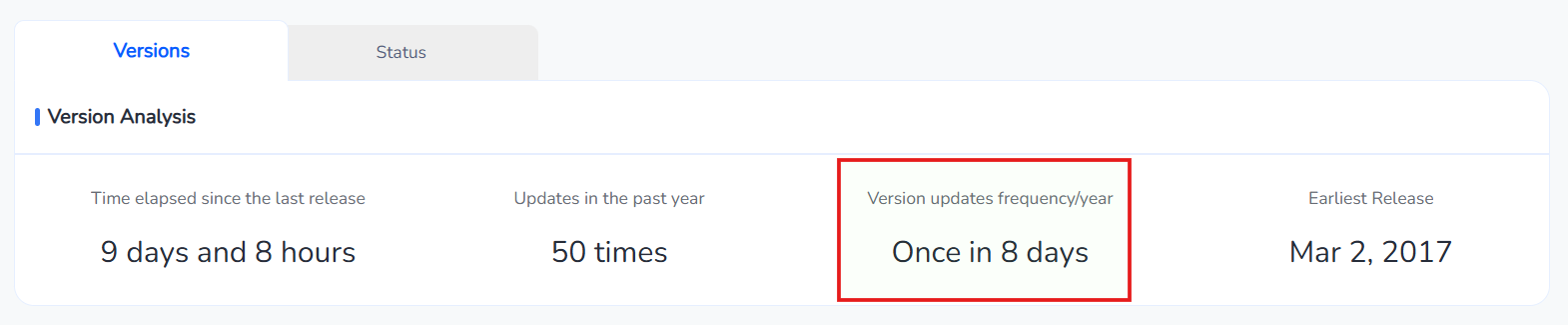
You can monitor competitor rating trends, review sentiment, update frequency, and category ranking shifts over time. These signals are early indicators of product strategy changes. Spotting them early gives your team time to respond rather than react.
The global ASO tools market was valued at $843.8 million in 2024 and is projected to reach $3.1 billion by 2035 — a clear signal that enterprises are investing heavily in this intelligence layer. Consumer spending on iOS and Android apps grew 11.1% year-over-year in 2025, meaning the competitive stakes of ranking well are rising alongside revenue.
User acquisition managers often run paid campaigns without knowing how their organic store performance is affecting overall conversion. When app store data integrates with your MMP and attribution stack, you can see the full picture.
ASO and paid UA must work together — it is nearly impossible to achieve financially sustainable results through advertising without optimizing your app's product page. Teams that unify these data streams consistently find waste in their paid spend and find new organic leverage they were not exploiting.
When app store KPIs live inside the same warehouse as revenue and retention data, reporting becomes far more credible. You can show leadership how a category ranking shift affected LTV cohorts. You can tie metadata updates to conversion rate changes in the same dashboard.
This is what separates tactical app teams from ones that operate strategically.
The fastest way to close this data gap is through a structured app store data API that gives your team programmatic access to the metrics that matter.
FoxData's app data API provides enterprise-grade access to app store intelligence across both iOS and Android. It is built for teams that need to pipe mobile market data directly into their analytics infrastructure without manual exports or fragile scraping solutions.
Here is a practical integration approach:
Step 1: Identify your key app store KPIs. Start with keyword rankings, category rankings, ratings and review volume, and download and revenue estimates for your app and top competitors. These are the foundational signals.
Step 2: Map them to existing BI data models. Most analytics stacks already have tables for user acquisition, revenue, and retention. App store data should sit alongside these, connected by date and market dimensions.
Step 3: Automate the pipeline. Using FoxData's mobile market intelligence API, you can schedule daily pulls into Snowflake, BigQuery, Redshift, or any warehouse your team already uses. No manual exports. No data staleness.
Step 4: Build cross-source dashboards. Once the data flows in, connect it in Tableau, Looker, or Power BI alongside your MMP data, revenue reporting, and product analytics. This is where the real ROI becomes visible.
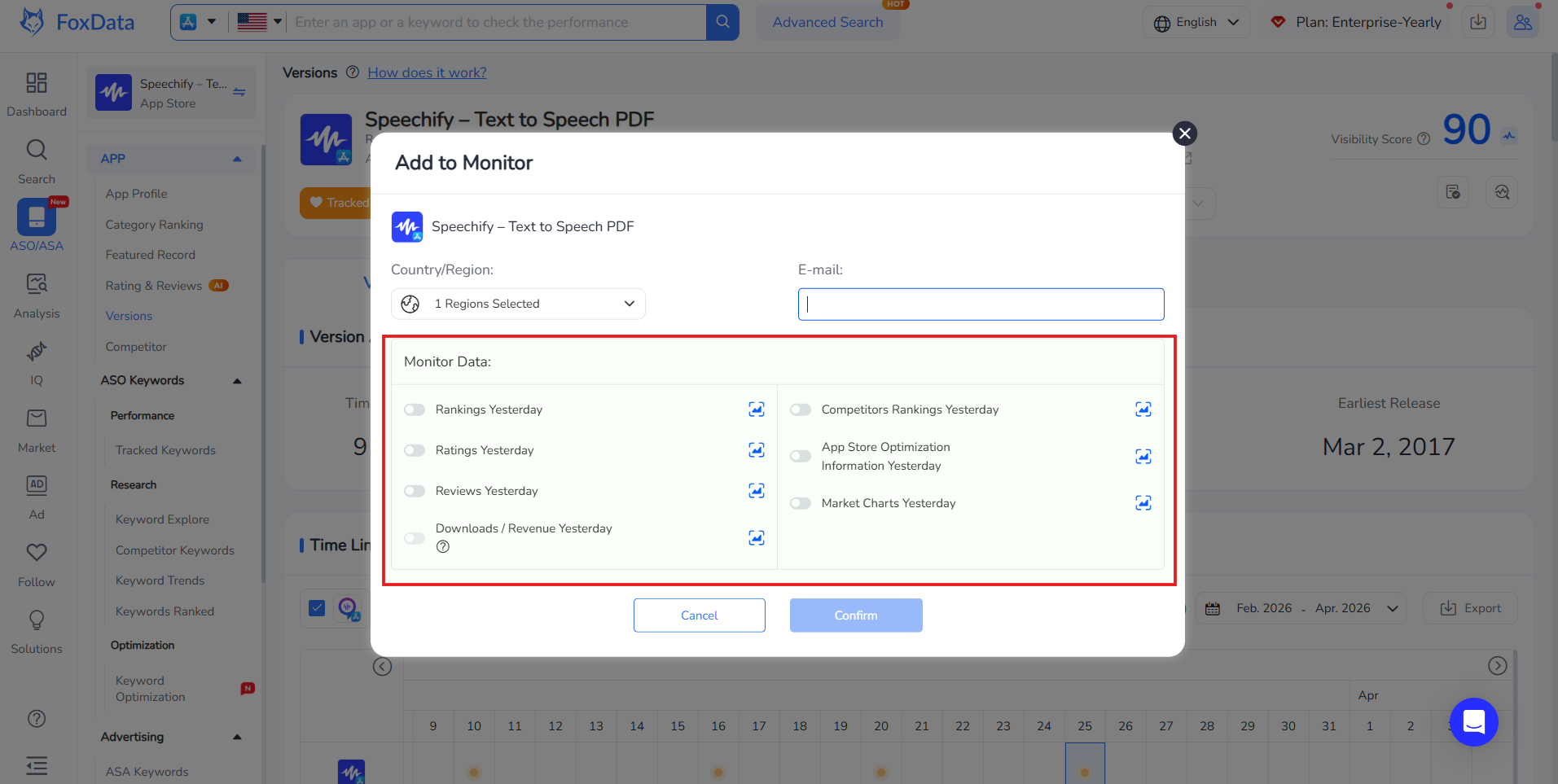
Step 5: Set automated alerts. Configure threshold-based alerts for ranking drops, competitor rating surges, or sudden review volume spikes. These early warning signals are only possible when your app store data is live and structured.
Teams that follow this approach stop treating ASO as a marketing function and start treating app store data as a core business intelligence asset.
App store rankings can shift significantly within days. Weekly or monthly review cycles miss the signals that matter most. Daily or near-real-time data feeds are essential for teams operating at scale.
Your app's ranking in isolation means little. Competitive context is everything. If your ranking holds steady but a competitor climbs past you on a core keyword, you are losing ground you will not see without competitor tracking built into your data model.
When ASO data sits only with the marketing team, it creates blind spots for product and UA. A keyword ranking drop might actually be a product quality signal. A rating decline might predict a churn spike. These connections only appear when all teams share a unified data view.
Download volume means nothing if your store page is converting poorly. Apps that A/B test screenshots quarterly see 20 to 30% higher conversion rates than those that update assets only annually. You need conversion rate data integrated alongside install volume to understand true acquisition efficiency.
Ad hoc integrations break. Schema changes, rate limits, and access issues create data gaps at the worst moments. Invest in a reliable enterprise-grade data provider with documented APIs, stable endpoints, and a support layer. That is the foundation of a durable analytics stack.
App store data is not a marketing metric. It is a business intelligence asset.
Teams that integrate this data at the enterprise level gain a competitive advantage that compounds over time. They catch ranking drops before they become revenue problems. They spot competitor moves before they become market share losses. They build UA strategies that are grounded in the full picture of how users discover and convert in the stores.
The infrastructure to do this is available now. The question is whether your team is using it.
Ready to bring app store intelligence into your enterprise analytics stack? Explore FoxData's app store data API and see how leading mobile teams are building smarter, faster data pipelines with structured mobile market intelligence built for scale.
What types of app store data can be pulled via an API?
Most enterprise-grade APIs provide keyword rankings, category rankings, download and revenue estimates, ratings and review data, update history, and competitor tracking across both iOS and Android. The depth and freshness of data varies by provider.
How does app store data API integration improve UA team performance?
When keyword ranking, organic install, and paid campaign data share the same analytics environment, UA managers can see which organic keywords their paid campaigns are cannibalizing, and which paid terms are underperforming because the store page conversion rate is low. This directly reduces wasted spend.
Is app store data integration only relevant for large publishers?
No. Any team with more than one app, operating in more than one market, or running active UA campaigns benefits from structured app store data. The ROI scales with team size, but the efficiency gains apply across the board.
How often should app store data be refreshed in an analytics stack?
For keyword rankings and competitor tracking, daily updates are the minimum meaningful frequency. Rating and review data benefits from near-real-time feeds, especially during product launches or update rollouts when user sentiment shifts quickly.
Ready to make your app shine? Optimize your app's visibility with FoxData, the ultimate mobile app analytics and ASO tool! Maximize downloads and rankings by leveraging our powerful insights today.
App Growth & ASO Tools by FoxData
FoxData supports every stage of app growth with specialized ASO and app analytics tools, helping teams improve keyword visibility, user acquisition, and retention through reliable data.
🔍 Store Keyword Research Tools
Research high-intent keywords, search volume, and competition to strengthen your app store optimization strategy.
📈 App Store Keyword Tools
Analyze keyword rankings and performance across the Apple App Store and Google Play to refine ASO execution.
📊 ASO Monitoring Tools
Monitor keyword ranking changes, visibility trends, and ASO impact over time with continuous performance tracking.
👥 User Activity Monitoring Tools
Understand in-app user behavior, engagement, and retention with real-time user activity analytics.
Together, these tools form FoxData’s ASO analytics and app intelligence ecosystem, designed to help developers, marketers, and growth teams make data-driven decisions and scale sustainably.
Explore it today!
👉 Learn more about FoxData here | 👉 Book a demo with FoxData team today!
© 2020-2026 FoxData. All Rights Reserved.