





Explore More Possibilities for Your Business
Full-cycle scenario construction to meet your needs from App research, development, and release to operation.
Ready for your soaring growth
The productivity app market has become one of the most competitive and commercially significant categories in mobile, and the opportunity it presents in 2026 is difficult to overstate.
Recent projections place the global productivity apps market at approximately $14.46 billion in 2026 and the market is projected to reach over $30 billion by 2034. Meanwhile, broader productivity software revenue, which encompasses office suites, AI tools, and cloud collaboration platforms, reached over $30 billion in 2024 alone, a year-over-year increase of more than 17%.
For app developers, marketers, and user acquisition managers, this growth signals both tremendous opportunity and intensifying competition. The question is not whether the productivity category is worth pursuing. It is whether your app has the visibility, positioning, and analytics infrastructure to capture a share of it.
This article breaks down the key trends shaping the productivity app market in 2026 and offers tactical guidance on how to capitalize on them.
The scale of growth in productivity is driven by structural forces that are unlikely to reverse. Hybrid and remote work models have become permanent for a significant share of the global workforce. Smartphone penetration continues to expand in Asia-Pacific, Latin America, and Africa. And the normalization of AI tools in everyday workflows has unlocked an entirely new tier of productivity software spending.
Research from Business of Apps indicates that AI app revenue was approximately $4.5 billion in 2024. Data indicates that AI apps are expected to see massive growth again in 2025, driven by conversational AI tools like ChatGPT. Some estimates suggest the market will grow to over $5 billion to $15 billion in 2025.
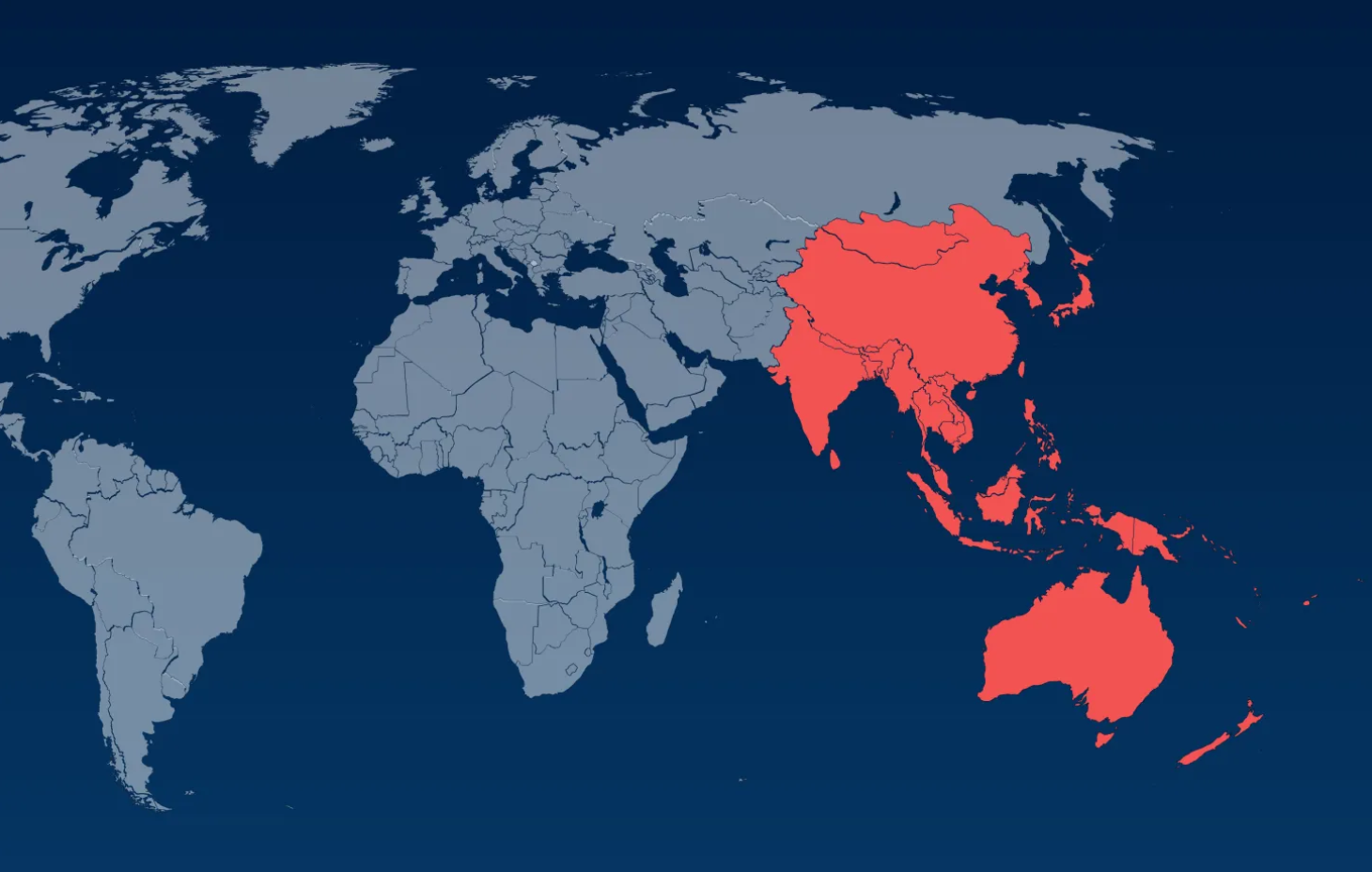
This places AI-powered productivity tools among the fastest-growing segments in mobile. The Asia-Pacific region in particular is projected to expand at a CAGR of over 15% through 2034, driven by rapid digitization and a mobile-first work culture.
For developers building in this space, the implication is clear. There is sustained demand across geographies and use cases. But with the App Store hosting roughly 1.99 million apps and Google Play around 2.06 million, discoverability has become the central challenge. High-quality apps continue to go undiscovered not because of poor execution, but because of poor optimization.
Perhaps the most consequential trend in the productivity category right now is the deep integration of artificial intelligence into user-facing features. Users are no longer impressed by AI as a novelty. They expect it as a baseline.
Task automation, smart scheduling, AI-generated summaries, and contextual prompts are becoming table stakes in productivity apps. Research indicates that AI decision-makers plan to increase investment in generative AI technologies, and more than 60–70% of companies have already begun implementing general AI and GenAI adoption.
Apps that lack these capabilities face growing pressure from competitors that offer them.
From a marketing and ASO standpoint, this creates a keyword opportunity. Terms related to AI productivity, smart task management, and workflow automation are gaining significant search volume in both the App Store and Google Play.
Developers who incorporate these terms naturally into their metadata, screenshots, and short descriptions can capture organic traffic from users who are actively searching for AI-enhanced tools.
It also raises the bar for review quality and retention. As Apple and Google's ranking algorithms become more sophisticated, they increasingly reward apps that demonstrate strong user engagement and low uninstall rates. An AI feature that genuinely reduces friction will drive both of those outcomes.
In a market this crowded, organic discoverability is a strategic moat. Data shows that organic downloads account for approximately 65% to 70% of total installs, and app store optimization remains the most cost-effective user acquisition strategy available to mobile teams.
What has changed in 2026 is the nature of ASO itself. The key shifts to understand are:
Semantic and intent-based search is replacing exact keyword matching. Both Apple and Google have invested heavily in natural language processing to better interpret what users want. This means keyword stuffing is not just ineffective; it is actively penalized. The goal now is to write metadata that communicates the app's core value clearly, for both algorithms and people.
Apple's algorithm now indexes text in screenshot captions. Research into ASO performance data shows that apps incorporating core keywords directly into screenshot caption text saw visibility increases of over 200% on iOS. This is a low-effort, high-return optimization that many productivity apps still overlook.
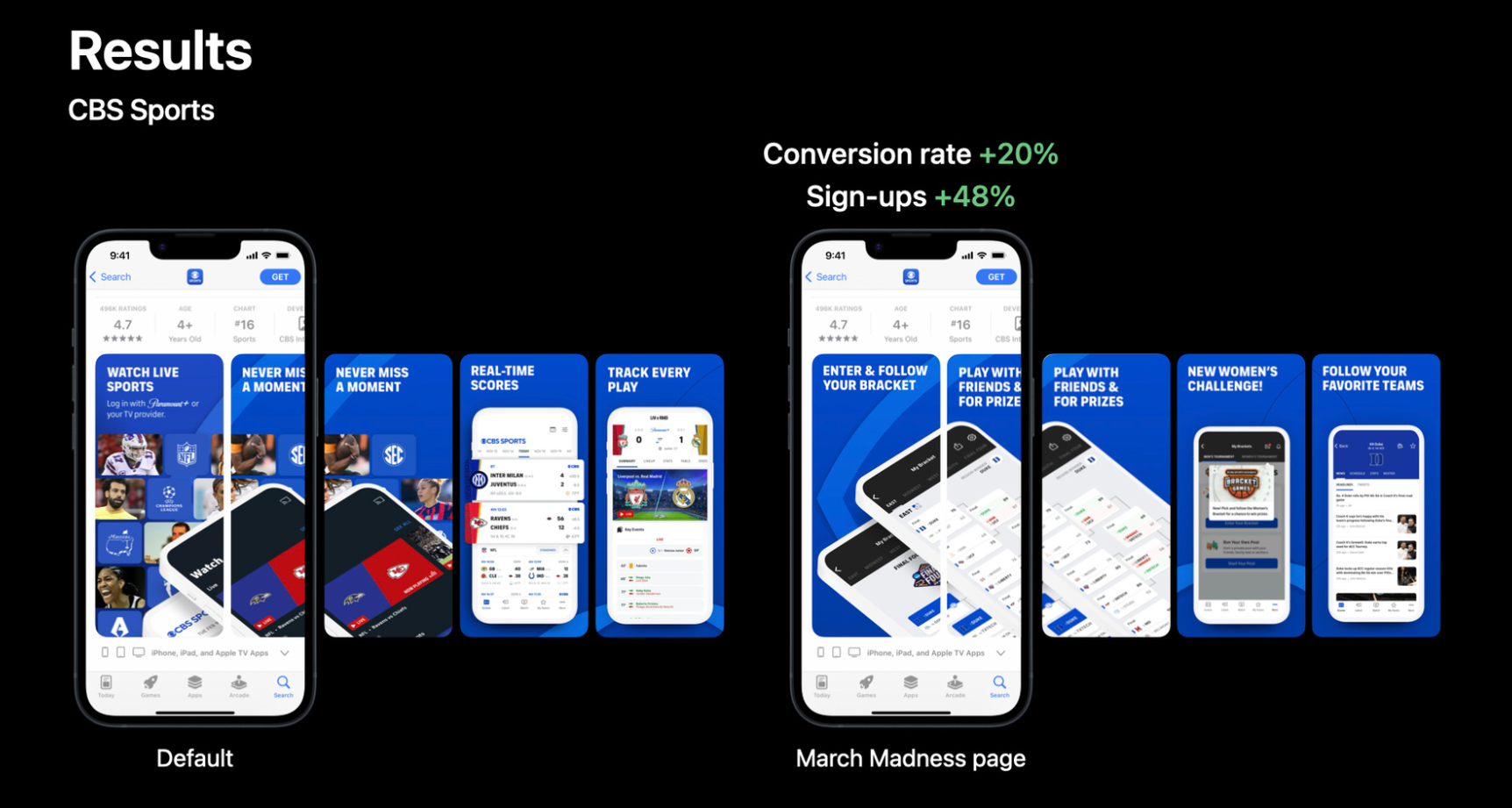
Custom Product Pages and Store Listings are no longer optional. Apple now allows up to 70 active Custom Product Pages, and apps using them have seen average conversion rate boosts of nearly 6%, with some campaigns reaching above 8%. For productivity apps targeting multiple use cases (personal task management vs. enterprise collaboration, for example), tailored store experiences are a direct lever on conversion.
Ratings and reviews have a measurable impact on rankings. Apps rated under 3.5 stars face significantly reduced visibility, while apps above 4.0 correlate with higher keyword rankings and discoverability. Research indicates that 90% of featured apps on the App Store carry ratings of 4.0 or above. Implementing in-app review prompts at the right moment in the user journey is not just a ratings strategy. It is an ASO strategy.
Staying competitive in this environment requires more than periodic keyword updates. It requires continuous monitoring of competitor movements, keyword volume shifts, and store algorithm changes. This is precisely where a dedicated productivity app analytics and ASO platform provides a structural advantage over manual approaches.
On the paid acquisition side, the landscape is also shifting. Apple recently rebranded Apple Search Ads to Apple Ads, a signal of its broader ambitions in the advertising space. Starting March 2026, Apple confirmed additional ad placements in App Store search results, increasing competitive pressure on high-intent keywords.
For productivity apps, this means two things. First, the cost to acquire users through paid search is likely to increase as more advertisers compete for top placements. Second, a strong organic foundation through ASO becomes even more valuable as a hedge against rising CPAs.
The smart approach combines both. Paid campaigns can identify which keywords and creatives convert best, and that data should feed directly back into organic metadata optimization. Teams that treat ASO and Apple Search Ads as separate workstreams are leaving optimization opportunities on the table.

Discover how FoxData enhances data protection and security standards to keep your analytics safe and reliable.
While North America currently accounts for roughly 35% to 40% of global productivity app market share, the fastest growth is happening elsewhere. AI-driven productivity and Generative AI (GenAI) app adoption is growing at an intense pace in APAC. One report noted downloads in the region grew 80% in six months (as of August 2025), with high adoption in China, India, and Japan. Emerging markets in Latin America and Southeast Asia are also increasingly mobile-first.
Yet many productivity app developers still release single-language store listings and treat international markets as afterthoughts. This is a missed opportunity with a relatively low barrier to entry.
Localization in ASO means more than translation. It includes adapting screenshots to reflect local workflows and UI conventions, researching locale-specific keyword patterns, and calibrating review prompts to cultural norms around app feedback. Apps with fully localized store listings consistently outperform unlocalized versions in international markets.
The productivity category's universal appeal, helping users manage time, tasks, and information, means the core value proposition translates across cultures with relatively modest adaptation. For teams looking for growth outside saturated markets, localization is one of the highest-ROI investments available.
The productivity app market in 2026 represents one of the most dynamic and commercially viable categories in mobile. The tailwinds are structural: remote work, AI adoption, smartphone growth, and cloud-first workflows are not going away. Neither is the competition.
For developers and marketers, the brands that will win are not necessarily those with the most features or the largest UA budgets. They are the ones who understand their market at a granular level, respond quickly to keyword and algorithm shifts, and make every element of their store presence work harder.
Discoverability is earned through consistent, data-informed effort. That means treating ASO as an ongoing discipline, not a launch-week task.
Ready to take a data-driven approach to growing your productivity app? Explore FoxData's productivity app market intelligence and ASO tools to track keyword performance, benchmark competitors, and optimize your store presence with confidence.
Q1: What are the biggest ASO opportunities for productivity apps in 2026?
The highest-impact ASO opportunities in 2026 are screenshot caption optimization on iOS (which Apple's algorithm now indexes for keywords), the expansion of Custom Product Pages to target different user segments, and semantic keyword strategies that align with how users phrase intent-based searches. Ratings and review velocity also remain critical, as apps below a 4.0 average face measurable ranking suppression.
Q2: How is AI changing the productivity app market for developers?
AI is shifting user expectations across the entire productivity category. Features like automated scheduling, smart summarization, and contextual task suggestions are increasingly standard. From a growth perspective, AI-related search terms are generating rising keyword volume in both major app stores, creating ASO opportunities for developers who incorporate these terms naturally into their metadata.
Q3: Why is analytics infrastructure important for competing in the productivity app market?
The productivity category is large and growing, but it is also competitive enough that gut-feel decisions are no longer sufficient.
Understanding which keywords drive installs, how competitor apps are positioning themselves, how conversion rates shift across store page variations, and which markets are trending requires real-time data. Teams that invest in structured analytics infrastructure make faster, more defensible decisions across ASO, paid UA, and product roadmap prioritization.
Q4: Is the productivity app market saturated, or is there still room for new entrants?
Despite a large number of apps in the category, the market is far from saturated in terms of genuine differentiation. Most productivity apps compete on features rather than clarity of positioning.
Developers who clearly define and communicate a specific use case, target a defined user segment, and invest in both on-page and off-page ASO still find substantial room to grow. Niche verticals within productivity, such as tools for specific professions, industries, or AI-powered workflows, remain particularly underdeveloped from an ASO standpoint.
Ready to make your app shine? Optimize your app's visibility with FoxData, the ultimate ASO tool! Maximize downloads and rankings by leveraging our powerful insights today.
App Growth & ASO Tools by FoxData
FoxData supports every stage of app growth with specialized ASO and app analytics tools, helping teams improve keyword visibility, user acquisition, and retention through reliable data.
🔍 Store Keyword Research Tools
Research high-intent keywords, search volume, and competition to strengthen your app store optimization strategy.
📈 App Store Keyword Tools
Analyze keyword rankings and performance across the Apple App Store and Google Play to refine ASO execution.
📊 ASO Monitoring Tools
Monitor keyword ranking changes, visibility trends, and ASO impact over time with continuous performance tracking.
👥 User Activity Monitoring Tools
Understand in-app user behavior, engagement, and retention with real-time user activity analytics.
Together, these tools form FoxData’s ASO analytics and app intelligence ecosystem, designed to help developers, marketers, and growth teams make data-driven decisions and scale sustainably.
Explore it today!
👉 Learn more about FoxData here | 👉 Book a demo with FoxData team today!
© 2020-2026 FoxData. All Rights Reserved.