



Explore More Possibilities for Your Business
Full-cycle scenario construction to meet your needs from App research, development, and release to operation.
Ready for your soaring growth
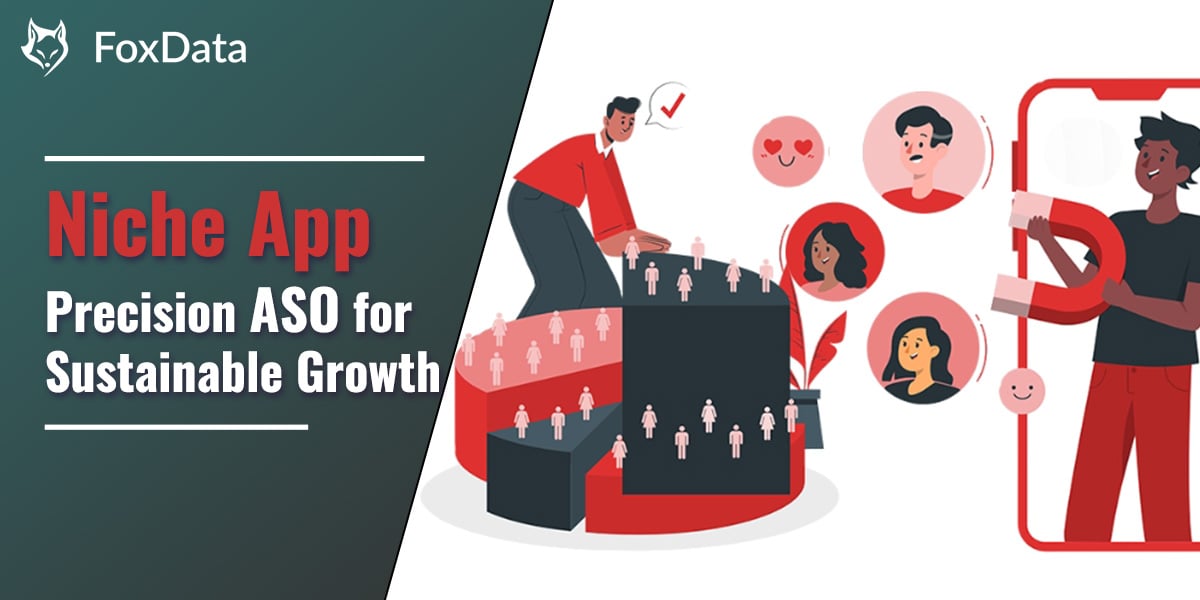
Today, mobile apps are deeply embedded in everyday life — supporting communication, entertainment, finance, health, and productivity. As competition intensifies, users are no longer searching for “everything apps,” but for solutions that fit their specific needs and workflows.
This shift has fueled the rise of niche apps — highly specialized products built for focused audiences and precise use cases.
For example, some of the standout niche apps in 2025 include:
These apps don’t compete on scale; they compete on relevance, trust and precision. Their success depends on understanding the unique needs of their target audience, delivering tailored solutions, and ensuring that every touchpoint — from app store discovery to retention loops — is optimized for high-intent users.
In saturated markets, this distinction fundamentally changes how App Store Optimization (ASO) should be approached. Niche apps require strategies that prioritize precision over volume, clarity over hype and conversion-driven decisions over broad visibility.
The app market is undeniably crowded — but it isn’t closed.
While mass-market apps aggressively compete for high-volume, high-cost keywords, niche apps continue to grow by serving clearly defined audiences with unmet or under-served needs. Whether it’s a fintech tool for freelancers, a rehabilitation-focused fitness app, or a B2B utility for a specific profession, niche apps win by being exactly right — not broadly visible.
However, this focus comes with real constraints:
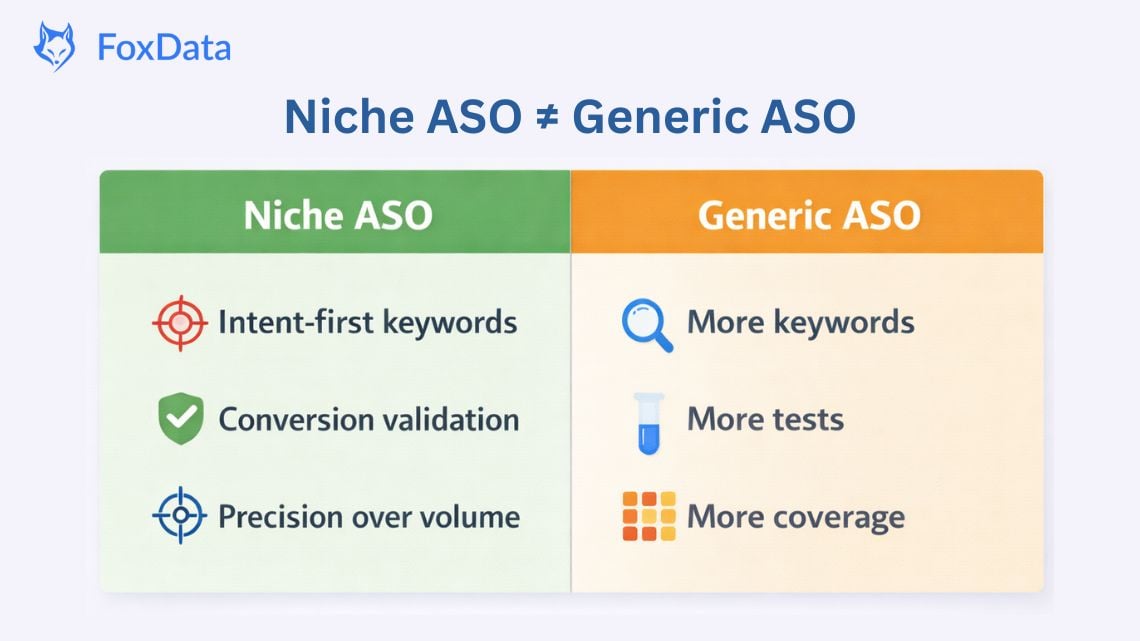
For niche apps, ASO is not about doing more — it’s about doing the right things with precision.
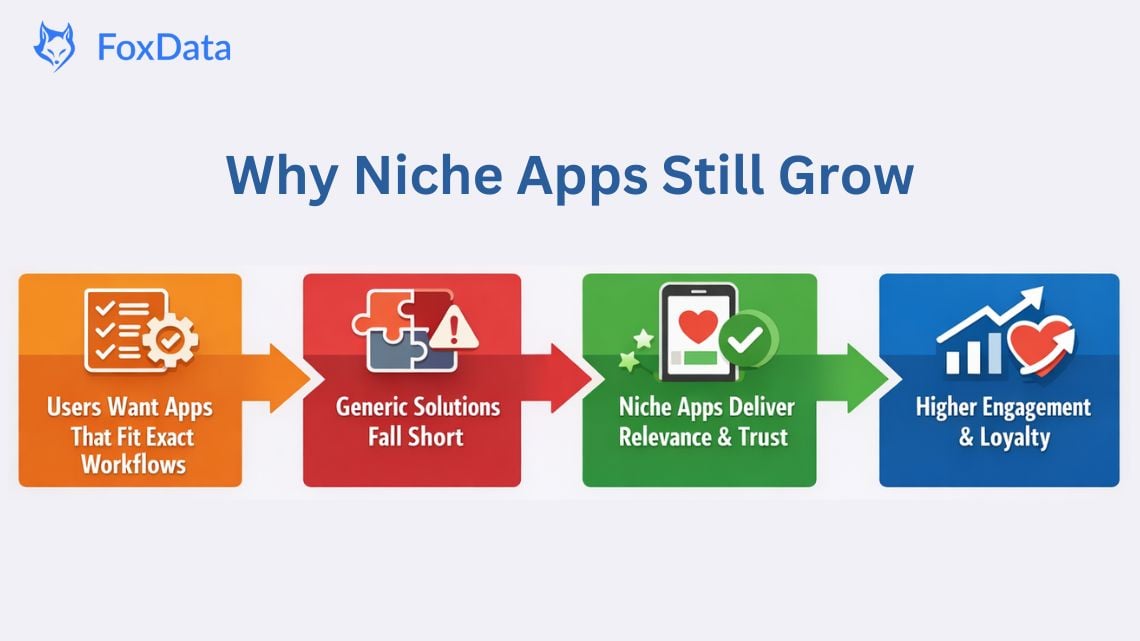
Despite intense competition in mainstream categories, niche apps continue to gain traction — not by competing head-on, but by addressing highly specific needs that broader solutions fail to satisfy.
As user expectations evolve, audiences increasingly seek apps that fit their exact workflows, lifestyles or professional requirements. Generic solutions often fall short, creating space for niche apps to deliver deeper relevance, stronger trust and higher long-term engagement.
From a growth perspective, niche positioning reshapes the equation. While total addressable markets may be smaller, competition is often more fragmented and user loyalty tends to be stronger once product-market fit is achieved.
Growth becomes possible — but only for teams that can:
This is why ASO plays a fundamentally different role for niche apps.
Before diving into tactics, it’s important to understand why generic ASO frameworks often fail for niche products:
Effective niche ASO must be intent-driven, data-validated and continuously refined.
Discover how FoxData enhances data protection and security standards to keep your analytics safe and reliable.
For niche apps, keyword success is defined by match quality, not search volume.
High-performing teams focus on:
Using ASO tools like FoxData, teams can:
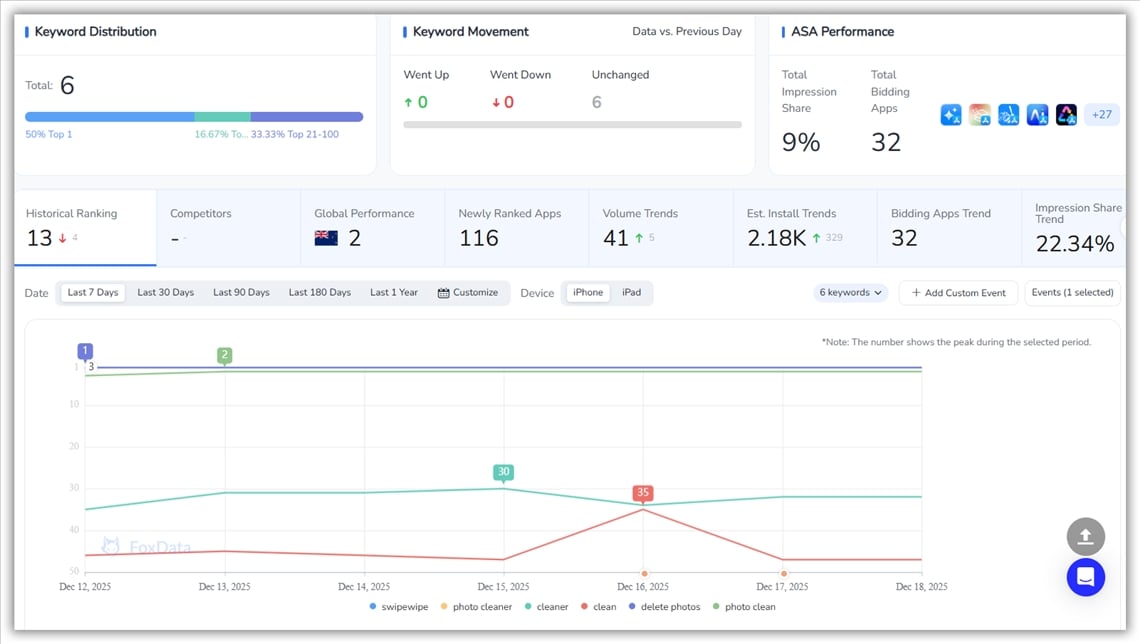
👉 Explore the All-New FoxData ASO/ ASA Module — Smarter ASO, Smoother Workflow
A lean, well-maintained keyword set consistently outperforms broad coverage in niche markets.
Metadata is often the first — and sometimes the only — chance to convince a niche user to download an app. Optimizing it effectively can directly impact both visibility in app stores and conversion rates.
Avoid marketing clichés. Niche users are typically informed and selective — clarity and relevance convert better than hype.
Below is an example of a real ASO Health Diagnosis for a niche app. It demonstrates how metadata elements such as app name, subtitle and keywords are analyzed to highlight both strengths and areas needing optimization.
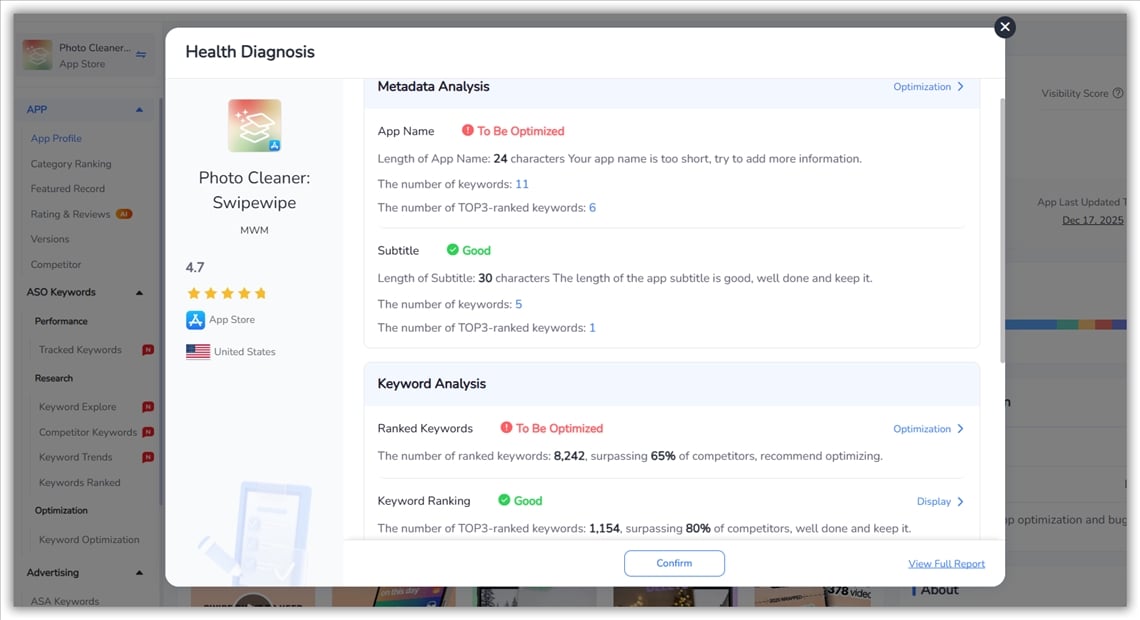
This type of analysis helps teams prioritize what to change first, instead of optimizing blindly. Tools like FoxData automate these diagnostics, allowing teams to identify gaps, validate decisions and track impact across versions.
For niche apps, ratings are not vanity metrics — they directly influence conversion confidence and ranking stability.
Execution best practices:
Turning feedback into strategy with FoxData’s Review Management Tools:
This closes the loop between user voice, product decisions and ASO performance.
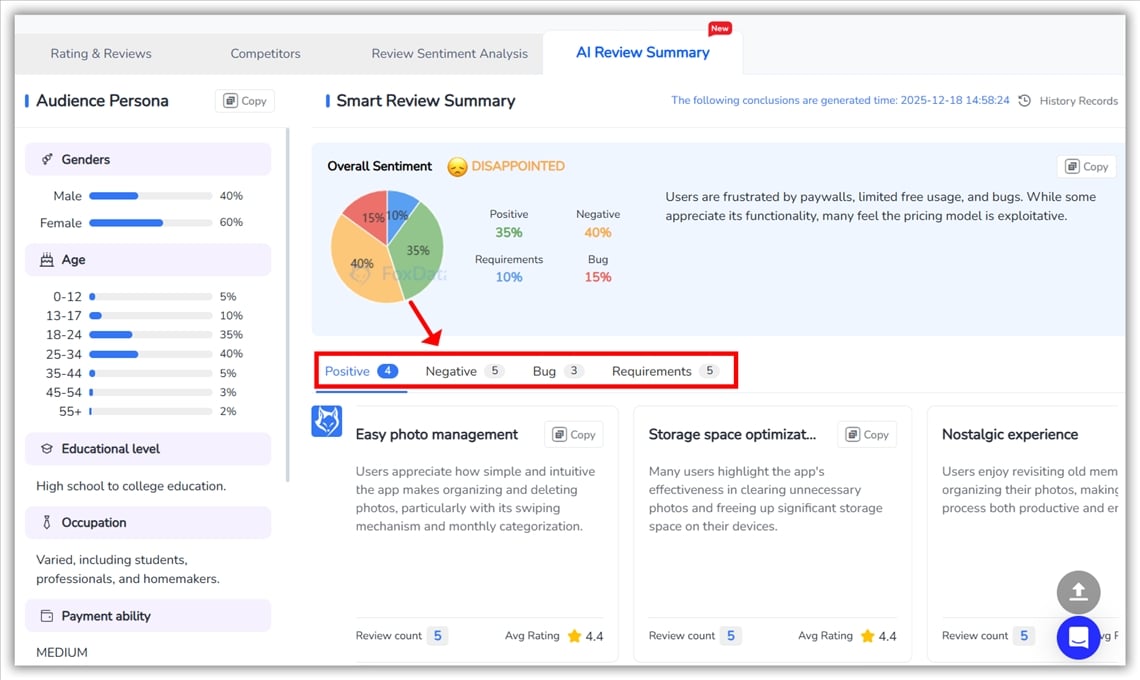
👉 How to Conduct App Market Research with "AI Review Summary"
For niche apps, localization is rarely about translation — it’s about relevance.
Effective localization includes:
A proven execution model:
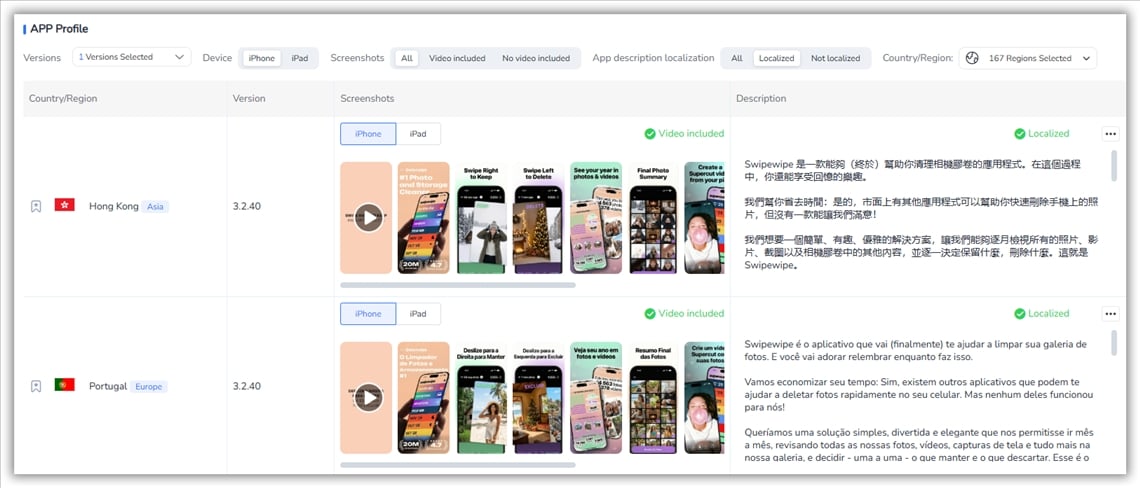
👉 The Comprehensive Guide for ASO Localization
Niche leaders don’t just watch competitors — they study patterns.
Key focus areas:
With FoxData ASO Impact Analysis, teams can connect what competitors changed with what actually moved rankings or downloads, reducing guesswork and avoiding blind imitation.
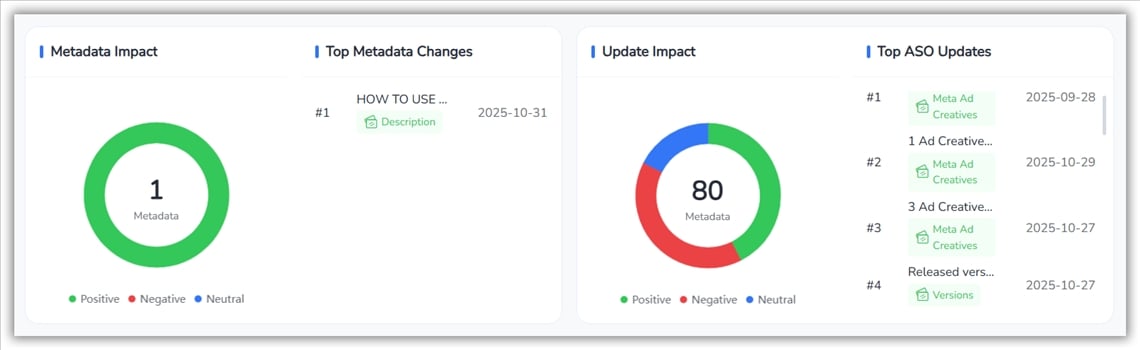
👉 ASO Impact Analysis: Turning App Store Events Into Measurable Growth Decisions
Even low-traffic niche apps benefit from disciplined testing.
High-impact test elements:
Principles:
Even small conversion uplifts can yield meaningful growth for niche subscription apps.
Content will be displayed after page load
High-performing niche teams often operate with limited resources across diverse categories — from mobile games and utilities to agency-managed portfolios.
This is where FoxData becomes especially valuable across different niches:
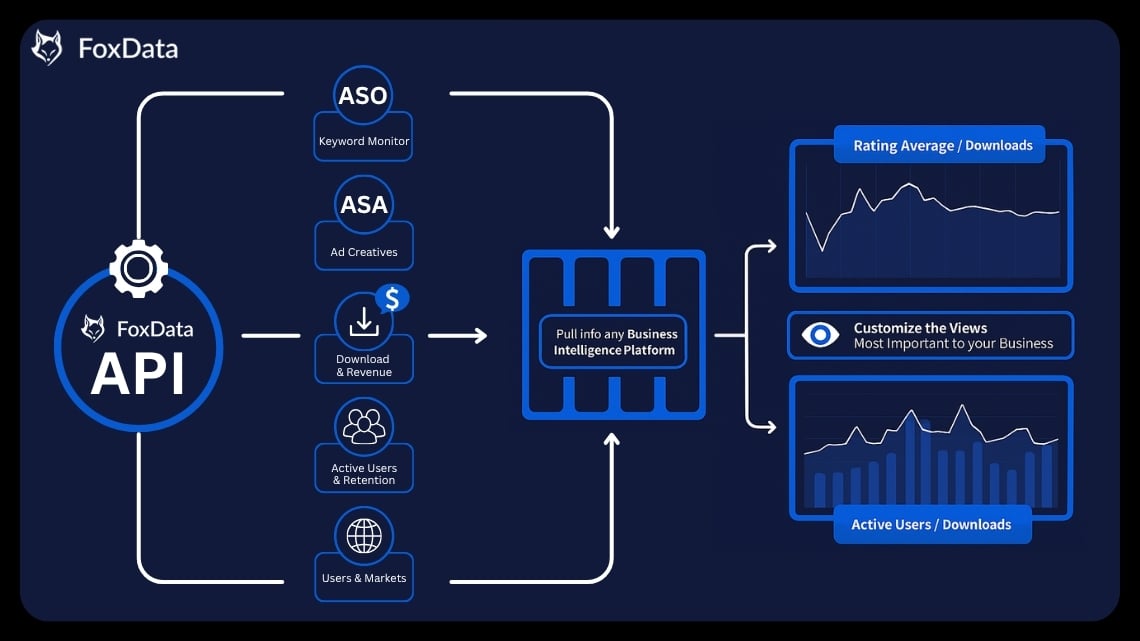
FoxData helps teams reduce decision time, eliminate guesswork and focus optimization where impact is proven — turning ASO into measurable, sustainable growth.
Niche apps don’t win by chasing scale.
They win by understanding their users better than anyone else — and reflecting that understanding in every ASO decision.
ASO isn’t a one-time campaign — it’s a system.
A system that connects keyword strategy, conversion performance and measurable outcomes.
For teams ready to move beyond fragmented optimizations and build a repeatable, data-driven ASO engine, precision is no longer optional — it’s the growth advantage.
👉 See how precision-led ASO drives sustainable app growth with FoxData.
📣 Don't miss these:
© 2020-2026 FoxData. All Rights Reserved.