



Explore More Possibilities for Your Business
Full-cycle scenario construction to meet your needs from App research, development, and release to operation.
Ready for your soaring growth
📢 FoxData has officially achieved ISO 27001 certification, reinforcing our commitment to global data security and enterprise-grade standards.
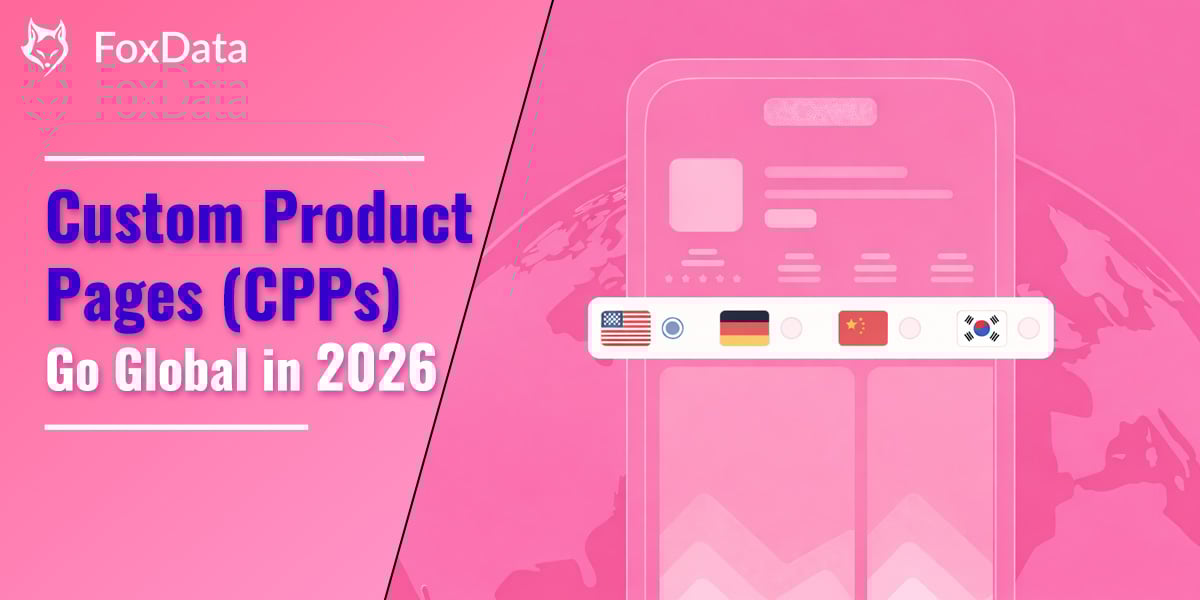
Custom Product Pages (CPPs) are no longer just a paid acquisition tool. They are now a strategic lever for global growth. Since WWDC 2025, Apple has expanded CPPs in App Store discovery, bridging paid campaigns and organic search while aligning directly with keyword-level user intent.
For developers, this means CPPs can drive localization, improve relevance, and optimize conversion across both organic and paid traffic. In this guide, we’ll explore how to craft region-specific messaging, respond to seasonal trends, align with Apple Ads campaigns, and continuously improve performance through measurement and testing.
Custom Product Pages are additional versions of your App Store product page, each with a unique URL. They allow you to tailor screenshots, app previews, promotional text, and deep links for specific audiences.
Your default product page remains the primary organic entry point. CPPs extend it — giving you precision targeting for campaigns, regions, and high-intent search traffic.
➡️ A Step-by-Step Guide to Custom Product Pages (CPPs) for Apple Ads
Global markets differ not just by language, but by expectations, habits, and decision-making patterns. CPPs allow you to respond to those differences strategically.
Localization goes beyond language translation. CPPs let you adapt the tone, visuals and messaging to make the app feel native in each market.
For example, Booking.com adapts its French product page not only through translation but also by adjusting screenshots and messaging emphasis to match local booking habits. When the message feels familiar, users decide faster, improving conversion.
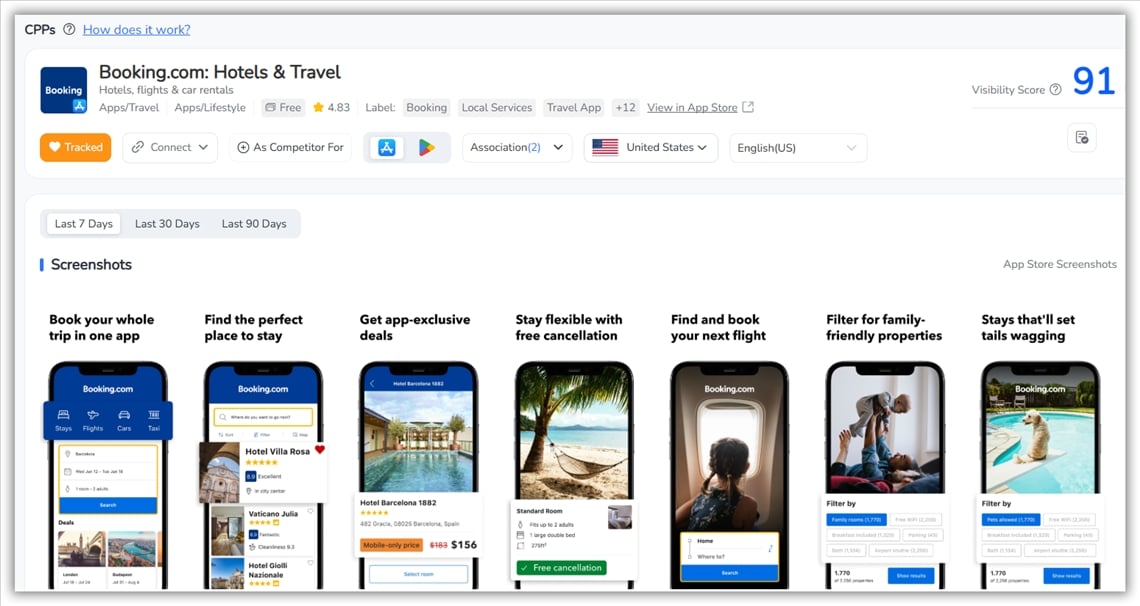
CPPs for "English" languge by Booking.com
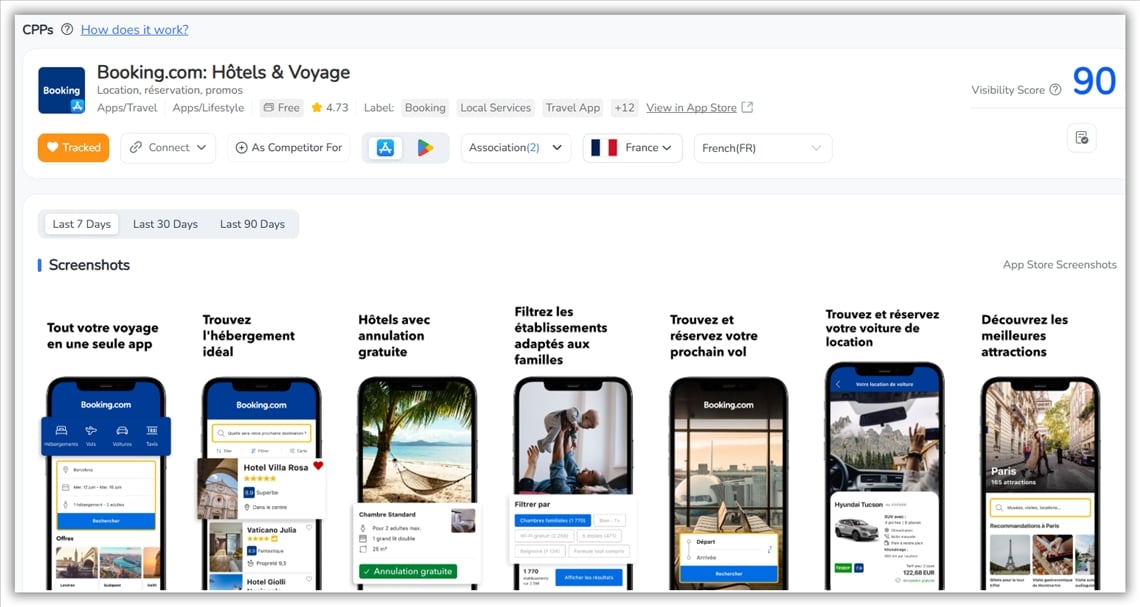
CPPs for "French" languge by Booking.com
💡 Tip: Focus on clarity and cultural alignment, not literal translation.
Users in different regions care about different benefits. Custom product pages let you adjust the message so your app feels more relevant locally.
Take Spotify as an example:
The app stays the same — only the story changes for each market. When messaging mirrors local habits, users understand relevance immediately, boosting conversion in search-driven traffic.
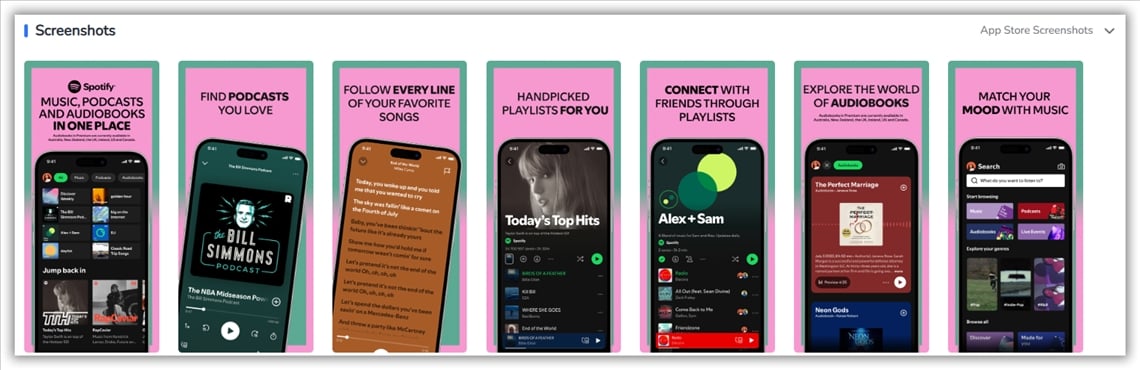
CPPs for "United States" by Spotify
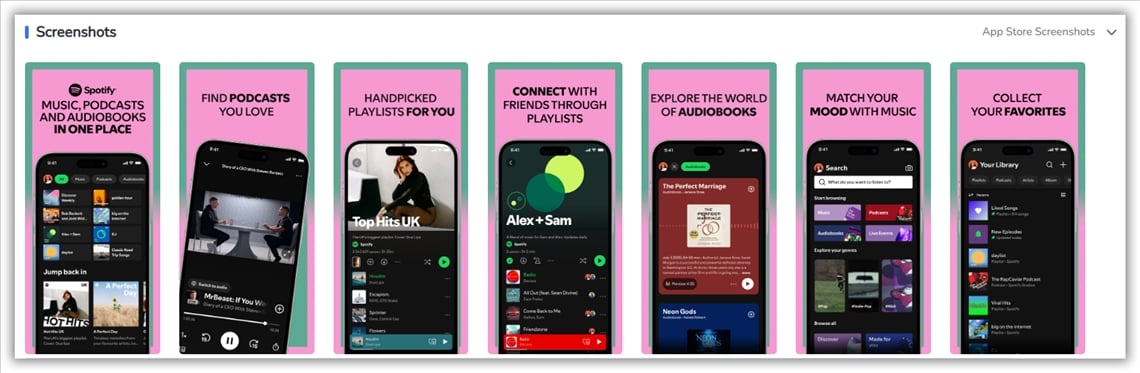
CPPs for "Ireland" by Spotify
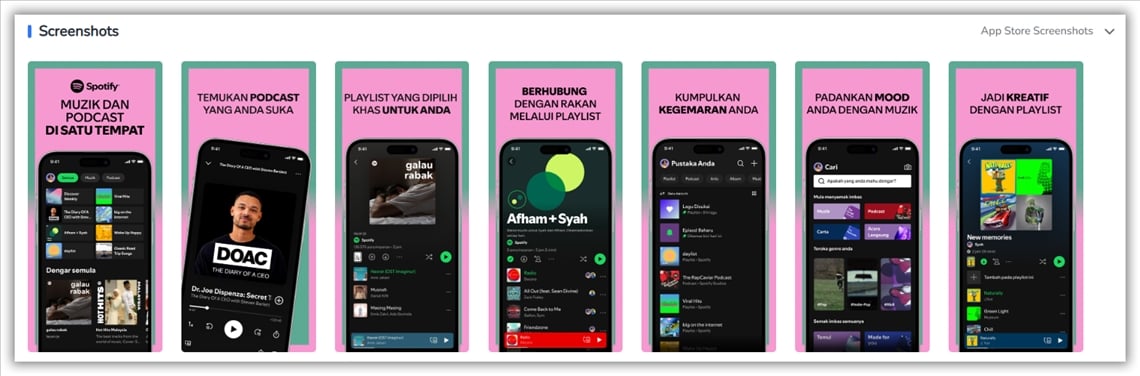
CPPs for "Malaysia" by Spotify
Seasonality varies by region. Holidays, events and shopping cycles vary by region. Custom product pages let you showcase seasonally relevant content without affecting your global default page.
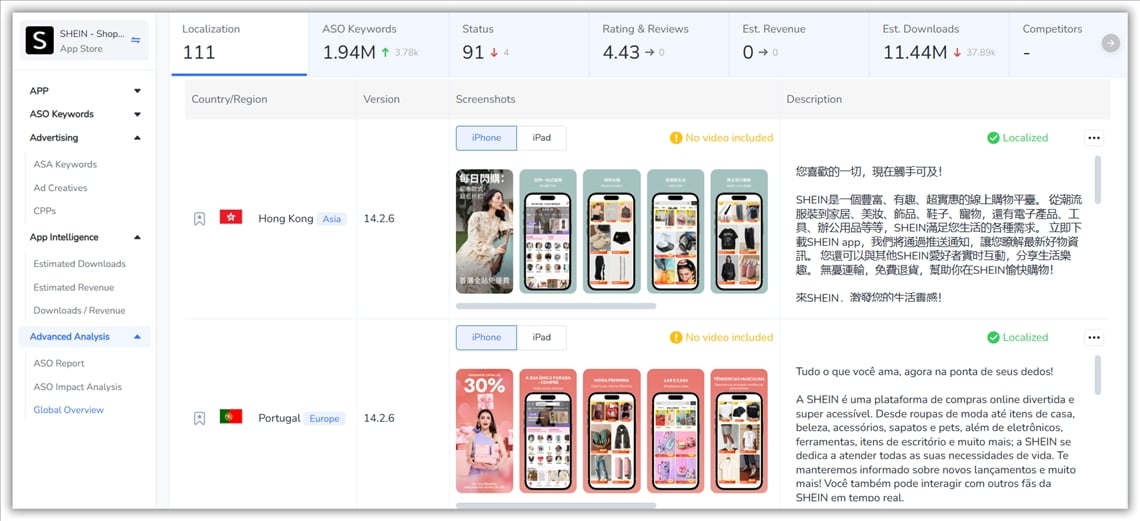
For example, SHEIN localizes Chinese New Year promotions across markets instead of using a single global message. CPPs let you showcase seasonal content without affecting your default page, keeping messaging timely and increasing high-intent conversions.
Discover how FoxData enhances data protection and security standards to keep your analytics safe and reliable.
CPPs can be tied directly to Apple Ads campaigns across search results, Search tab and Today tab placements.
At the regional level, this allows you to:
As data accumulates, creative and budget decisions become evidence-based rather than assumption-driven.
Trust expectations vary by market. Instead of using one global trust message, custom product pages let you highlight what matters most locally. This may mean changing the order of screenshots, adjusting headlines, or featuring different proof points upfront.
Depending on the region, effective trust signals can include:
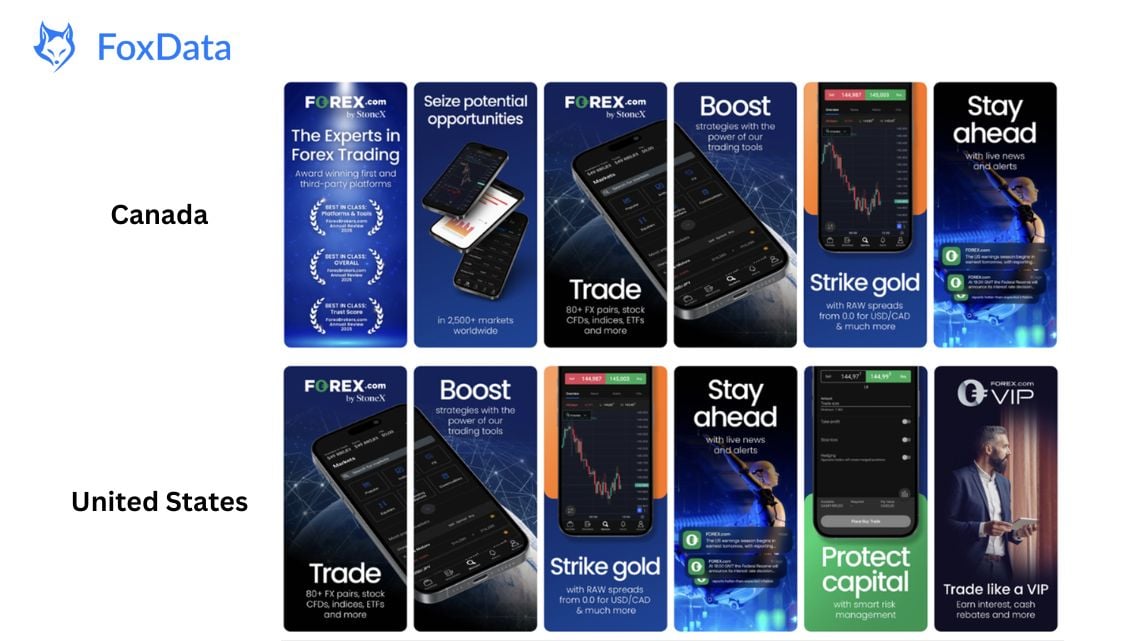
For example, a fintech app might build trust differently across markets. In Canada, the focus could be on institutional credibility — awards, reliability and scale. In the United States, the emphasis might shift to performance tools, alerts and risk management features.
Global expansion doesn’t end at install. To fully optimize Custom Product Pages for global growth, developers must ensure the post-install experience matches regional user intent. In many markets, users expect to see localized content, features, or onboarding flows immediately after download.
App Store Custom Product Pages support optional deep links, allowing you to direct users to a specific in-app destination after install (on supported iOS versions). This creates a seamless connection between the App Store messaging and the first in-app experience.
Common use cases include:
When deep links align the App Store product page messaging with the in-app journey, activation rates and early retention improve. For developers scaling internationally, this continuity between discovery, install, and first use is essential for sustainable global expansion.
Localization alone doesn’t guarantee results. CPP A/B testing validates whether regional adaptations actually improve performance.
Why test:
Testing methods:
Structured testing lets you draw insights from one market and apply them globally. FoxData’s ASO Tools supports tracking keyword-level performance, visibility and conversion impact.
A: Identify markets with lower conversion, higher CPI, or weaker retention.
A: Start with one page per region. Expand only if data supports multiple user segments, strong seasonality, or distinct acquisition strategies.
A: Yes. By aligning pages to local search intent, CPPs can appear in relevant queries, boosting organic conversion when localized messaging resonates more than a global narrative.
Custom product pages are a strategic tool for developers looking to scale globally. When used effectively, they enhance localization, strengthen messaging relevance, and maximize conversion across both paid and organic traffic—making global expansion smarter, not just broader.
👉 Scale smarter with FoxData — optimize CPPs and boost App Store conversions today.
📣 Don't miss these:
© 2020-2026 FoxData. All Rights Reserved.