The Chinese mobile games market is both vast and financially rewarding, yet it remains a puzzle for numerous game developers. While entering this market poses challenges, success is attainable with an appropriate strategy and method.
Are you interested in understanding the intricacies of the Chinese mobile games market?
You've arrived at the perfect resource.
This blog will provide comprehensive insights into the largest mobile games market globally, discussing key aspects such as:
🔹Market size and scope
🔹Leading genres
🔹Player preferences
🔹Tips for developing games for China
Let's begin our exploration!
Market Size
So How Large is the Mobile Gaming Market in China?
China constitutes a remarkable one-fourth of the global mobile games market, and this sector continues to expand both in player base and revenue generation.
With such a vast player base comes substantial influence and revenue potential.
Recent estimates value the Chinese mobile gaming market at $34.1 billion .
According to
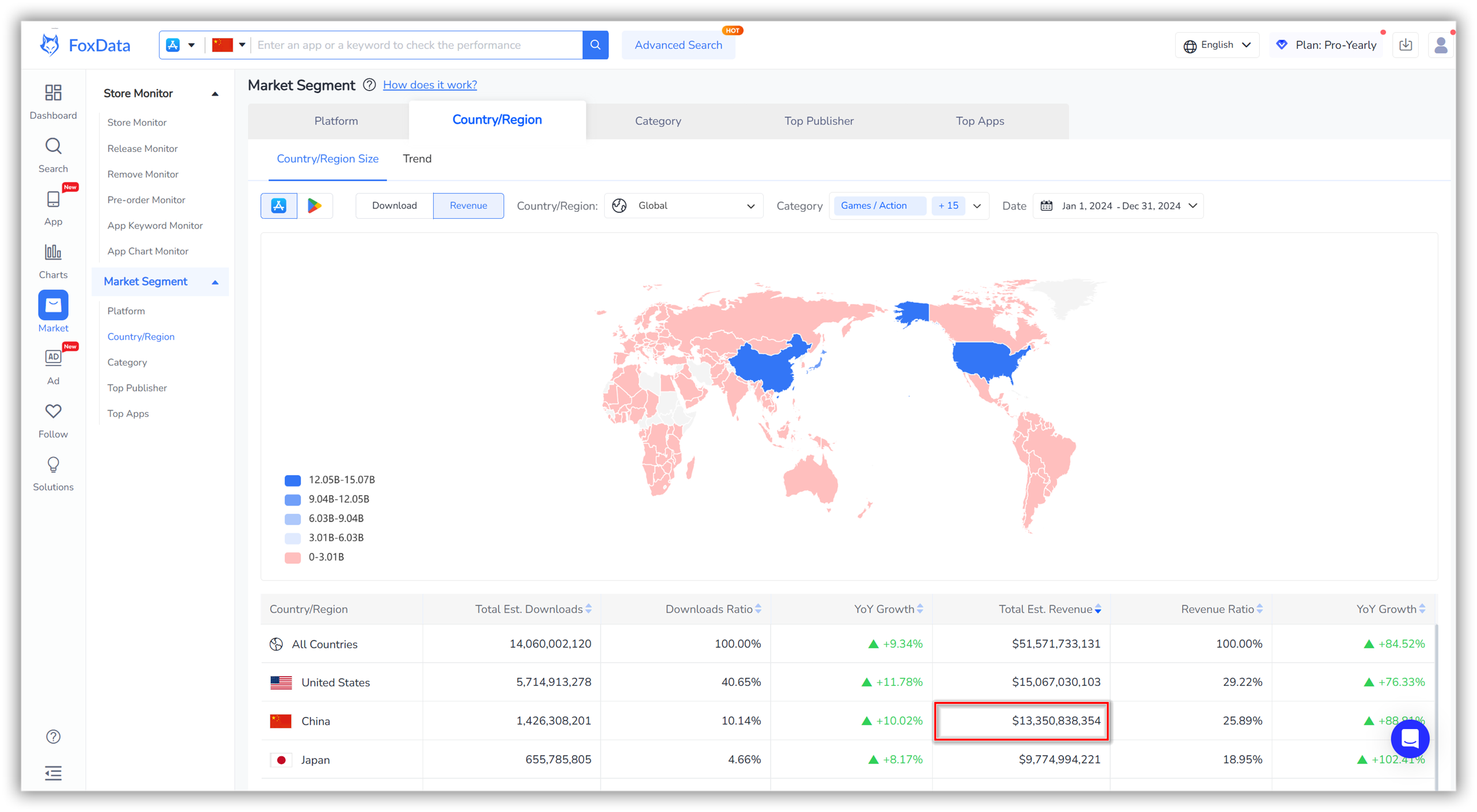
FoxData-Market Segment, in 2024 alone, the App Store mobile game market in China generated an impressive revenue of $13.4 billion.
Additionally, mobile gaming vastly outperforms PC and console gaming, accounting for a dominant 74% of the total gaming market.
Leading genres
What are the leading genres and subgenres in the Chinese mobile games market? Which games are currently topping the charts?
Let's explore the details.
While mobile gamers around the world exhibit some common preferences, regional differences can drastically shape their gaming habits.
According to
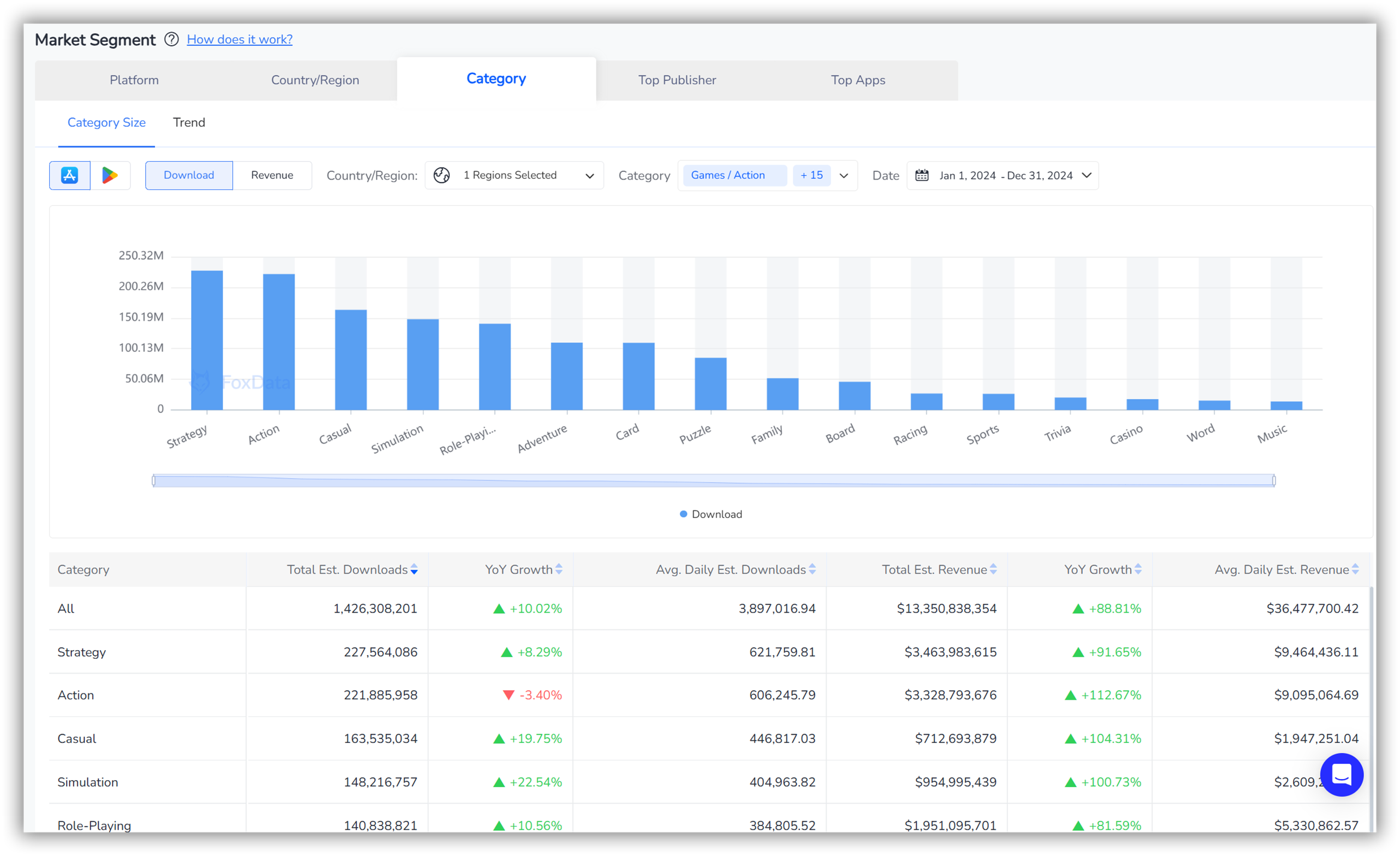
Market Segmet-Category from FoxData, Chinese gamers have distinct genre preferences compared to their global counterparts. While hyper-casual and simulation games are particularly popular in the US, Chinese gamers predominantly favor:
Understanding the specific subgenres that Chinese players enjoy is also important. Among their top choices are Strategy, Action, and Casual.
Player Preferences
Given their unique characteristics, approaching Chinese mobile gamers requires a different strategy than what's typically used in Western markets. Below are essential insights into their demographics, habits, and preferences.
Demographics & Gaming Habits
The demographic profile of Chinese mobile gamers aligns with global trends, with a similar age and gender distribution. A majority (55%) of these gamers are male, and a significant portion belongs to the Gen Z and Millennial age groups, specifically those aged between 21 and 35.
However, when examining their gaming habits, notable differences emerge:
- Gameplay Duration: About 52% of Chinese mobile gamers play for over an hour daily, which exceeds the global average by approximately 15 minutes.
- Game Retention: Chinese gamers are less likely to abandon games quickly. An impressive 92% continue to play a game for more than a week. This tendency is likely tied to their preference for engaging casual and mid-core games, compared to short-lived hyper-casual games.
Preferences in Gaming
Chinese mobile gamers exhibit distinct preferences regarding game discovery, advertisements, and in-game spending.
- Game Discovery: The primary avenues for discovering new games are through app store rankings (36%) and recommendations from friends and family (29%).
- Monetization Preferences: There is a strong preference for free-to-play games with in-app purchases (44%) over premium or ad-supported games.
- Spending Habits: A substantial portion of gamers engage in in-game spending, with only 15% not spending at all. The majority spend up to $5.80 monthly.
- Preferred Advertisement Types: Rewarded ads (27%) and native in-game ads (22%) are the favored ad formats.
Understanding these characteristics is crucial for successfully engaging with the Chinese mobile gaming audience.

Optimize Apple Search Ads with Real-Time Data
Discover keyword opportunities, monitor competitors, and improve campaign performance using FoxData’s ASA analytics tools.
Tips for Developing Games for the Chinese Mobile Games Market
Ready to tackle the challenge of developing a game for China's mobile market? That's the spirit! While you'll need plenty of patience and knowledge, we've got some tips to help guide you in creating successful games for this lucrative market.
1. Incorporate PvP Gameplay
Competitiveness is a major motivator for 36% of Chinese mobile gamers. Chinese players often value competition even more than the quality of the game itself. This is evident as nearly all top-grossing games in China feature some form of PvP (Player vs Player) gameplay. To boost your game's chart performance, integrating a competitive mode is essential.

2.Partner with Established IPs
Teaming up with a well-known IP can significantly enhance your game's success in China's market, although securing such partnerships is no small feat. Seven out of the ten highest-grossing imported mobile games in China were based on popular IPs. These games resonate well because they are already familiar and beloved, thanks to franchises like Diablo Immortal, League of Legends, Pokémon, and Digimon.

3. Focus on Localization
Chinese players have a strong preference for games that are tailored to their cultural context. Effective localization goes beyond translation; it involves adapting the entire gaming experience with local cultural elements. Steps include:
- Researching cultural preferences
- Optimizing user interfaces
- Updating themes to align with local holidays
32% of Chinese players favor games that incorporate Chinese design and themes, with many top games featuring storylines and characters from Chinese history and literature.
Feeling overwhelmed by localization? Partnering with popular IPs can reduce this burden, as their inherent familiarity can appeal to Chinese players without extensive cultural adaptation.
Now just join
FoxData and embark on a journey of business growth as we unveil a
FREE App Data Analytics Tool, which boosts your downloads, increases your user base, and watches your performance soar to new heights!
All content, layout and frame code of all FoxData blog sections belong to the original content and technical team, all reproduction and references need to indicate the source and link in the obvious position, otherwise legal responsibility will be pursued.