





Explore More Possibilities for Your Business
Full-cycle scenario construction to meet your needs from App research, development, and release to operation.
Ready for your soaring growth

There are over 200,000 games on the App Store. Your target player is searching right now. The question is whether they find your game or a competitor's.
Research shows that over 65% of app downloads are directly driven by organic search on the App Store, making keyword visibility one of the highest-leverage levers available to any mobile game marketer. Yet many studios still rely on guesswork, copying competitor titles, or using keywords that sound intuitive but never actually convert.
This guide is a tactical walkthrough for identifying keywords that can realistically rank, drive high-intent installs, and scale alongside your user acquisition strategy. Whether you are preparing a new launch or optimizing a live title, the framework here applies directly to your workflow.
The App Store is a closed ecosystem. Apple does not expose search volume data the way Google does. This makes mobile game keyword research on the App Store fundamentally different from web SEO, and considerably more challenging without the right infrastructure.
Here is what data actually tells you that intuition cannot:
Without this data, you are not doing it right. Studies across mobile app marketing consistently show that games with a structured, data-backed keyword strategy outperform those using ad hoc methods by a significant margin on organic install volume. The difference between a top-10 ranking and a page-3 ranking on even a mid-volume keyword can represent tens of thousands of installs per month.

Discover how FoxData enhances data protection and security standards to keep your analytics safe and reliable.
Here is how to build a winning keyword strategy, one that works.
Start by organizing keywords into three tiers based on volume and competition:
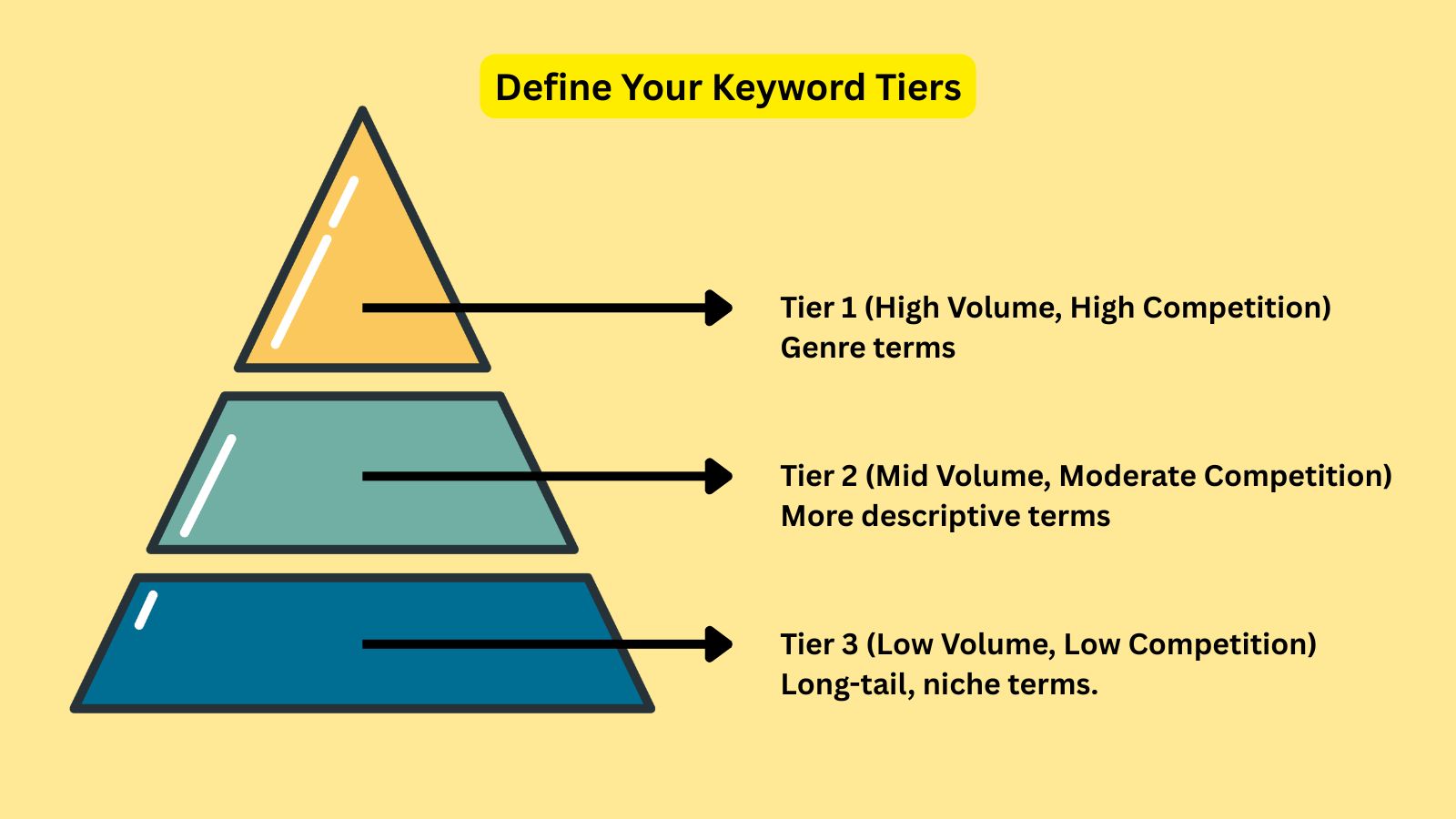
A balanced strategy targets all three tiers, with heavier emphasis on Tier 2 for most titles at the growth stage. The exact distribution depends on your game's current install base, rating velocity, and competitive footprint.
Your direct competitors have already done part of the research work for you. Analyzing their keyword footprints reveals high-performing terms you may have overlooked.
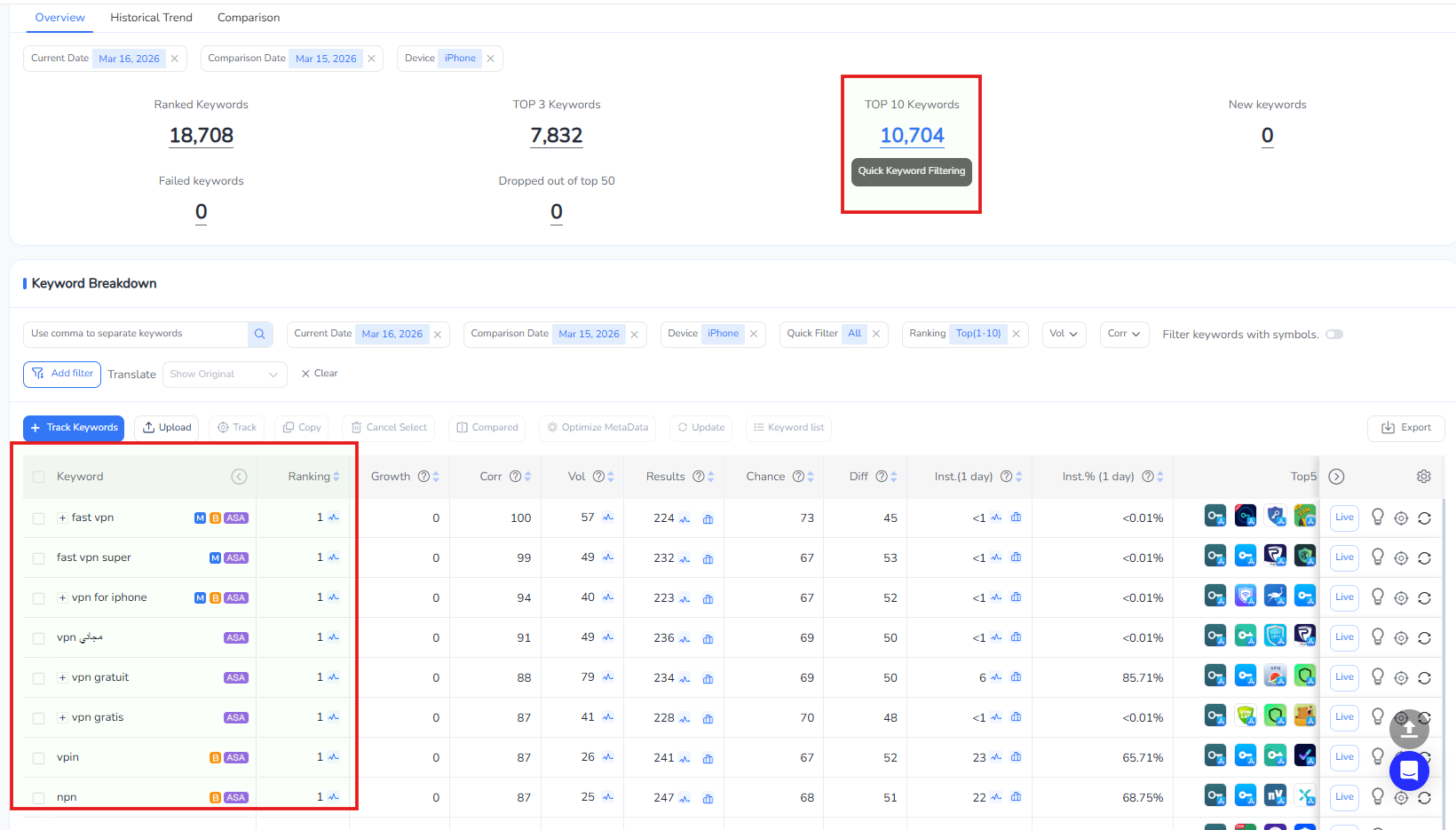
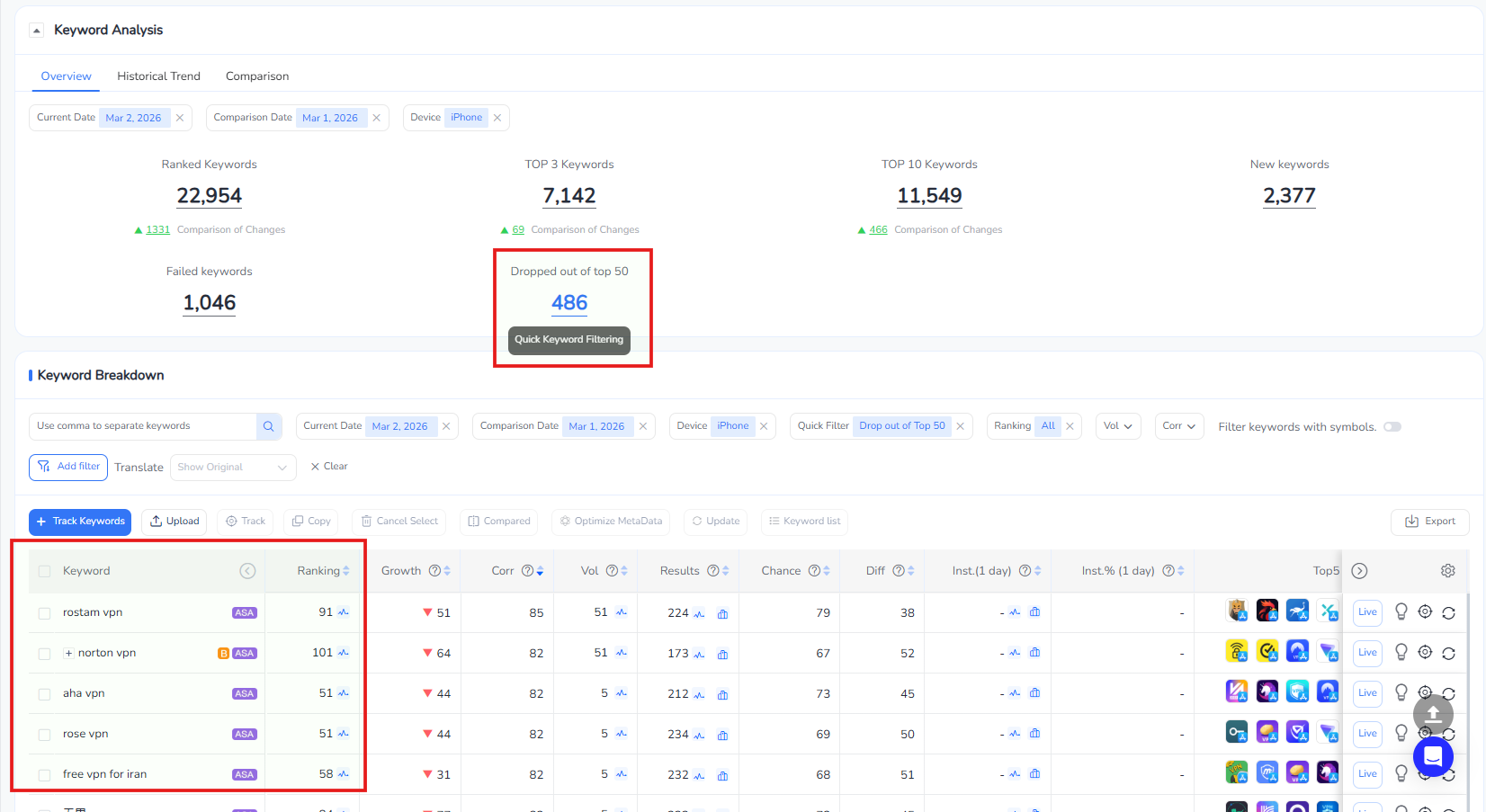
Mobile game market intelligence tools allow you to see which keywords competing titles rank for, how their rankings have shifted over time, and which terms drive the most estimated installs. Use these competitive data as a signal to confirm demand and identify gaps.
Look specifically for:
Volume alone is a misleading metric. A keyword with 20,000 monthly impressions but 2% conversion to install is worth less than a keyword with 8,000 impressions and 12% conversion. Use estimated install-per-keyword data wherever available, and cross-reference it with your own product page conversion rate to project realistic return.
Additionally, factor in keyword relevance to your core game loop. Terms that attract players who are not aligned with your game mechanic will produce early churn, hurting your retention metrics and, indirectly, your ranking signals over time. Apple's algorithm rewards engagement, not just installs.
Apple's App Store indexes keywords from three primary fields: the title (30 characters), the subtitle (30 characters), and the keyword field (100 characters). Priority weight is highest in the title, followed by the subtitle. The keyword field should contain terms not already present elsewhere in your metadata. Avoid repetition across fields, as it wastes indexable space without improving ranking.
Tactical notes:
Manual keyword research is possible but severely limited at scale. The volume of keyword combinations, competitor data points, and ranking fluctuations involved in a serious ASO strategy requires purpose-built tooling. This is where a dedicated platform changes the output quality entirely.
Platforms built specifically for mobile game analytics, like FoxData's mobile game analytics and ASO solution, give marketers and UA managers access to real-time keyword ranking data, competitive benchmarking, and market share visibility across the App Store ecosystem.
Here is what that looks like in practice:
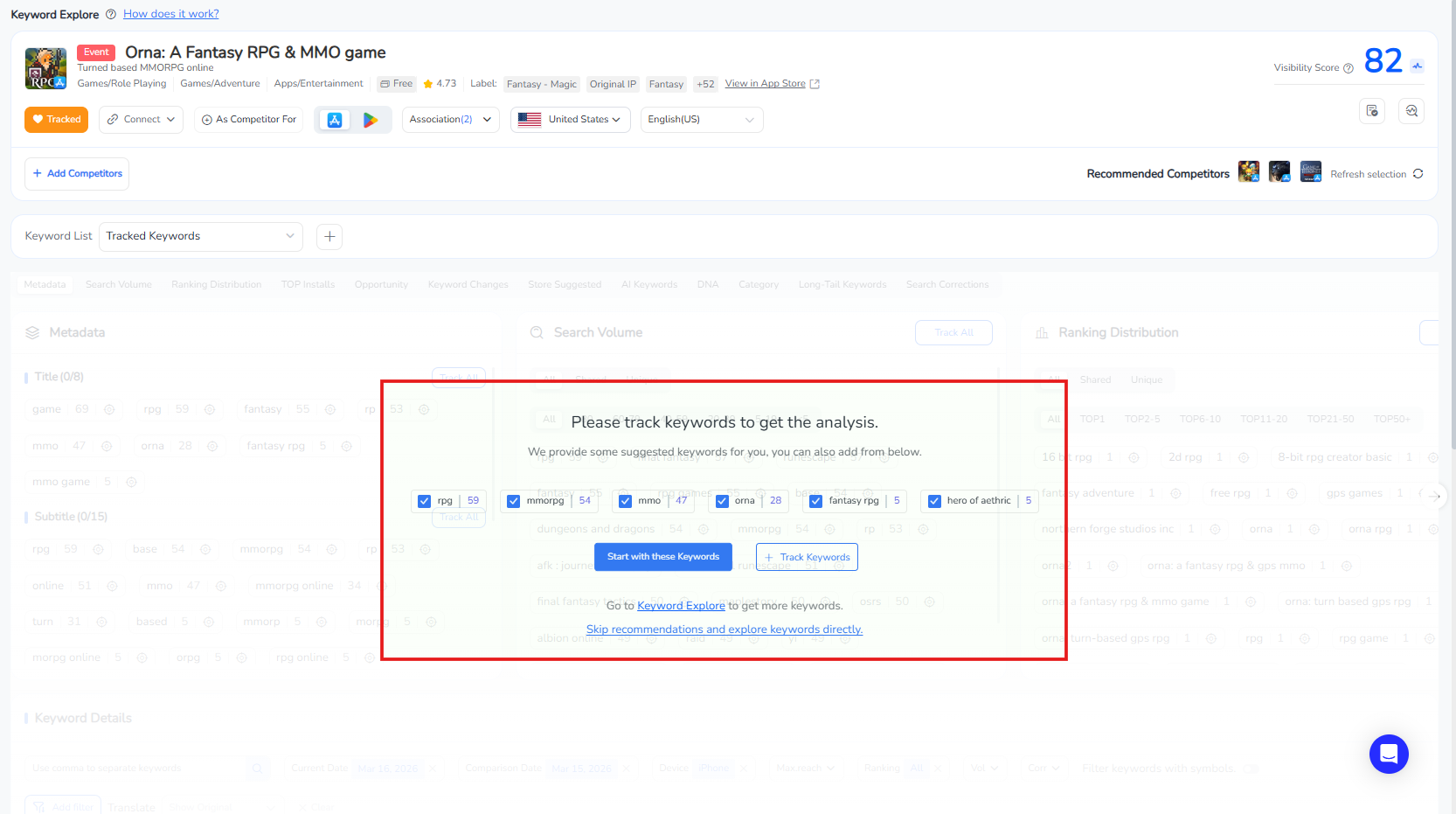
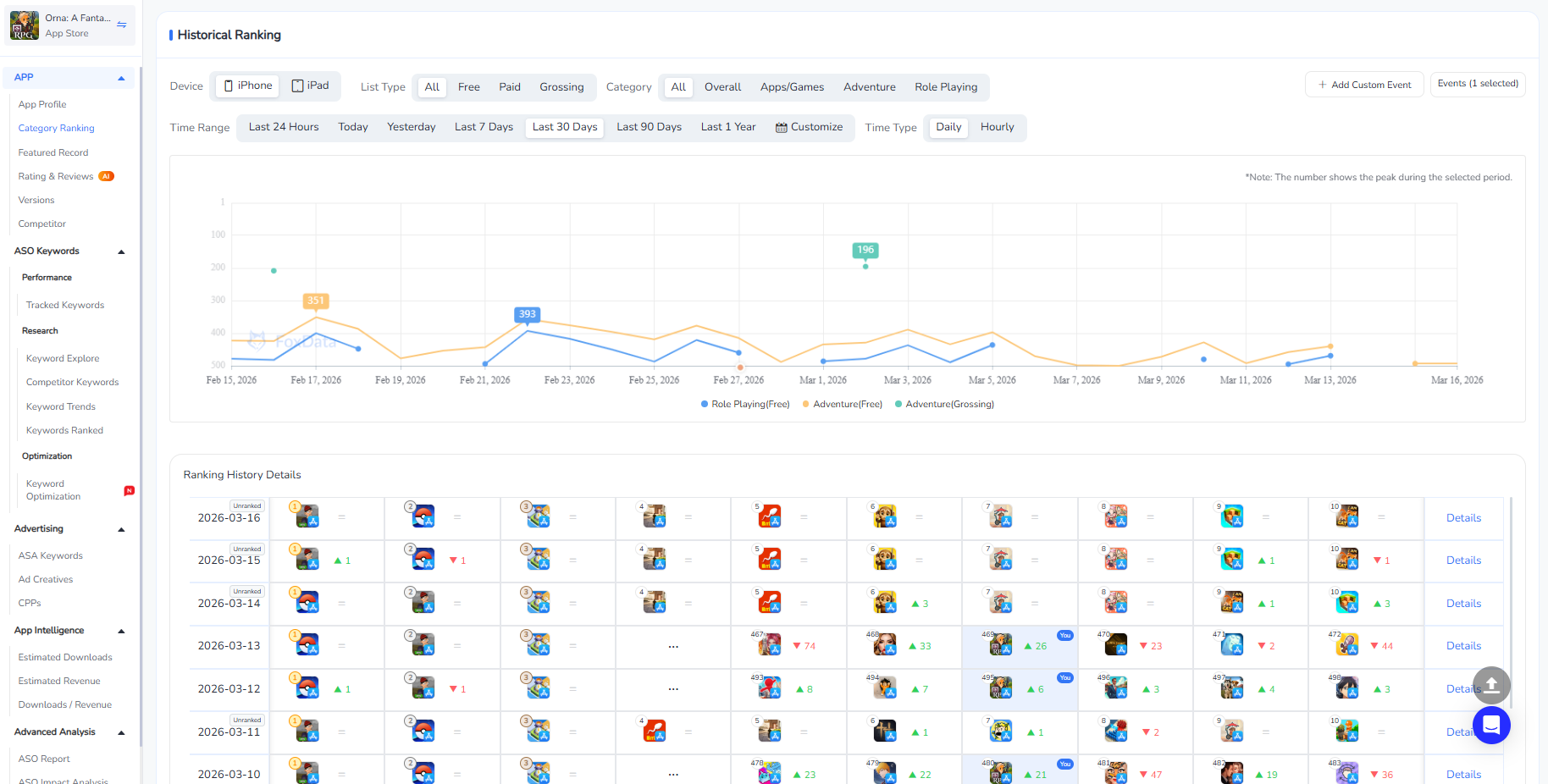
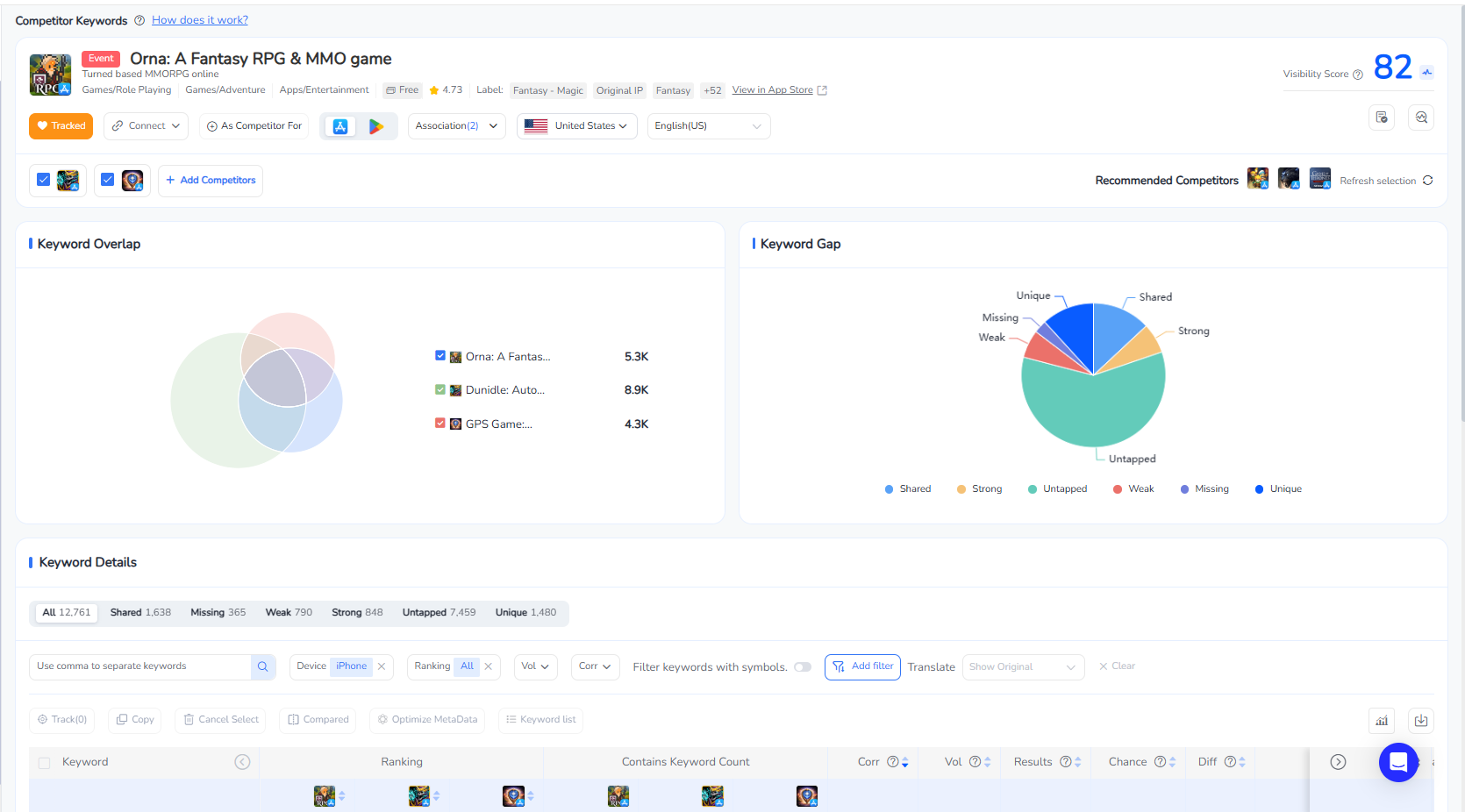
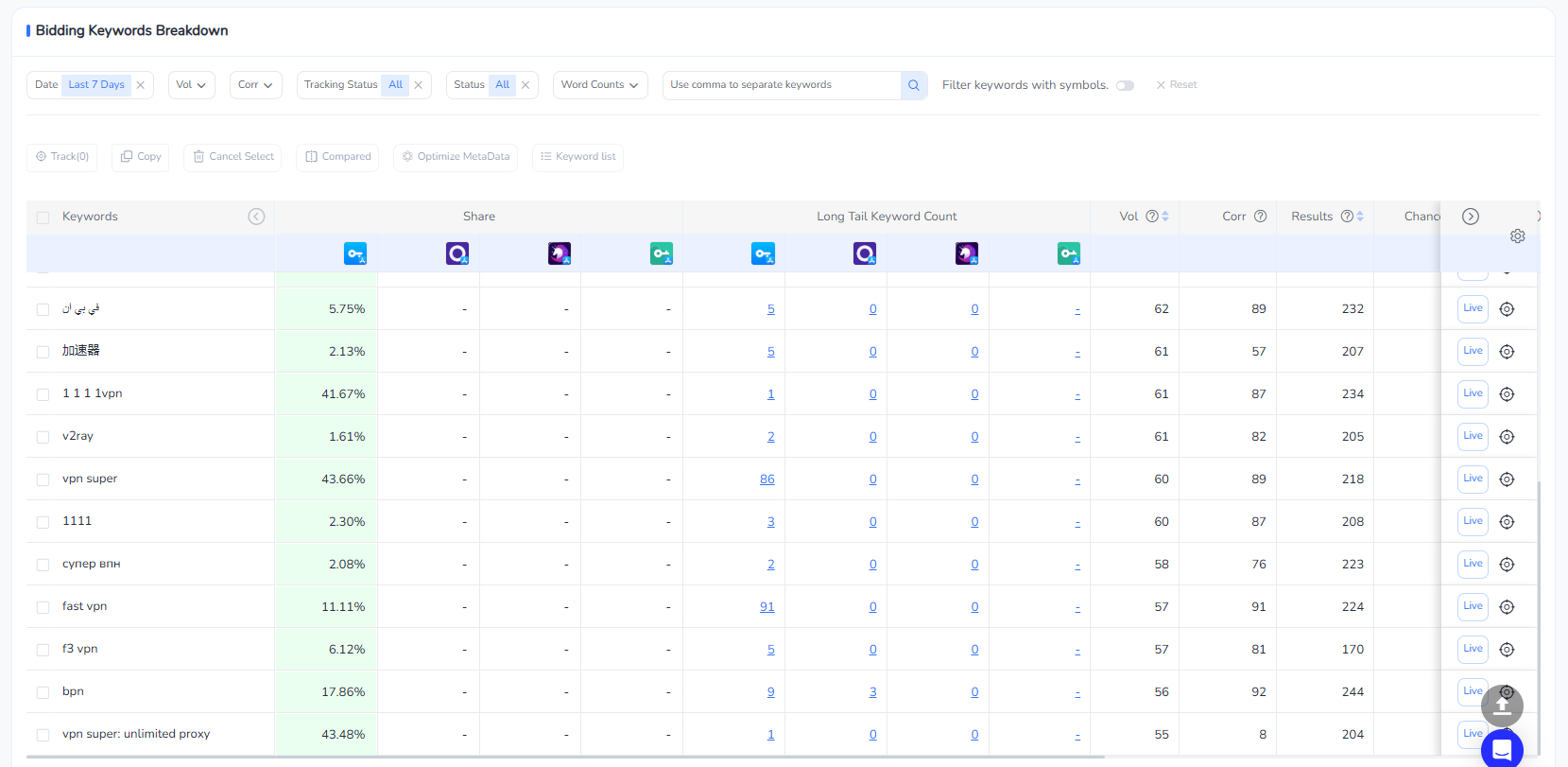
The key is to establish a recurring optimization rhythm. Industry benchmarks suggest that App Store listings updated every 30 to 45 days with data-driven keyword adjustments see meaningfully better ranking retention than those updated infrequently. Using integrated mobile game ASO and UA growth tools makes this cadence sustainable, even for small teams managing multiple titles.
Even experienced marketers consistently make these errors. Avoiding them is as important as implementing the right strategy.
Keyword strategy on the App Store is not a one-time setup task. It is an ongoing discipline that compounds over time. The games that consistently show up in organic search are not there by accident. They are backed by structured research processes, reliable ranking data, and regular optimization cycles that most studios underinvest in.
The framework outlined here, from tiered keyword targeting to competitor analysis to metadata integration, gives you a repeatable approach that scales whether you are managing one title or ten. Pair it with the right tooling and you move from guessing to knowing.
What separates high-growth mobile games from the rest is not just the quality of the game itself. It is the quality of the systems built around it, including how intelligently they approach visibility.
Ready to build a keyword strategy grounded in real data? Explore FoxData's mobile game analytics and ASO platform to access keyword research, competitive intelligence, ranking tracking, and integrated UA insights purpose-built for mobile game growth teams.
Apple gives you 100 characters in the keyword field, which typically accommodates 15 to 25 terms depending on their length. Beyond the keyword field, your title and subtitle add additional indexed terms.
In practice, you are working with a combined pool of roughly 50 to 60 unique indexable terms across all fields. Prioritize quality and strategic fit over quantity. A tightly chosen set of 20 relevant, achievable terms outperforms a bloated list of 60 loosely related ones.
Apple typically processes metadata updates within 24 to 72 hours of app review approval.
Ranking movements following a keyword update can begin appearing within 3 to 7 days, though meaningful data on the performance of new keywords usually requires 2 to 4 weeks of observation. Factors like your app's overall authority, recent install velocity, and rating trends all influence how quickly rankings respond to changes.
ASO keyword strategy focuses on organic search ranking through metadata optimization. It is a long-term investment that builds sustainable discoverability over time. Apple Search Ads (ASA) keyword strategy involves paid bidding to appear at the top of search results for specific terms.
The two strategies are complementary: strong organic rankings reduce the cost-per-tap for equivalent keywords in paid campaigns, and ASA performance data (particularly impression and conversion rates by keyword) provides valuable signals for refining your organic keyword list. Treating them in isolation misses significant efficiency gains.
No, and conflating the two is a common error. Google Play indexes your full description for keyword relevance, while the App Store does not. Google Play has no dedicated keyword field, whereas Apple's App Store does.Search ranking algorithms, user intent signals, and even search term popularity differ significantly between the two platforms.
Research shows that keyword performance can vary by up to 40% between stores for the same term. Each platform requires its own keyword research process and optimization logic.
Ready to make your app shine? Optimize your app's visibility with FoxData, the ultimate ASO tool! Maximize downloads and rankings by leveraging our powerful insights today.
App Growth & ASO Tools by FoxData
FoxData supports every stage of app growth with specialized ASO and app analytics tools, helping teams improve keyword visibility, user acquisition, and retention through reliable data.
🔍 Store Keyword Research Tools
Research high-intent keywords, search volume, and competition to strengthen your app store optimization strategy.
📈 App Store Keyword Tools
Analyze keyword rankings and performance across the Apple App Store and Google Play to refine ASO execution.
📊 ASO Monitoring Tools
Monitor keyword ranking changes, visibility trends, and ASO impact over time with continuous performance tracking.
👥 User Activity Monitoring Tools
Understand in-app user behavior, engagement, and retention with real-time user activity analytics.
Together, these tools form FoxData’s ASO analytics and app intelligence ecosystem, designed to help developers, marketers, and growth teams make data-driven decisions and scale sustainably.
Explore it today!
👉 Learn more about FoxData here | 👉 Book a demo with FoxData team today!
© 2020-2026 FoxData. All Rights Reserved.