




Explore More Possibilities for Your Business
Full-cycle scenario construction to meet your needs from App research, development, and release to operation.
Ready for your soaring growth
You have built a solid mobile game. It functions well, it looks great, and your early testers love it. But after launch, the download curve stays flat. Nobody is finding it.
If that sounds familiar, you are not alone. As of early 2025, some reports indicate that there are roughly 8.93 million total smartphone applications available for download worldwide, which includes the Apple App Store, Google Play Store, alternative marketplaces (like Amazon), and regional Chinese stores. The odds of organic discovery are steep without a deliberate strategy.
And for indie developers or small publishing teams, pouring budget into paid user acquisition is not always an option.
The good news is that paid ads are not the only lever. App Store Optimization (ASO) is one of the most powerful, cost-effective ways to improve app store ranking and drive consistent installs.
Research confirms that approximately 70% of app discoverability happens through in-store search, meaning the majority of downloads are still driven by how well your listing is optimized, not how much you spend on ads.
This guide breaks down exactly how to improve app visibility in the App Store using organic, data-informed methods, using tactical steps you can start applying today.
Intuition has its place in game design but it has almost no place in ASO.
When you are operating with a limited budget, every decision needs to deliver measurable return. That means choosing keywords based on actual search volume and competition data. It means understanding why a competitor ranks above you for a specific term before you decide how to respond. On top of that, you still have to monitor your changes over time to know what is actually working.
Industry data underscores the stakes. Mobile user acquisition costs have increased significantly over the past five years, often cited as rising by up to 60%, largely due to privacy changes (iOS 14.5+), decreased targeting precision, and heightened competition.
This makes organic discovery through well-executed ASO not just appealing, but financially essential for indie teams. Research supports that organic users acquired through Structured App Store Optimization (ASO) often yield lower acquisition costs and higher lifetime value (LTV) compared to paid campaigns.
Data removes guesswork from a process that is already highly competitive. The developers who treat ASO as an ongoing, measurable discipline consistently outperform those who set it up once and forget it.
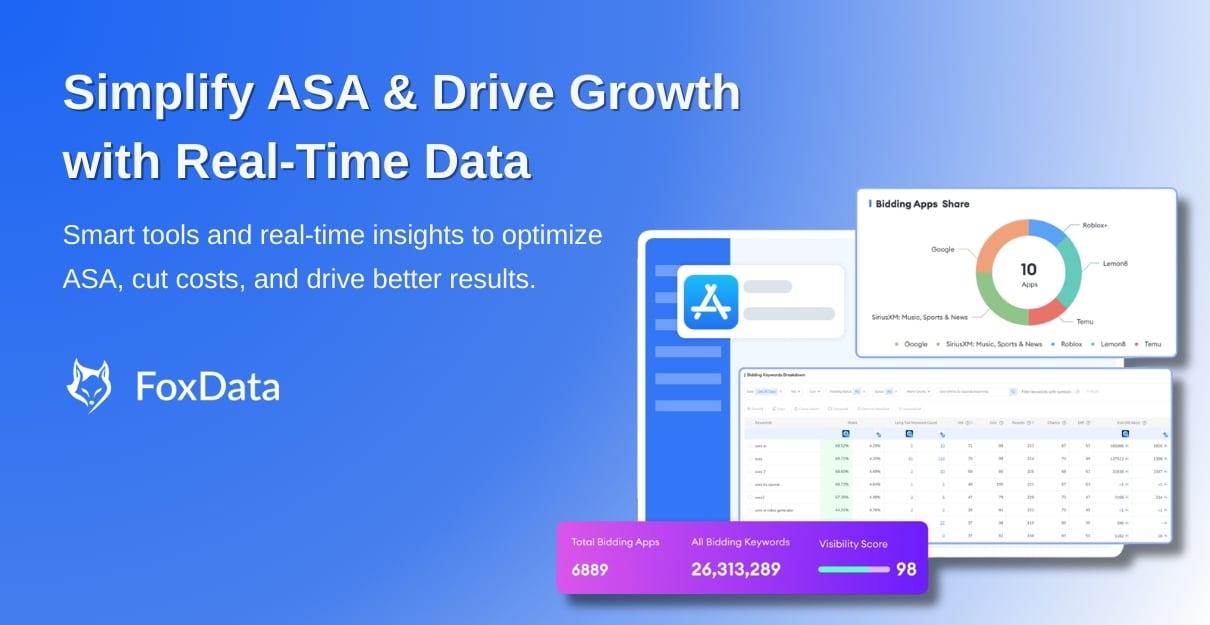
Discover keyword opportunities, monitor competitors, and improve campaign performance using FoxData’s ASA analytics tools.
Your app title, subtitle, and keyword fields are the most direct signals you send to the app store algorithm. Getting them right is foundational.
Start by mapping keywords to user intent. Think in terms of what a potential player types into the search bar when they do not know your app exists.
Phrases like "offline puzzle game no ads" or "city builder strategy mobile" are far more specific than broad terms, and they are also significantly easier to rank for. Apps that shifted from single-word targets to intent-based, long-tail phrases improves their performance greatly.
From there, prioritize balance. High-volume keywords bring visibility potential but come with steep competition. Medium-volume, lower-difficulty terms often deliver stronger results for smaller apps because they face less entrenched competition. Use a mix of both across your metadata fields.
Refresh your keyword strategy regularly. App store algorithms evolve, user search behavior shifts, and competitors update their listings. Treating keyword research as a quarterly task rather than a one-time setup is a meaningful competitive advantage.
Ranking higher gets your app in front of users. Your visual assets determine whether they actually tap "install."
Screenshots and preview videos are the most influential conversion elements on an app product page. Top-performing apps update their screenshots two to four times per year, with gaming apps refreshing them even more frequently.
 Screenshot changes in Subway Surfer between 3.58.4 version and 3.59.0 version | Source: FoxData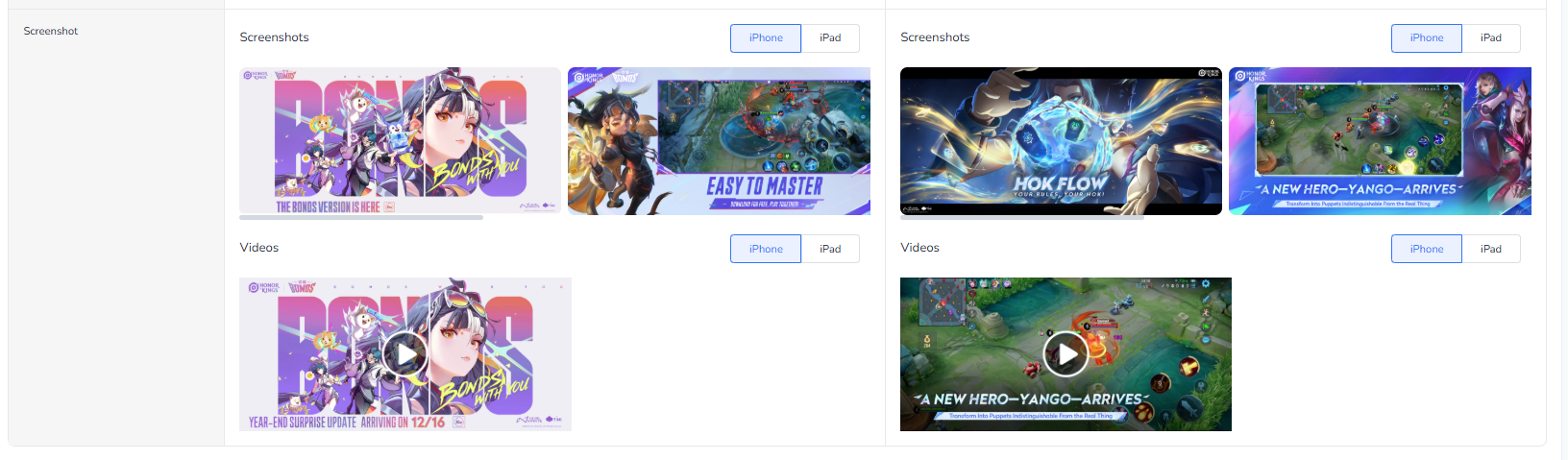
According to a report on ASO trends and benchmarks, 57% of top games on Google Play A/B tested their screenshots at least twice in 2024. Frequent visual testing correlates directly with higher rankings and better install rates.
A few principles to apply immediately:
App icon: Your icon is the first visual impression. It needs to communicate genre and tone in a single glance. Avoid clutter. Test variants with your target audience before committing to a final version.
Screenshots: Lead with your strongest hook, whether that is the core gameplay loop, a unique mechanic, or a specific emotional appeal. Add short captions that reinforce the value proposition rather than just labeling features.
Preview video: A short, well-paced video showing actual gameplay drives significantly higher conversion than static screenshots alone. Keep it under 30 seconds and front-load the most compelling moments.
Reviews are not just social proof. They directly affect algorithmic ranking. Apps rated below 3.5 stars show measurably reduced visibility in search results, while apps rated 4.0 and above correlate strongly with higher keyword rankings. Data shows that approximately 90% of featured apps on the App Store and roughly 85% on Google Play carry a rating of 4.0 stars or higher.
Studies indicate that 79% of users check an app's rating and reviews before downloading. A strong review profile builds the trust that converts page visitors into installs.
To build a healthy review presence:
Trigger in-app review prompts after positive moments, such as completing a level, unlocking an achievement, or reaching a milestone. Never ask for a review immediately after a frustrating experience. Respond publicly to negative reviews. It signals to both potential users and the algorithm that your team is attentive. Use negative feedback to inform your next update.
Apps that addressed user complaints in update notes reported higher retention rates than those that ignored them. When users see their concerns addressed in update logs, they feel heard and these often turning potential churners into loyal users.
If your app listing is only available in English, you are invisible in a large portion of the global market. Localization expands your keyword index by unlocking entirely separate search environments in other languages and regions.
Apps often plateau in their primary market only to discover a significant second wave of growth in regions where they localized their listing. Southeast Asia, Latin America, and parts of Europe represent significant untapped audience pools for mobile games.
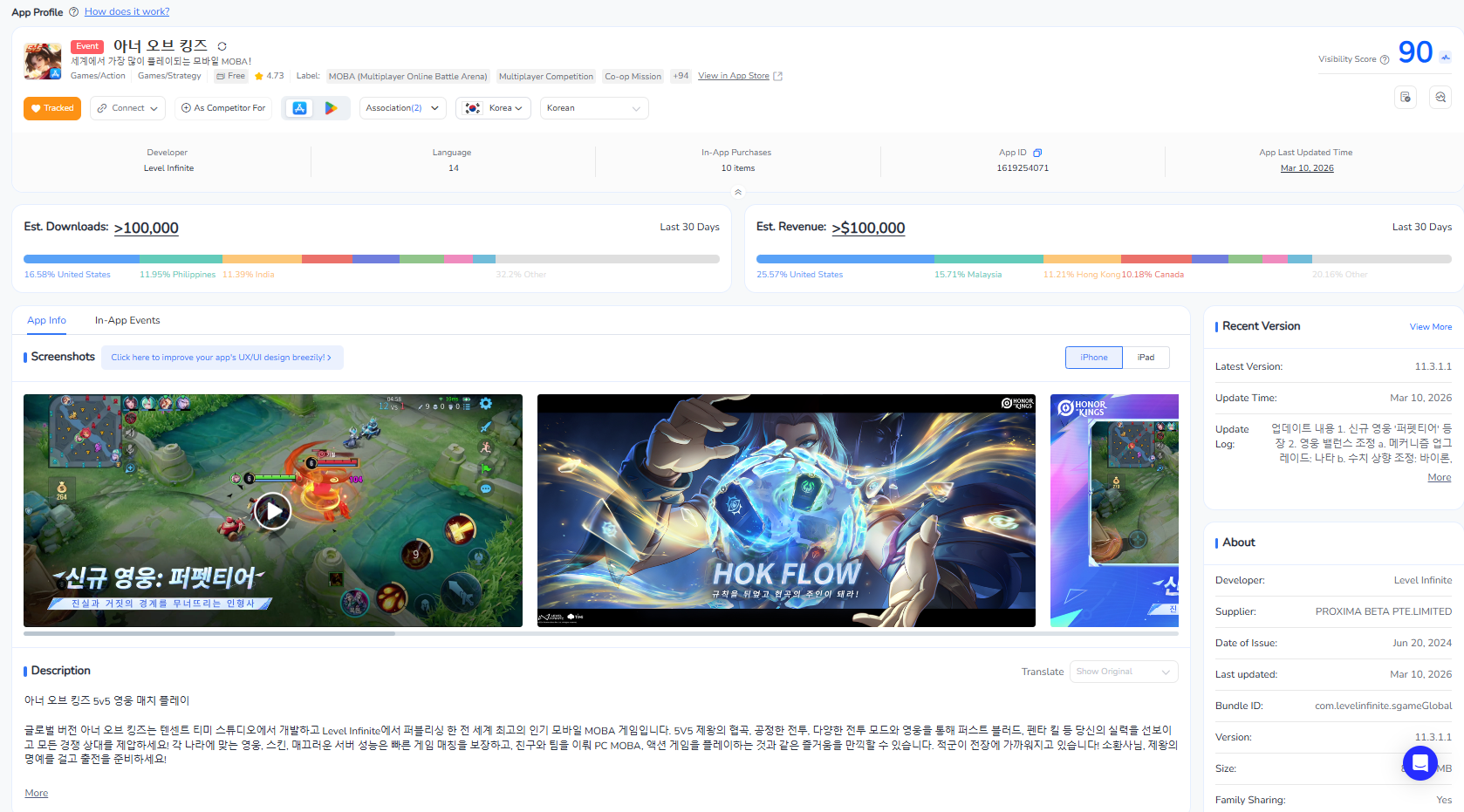
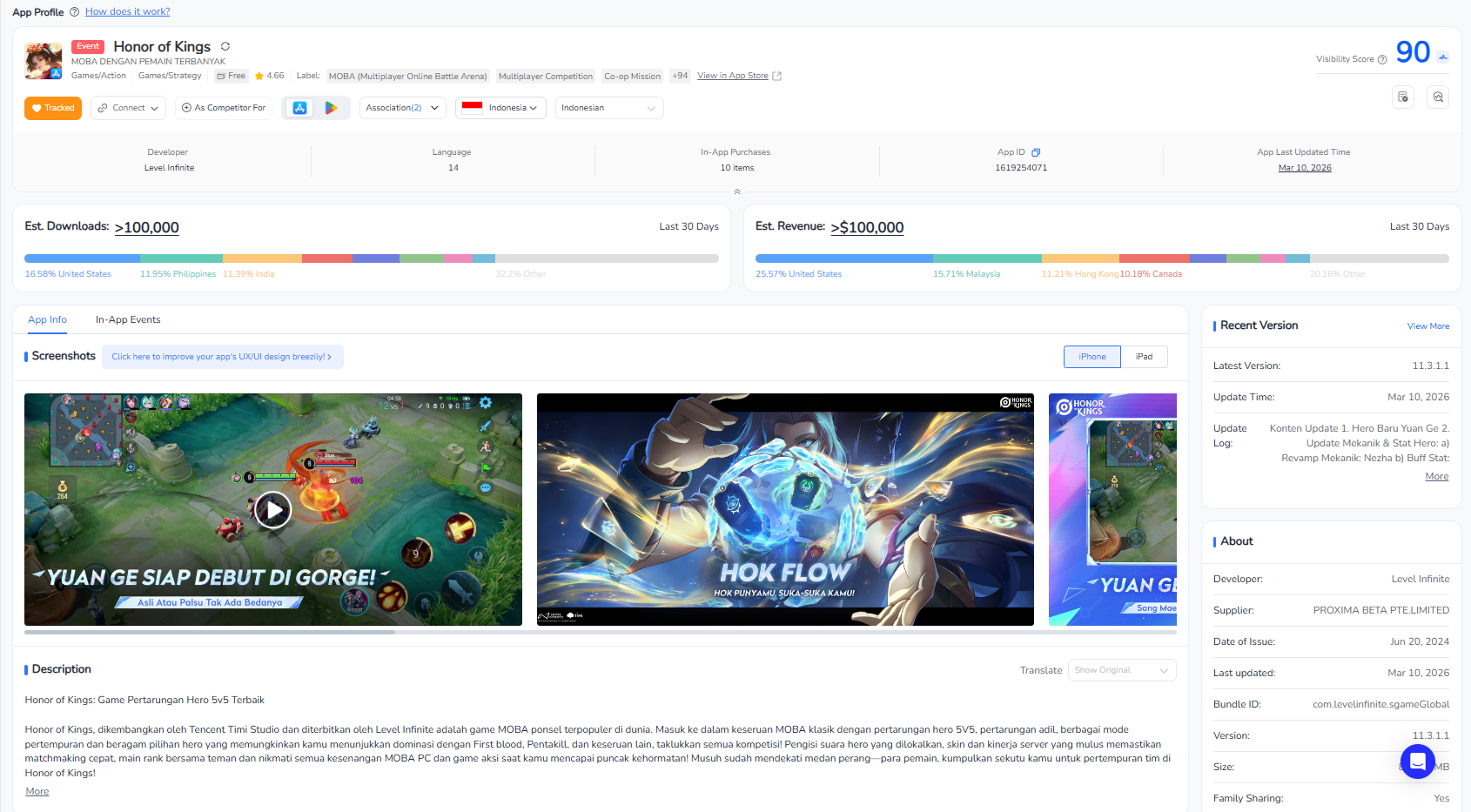
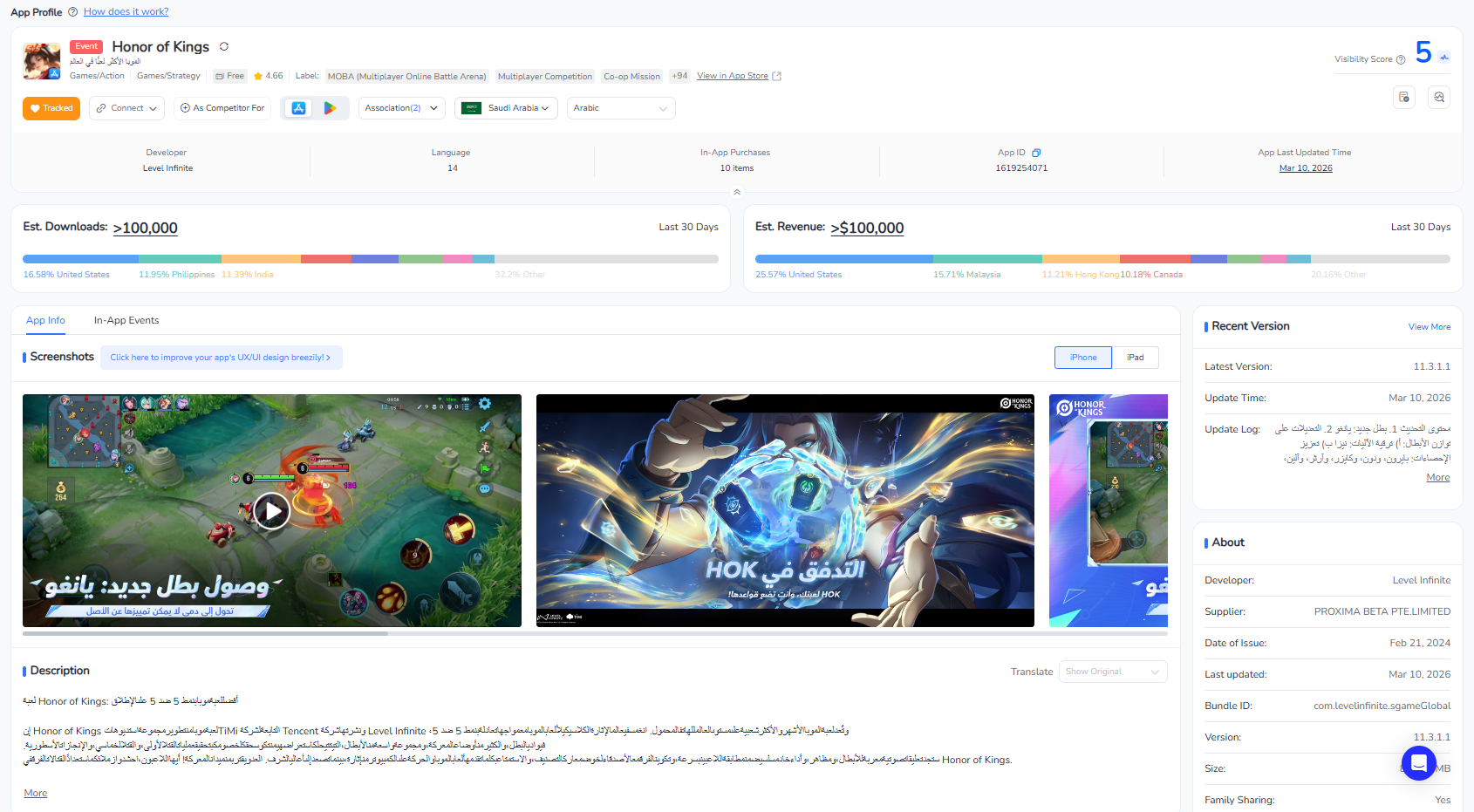
Localizing your title, description, and screenshots into even two or three additional languages can produce meaningful uplift in those markets without requiring any incremental ad spend.
Knowing what to optimize and having the tools to do it efficiently and accurately, are the best scenarios.
For indie developers and lean publishing teams, ASO tools for indie developers built around real store data are what separate a well-informed strategy from guesswork. The right platform gives you access to keyword search volume, difficulty scores, competitor ranking data, and performance tracking, so your decisions are grounded in evidence rather than assumption.
Specifically, a capable ASO platform should help you:
Find high-opportunity keywords you would not have thought of on your own, including long-tail terms with strong intent and manageable competition.
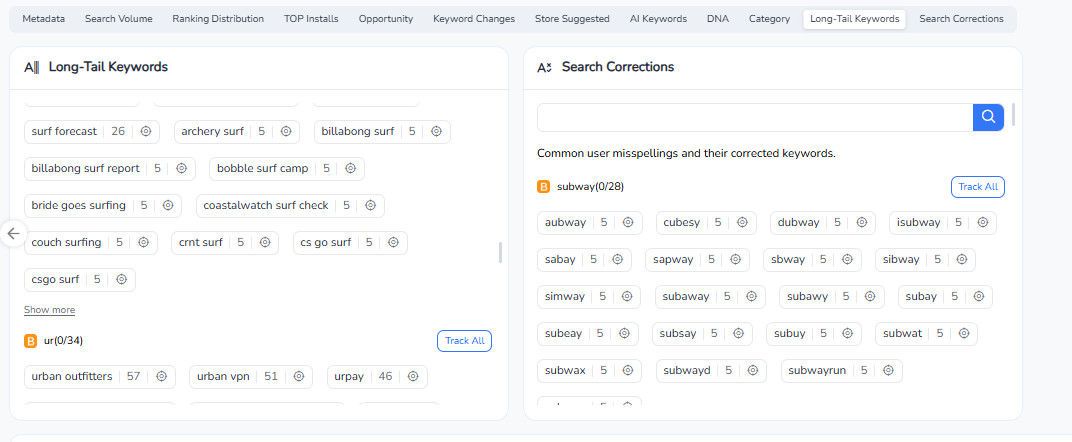
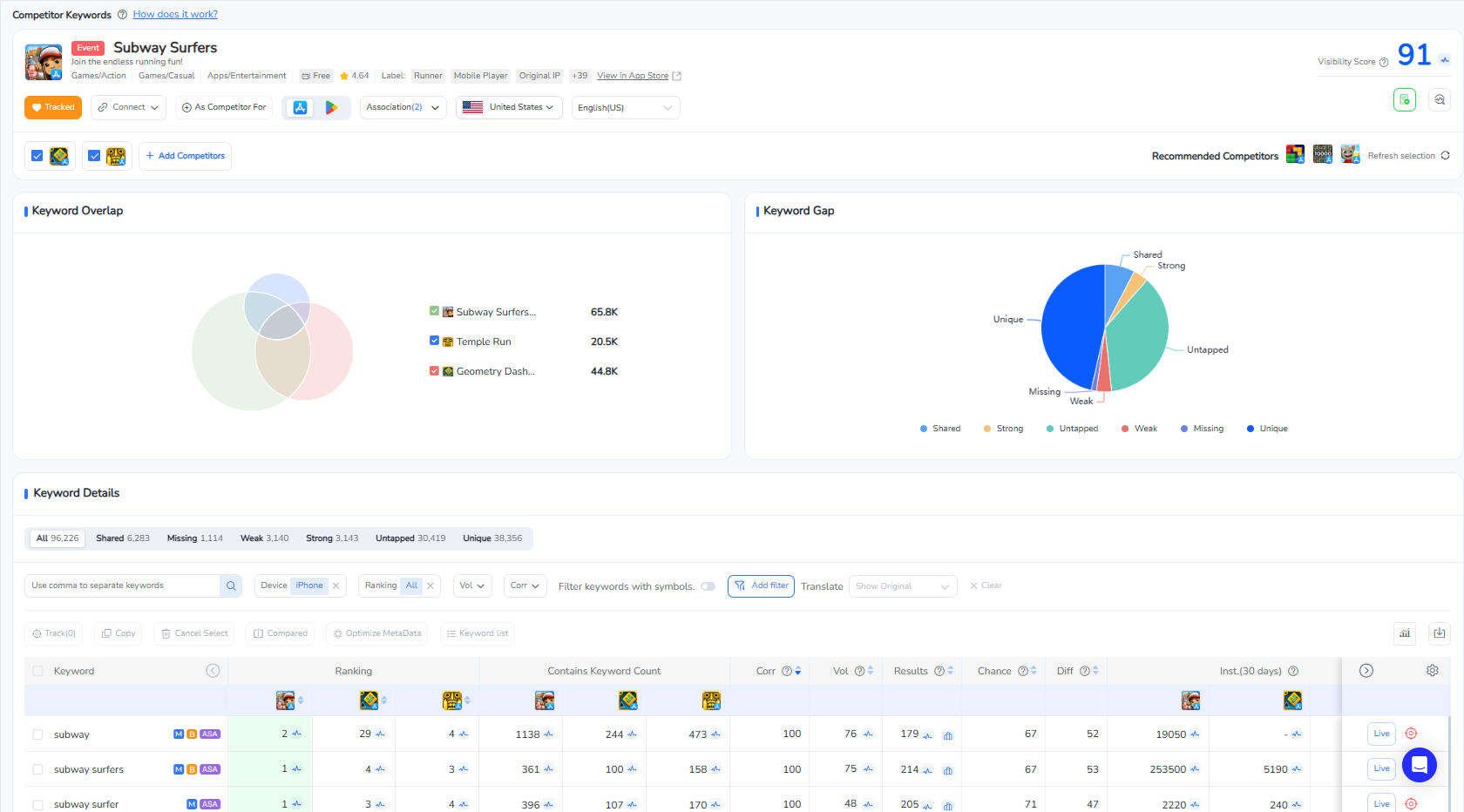
Monitor competitor listings to identify what keywords they are ranking for, where they are gaining ground, and where gaps exist that you can exploit.
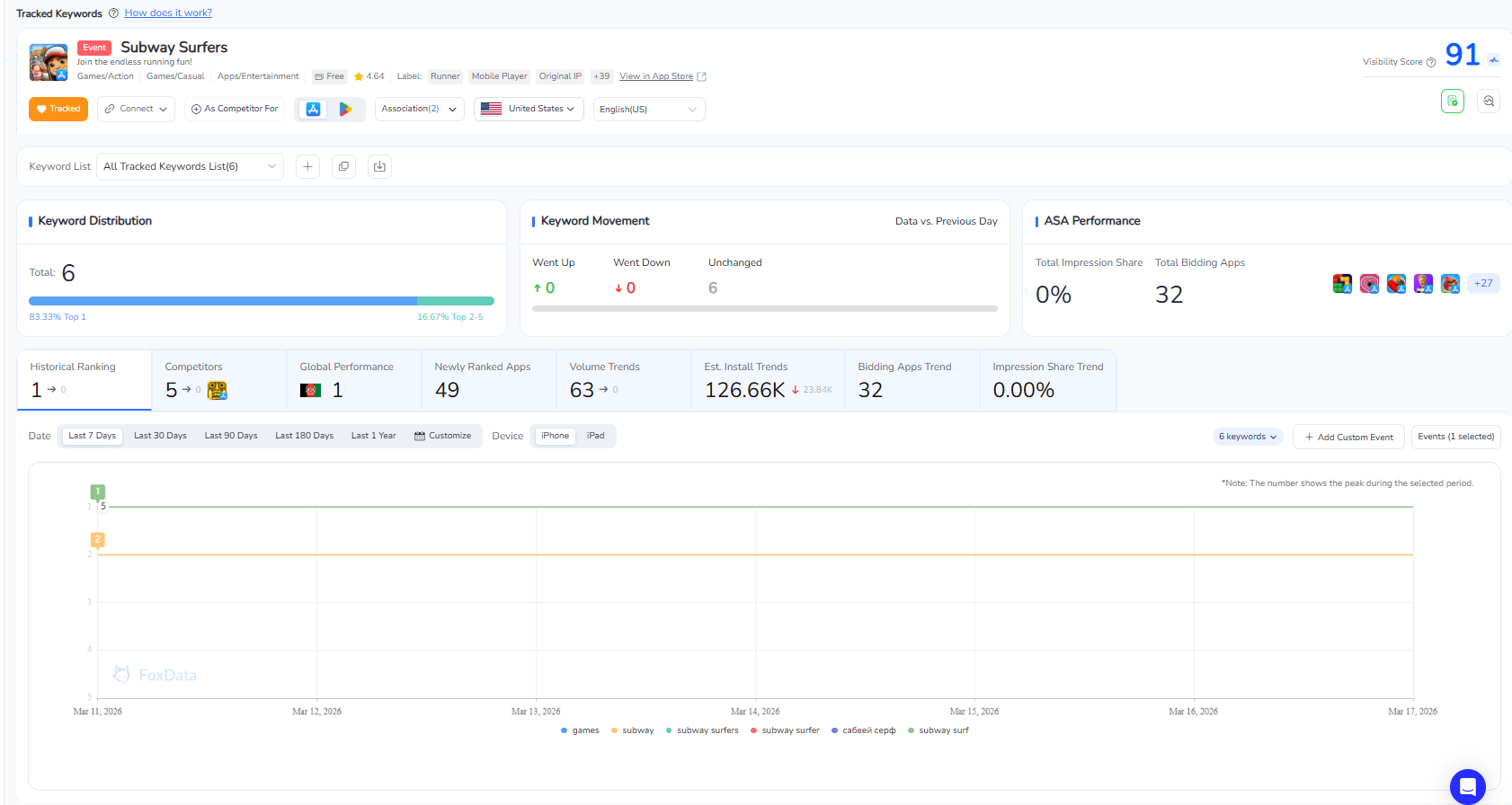
Track keyword ranking changes over time so you can measure the impact of each metadata update and iterate with confidence.
Benchmark your conversion metrics against category averages, so you know whether your screenshots and description are underperforming relative to comparable apps.
FoxData's platform is designed specifically for teams operating with focused budgets who still need access to professional-grade intelligence. For studios that want to compete on organic performance without enterprise-level spending, app store optimization tools built for small teams and indie publishers make it possible to move with the same data precision as larger players.
Even developers who understand ASO in theory often undermine their own results with a few recurring errors.
Keyword stuffing the description. Repeating the same keyword phrase unnaturally throughout your app description does not improve ranking. It damages readability, reduces conversion, and can trigger spam signals from the algorithm. Integrate keywords naturally into writing that a real user would find compelling.
Ignoring the subtitle field. The subtitle is one of the most underutilized metadata fields in the App Store, and it carries significant algorithmic weight. Use it to include a secondary keyword set that complements your title rather than repeating it.
Treating ASO as a one-time task. App store algorithms are dynamic. Competitor listings change. Search trends shift with seasonal patterns and cultural moments. An optimization that performed well six months ago may be significantly less effective today. Regular audits and updates are not optional; they are part of the practice.
Making too many changes at once. If you update your title, subtitle, description, and screenshots simultaneously, you have no way of knowing which change drove the results. Test changes incrementally so you can isolate what is working.
Neglecting the visual review cycle. Many developers invest heavily in keyword research but treat their screenshots as permanent. Visuals directly affect conversion rate, and conversion rate feeds back into ranking. Stale screenshots mean missed installs.
Improving app visibility without paid ads is entirely achievable. But it requires treating ASO as a continuous discipline rather than a one-time checklist.
The fundamentals are consistent: invest in data-driven keyword research, maintain compelling and regularly updated visual assets, actively cultivate ratings and respond to reviews, localize your listing for growth markets, and measure every change you make. These are not quick wins. They are compounding advantages that strengthen over time and deliver a quality of user that paid acquisition rarely matches.
The barrier for indie developers today is not access to strategy. It is access to the right data. When you can see clearly where opportunities exist, which competitor gaps you can fill, and which changes are driving results, the path to sustainable organic growth becomes significantly more navigable.
Ready to put data behind your organic growth strategy? Explore FoxData's suite of app store optimization tools designed for indie developers and small game studios and start making every metadata update count.
How long does it take to see results from ASO changes?
Keyword ranking changes typically begin to surface within two to four weeks of a metadata update, though meaningful lift in organic install volume often takes one to three months of consistent optimization. The timeline depends on your category's competitiveness, the strength of your keyword selection, and how frequently you iterate.
Can app store optimization on a small budget compete with larger publishers?
Yes, particularly in niche categories or emerging markets where large publishers have not invested heavily in localization or long-tail keyword coverage. A focused, data-informed ASO strategy can outperform a poorly maintained listing from a larger competitor. The key is specificity: owning a well-defined keyword set relevant to your game will consistently outperform competing for broad, high-competition terms where large publishers have entrenched rankings.
How important are ratings to how to improve app store ranking?
Highly important. Both the Apple App Store and Google Play factor ratings into search ranking and feature eligibility. Apps rated below 3.5 stars show significantly reduced visibility in search results. Achieving and maintaining a rating above 4.0 is one of the most impactful, sustainable things you can do for both visibility and conversion.
How do I know which keywords to target first?
Start by identifying the keywords that best describe your core game mechanic and genre, then use an ASO platform to check search volume, keyword difficulty, and your current ranking position for each term. Prioritize keywords where you already have some existing ranking, as these are often the fastest opportunities to move up. From there, layer in long-tail, intent-based terms where competition is lower and user search behavior is more specific.
Ready to make your app shine? Optimize your app's visibility with FoxData, the ultimate ASO tool! Maximize downloads and rankings by leveraging our powerful insights today.
App Growth & ASO Tools by FoxData
FoxData supports every stage of app growth with specialized ASO and app analytics tools, helping teams improve keyword visibility, user acquisition, and retention through reliable data.
🔍 Store Keyword Research Tools
Research high-intent keywords, search volume, and competition to strengthen your app store optimization strategy.
📈 App Store Keyword Tools
Analyze keyword rankings and performance across the Apple App Store and Google Play to refine ASO execution.
📊 ASO Monitoring Tools
Monitor keyword ranking changes, visibility trends, and ASO impact over time with continuous performance tracking.
👥 User Activity Monitoring Tools
Understand in-app user behavior, engagement, and retention with real-time user activity analytics.
Together, these tools form FoxData’s ASO analytics and app intelligence ecosystem, designed to help developers, marketers, and growth teams make data-driven decisions and scale sustainably.
Explore it today!
👉 Learn more about FoxData here | 👉 Book a demo with FoxData team today!
© 2020-2026 FoxData. All Rights Reserved.