





Explore More Possibilities for Your Business
Full-cycle scenario construction to meet your needs from App research, development, and release to operation.
Ready for your soaring growth
Data Period: March 1–31, 2026
Data Source: FoxData Download & Revenue Rankings
Platforms Covered: Apple App Store & Google Play Store
Geographic Scope: Global
As spring arrived, the global gaming industry entered a new growth cycle driven less by single breakout hits and more by structural shifts in technology, distribution, and player behavior. March 2026 was defined by a dual narrative: rapid technological innovation alongside market stability, as major releases and AI-powered production sustained momentum across platforms.
The Game Developers Conference (GDC) kicked off in San Francisco on March 9, with AI-driven game production emerging as the dominant narrative. From procedural content generation to AI-assisted live operations, developers demonstrated how artificial intelligence is rapidly embedding across the entire game lifecycle.
Chinese publishers — led by Tencent — drew particular attention by showcasing practical AI adoption spanning R&D workflows, gameplay innovation, and long-term player operations. Rather than experimental concepts, AI is increasingly positioned as a production infrastructure layer, signaling a structural shift in how games are built and operated globally.
March saw explosive global game launches reshaping player attention across console, PC, and mobile:
FoxData Steam Charts enables real-time tracking of trending titles and early momentum signals across the PC ecosystem, helping developers and marketers anticipate market shifts.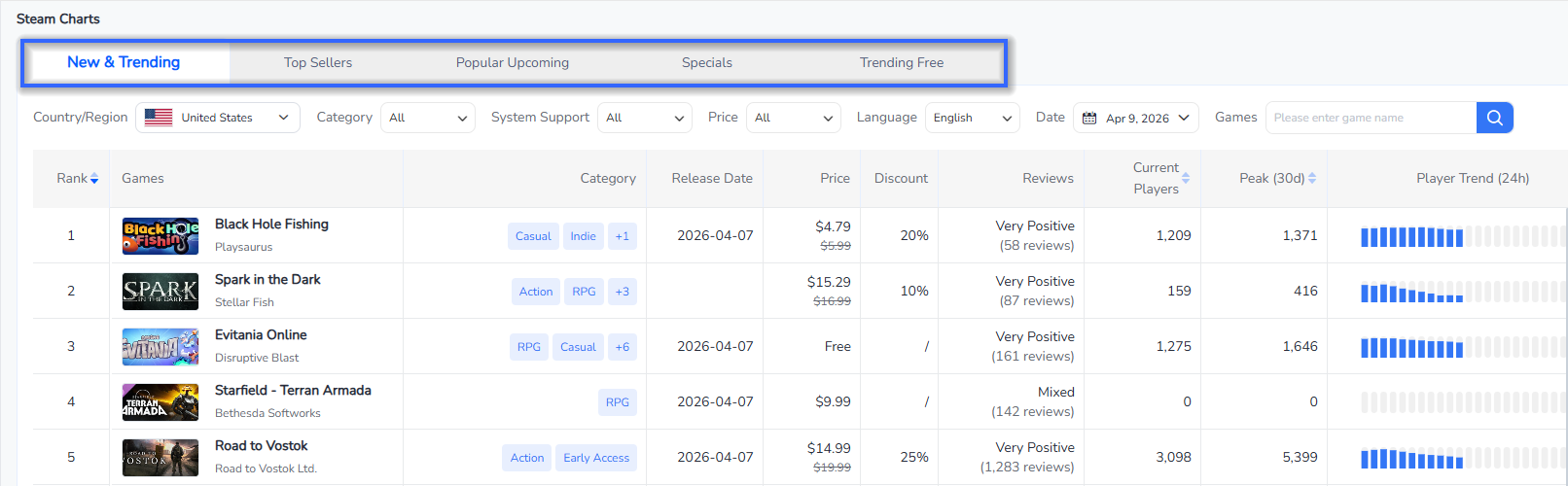
According to FoxData market data, the global mobile gaming market began recovering in March following a short correction in February. However, the rebound revealed a clear divergence between downloads and revenue performance.
App Store and Google Play rankings displayed an unusually split dynamic:
Three structural trends shaped the global mobile gaming market in March 2026:
Together, these forces reflect a market less about short-term hits and more about long-term ecosystem evolution, where technology, platform dynamics, and player behavior converge.
🎮 Track real-time global mobile game rankings, download trends, and revenue shifts:
In March 2026, competition within the global App Store mobile game download rankings could best be described as a full-scale reshuffle. Nearly every upward-moving title recorded measurable gains, with ranking increases ranging from 1 to 14 positions, revealing an unusually aggressive cycle of user acquisition competition.
Notably, ranking momentum showed clear correlations with game genre performance, suggesting shifting player demand rather than random volatility.
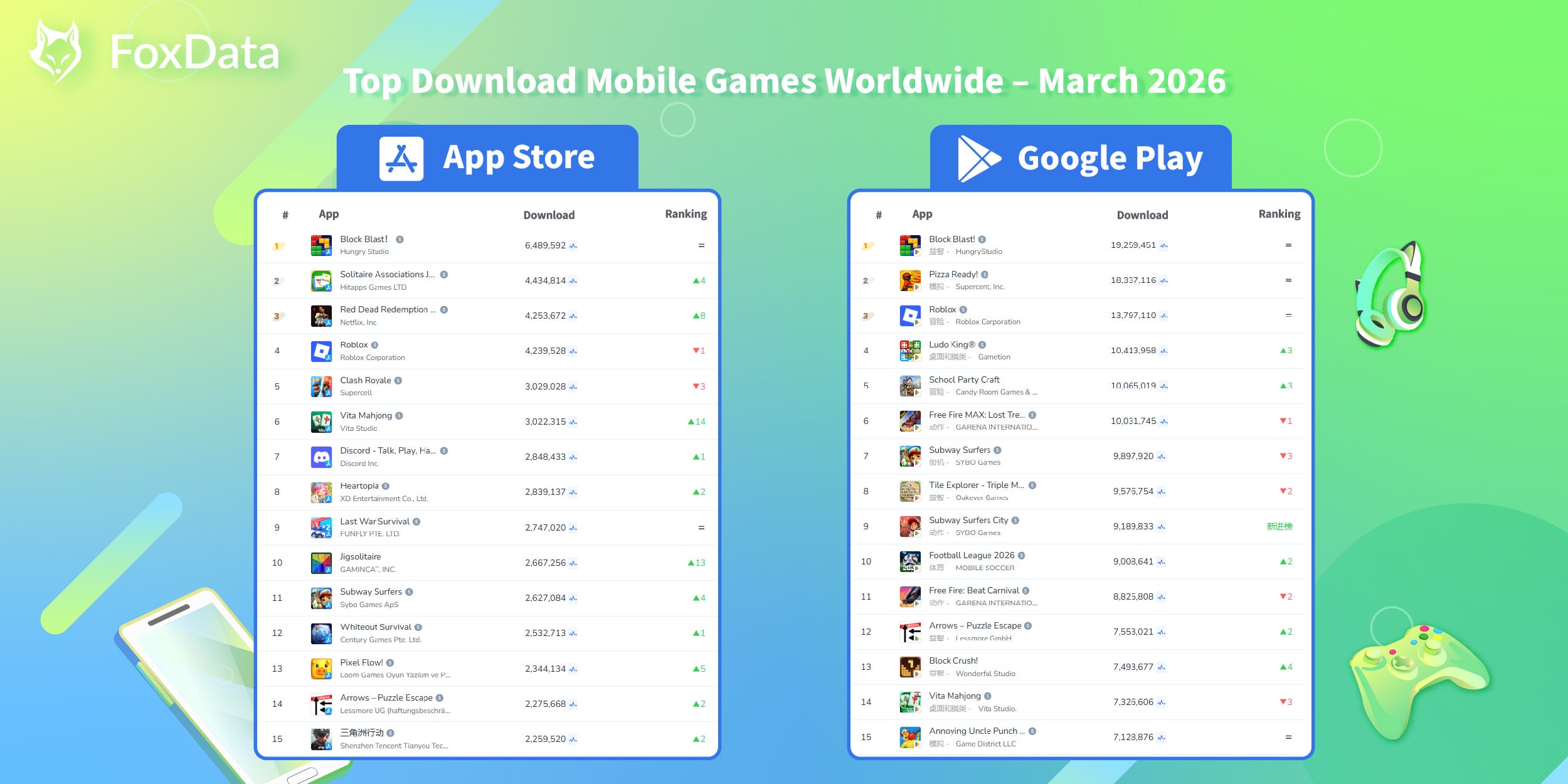
Leading the surge was Vita Mahjong, which climbed an impressive 14 positions — the largest ranking gain across the entire chart. Notably, its relatively modest performance on Android did not slow its rapid ascent on iOS. This contrast likely reflects stronger alignment with iOS audience preferences, particularly around casual, lightweight entertainment experiences, enabling the title to sidestep the genre saturation often seen in Android markets.
This performance highlights a key industry takeaway: platform psychology can be just as decisive as game design itself — especially when a title resonates with specific user behaviors and cultural expectations.
🤔 Curious how a Mahjong game overtook Candy Crush to reach #1 on the U.S. App Store?
👉 Discover the strategies behind Vita Mahjong’s success and what it means for your app growth.

Developer: GAMINCAT, INC.
Release Date: March 7, 2025
Jigsolitaire merges jigsaw puzzle assembly with solitaire-style mechanics, creating a hybrid experience that balances strategic depth with controlled randomness.
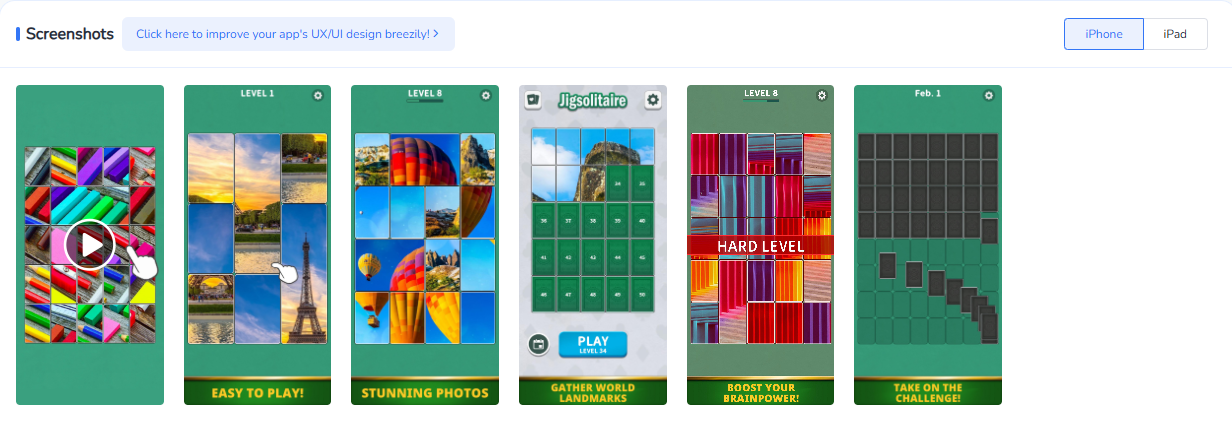
The game’s +13 ranking jump on the App Store highlights a key trend in casual gaming: low learning barriers, paired with satisfying feedback loops, remain powerful growth drivers, capable of attracting both casual users and core puzzle enthusiasts alike.
🔍 FoxData Insight
Tracking real-time App Store and Google Play data reveals which casual games are gaining traction and why. Jigsolitaire’s success illustrates how platform-aligned design and viral feedback loops can create rapid rank acceleration.
👉 Explore FoxData Charts to see real-time rankings, player engagement trends, and emerging breakout titles in the casual games segment.
Although the title has not yet entered the March Top 15, several industry analysts already view its mechanics as a potential benchmark for hybrid-casual design in 2026.

Developer: Loom Games Oyun Yazilim ve Pazarlama Anonim Sirketi
Release Date: August 17, 2025
The game exemplifies a dominant 2026 design philosophy:
“Easy to learn in one minute, difficult to stop for an hour.”
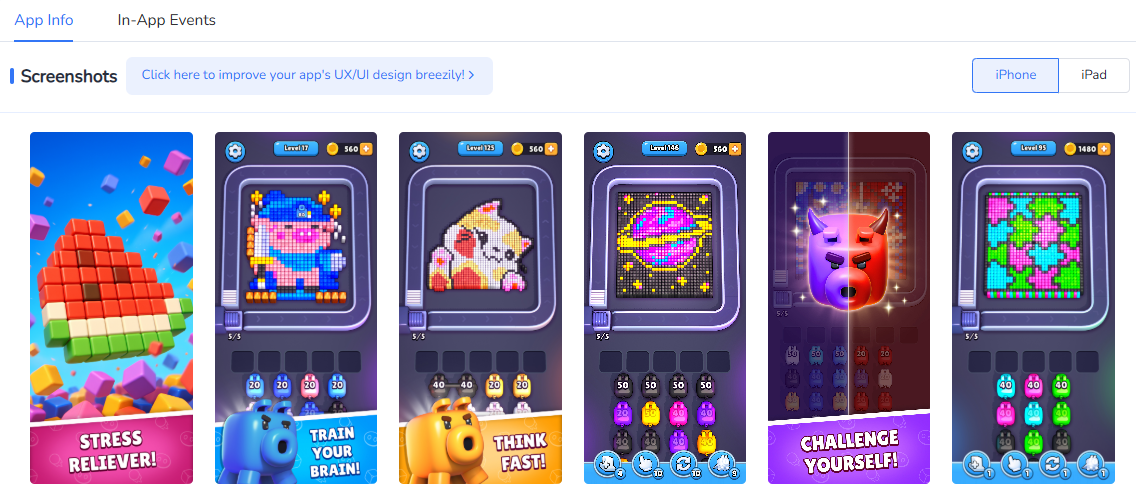
Its combination of fast onboarding, visual clarity, and strategic depth positions it as a model for future casual games aiming to capture both short-session players and deeper engagement loops.
Three structural factors drove the March ranking volatility on iOS:
1. Spring Break seasonality: Increased fragmented playtime among younger audiences boosted casual game downloads.If the iOS download chart in March felt like an intense, full-contact battle, the Google Play Top 15 tells a very different story — more like a community festival. Overall, the ranking shifts were mild, the atmosphere harmonious, and volatility low.
Key Observations

Subway Surfers City: App Profile
Developer: SYBO Games ApS
Release Date: February 26, 2026
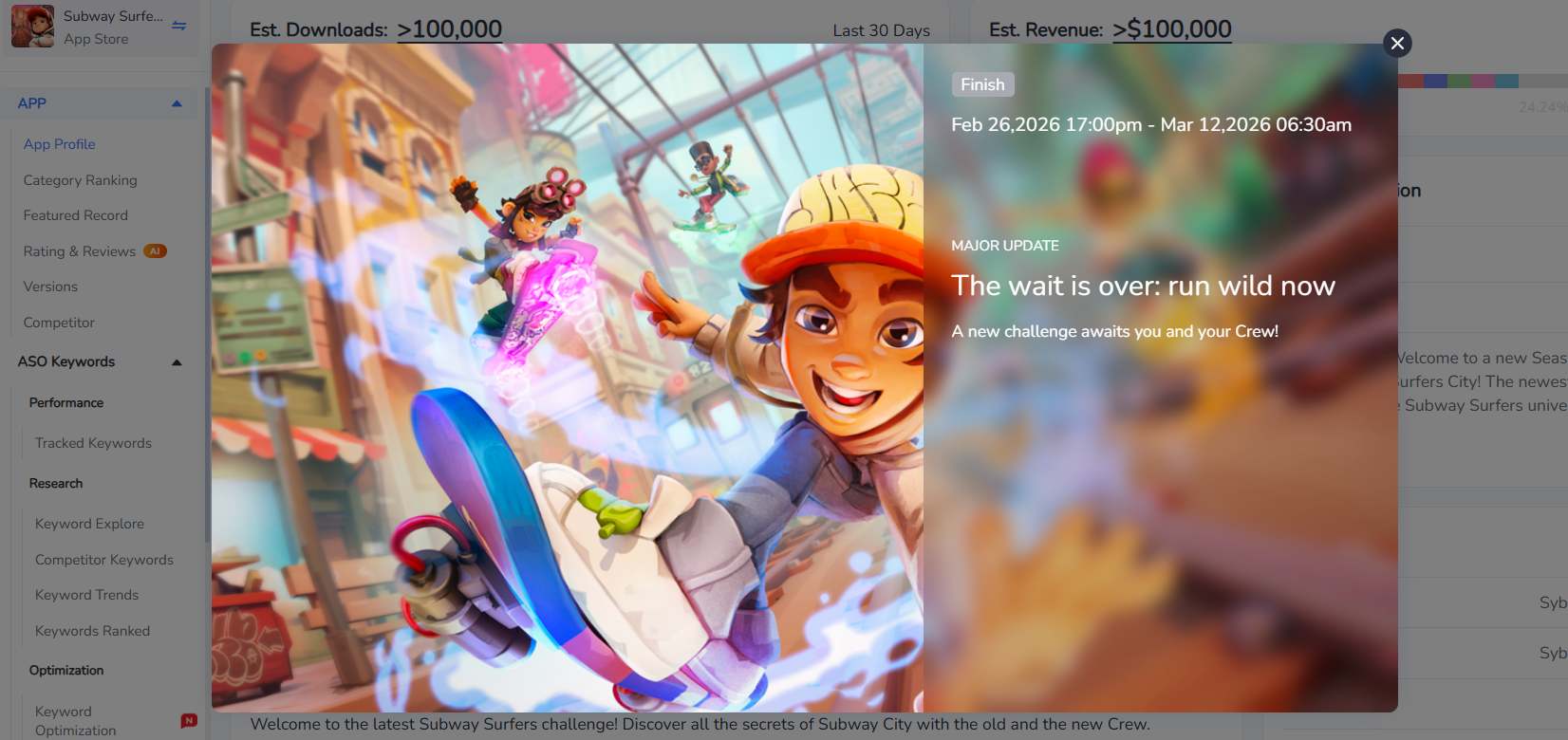
Subway Surfers City — Expanding a Classic IP Through Exploration
Dual modes:
Core mechanics:
💡 Takeaway: Subway Surfers City shows the power of IP additive design — keeping the core runner mechanics intact while adding exploration and goal-oriented objectives. Its strong March Google Play performance and potential iOS growth make it a contender for April’s charts.
A classic block puzzle title, Block Crush!, climbed four positions on the Google Play download rankings, demonstrating how performance-driven design continues to outperform visual complexity within the Android ecosystem.
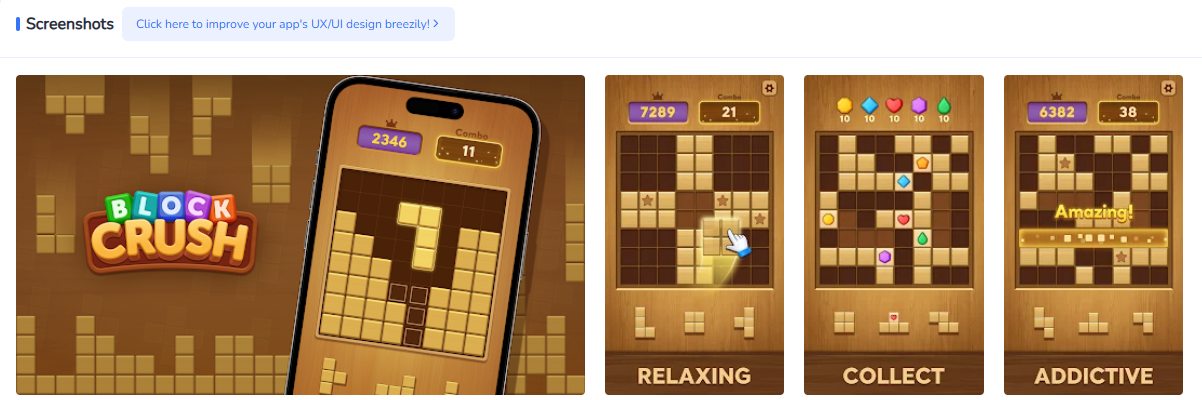
Its growth was primarily supported by three factors:
Unlike iOS markets — where visual polish and brand recognition often drive discovery — Android success frequently depends on technical efficiency and scalability.
The relatively fixed ranking structure of Google Play download charts reflects fundamental differences in ecosystem distribution logic.
Unlike App Store — where editorial featuring and social buzz can rapidly reshape rankings — Google Play acquisition relies heavily on:
Once leading titles secure key distribution channels, late entrants face significantly higher barriers to rapid breakout through paid acquisition alone.

Discover how FoxData enhances data protection and security standards to keep your analytics safe and reliable.
In stark contrast to the volatility seen in download rankings, the App Store revenue charts in March 2026 remained remarkably stable, reflecting a market driven by long-term operational strength rather than short-term acquisition momentum.
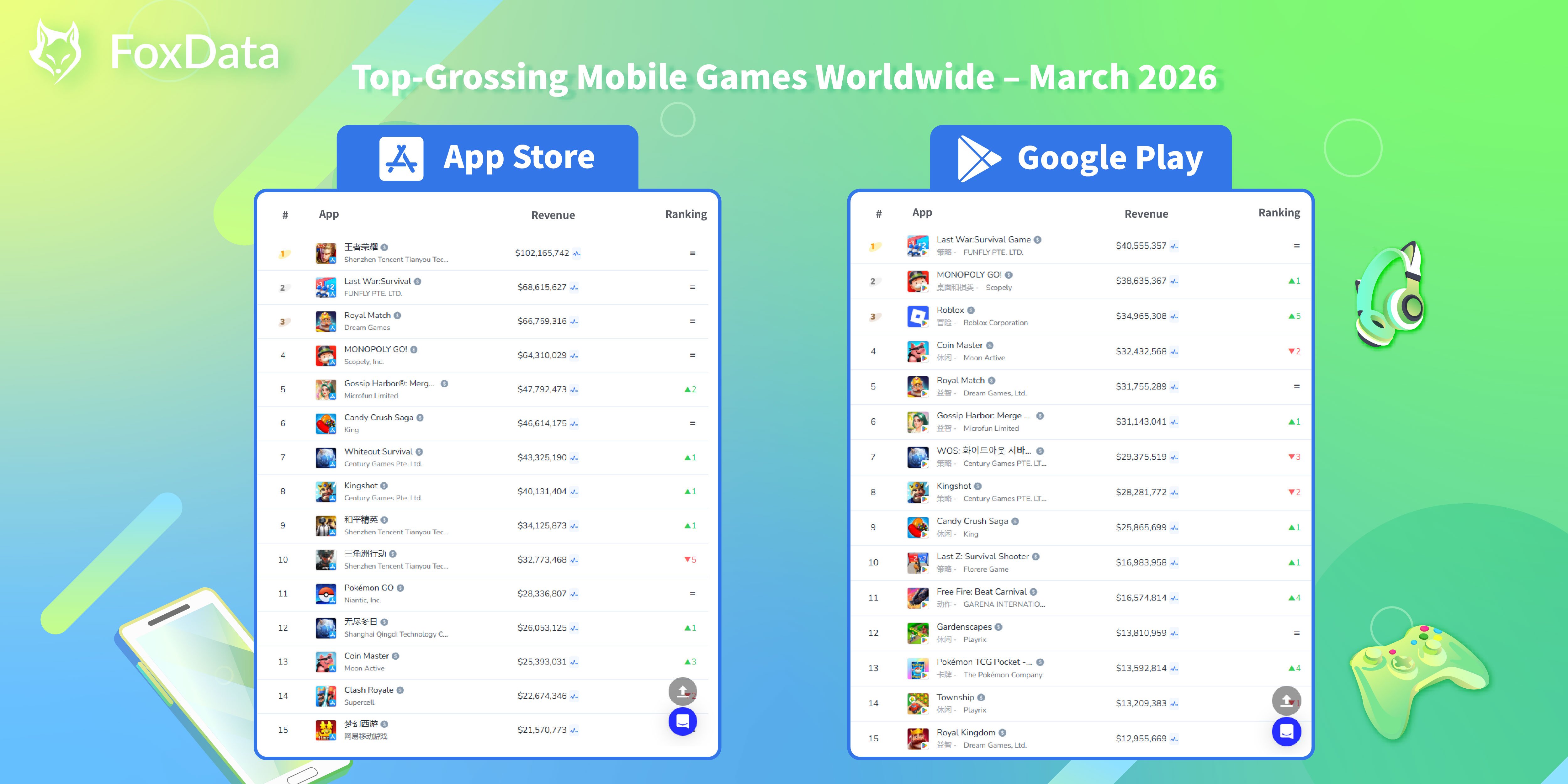
Top-grossing iOS games have evolved into long-term live-service ecosystems, sustained by predictable monetization cycles rather than rapid growth experimentation.
Core revenue drivers include:
As a result, these titles function less as breakout growth stories and more as reliable cash-flow engines, optimized for stability and lifetime value.
Delta Force recorded the most significant movement on the chart, dropping five positions during March.
Possible contributing factors include:
For tactical shooter games, revenue stability is closely tied to consistent content cadence. When update timing falls out of sync with player expectations, monetization performance can soften rapidly.
Long-running social casino title Coin Master continued its gradual downward trend, slipping two positions during the period.
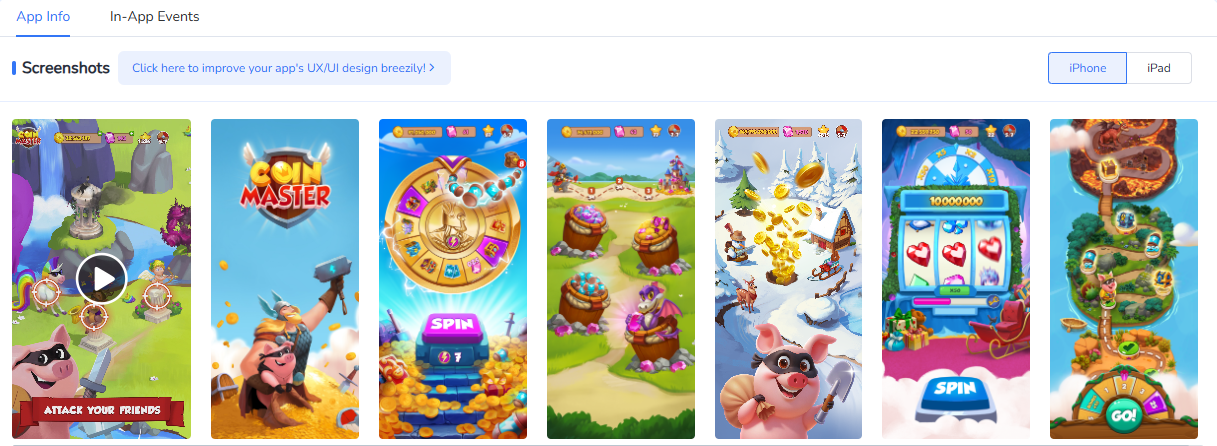
Its classic “spin-and-raid” gameplay loop now faces increasing pressure from hybrid-casual competitors incorporating:
These evolving designs broaden monetization pathways, gradually redistributing payer attention across the casual market.
The calm nature of the revenue rankings reflects structural maturity rather than stagnation.
Most Top 15 titles now operate in steady-state monetization phases where incremental optimization outweighs explosive growth. In such an environment:
Standing still effectively means losing market share.
As overall spending growth moderates, even minor declines in engagement or monetization efficiency quickly translate into ranking movement.
For developers and publishers, sustained success increasingly depends on content cadence precision, monetization innovation, and long-term player lifecycle management — not short-term acquisition spikes.
In March 2026, the global Google Play game revenue rankings continued their pattern of gradual upward movement, with most ranking gains falling within a modest +1 to +5 position range.
Rather than dramatic reshuffling, the chart reflected steady monetization adjustments shaped by seasonal engagement and evolving player preferences across Android markets.
Roblox emerged as the biggest winner of the month, climbing five positions on the revenue chart. Its performance was largely fueled by platform-driven initiatives during the spring holiday season, including:
These initiatives directly stimulated in-app purchases by aligning creator output with seasonal player demand.
Unlike traditional live-service games, Roblox’s monetization momentum benefits from a decentralized content pipeline — powered by millions of creators rather than a single development roadmap — enabling continuous adaptation to shifting player interests.
Two titles recorded notable four-position increases:
Free Fire: Secretos del Oasis
Pokémon TCG Pocket
Both cases highlight how content refresh cycles and collectible-driven monetization remain highly effective revenue accelerators on Android.
Despite overall stability, four games experienced ranking drops:
Notably, Century Games’ flagship titles Whiteout Survival and Kingshot recorded simultaneous declines, signaling potential structural pressure within the once-dominant ice-survival strategy genre.
Possible contributing factors include:
The broad pattern of modest upward movement reveals a deeper platform dynamic.
Compared with iOS, Android markets continue to show:
As a result, many developers prioritize revenue stability over rapid monetization expansion, focusing on maintaining payer depth rather than aggressively scaling spending.
AI is accelerating development speed and content iteration, but monetization leadership remains concentrated among established ecosystems and long-running titles.
2. Acquisition Is Volatile; Revenue Is Structural
Download rankings respond rapidly to seasonal trends and marketing investment, while revenue charts reflect long-term retention systems and mature monetization design.
3. Platform Differences Are Widening
4. Hybrid Casual Continues Expanding
Games combining simple onboarding with layered progression mechanics continue to dominate new user acquisition, signaling a durable design direction rather than a temporary trend.
April 2026 Key Questions for Publishers:
The rankings tell you what happened.
FoxData helps you understand why — and what to do next.
With FoxData, you can:
✅ Track global game rankings in real time
✅ Analyze download vs revenue divergence across platforms
✅ Identify emerging hybrid-casual trends before competitors
✅ Benchmark monetization and acquisition strategies worldwide
👉 Explore global mobile game intelligence with FoxData today
Turn market insights into smarter growth decisions.
© 2020-2026 FoxData. All Rights Reserved.