

Explore More Possibilities for Your Business
Full-cycle scenario construction to meet your needs from App research, development, and release to operation.
Ready for your soaring growth
With over 650 million weekly App Store visitors globally and nearly 65% of downloads driven by search, Apple Ads (formerly Apple Search Ads) remains the highest-intent paid acquisition channel in mobile marketing. Yet most advertisers still structure their campaigns around keywords alone, missing the critical dimension that separates efficient spend from wasted budget: user intent.
This guide shows you how to structure Apple Ads campaigns based on intent, so you can capture the right users at the right stage and drive consistent, measurable conversions.
The most effective Apple Ads campaign structure is built around four intent-based campaign types:
Each campaign serves a different role in your funnel—and requires different bids, creatives, and KPIs.
Not all App Store searches carry the same value. A user searching your app name is fundamentally different from someone browsing “photo editor” or exploring alternatives. Treating them the same leads to inefficient spend and poor performance insights.
The core principle is straightforward: group keywords by what the user wants to accomplish, not just by what they type. This unlocks three key advantages:
Apple’s own best-practices documentation now explicitly recommends organizing campaigns by keyword theme and intent, a validation that this approach is no longer optional for serious advertisers.
Apple recommends—and top-performing advertisers confirm—four core campaign types. Each targets a distinct layer of user intent and requires its own bidding logic, creative alignment, and success metrics.
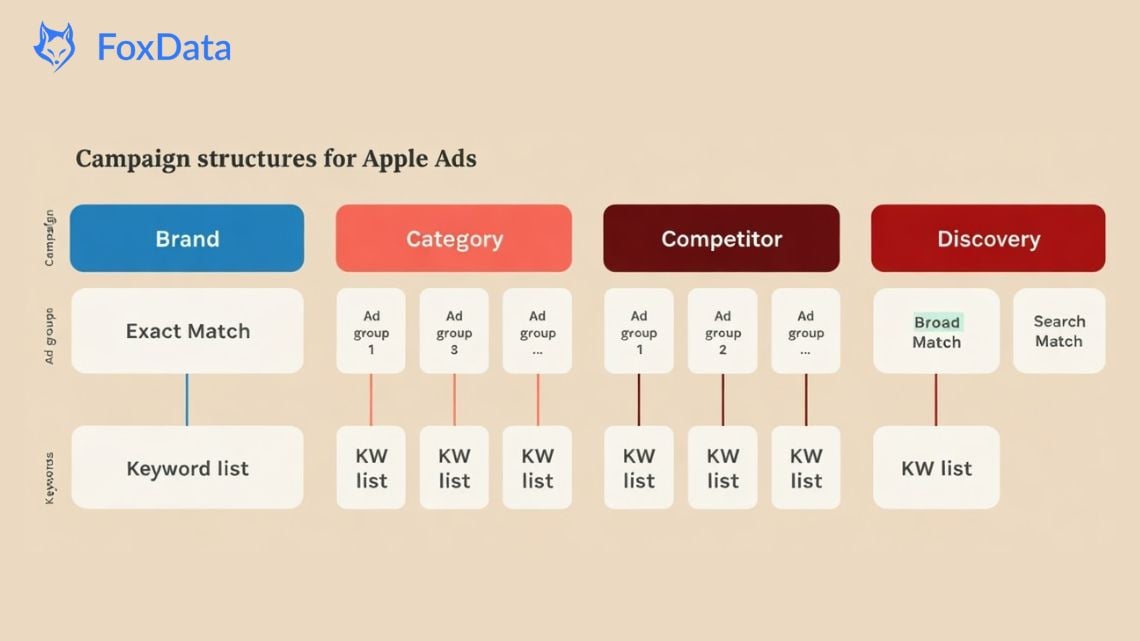
Brand campaigns target searches that include your app name, company name, or branded terms. These users already know who you are; conversion rates are typically the highest across all campaign types.
Strategy:
Category campaigns target non-branded, generic keywords that describe your app’s function, category, or use case (e.g., “budget tracker,” “photo editor,” “meditation app”). These users have intent but haven’t chosen a solution yet.
Strategy:
Competitor campaigns bid on the names of rival apps. Users searching competitor names are actively evaluating alternatives, making this a high-value interception point.
Strategy:
Discovery campaigns exist to find new keyword opportunities that you can promote into your core campaigns. They use broad match and Search Match to surface terms you haven’t explicitly targeted.
Strategy:
|
Campaign Type |
Budget (%) |
Match Type |
Intent Level |
Primary Goal |
|
Brand |
25–30% |
Exact |
Highest |
Defend & convert |
|
Category |
30–35% |
Exact + Broad |
Medium-High |
Scale acquisition |
|
Competitor |
20–30% |
Exact |
Medium |
Intercept evaluators |
|
Discovery |
5–10% |
Broad + Search |
Exploratory |
Find new terms |
🔍 Want to automate your intent-based campaign structure?
FoxData's ASA Analytics Tools helps you build, manage and optimize Apple Ads campaigns with AI-powered keyword intelligence and real-time competitve insights.
Start Your Free Trial →
Discover keyword opportunities, monitor competitors, and improve campaign performance using FoxData’s ASA analytics tools.
 Optimize Apple Search Ads with Real-Time Data
Explore Now
Optimize Apple Search Ads with Real-Time Data
Explore Now
Starting March 2026, Apple expanded search results ad inventory to include multiple ad positions beyond the traditional single top slot. The rollout began in the UK and Japan and is now available globally.
What this means for advertisers:
Action items: Re-baseline your CPA and ROAS benchmarks pre- and post-expansion. Test expanded keyword coverage with efficiency guardrails. Build intent-clustered CPPs to maximize relevance scoring across multiple placements.
Apple’s platform (rebranded from “Apple Search Ads” to “Apple Ads” in 2025) now offers several features that directly support intent-based campaign design:
Apple Ads now supports four distinct ad placements, each corresponding to a different moment in the user’s App Store journey:
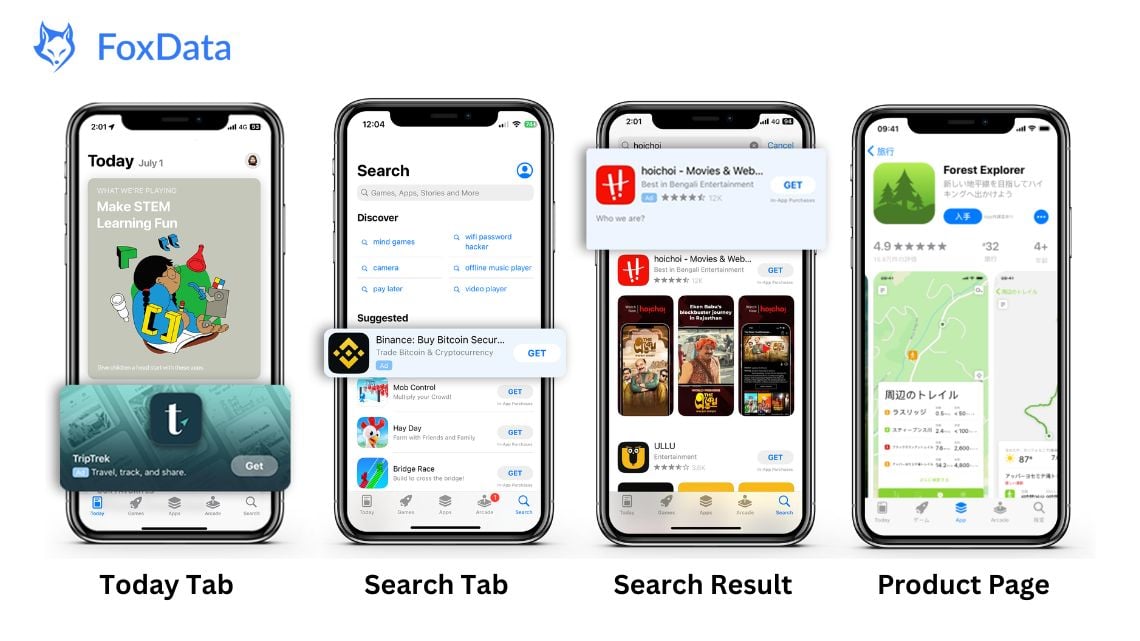
👉 Learn More: Promote Your App with Apple Search Ads 2026: Today Tab, Search Tab, Search Results & Product Pages
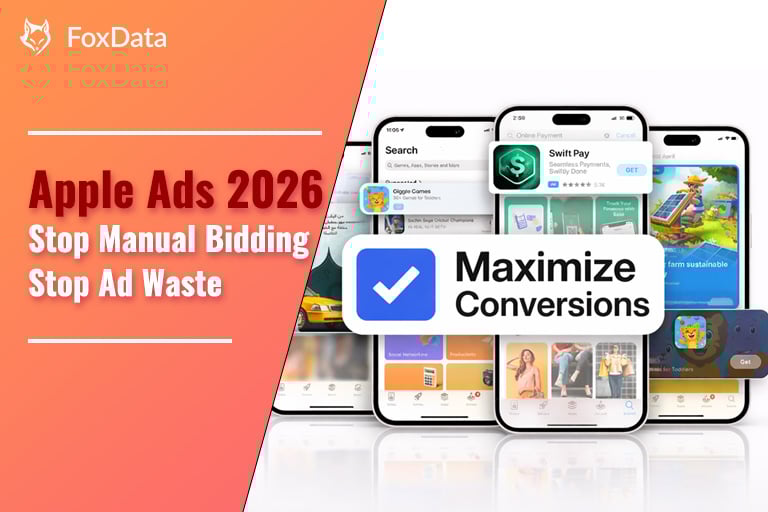
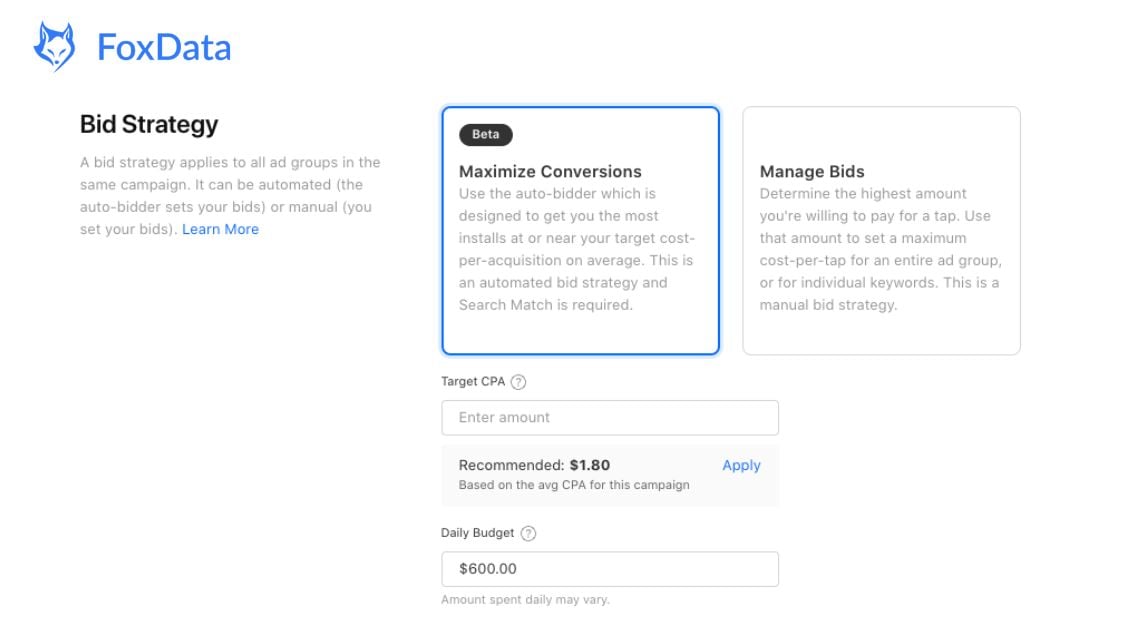
Apple’s AI-powered “Maximize Conversions” bidding strategy automates keyword matching and bid optimization. It works particularly well for discovery campaigns where manual bid management across hundreds of exploratory terms is impractical.
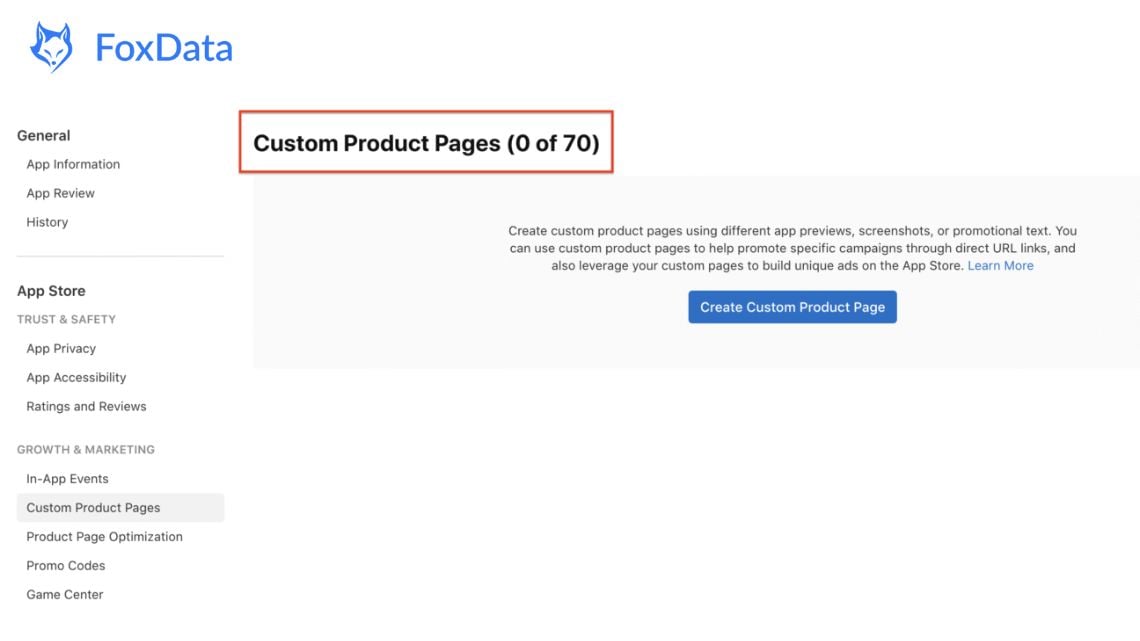
You can now create up to 70 Custom Product Pages per app and link them to specific ad groups. This lets you tailor the post-tap experience to match the user’s search intent:
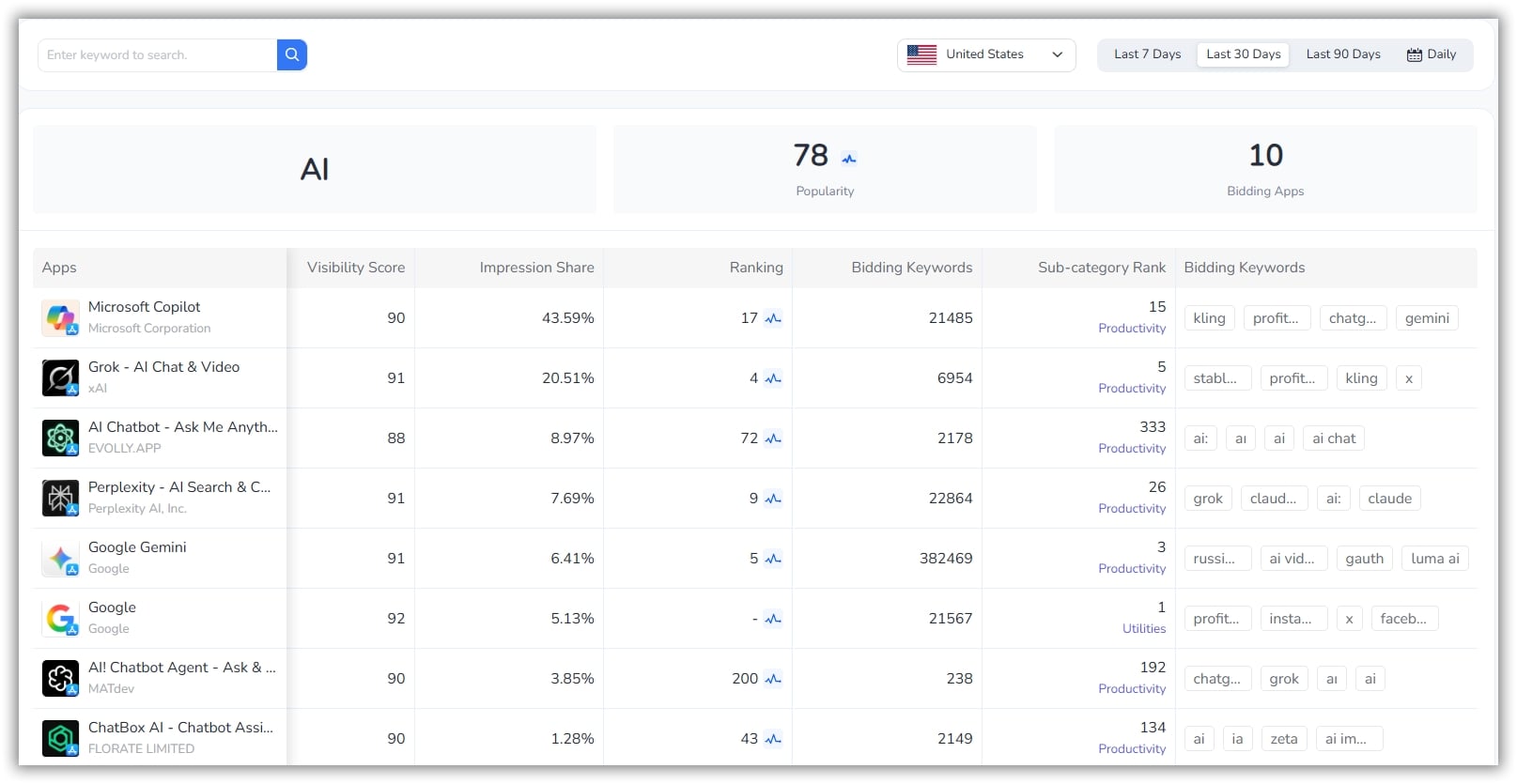
Before creating a single campaign, audit your full keyword landscape. Classify every keyword into one of four intent buckets (brand, category, competitor, discovery). Use tools like FoxData’s keyword intelligence to identify:
Within each campaign type, create separate ad groups for different match types. This gives you independent bid control and clear performance visibility:
Naming convention tip: Use a consistent format like [AppName]_[Country]_[CampaignType]_[MatchType] (e.g., MyApp_US_Category_Exact). This makes reporting and bulk management significantly easier.
Keyword overlap between campaigns wastes budget and muddies your data. Apply these rules systematically:
Your highest-intent campaigns should never be starved of budget because a discovery campaign consumed it. Set daily caps per campaign based on expected return:
The post-tap experience must match the pre-tap intent. Apple’s Custom Product Pages let you create tailored landing experiences for each ad group:
|
Intent Segment |
CPP Focus |
Key Creative Elements |
|
Brand |
Trust & loyalty |
Awards, ratings, user count |
|
Category |
Feature relevance |
Feature demos, use-case screenshots |
|
Competitor |
Differentiation |
Comparison points, unique features |
|
Discovery |
Broad appeal |
Core value prop, social proof |
The real power of intent-based architecture is the feedback loop between discovery and core campaigns. Here is the workflow top advertisers follow:
1. Mine: Discovery campaigns surface new search terms via broad match and Search Match.Different intent stages require different success metrics. Applying a single CPA target across all campaigns leads to over-investing in low-intent traffic or under-investing in high-value brand defense.
|
Campaign Type |
Primary KPI |
Secondary KPI |
Benchmark Range |
|
Brand |
Impression Share |
CPA |
Lowest CPA tier |
|
Category |
CPA/ ROAS |
Conversion Rate |
Target CPA ±20% |
|
Competitor |
CPA |
Tap-Through Rate |
1.5–2x category CPA |
|
Discovery |
New terms found |
Graduation rate |
Higher CPA accepted |
Managing an intent-based campaign structure manually is time-consuming, especially at scale across multiple markets. FoxData platform is purpose-built to solve this challenge.
FoxData surfaces keyword opportunities you would otherwise miss—trending terms, competitor bid strategies, and organic ranking gaps—updated within 20 minutes of market changes. This powers your discovery campaigns with continuously fresh data.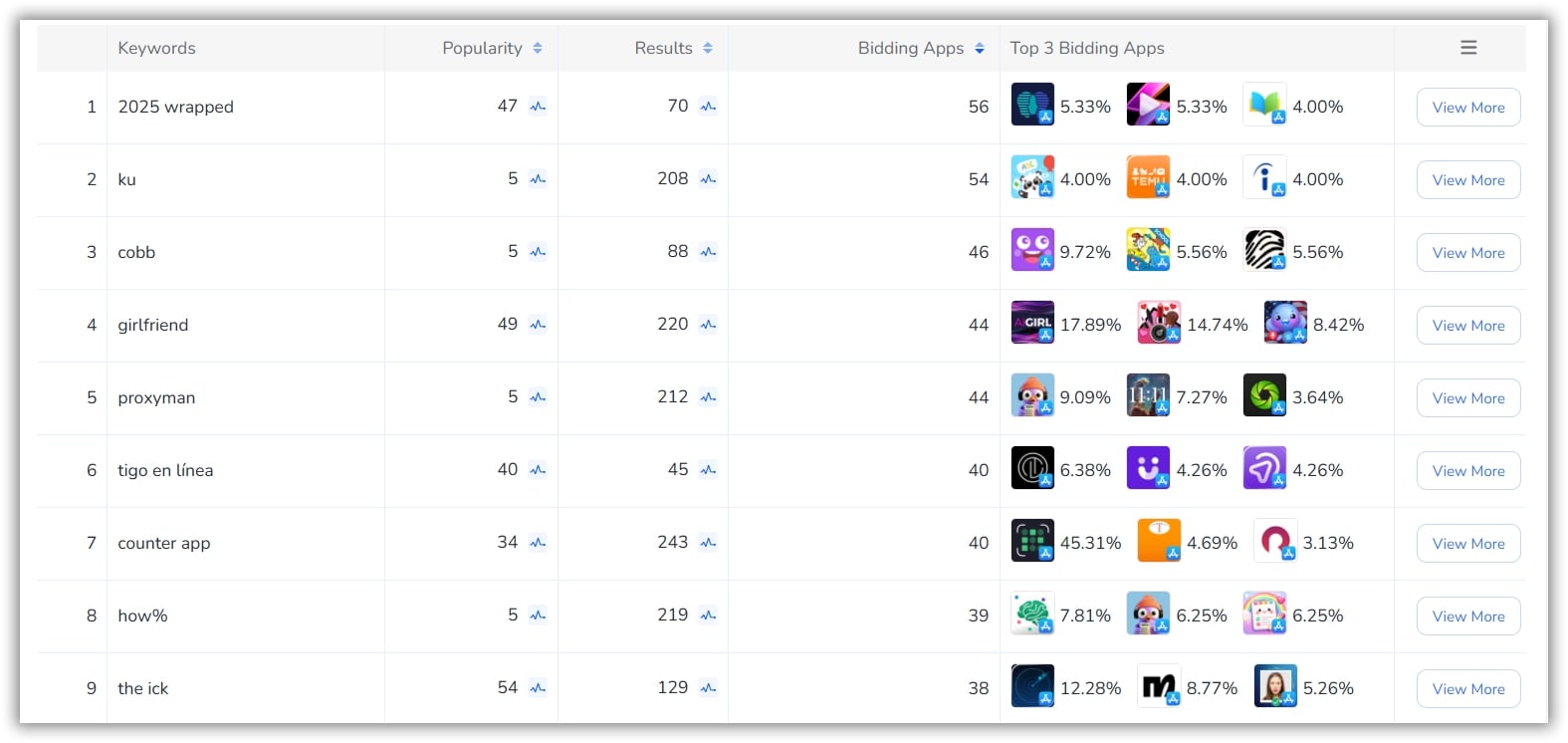
Build and manage intent-segmented campaigns from a unified dashboard. Bulk operations, automated bid adjustments, and smart campaign generation reduce the operational overhead of maintaining four campaign types across multiple geolocations.
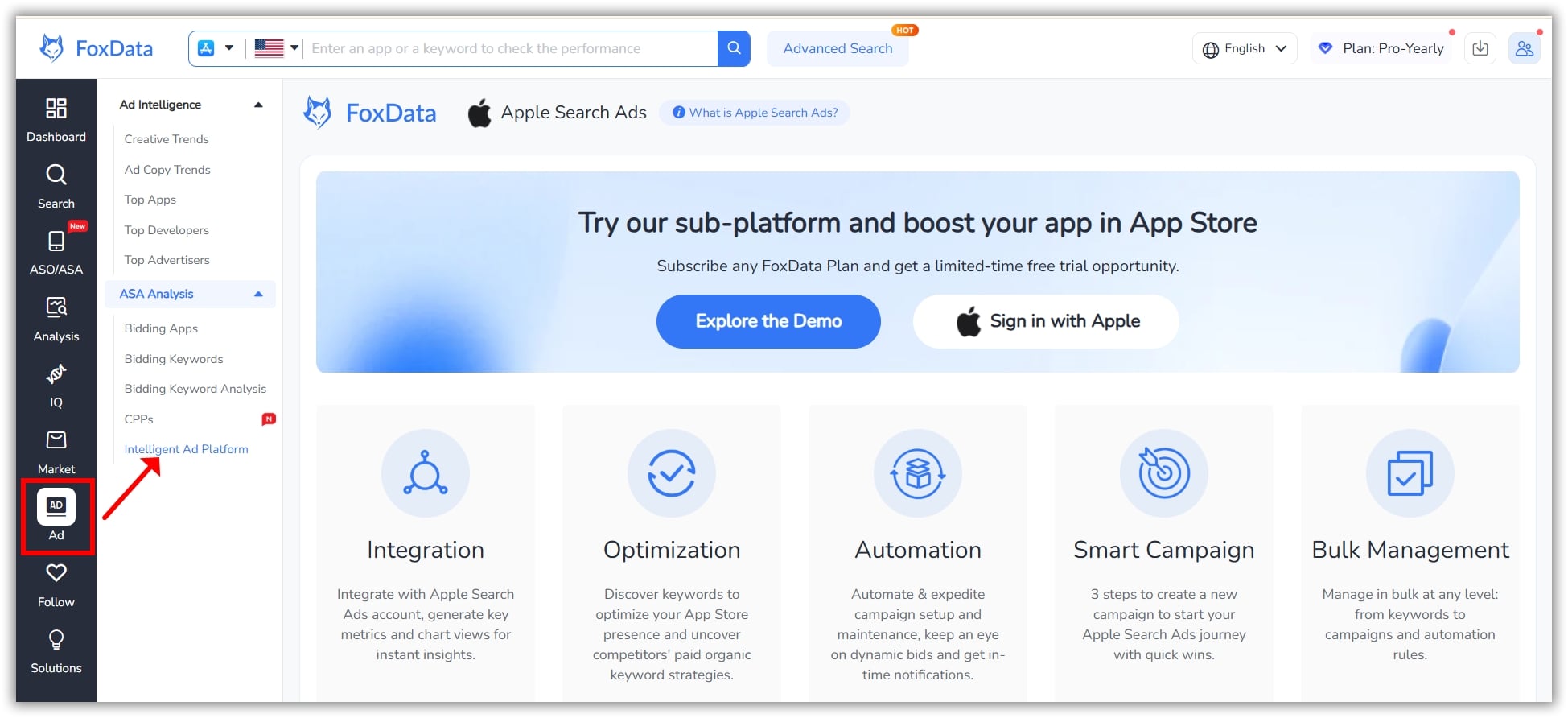
👉 5 Steps to Unlock The Potential of Apple Ads
FoxData’s analytics engine provides placement-level, keyword-level, and creative-level reporting so you can measure performance by intent segment and make data-driven graduation and budget reallocation decisions.
📣 Ready to scale your Apple Ads with intent-based campaigns?
FoxData offers a full-cycle Apple Ads management solution—from keyword research and campaign structuring to automated optimization and advanced analytics.
A: The recommended structure uses four campaign types organized by user intent: Brand (defending your name), Category (capturing generic searches), Competitor (intercepting rival traffic), and Discovery (finding new keyword opportunities). Each should have separate ad groups for exact match and broad match keywords.
A: At minimum, four campaigns per app per market: Brand, Category, Competitor, and Discovery. Larger apps may need additional campaigns segmented by sub-category or geographic region. The key is maintaining clean intent separation, not minimizing campaign count.
A: Allocate 5–10% of your total Apple Ads budget to discovery campaigns. For new markets or app launches, increase to 15–20%. Discovery campaigns will have higher CPAs than core campaigns—this is expected. Their value is measured by the quality and quantity of keywords they graduate to core campaigns.
A: Keyword graduation is the process of moving high-performing search terms from discovery campaigns to core campaigns (brand, category, or competitor) as exact match keywords. Simultaneously, add those terms as exact match negatives in the discovery campaign to prevent duplicate bidding. This should be a weekly operational rhythm.
A: Yes. FoxData provides an end-to-end Apple Ads management platform with AI-powered keyword intelligence, automated bid optimization, competitive monitoring, and real-time analytics. Learn more and start a free trial here.
Intent-based campaign architecture is not just a best practice—it is the foundation that separates apps that scale efficiently from those that burn budget without direction. By aligning your campaign structure with how users actually search, you create a system that captures demand at every stage and converts it predictably.
FoxData gives you the tools to make it happen. From intelligent keyword discovery to automated campaign management and real-time competitive intelligence, FoxData’s platform is built for the way Apple Ads works in 2026.
Take the next step
Join thousands of app marketers using FoxData to drive measurable growth through Apple Ads.
→ Start your free trial and build high-converting ASA campaigns today
✨ You Might Also Like:
© 2020-2026 FoxData. All Rights Reserved.