

Explore More Possibilities for Your Business
Full-cycle scenario construction to meet your needs from App research, development, and release to operation.
Ready for your soaring growth
Most developers focus on keywords and ratings. But there is a third signal quietly shaping your rankings. It is how recently and how often you update your app.
Stores like Apple's App Store and Google Play are not static directories. They are living, AI-driven systems that continuously evaluate which apps deserve visibility. One of the clearest quality signals they read is momentum. Is your app actively maintained? Is it improving? Does it meet today's standards?
If your last update was months ago, the algorithm may already be downranking you. This guide explains exactly why app freshness matters in 2026, what the verified data tells us, and how to turn update cadence into a measurable competitive edge.
Before building a strategy, it helps to understand the scale of what you are up against.
According to Apple, the App Store hosted 1,961,596 apps at the end of 2024. By early 2026, independent app intelligence tracking by 42matters puts that figure at approximately 2.2 million apps on iOS and 2.27 million on Google Play. That is a combined total of over 4.4 million apps competing for user attention across both platforms.
The same Apple Transparency Report confirms that weekly redownloads average 1.9 billion, while new downloads average 839 million per week. Redownloads outpace new downloads by more than two to one. Both stores have noticed this shift and are structuring their algorithms to reward apps that retain and re-engage users, not just apps that acquire new ones.
Now look at what the top performers actually do. According to 2026 data from 42matters tracking the top 1,000 apps on the Apple App Store, 74% are updated at least once per month and 26% push updates weekly. On Google Play, 75% of the top 1,000 apps update monthly and 28% update every week.
Across both stores, over 96% of top-performing apps ship at least one update per year.
The pattern is clear. If you are not updating monthly, you are already behind the majority of top-ranked apps on both platforms.
Discover how FoxData enhances data protection and security standards to keep your analytics safe and reliable.
Apple does not publicly disclose its ranking formula. However, 2025 and 2026 have brought meaningful confirmed changes that make update frequency more impactful than ever.
In June 2025, Apple introduced one of its most significant algorithm changes in years. Screenshot captions are now actively indexed as ranking signals. This means that every update you ship is not just a technical changelog. It is an opportunity to introduce keyword-rich caption text that the algorithm can evaluate and rank against search queries.
Apple also confirmed that in-app events are now matched to user search queries. These events — tournaments, seasonal content, feature launches — are indexed for discoverability.
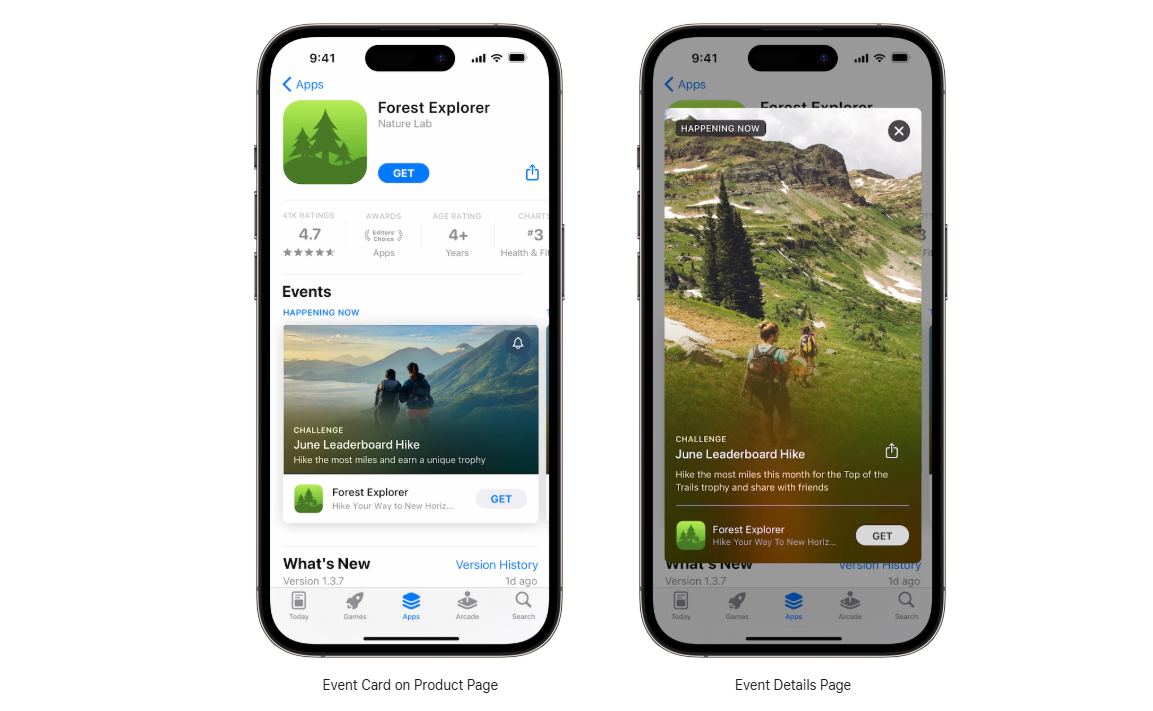
Apps that publish two to four active events per month earn significantly more organic impressions from Apple. An app that never updates simply cannot access this discovery channel.
Apple's 2026 algorithms are also placing heavier weight on post-install behavior. Retention benchmarks have sharpened. Day 1 retention above 35% and Day 7 retention above 15% are now the signals a healthy, rank-worthy app sends to Apple's algorithm. Regular updates that improve onboarding and core feature delivery are the most direct way to hit those thresholds.
Google Play has been equally explicit about rewarding active maintenance. Since 2025, app stability, update frequency, and retention have had a more visible and measurable impact on Google Play rankings.
Google's algorithm now uses AI to understand your app listing contextually. It can match your app to relevant searches even without exact keyword matches. This makes your release notes, updated descriptions, and refreshed metadata more valuable each time you push a new version.
Android Vitals, Google's quality tracking system, directly affects search rankings. Apps that crash frequently or have poor startup times see measurable drops in visibility. Regular updates that address these technical signals protect and improve your ranking position over time.
Google also runs a Level Up program for games, giving additional store visibility to apps that hit specific engagement benchmarks. This is a direct signal that Google is tying ranking access to quality indicators that frequent updates help maintain.
App freshness does not help your rankings in isolation. It creates a compound effect across every other ranking signal.
When you ship a meaningful update, several things happen at once. First, lapsed users receive a notification and may reopen the app. This drives re-engagement and boosts your session metrics. Second, improved features generate fresh ratings and reviews, lifting your social proof score. Third, a cleaner, more stable release reduces crash rates, which directly protects your Android Vitals performance.
All of these feed back into your ranking.
Research tracking top-performing apps shows that teams who A/B test their screenshots quarterly see 20 to 30% higher conversion rates compared to teams that update their creative assets only once per year. Every version you ship is a fresh window to run that kind of test.
This compound effect is why the smartest app teams now align their product roadmaps with their ASO calendars. Update scheduling is no longer a product-only decision. It is a growth decision.
Knowing that updates matter is only half the battle. You also need to know when to update, what to change, and how to measure the impact. This is where a dedicated ASO and mobile app analytics platform becomes essential.
Every update you ship creates a ranking event. Your metadata may move up or down for specific keywords. Without tracking, you have no feedback loop. You cannot learn which changes helped or hurt.
A platform built for app store optimization and productivity app analytics gives you keyword rank tracking over time. You can overlay your update history against ranking movement to identify clear patterns. Over a few release cycles, this builds a picture of which metadata changes are consistently driving visibility.
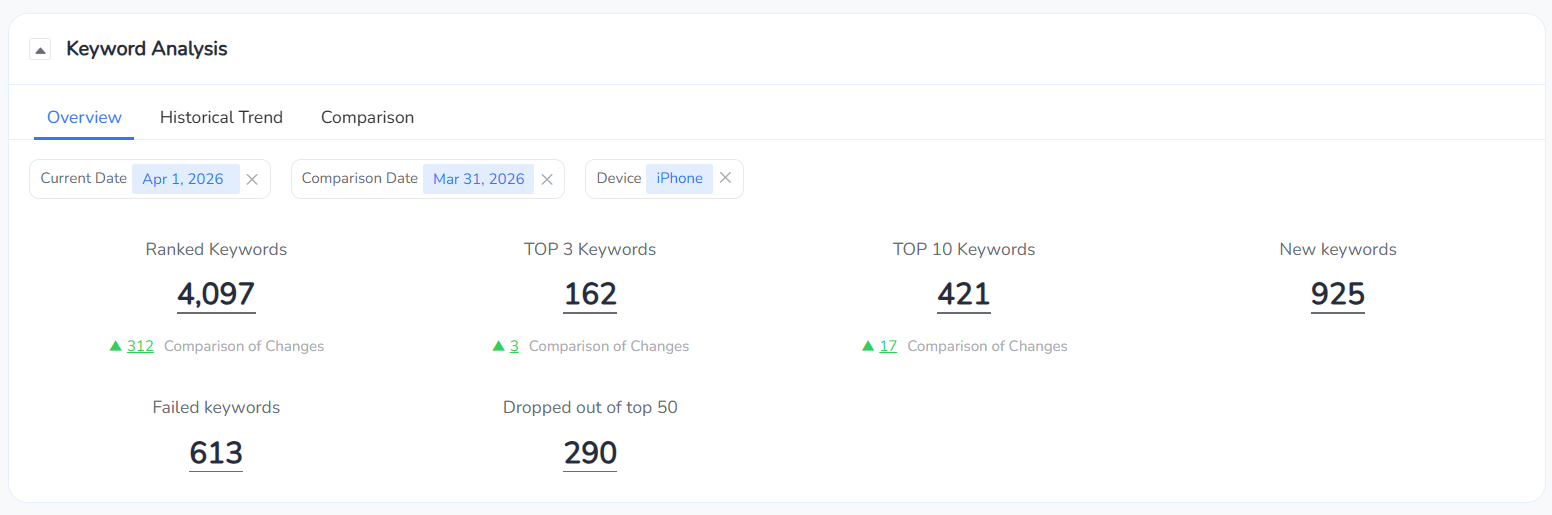
One underused tactic is tracking how often your top competitors update. If your main rival ships updates every two weeks and you update quarterly, they are generating four times as many ranking events, metadata refresh windows, and review opportunities.
With FoxData's mobile app analytics and ASO solutions, you can track competitor update activity and spot gaps in your category. This lets you respond strategically, whether by closing the cadence gap or timing updates to coincide with competitor inactivity.
Each update is also a metadata refresh opportunity on iOS. You can revise your title, subtitle, and keyword field with each new version submission. Most teams miss this window entirely, treating updates as purely technical releases.
A strong ASO platform helps you identify underperforming keywords before your next update. You enter each release with a tested, research-backed set of metadata changes, not just a changelog. For teams managing productivity app analytics and ASO performance, this kind of structured workflow is what separates consistent top rankers from apps that plateau.
For example, with FoxData, you can learn about competitors version analysis, version timeline, version history, and update details.
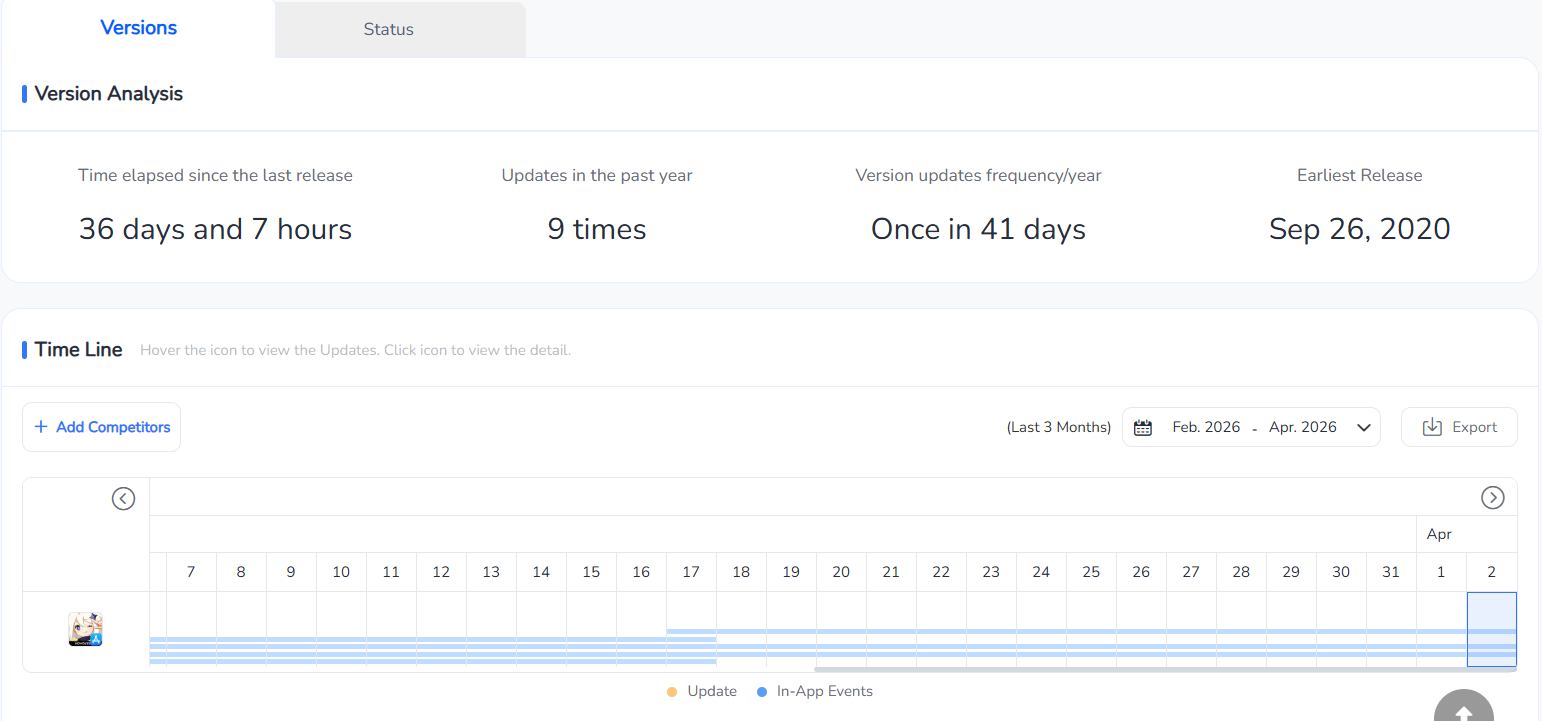
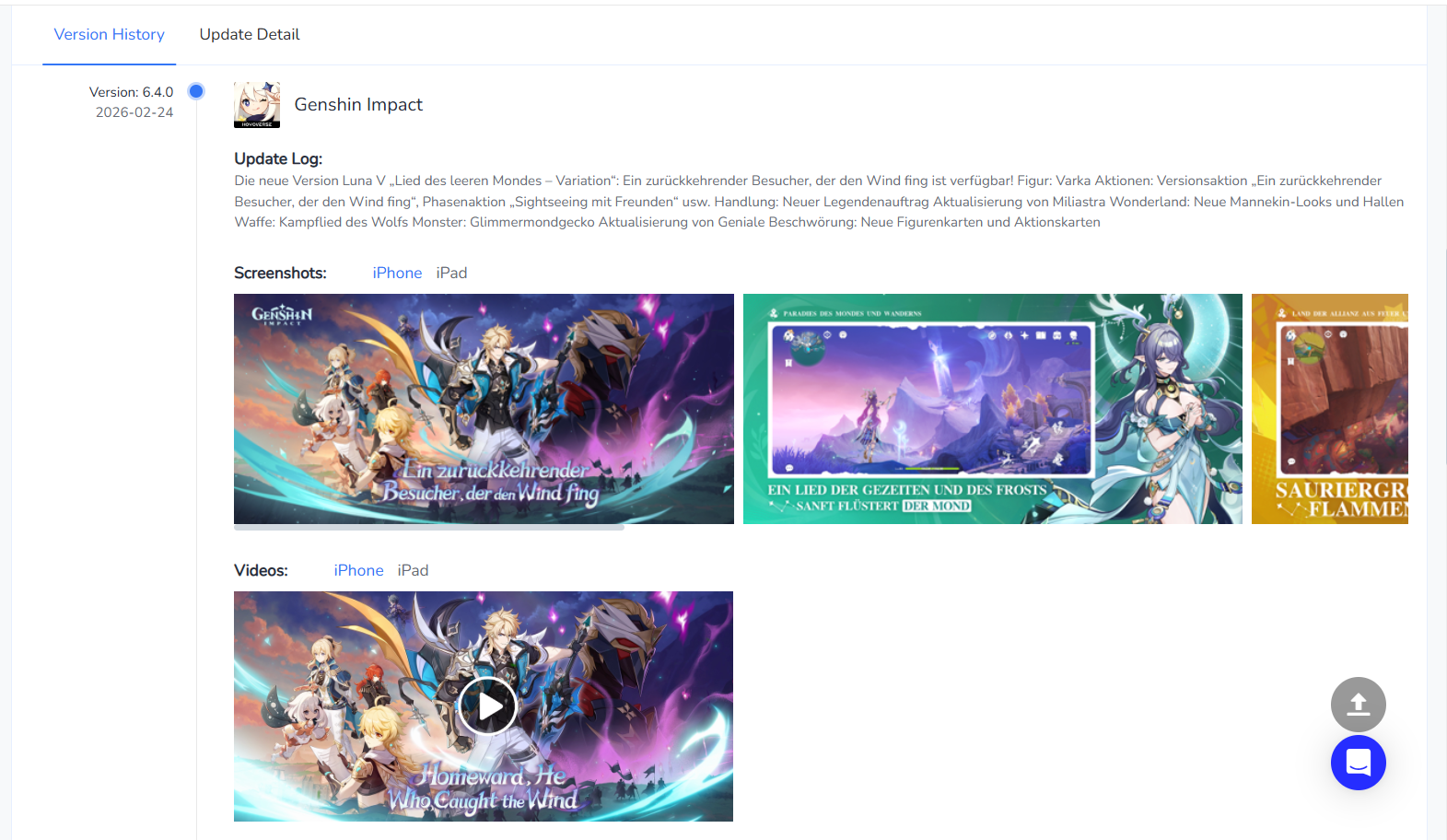
Many teams treat app updates as purely technical. They push a bug fix and move on. On iOS, the store uses every new version submission as an indexing event. If you ship a version without touching your keyword field, subtitle, or screenshot captions, you miss a free optimization window with no additional cost.
Some teams fear that frequent updates will trigger negative reviews or fatigue. This concern only applies when update quality is poor. A well-tested, incremental update shipped regularly builds trust with both users and algorithms. Quarterly updates, by contrast, allow competitors to compound ranking advantages month after month.
Release notes are visible on both the App Store and Google Play product pages. On Android, they may contribute to indexing signals. Clear, benefit-focused release notes reduce churn from update-averse users and reinforce your app's value. Notes that say only "bug fixes and performance improvements" are a missed communication opportunity.
Without measurement, every update is a guess. If you are not tracking keyword rank changes in the 7 to 14 days following an update, you have no feedback loop. This is one of the most common gaps in app marketing workflows and one of the easiest to fix with the right tooling.
In 2026, the winning approach is not just "update often." It is "update with clear user value and communicate it well." A flood of meaningless micro-updates can irritate users and drive negative reviews. Quality, consistency, and communication are what the algorithm rewards, not volume alone.
In 2026, the store algorithms have matured significantly. Keyword stuffing and one-time optimization no longer sustain rankings. What drives consistent visibility now is structured, data-informed activity, and app freshness sits at the center of that.
With over 4.4 million apps across the App Store and Google Play combined, standing still is the fastest way to fall behind. Every update you ship is a signal.
It tells the algorithm your app is alive, maintained, and improving. It brings lapsed users back. It opens a metadata window. It generates new reviews. And done with clear purpose and measurement, it compounds into a real ranking advantage over competitors who update on a slower, less strategic cycle.
The teams winning in app discovery in 2026 are treating every update as a marketing event, not just an engineering task.
Ready to turn your update cadence into a ranking strategy? FoxData gives mobile teams the keyword tracking, competitor intelligence, and ASO analytics they need to make every update count. Explore FoxData's app store optimization and analytics solutions and start building a smarter update workflow today.
Q: How often should I update my app to improve store rankings in 2026?
Data from 42matters tracking the top 1,000 apps on both stores shows that 74% to 75% of leading apps update at least once per month. For most teams, one meaningful update every three to four weeks, paired with a metadata refresh, is a sustainable and competitive cadence.
Q: Do app updates directly boost keyword rankings?
Updates do not guarantee ranking improvements. They create the conditions for improvement. Each update allows the algorithm to reassess your app, gives you a fresh metadata window, reduces technical friction, and can re-engage lapsed users, all of which influence rankings indirectly but consistently.
Q: Does update frequency matter equally on iOS and Android?
Both platforms reward active maintenance, but in different ways. On iOS, screenshot captions are now indexed as ranking signals, making visual updates especially valuable. In-app events are also matched to search queries, which requires regular publishing.
On Google Play, Android Vitals and the full description are key ranking inputs, and regular updates that improve technical stability and refresh keyword-rich descriptions compound over time.
Q: What is the best way to measure how updates affect my app's ASO performance?
Use a dedicated ASO platform that tracks keyword ranking history over time and lets you compare performance windows before and after each update. This turns your release history into a structured experiment rather than a series of unconnected releases.
Ready to make your app shine? Optimize your app's visibility with FoxData, the ultimate mobile app analytics and ASO tool! Maximize downloads and rankings by leveraging our powerful insights today.
App Growth & ASO Tools by FoxData
FoxData supports every stage of app growth with specialized ASO and app analytics tools, helping teams improve keyword visibility, user acquisition, and retention through reliable data.
🔍 Store Keyword Research Tools
Research high-intent keywords, search volume, and competition to strengthen your app store optimization strategy.
📈 App Store Keyword Tools
Analyze keyword rankings and performance across the Apple App Store and Google Play to refine ASO execution.
📊 ASO Monitoring Tools
Monitor keyword ranking changes, visibility trends, and ASO impact over time with continuous performance tracking.
👥 User Activity Monitoring Tools
Understand in-app user behavior, engagement, and retention with real-time user activity analytics.
Together, these tools form FoxData’s ASO analytics and app intelligence ecosystem, designed to help developers, marketers, and growth teams make data-driven decisions and scale sustainably.
Explore it today!
👉 Learn more about FoxData here | 👉 Book a demo with FoxData team today!
© 2020-2026 FoxData. All Rights Reserved.