




Explore More Possibilities for Your Business
Full-cycle scenario construction to meet your needs from App research, development, and release to operation.
Ready for your soaring growth
Data Source: FoxData Market Segment
Data Period: Jan 2025 - Dec 2025
Platform: App Store/ Google Play
Data Scope: Global
Data Metric: App downloads
In 2025, Games continued to dominate global app downloads, leading both the App Store and Google Play. But mobile growth is no longer driven by gaming alone. Entertainment, tools, productivity, lifestyle and finance apps are steadily capturing more installs, reflecting how mobile devices have become central to everyday life.
This article breaks down global app downloads by category in 2025 using FoxData Market Segment data, highlighting which categories attract the highest volumes, platform-specific differences, and what these trends reveal about global mobile usage.
While Games dominate both platforms, the demand structure differs sharply. Android’s reach drives higher absolute volumes, whereas iOS downloads skew toward quality, utility and professional use cases.
|
Category |
App Store Downloads (Billions) |
|
Games |
8.06B |
|
Entertainment |
6.74B |
|
Lifestyle |
6.11B |
|
Utilities |
5.57B |
|
Productivity |
4.02B |
|
Game - Casual |
3.43B |
|
Shopping |
2.76B |
|
Social Networking |
2.72B |
|
Game - Puzzle |
2.67B |
|
Business |
2.64B |
Source: FoxData Market Segment · Global · App Store · Jan–Dec 2025
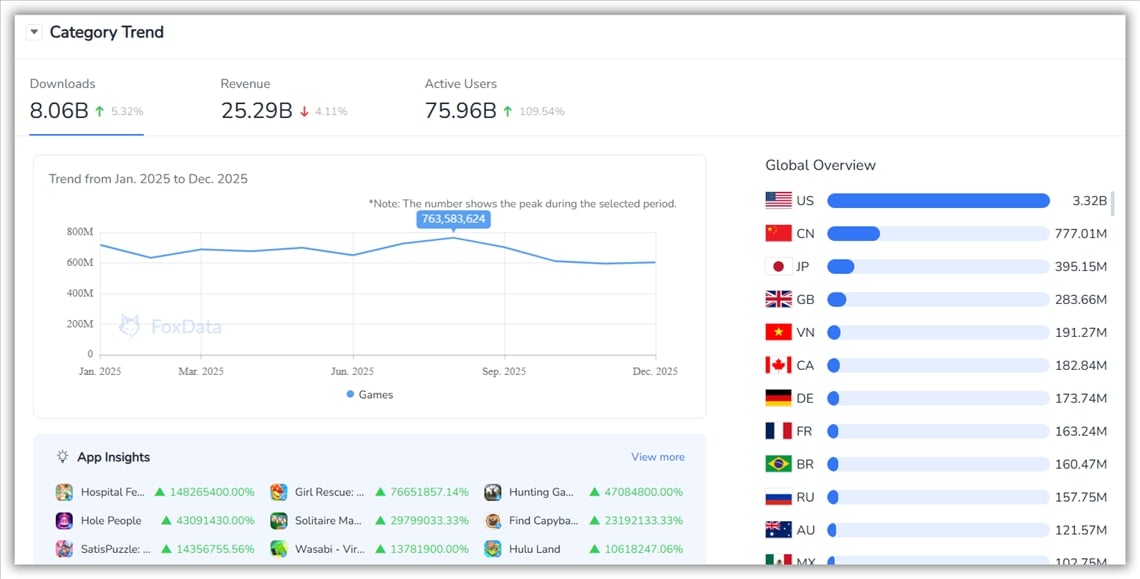
According to FoxData Category Trend, Games reached 8.06 billion downloads on the App Store in 2025, with 75.9 billion active users. Revenue growth faces competitive pressure, highlighting the need for targeted monetization, engagement and retention strategies. Key markets remain the US, China and Japan, with secondary growth emerging in the UK, Vietnam, Canada and Germany.
📌 Takeaway: On the App Store, downloads skew toward higher-intent categories. Prioritize conversion optimization and retention to maximize app value and revenue potential.
|
Category |
Google Play Downloads (Billions) |
|
Tools |
12.46B |
|
Game- Casual |
9.13B |
|
Game- Simulation |
7.31B |
|
Game- Action |
6.52B |
|
Entertainment |
6.31B |
|
Game- Puzzle |
6.2B |
|
Finance |
5.94B |
|
Game- Arcade |
4.61B |
|
Social |
4.5B |
|
Productivity |
4.01B |
Source: FoxData Market Segment · Global · Google Play · Jan–Dec 2025
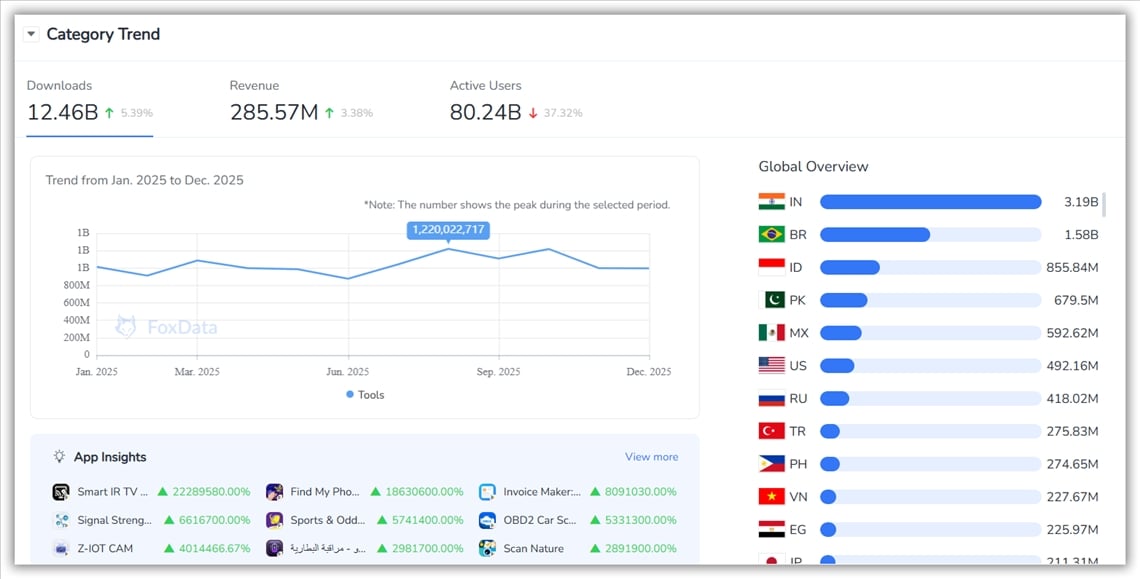
According to FoxData- Category Trend, Tools topped Google Play with 12.46 billion downloads and 80.24 billion active users. Downloads grew steadily, while revenue reached $285.57M, highlighting a high-volume but competitive market. Leading markets include India, Brazil and Indonesia, with emerging contributions from Pakistan, Mexico and the US.
Notable utility apps such as Smart IR TV Remote Control, Find My Phone by Clap/Whistle, and Invoice Maker: Money CalcTool illustrate the rapid appeal of practical, problem-solving tools.
📌 Takeaway: Google Play drives global download volume, especially for utility-focused, price-sensitive, mass-market categories. Prioritize market fit, discoverability, and retention to capitalize on high-volume opportunities.
👉 Who’s Rising? Who’s Falling? FoxData’s Real-Time App Ranking Helps You Seize the Turning Point
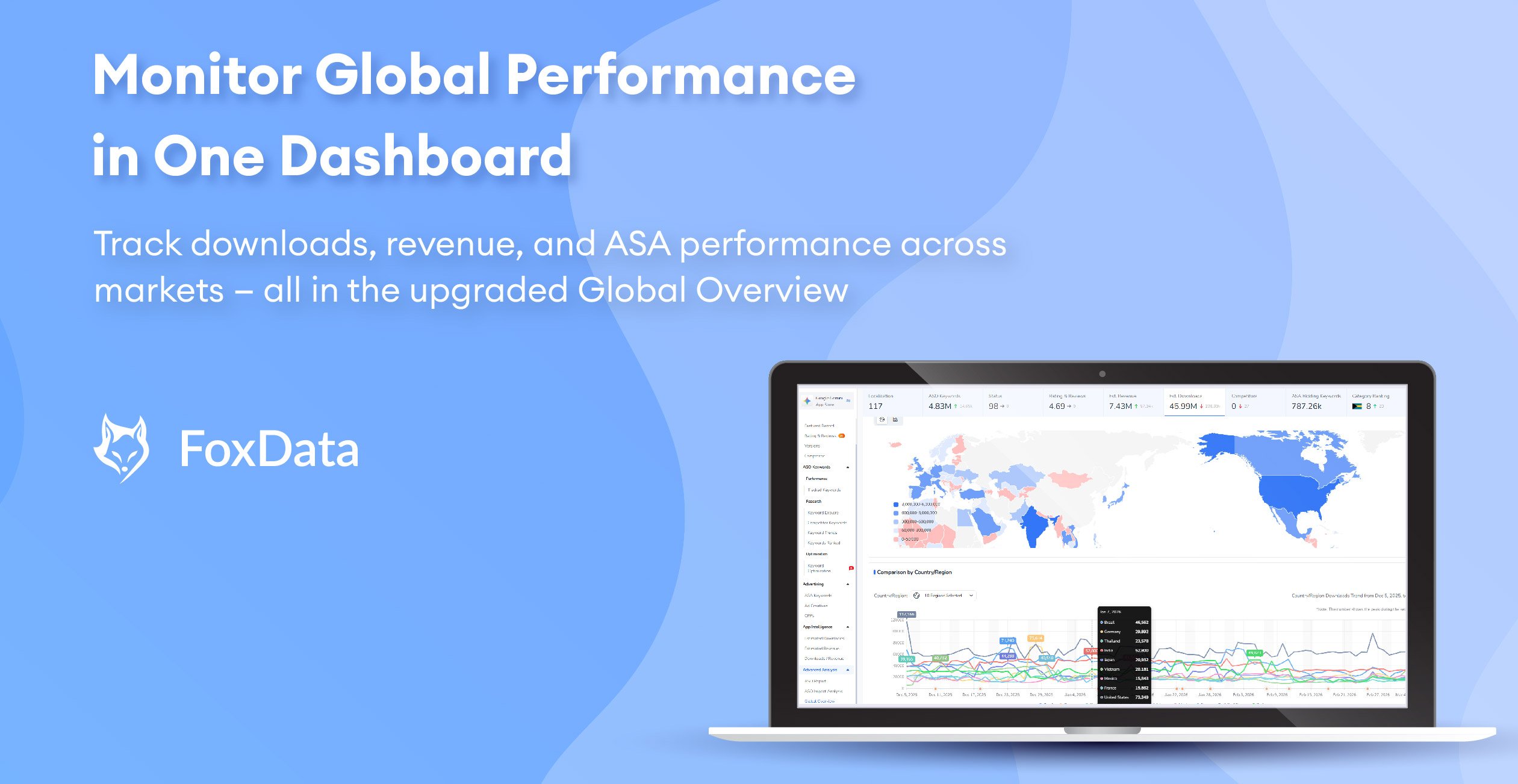
Get the latest updates in Global Overview, with all features included in the $159 package—track global app trends with ease and explore now!
|
Dimension |
App Store |
Google Play |
|
Overall volume |
Lower |
Significantly higher |
|
User behavior |
Higher-intent, value-focused |
Scale-driven, exploratory |
|
Strong categories |
Games, Lifestyle, Productivity, Business |
Tools, Casual Games, Finance |
|
Market profile |
Mature, high-income regions |
Emerging, high-growth markets |
Insight: Android drives mass adoption; iOS emphasizes engagement and long-term value. Understanding these dynamics is crucial to spotting growth opportunities.
App download volumes are shaped by structural and behavioral factors:
These factors explain why some categories thrive on both platforms while others skew strongly toward iOS or Android.
A: Not necessarily. Some categories generate large download volumes but lower revenue per user, while others monetize more effectively despite fewer installs.
A: Short-term shifts often happen quarterly due to seasonality (holidays, New Year, back-to-school), while long-term category changes usually develop over several years.
A: It helps teams understand user demand concentration, platform-specific competition, and category growth potential.
Games remain the most downloaded category in 2025, but global demand is diversifying. Entertainment, Tools, Finance, Productivity and Lifestyle apps are gaining ground, signaling a shift toward everyday utility and content. Google Play drives scale, while the App Store focuses on higher-intent segments.
Leverage FoxData insights to track category demand by store and region, identify early shifts, and benchmark your app against competitors—before markets become crowded.
📢 Sign up FREE at FoxData to explore category trends and see where your app stands.
© 2020-2026 FoxData. All Rights Reserved.