


Explore More Possibilities for Your Business
Full-cycle scenario construction to meet your needs from App research, development, and release to operation.
Ready for your soaring growth
The mobile app market has never been more demanding for agencies.
As of early 2026, the Apple App Store hosts over 2.2 million apps and Google Play holds more than 2.27 million. Roughly 2,000 new iOS apps are published every single day. Consumer spending on in-app purchases and subscriptions reached $155.8 billion globally in 2025, marking another record year for the mobile economy.
And yet, many app marketing agencies are operating on workflows built for a far simpler era.
The result? Wasted budgets. Missed rankings. Frustrated clients. Stalled growth.
Growth rarely stalls because agencies lack talent. It stalls because operational bottlenecks quietly strangle strategy before it can work. These are the "growth traps," the internal friction points that slow down execution, muddy data, and make scaling nearly impossible.
This article breaks down five of the most common bottlenecks in app marketing agencies. More importantly, it shows you how to fix each one with the right data infrastructure and processes.
Before addressing each bottleneck, one truth must be established: every agency bottleneck has a data problem at its root.
App marketing in 2026 is more complex than ever. Apple has expanded its search ad inventory globally, rebranded Apple Search Ads to Apple Ads, and doubled the number of Custom Product Pages (CPPs) available per app from 35 to 70.
Apple's AI-generated App Store Tags now influence browse placements based on metadata. Google Play has introduced Guided Search and short-form video discovery, rewarding apps based on engagement signals rather than keyword density alone.
Meanwhile, Google formally discontinued the Privacy Sandbox initiative in late 2025, leaving measurement fragmented across legacy attribution paths. This makes first-party data and app-level analytics more critical than ever for agencies proving campaign ROI.
When your data is fragmented, your decisions are delayed and your client reports are inconsistent. When your data is unified, you can move fast, optimize with confidence, and grow reliably.
That is the competitive advantage your agency needs right now.

Discover how FoxData enhances data protection and security standards to keep your analytics safe and reliable.
Most agencies run ASO and Apple Ads (formerly Apple Search Ads) through separate platforms. Keyword rankings live in one tool. Campaign bid data sits in another. Competitor intelligence is pulled manually from a third source.
This fragmentation creates a dangerous blind spot. Your team cannot see how organic keyword performance interacts with paid ad bids. You miss opportunities where high-converting paid keywords could strengthen your organic metadata strategy and vice versa.
The distinction between paid and organic is blurring faster than ever. Apple now allows Custom Product Pages to appear directly in organic search results when linked to specific keywords. That means your Apple Ads creative strategy and your ASO metadata strategy are now the same strategy. An agency managing them in silos is operating at a structural disadvantage.
The fix: Centralize your ASO and Apple Ads data into a single intelligence layer. You need to see keyword rankings, search volume trends, bid performance, and competitor data in one place. This is exactly what an integrated ASO and ASA agency data solution is designed to address.
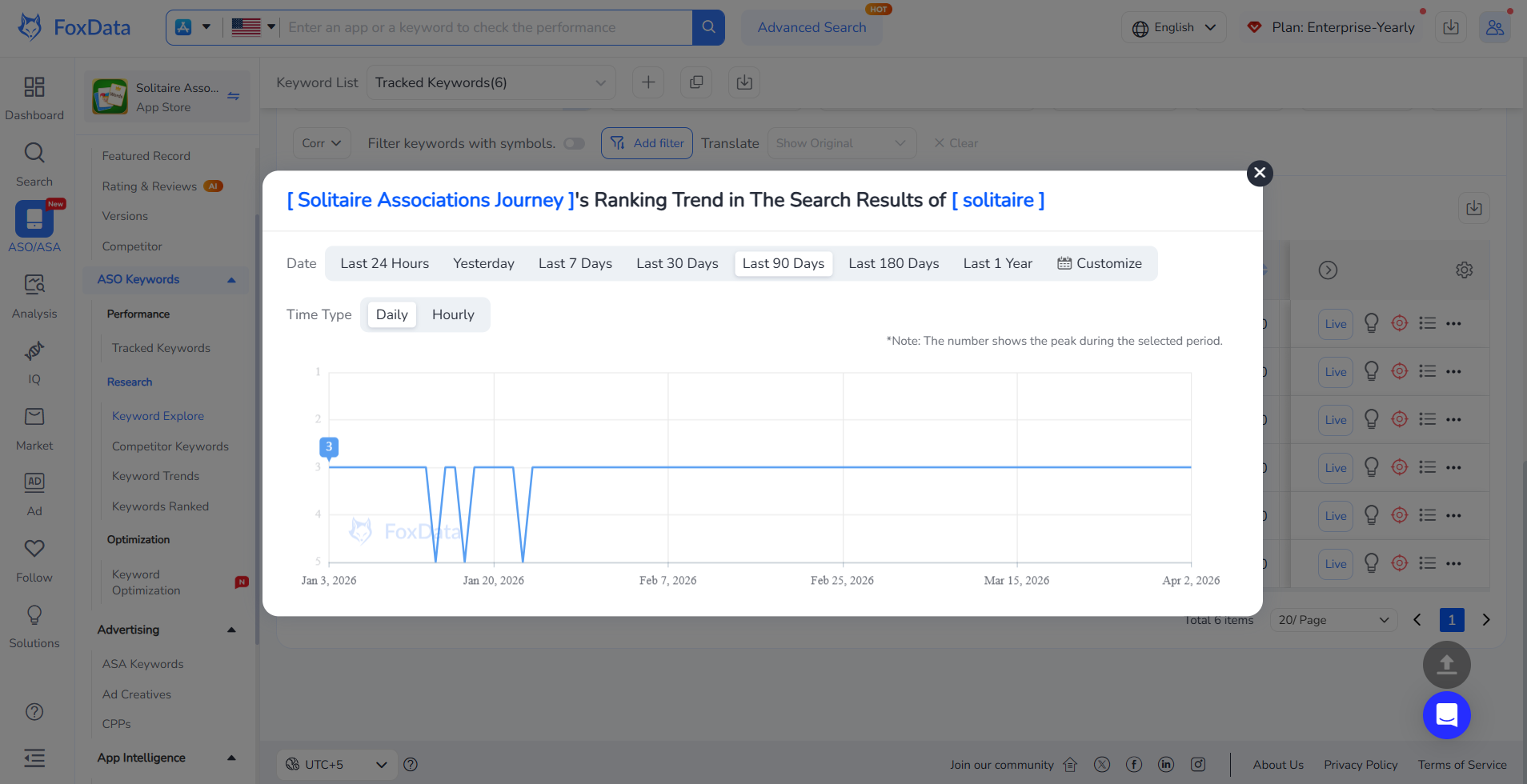
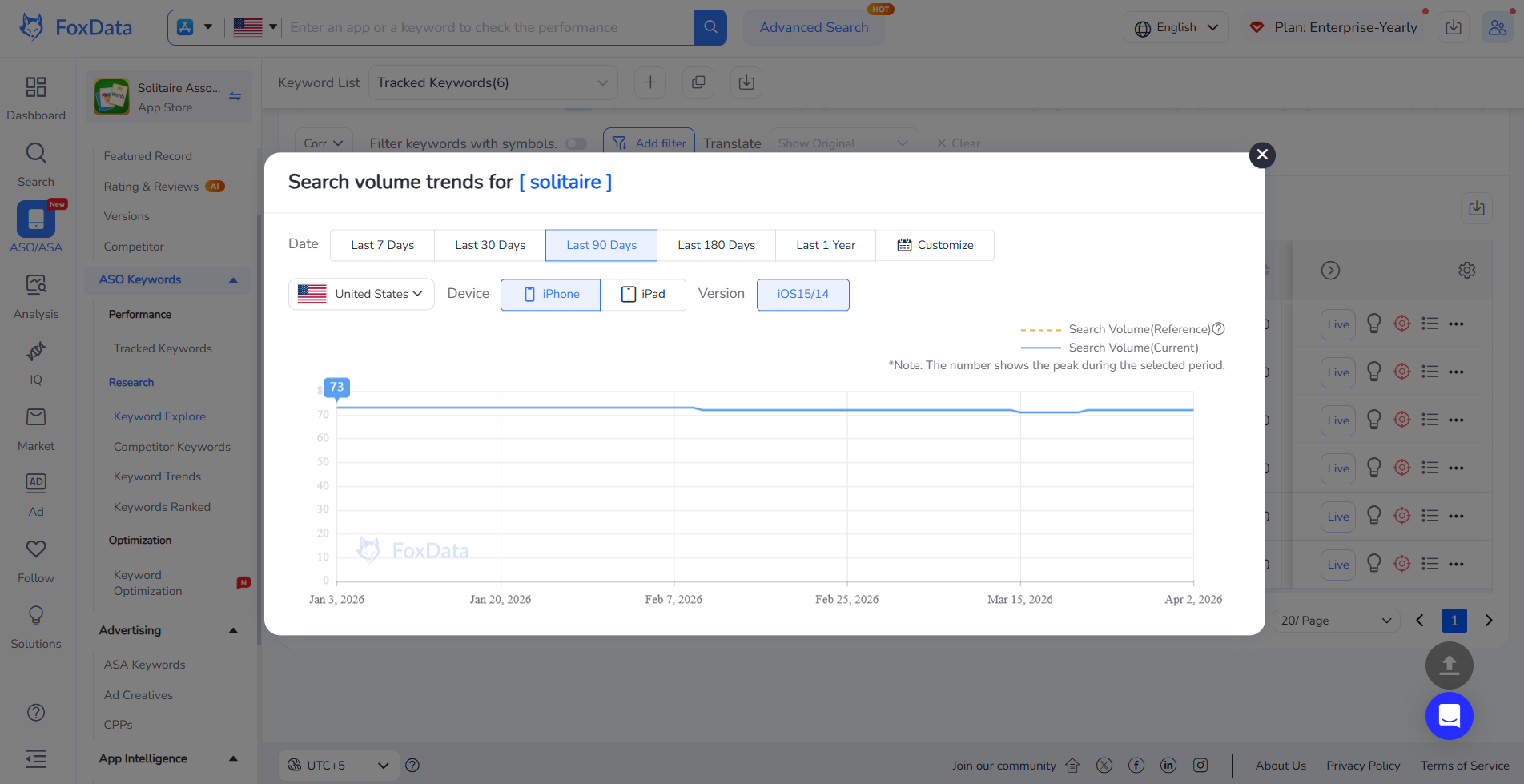
Client reporting is one of the most time-consuming tasks inside any app marketing agency. Teams manually pull data from multiple platforms, stitch it into spreadsheets, reformat it for each client, and spend hours building decks that are outdated before they are delivered.
Research on marketing agency benchmarks confirms that operational inefficiency ranks among the top internal challenges, alongside client acquisition. When reporting is slow, client trust erodes. When data is inconsistent between reports, it invites hard questions your team cannot easily answer.
The reporting environment has become more complex, not simpler. With Google having shut down Privacy Sandbox on Android as of October 2025, attribution paths have fractured. Clients are asking harder questions about measurement and ROI. Agencies that cannot produce clear, consistent answers quickly will lose accounts to competitors that can.
The fix: Build templatized, automated reporting workflows anchored to a single source of truth. Stop pulling data from five different dashboards. Standardize the metrics your agency tracks across every client account from day one. Tools built for multi-client app store analytics and reporting allow your team to generate consistent, professional reports in a fraction of the time, freeing analysts to focus on insight rather than data wrangling.
Many agencies update keyword metadata only after rankings drop. They react to performance changes rather than anticipating them. This puts your clients perpetually one step behind their competitors.
App store algorithms are not static. In 2025 alone, Apple began indexing screenshot caption text as a ranking signal, shifted toward intent-based semantic matching, and introduced AI-generated tags that influence browse placements. An agency that checks keyword rankings monthly cannot keep pace with these changes.
App store search is evolving from exact-match keyword logic toward intent-driven discovery. Apple's Natural Language Processing now interprets conversational queries, and Google Play's Guided Search organizes results by user goals rather than individual keywords. Agencies relying on static keyword lists built six months ago are optimizing for a store algorithm that no longer exists.
With over 2,000 new iOS apps published daily, ranking momentum is hard to recover once lost. The competitive window for any given keyword narrows fast.
Shift from reactive to proactive keyword management. This means continuous monitoring of keyword rankings, competitor metadata changes, trending search terms, and seasonal intent shifts across target markets. A platform purpose-built for app store optimization agency workflows should surface keyword opportunities before your competitors act on them.
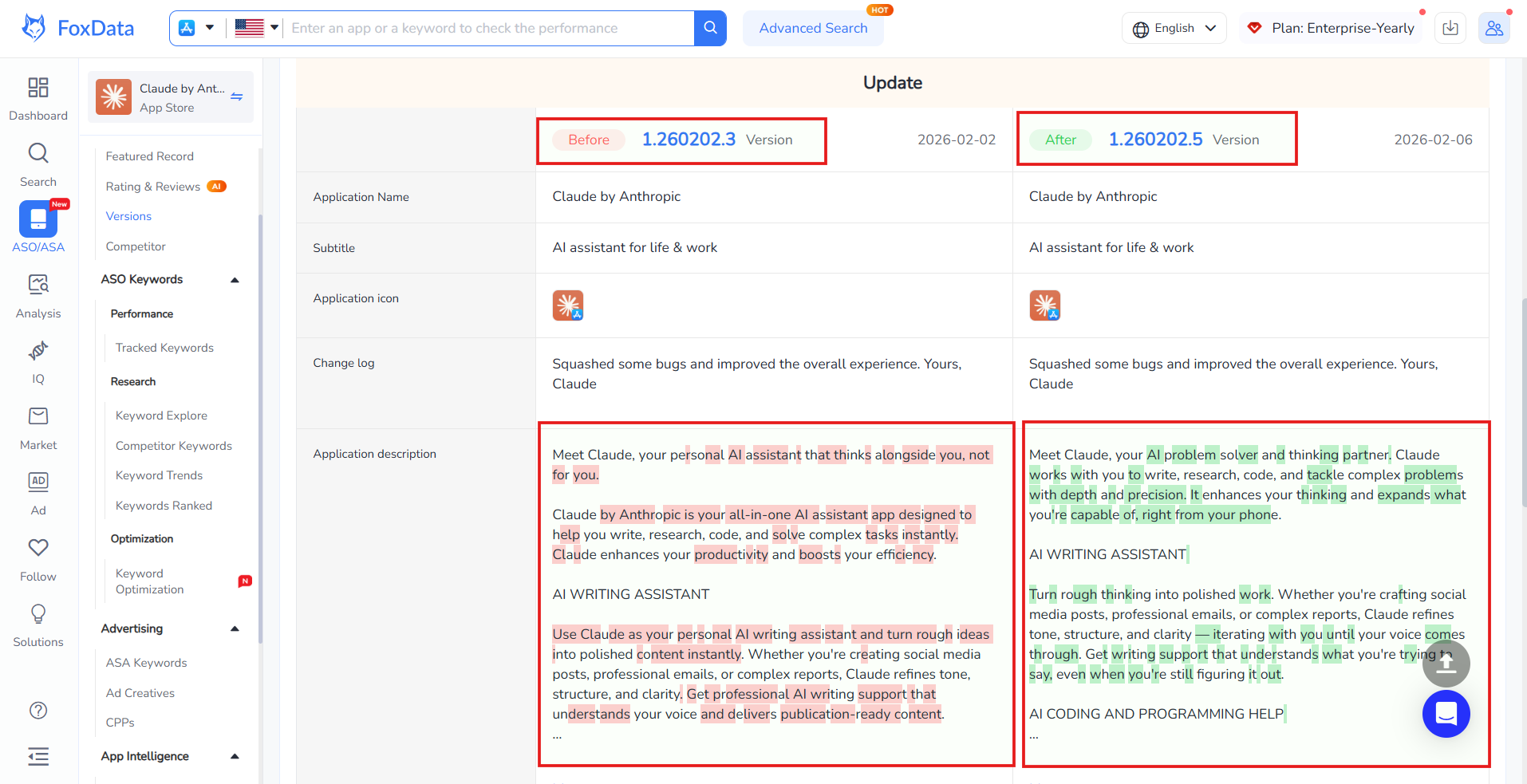
Build a weekly cadence: monitor competitor ranking movements, flag keywords gaining search volume, and update client metadata on a rolling basis. Stop waiting for rankings to fall before taking action.
Agencies managing multiple client apps rarely have a systematic way to track competitor activity at scale. Competitor monitoring is often done manually, app by app, market by market. This is slow, inconsistent, and expensive in terms of team hours.
In-app purchase and subscription revenue reached $155.8 billion globally in 2025, up from $150 billion in 2024. This growth is attracting more competition into every category. Clients want to know not just how their app is performing in absolute terms, but how it stacks up against direct competitors in real time.
Competitive intelligence in 2026 also requires tracking more signals than before. Competitors are now optimizing Custom Product Pages for individual keyword clusters, running In-App Events to boost browse placements, and localizing store listings across ten or more markets. Manually tracking all of this across a client portfolio is not a reasonable ask for any team.
The fix: Build a repeatable competitive intelligence framework for every client account. This means tracking competitor keyword sets, rating and review trends, update histories, CPP strategies, and category ranking movements. Scaling this across a full client roster requires a data platform, not manual research.
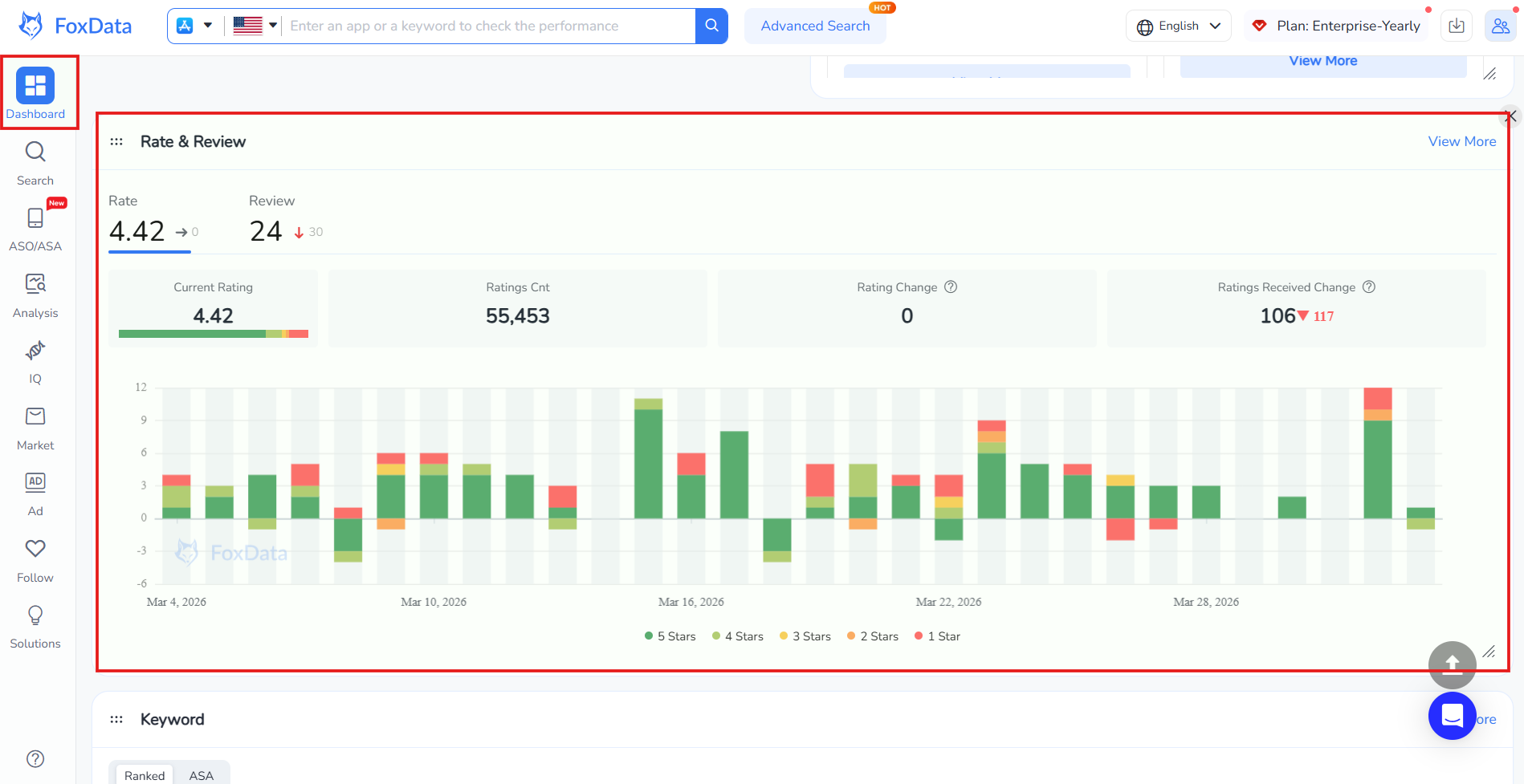
Look for tools that allow your team to monitor multiple apps and competitors simultaneously, with automated alerts when significant changes occur. That is the only way to deliver meaningful competitive intelligence at agency scale.
User acquisition managers and ASO strategists often operate in silos. UA teams optimize for install volume and cost-per-install. ASO teams optimize for keyword rankings and conversion rates. Neither team has a full view of how their work affects overall app growth.
This disconnect creates duplicated effort and contradictory decisions. A UA team might bid aggressively on keywords the ASO team has already captured organically. An ASO team might optimize for keywords that consistently underperform in paid campaigns.
Apple's expanded search ad inventory means there are now more paid placements appearing within app store search results. Paid and organic results are appearing closer together than ever, with reduced visual distinction between sponsored and organic listings. If your UA and ASO teams are not sharing data and aligning strategy, you are bidding against yourself and leaving organic performance on the table simultaneously.
Research shows that approximately 70% of app installs originate from app store searches. When paid and organic efforts reinforce each other, agencies can maximize visibility across both surfaces for the same keyword set. When they operate in silos, both efforts become less efficient.
The fix: Create shared performance dashboards that both UA and ASO teams reference. Agree on a core set of growth metrics that bridge both disciplines: keyword-level install attribution, organic versus paid conversion rates, and store page performance by traffic source. When both teams see the same data, they make decisions that reinforce each other rather than working at cross-purposes.
Solving agency bottlenecks is not just about identifying the problems. It requires building a data infrastructure that supports how agencies actually operate.
Here is a practical framework:
Step 1: Audit your current tool stack. List every platform your team uses for keyword research, campaign management, reporting, and competitive tracking. Identify where data breaks down between tools.
Step 2: Identify your highest-cost workflows. Measure how many hours per week your team spends on manual reporting, competitor research, and keyword updates. These represent your biggest ROI opportunities for automation.
Step 3: Consolidate around a unified data platform. A platform built specifically for agency workflows should support multi-client management, keyword intelligence, Apple Ads campaign data integration, and automated reporting in one environment.
Step 4: Build standard operating procedures (SOPs) around the platform. Tools only eliminate bottlenecks when teams use them consistently. Define your weekly keyword review cadence, your monthly reporting schedule, and your competitor monitoring triggers.
Step 5: Review and iterate quarterly. App store dynamics are changing faster in 2026 than in any previous year. Your data workflows should evolve alongside platform changes, algorithm shifts, and new ad inventory expansions.
Treating ASO as a one-time setup task. App store optimization is an ongoing discipline. With Apple now indexing screenshot text and using AI to generate browse tags, metadata strategy requires more frequent review and adjustment than it did even a year ago.
Using generic marketing dashboards for app-specific reporting. General reporting tools were not built for app store data. They cannot surface the keyword rankings, category movements, and review sentiment shifts that matter most to clients.
Optimizing for installs without monitoring retention signals. A great conversion rate means nothing if users churn in the first week. Google Play now explicitly factors retention and engagement metrics into search rankings. App store ratings, review sentiment, and session
depth data should inform both your ASO and UA targeting.
Ignoring localization in keyword strategy. Many agencies optimize only for their primary market. Research shows that apps with localized store listings in ten or more markets see significantly higher overall conversion rates. Keyword behavior, search volume, and competitive intensity vary significantly by region.
Scaling headcount before scaling systems. Hiring more analysts does not fix a fragmented data infrastructure. Fix the foundation first, then scale the team on top of it.
Every bottleneck described above is fixable. The agencies that scale in 2026 are not the ones with the largest teams. They are the ones with the clearest data, the tightest workflows, and the platforms that support how agencies actually operate.
App store platforms are moving faster than at any point in recent history. Apple has expanded its paid inventory, introduced AI-driven discovery surfaces, and doubled CPP capacity all within the past twelve months. Google Play has shifted its algorithm to prioritize engagement over raw download volume. The measurement landscape has been reshuffled by the deprecation of Privacy Sandbox. Agencies that cannot adapt their data infrastructure quickly will fall behind clients who expect results in a rapidly shifting environment.
Ready to remove the data bottlenecks slowing your agency down? FoxData's ASO and Apple Ads agency data solution is built specifically for app marketing agencies managing multi-client growth at scale. Explore the platform and see how unified app intelligence can transform the way your team works.
What is the difference between ASO and Apple Ads for app marketing agencies?
App Store Optimization (ASO) is the process of improving an app's organic visibility through keyword metadata, visuals, ratings, and review performance. Apple Ads (formerly Apple Search Ads) is Apple's paid advertising platform within the App Store.
In 2026, the line between paid and organic has blurred significantly. Apple now allows Custom Product Pages to appear in organic search results when linked to specific keywords, making it essential for agencies to integrate both disciplines under a unified strategy.
How can an agency manage ASO for multiple clients efficiently?
Efficient multi-client ASO management requires centralized data access, standardized reporting templates, and a unified keyword tracking system. Agencies relying on manual research per client spend too many hours on non-billable work. A dedicated platform built for agency-scale ASO and Apple Ads management dramatically reduces that overhead while improving consistency across accounts.
Why is keyword intelligence important for mobile app marketing agencies in 2026?
App store keyword algorithms have grown significantly more sophisticated. Apple now uses semantic matching and intent signals rather than exact keyword matching alone. Agencies that monitor keyword trends continuously can update client metadata proactively and align their CPP strategy with high-converting search terms before competitors act.
Reactive keyword updates always put clients at a disadvantage in a faster-moving environment.
How do agencies demonstrate ROI from ASO to clients?
ROI from ASO is demonstrated through measurable changes in keyword rankings, organic install growth, conversion rate improvements on the store page, and category ranking movements over time.
With measurement becoming more fragmented following the deprecation of Privacy Sandbox on Android, agencies that maintain clear, app-store-level attribution data are better positioned to prove value to clients clearly and consistently.
Ready to make your app shine? Optimize your app's visibility with FoxData, the ultimate mobile app analytics and ASO tool! Maximize downloads and rankings by leveraging our powerful insights today.
App Growth & ASO Tools by FoxData
FoxData supports every stage of app growth with specialized ASO and app analytics tools, helping teams improve keyword visibility, user acquisition, and retention through reliable data.
🔍 Store Keyword Research Tools
Research high-intent keywords, search volume, and competition to strengthen your app store optimization strategy.
📈 App Store Keyword Tools
Analyze keyword rankings and performance across the Apple App Store and Google Play to refine ASO execution.
📊 ASO Monitoring Tools
Monitor keyword ranking changes, visibility trends, and ASO impact over time with continuous performance tracking.
👥 User Activity Monitoring Tools
Understand in-app user behavior, engagement, and retention with real-time user activity analytics.
Together, these tools form FoxData’s ASO analytics and app intelligence ecosystem, designed to help developers, marketers, and growth teams make data-driven decisions and scale sustainably.
Explore it today!
👉 Learn more about FoxData here | 👉 Book a demo with FoxData team today!
© 2020-2026 FoxData. All Rights Reserved.