💡Harness GameIQ deep game tags, global ad creative insights, precise download revenue predictions and player behavior analytics. Make every market decision backed by intelligence.
We address your challenges with tailored data-driven solutions for each pain point.
From insights to revenue,
FoxData mobile game analytics solution integrates competitive intelligence, smart user acquisition, market predictions, and player value optimization.
The South Korean market is one you should definitely consider.
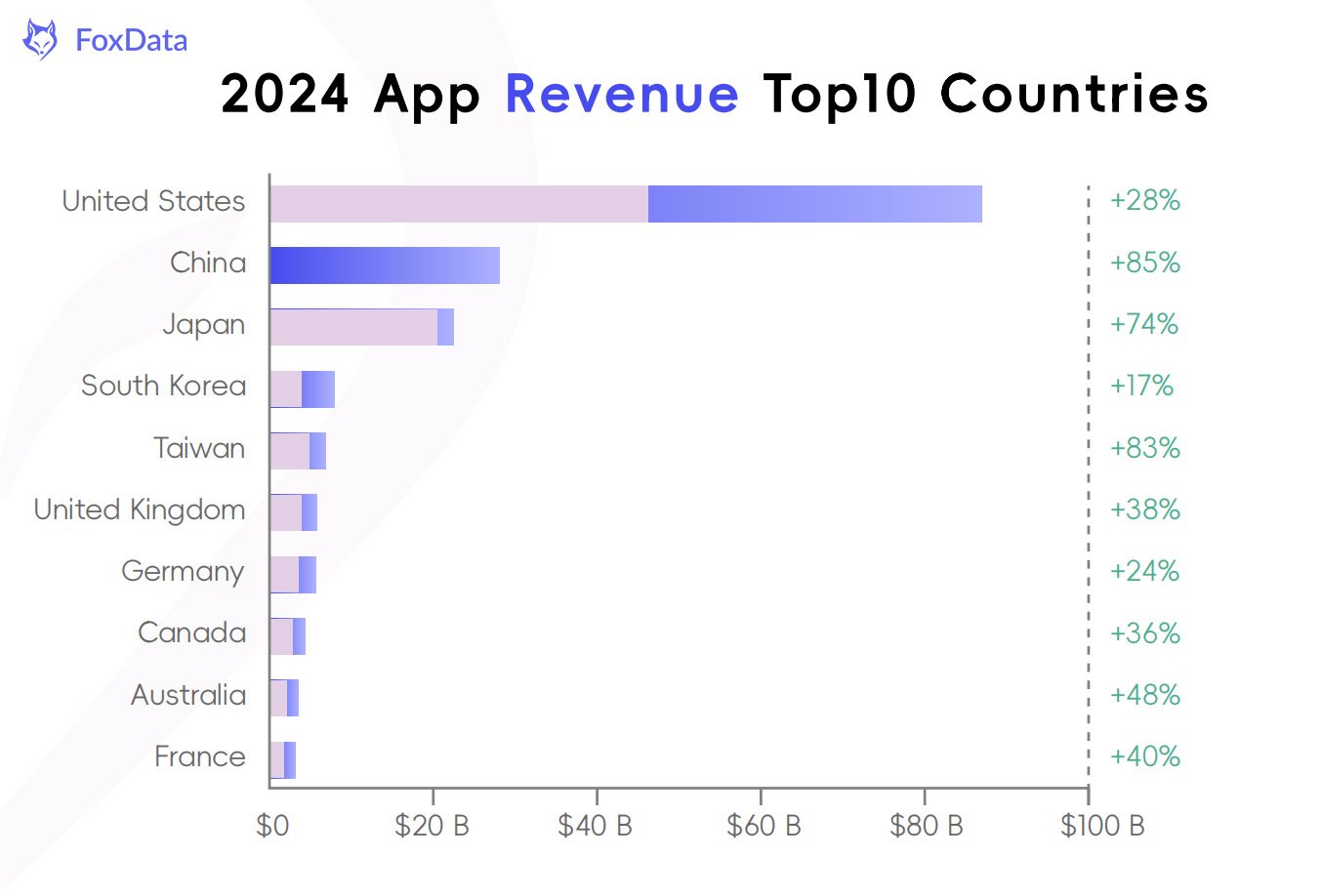
In terms of global revenue in 2024, South Korea ranks 4th, with its mobile gaming market maintaining high profit margins worldwide.
💡 Read More: The State of Mobile App 2025.
An increasing number of mobile game advertisers and developers are aiming to enter this burgeoning market. To achieve success, it's crucial to grasp its fundamental trends and dynamics.
If you want to enter South Korea, this thriving country, you must truly understand the South Korea app market, as there are significant cultural and user habit differences compared to Western markets.
To help you get started, we've compiled the most important information and data about South Korea's market, along with some useful tips.
South Korea App Market Performance
All the 2024 data for the South Korea's market below is based on the FoxData platform.
👉 Just register on FoxData to access these data, study the market trends, and conduct your market research.
Total Revenue in 2024
In 2024, South Korea became the 4th largest market globally for mobile app revenue, with earnings of $6,555,867,717, marking a 17% annual growth.
South Korea has a population of 51 million, with approximately 24 million being mobile game players.
In 2024, South Korea's mobile game app revenue amounted to $4,644,498,231, making up 70% of its total revenue.
Mobile game revenue from Android accounted for 70.17%, but the share of Android revenue in South Korea is shrinking.
From 2024 to 2025, Android's share decreased by 16.48%, while iOS grew by 113.10%.
Top Grossing Mobile Game Apps
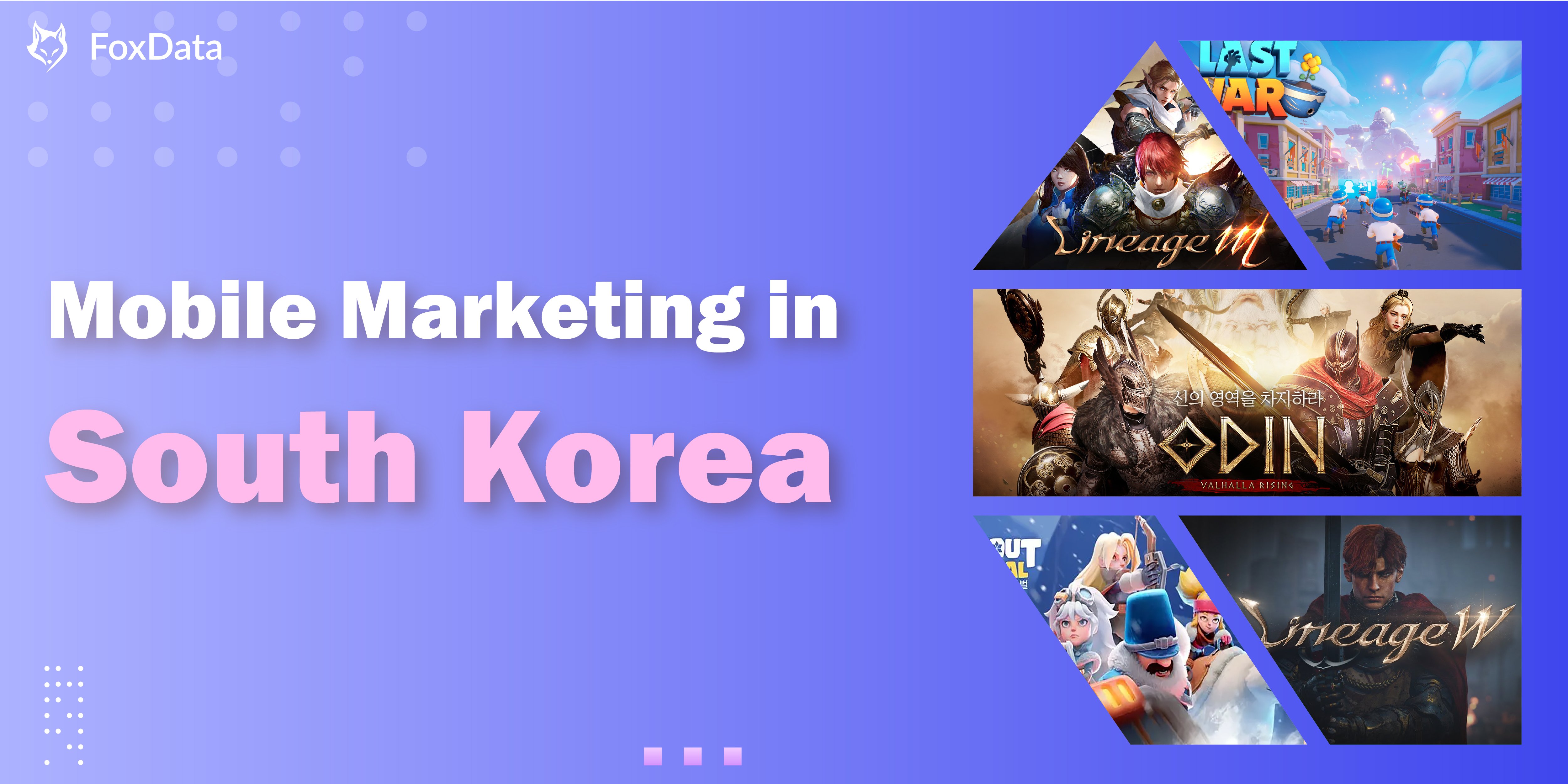
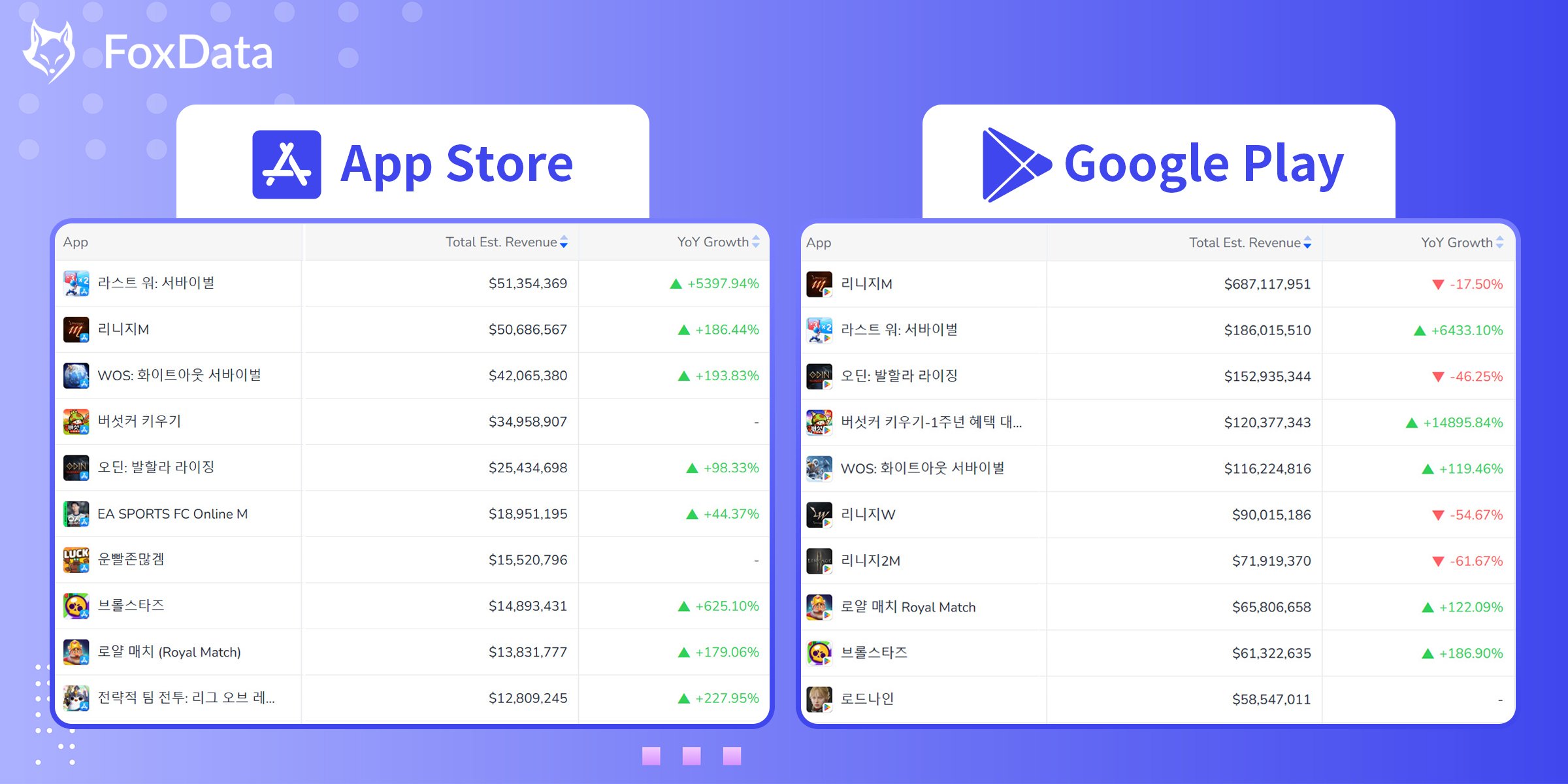
Both the App Store and Google Play's top three revenue-generating mobile games come from Asian publishers, with two games, "리니지M" and "오딘: 발할라 라이징," originating from local Korean publishers.
In addition to these, the top three also include notable foreign games like the popular strategy games "Last War: Survival" and "Whiteout Survival."
This indicates that Korean players are willing to download and spend money on both local and foreign games, as long as these games are localized and align with their interests.
Key Strategies for the South Korean Mobile Game Market
How should we approach this market?
To effectively engage with the Korean mobile gaming market, it is essential to understand its unique characteristics and identify strategies to leverage these distinct features.
Let's explore what makes this market stand out and how you can capitalize on these aspects.
1. Text Localization for the South Korean Market
Entering the South Korean market requires a strong focus on localization, which is essential for success. Korean players demand fully localized games that include culturally relevant content and marketing materials.
Language Localization
-
Understanding Hangul: Korean is written in Hangul, a script read from left to right. Hangul characters often occupy twice the space of English characters, which can lead to layout challenges. Instead of simply resizing fonts, use fonts like Dodum and Nanum that are optimized for readability.
-
Complex Language Structure: The Korean language features a unique grammar structure, varying levels of formality, and numerous synonyms and borrowings from English and Chinese. To navigate these complexities, it is advisable to collaborate with a native speaker for game localization.
Alternatively, using FoxData's Text Localization is also a great option. We support you in finding localizable keywords while researching them.
💡 Read More: How to Easily Localize Mobile App with Keywords Auto-Translation
Key Elements to Translate
- In-Game Content: Ensure all in-game text is accurately translated.
- Game Title and Subtitle: Localize these to enhance appeal and understanding.
- App Store Details: Translate keywords, descriptions, and screenshots to optimize visibility and user engagement in app stores.
By prioritizing comprehensive localization, you can better connect with South Korean players and enhance your game's success in this market.
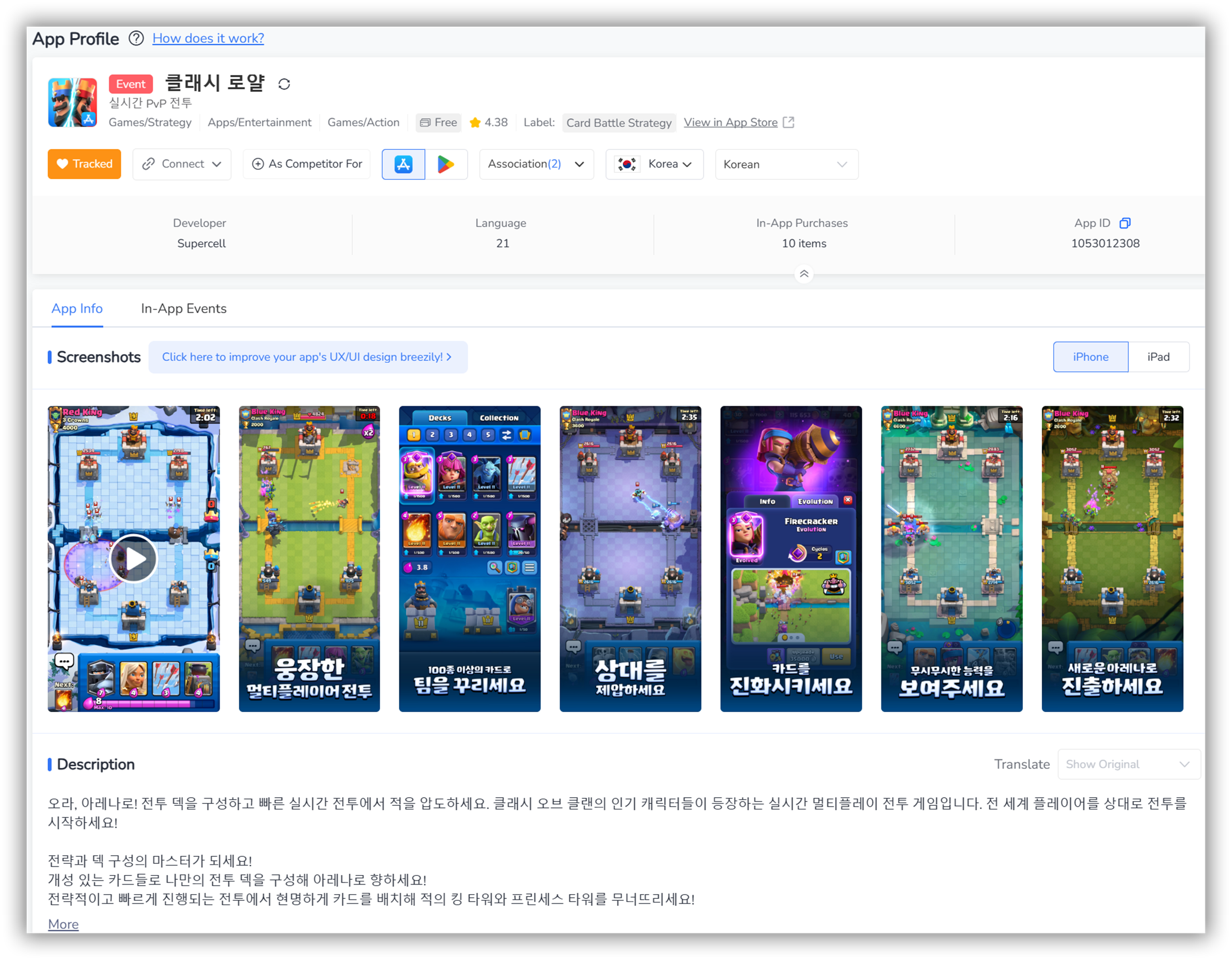
Clash Royal Korean localization in App Store
2. Visual and Cultural Localization
Merely translating text into Korean isn't enough to captivate the Korean audience. To enhance your appeal, it's crucial to align your visuals with local preferences. Koreans generally favor vibrant and intricate designs, rich in graphics. Much like the Japanese affinity for kawaii, Koreans enjoy games with cute, anime-inspired elements.
Color choices are significant in Korean culture. Positive associations are linked with colors such as white, blue, green, and yellow, whereas black and red may carry negative connotations. This is particularly important when localizing app store visuals, icons, and advertising materials.
Cultural awareness extends to acknowledging national holidays. While Christmas is a major holiday in the Western world, Korea's most significant holidays are Seollal (Lunar New Year) and Chuseok (Korean Thanksgiving Day). This knowledge is essential for crafting a LiveOps calendar with in-game events tailored for Korean players.
A thoroughly localized experience can foster greater user trust, engagement, and loyalty.
3. Understanding Spending Habits
It's known that Koreans predominantly spend on RPG titles. But what drives their spending behavior?
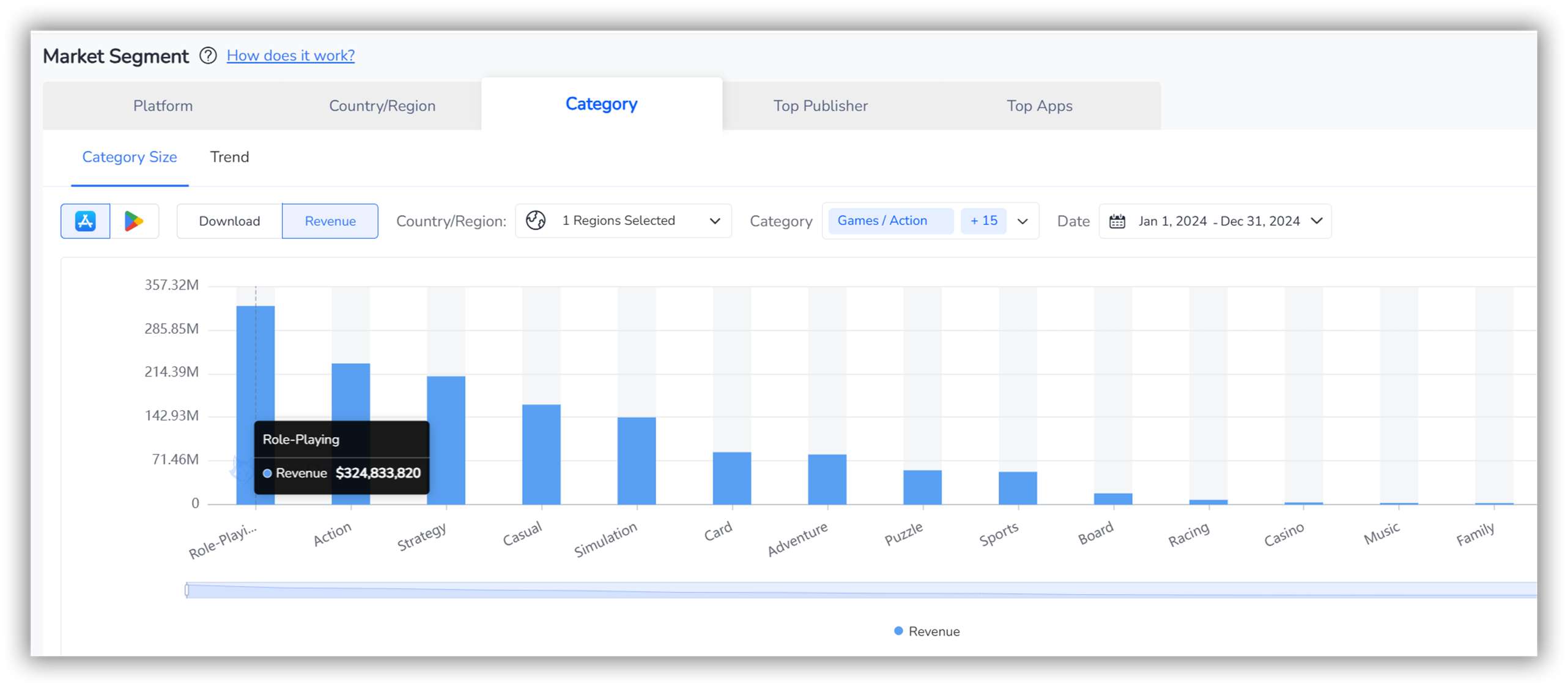
According to Mistplay's survey of Korean mobile game spenders, 66% are motivated by enhancing gameplay progression, and 49% by personal enjoyment. Their preferred in-app purchases (IAPs) include in-game currency (50%) and bundles (31%), while they are less inclined to spend on loot boxes and cosmetic items. This indicates that Korean players are primarily motivated by the desire to enhance their gaming experience and achieve in-game success.
Social dynamics also significantly influence spending. Korean gamers are passionate about socializing and competing with others. In a recent survey, 29% of spenders highlighted leaderboards, challenges, and rankings as top social factors influencing their spending (Mistplay). Game developers can leverage these preferences by incorporating more social features to stimulate competition and spending.
4. Video & Rewarded Advertising
In South Korea, successful user acquisition strategies must include thoughtful localization efforts. Where should you promote your apps in Korea? Beyond global ad networks like Google Ads, AppLovin, and Meta, consider leveraging local platforms such as Kakao and Naver for social promotion.
Rewarded advertising is particularly popular in Korea alongside traditional video advertising. South Korean gamers not only spend heavily but also invest significantly more time in gaming. In fact, top-grossing titles in Korea achieve 4–5 times higher daily playtime compared to the average (adjoe, Statista, Airbridge).
Want to see more market insights?
Now just join FoxData and embark on a journey of business growth as we unveil a Mobile App Data Analytics Tool, which boosts your downloads, increases your user base, and watches your performance soar to new heights!
All content, layout and frame code of all FoxData blog sections belong to the original content and technical team, all reproduction and references need to indicate the source and link in the obvious position, otherwise legal responsibility will be pursued.